

Exhibition | Liu Yiqian: "I don't consider myself a person" Long Museum's first ancient artifact theme exhibition "The Grand View of Heaven and Earth" 200 exquisite pieces unveiled
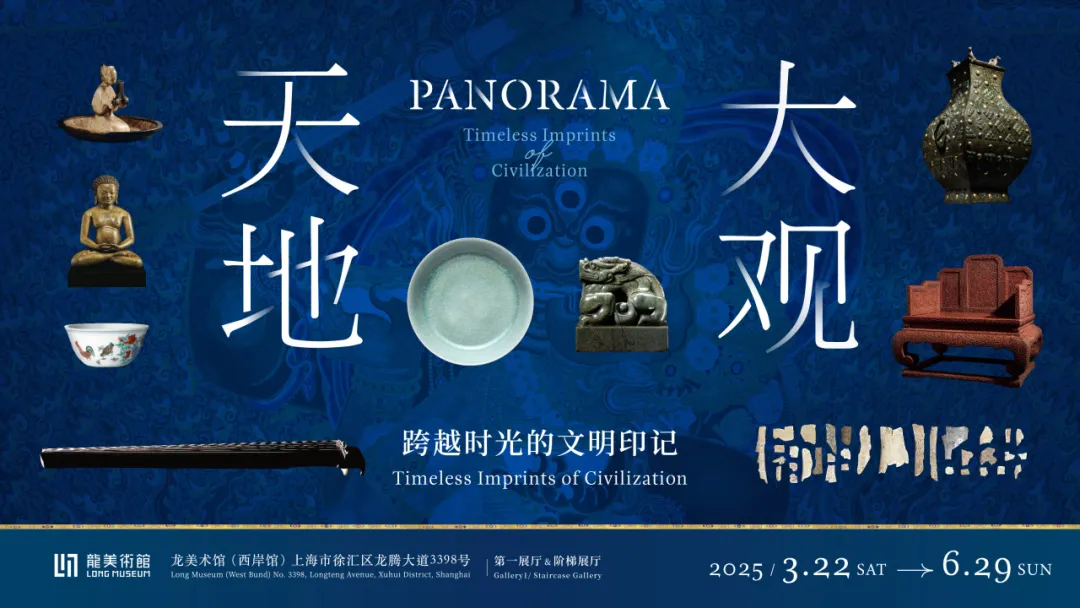
Grand View of Heaven and Earth: A Civilization Imprint Across Time
2025.3.22 - 2025.6.29
Long Museum (West Bund)
Exhibition Hall 1, Exhibition Hall 5, Staircase Exhibition Hall
On March 21, 2025, the most important exhibition of the first half of this year at the Long Museum (West Bund) "The Grand View of Heaven and Earth - The Mark of Civilization Across Time" was unveiled. This exhibition is the first exhibition with ancient artifacts as the theme since the opening of the Long Museum 13 years ago. It presents more than 200 pieces (sets) of precious cultural relics from the Shang and Zhou Dynasties to the Ming and Qing Dynasties, including oracle bone inscriptions, bronzes, jades, porcelains, Buddha statues, furniture, etc., which are laid out in sequence according to the four sections of "Longevity of Gold and Stone", "Vessels Carry the Tao", "Pure Thoughts" and "Endless Treasures", telling the ancient stories and exquisite craftsmanship of the three thousand years of Chinese civilization, and witnessing the fusion and crystallization of the emperor's will, the elegant taste of literati and the folk wisdom.
In addition to the Ming Yongle imperial red Yamadi embroidered thangka, which was on display in Shanghai again after eight years, and the Ming Chenghua Doucai Chicken Cup, which was on display in Shanghai again after ten years, more precious cultural relics were exhibited for the first time, such as the bronze Xijia plate from the fifth year of King Xuan of the Western Zhou Dynasty, the bronze square pot with gold and silver inlaid glaze nipple pattern from the Warring States Period, the kneeling jade lamp/dish from the Han Dynasty, the Ru kiln sky blue glaze washbasin from the Northern Song Dynasty, the official kiln green glaze octagonal string pattern pan-mouthed vase from the Southern Song Dynasty, the Yuan Dynasty blue and white water wave cloud dragon and entwined lotus pattern large jar, the Ming Hongxi Yongle Empress Renxiaowen green jade dragon button posthumous seal, the Qing Kangxi five-color twelve-month flower god cup, the Qing Kangxi pink ground enamel flower bowl, the Qing Qianlong imperial carved cloud dragon blessing and abundant pattern throne, etc.
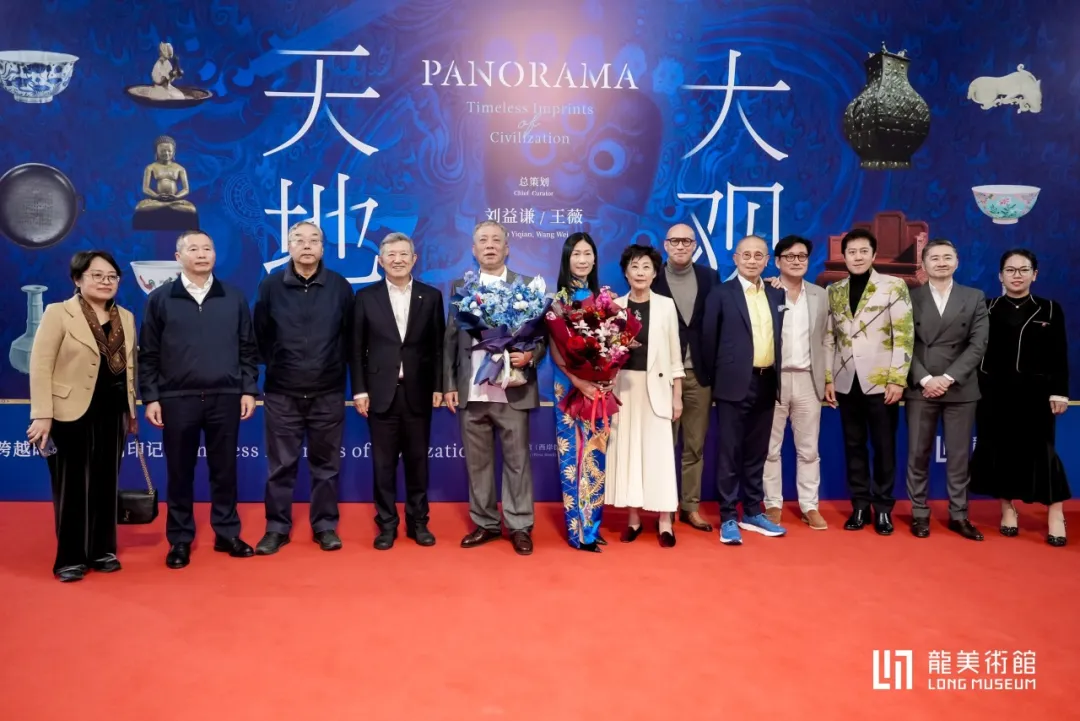
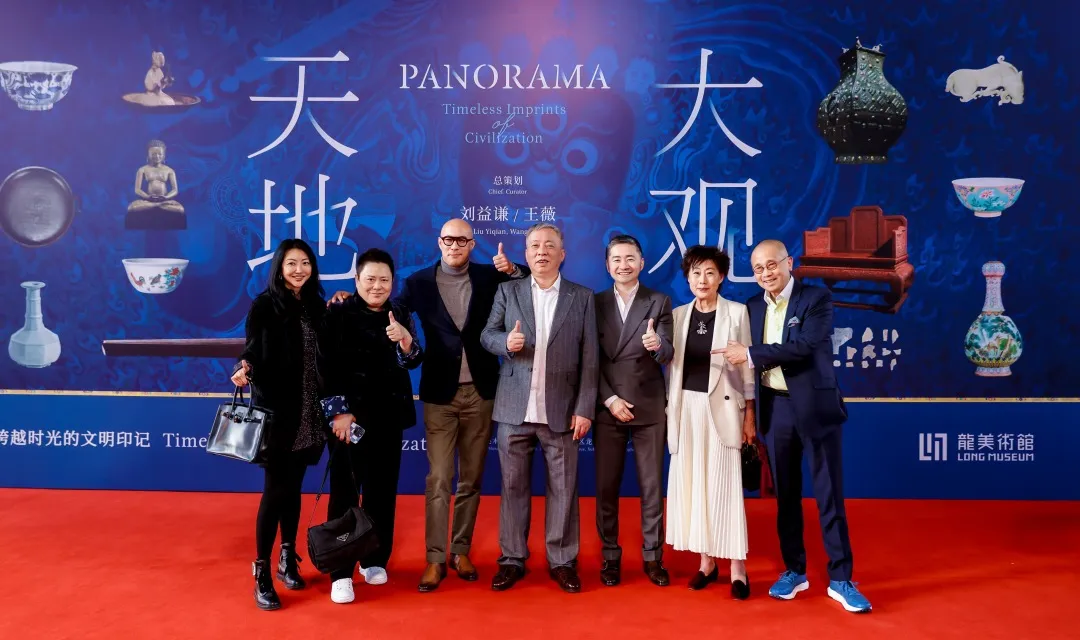
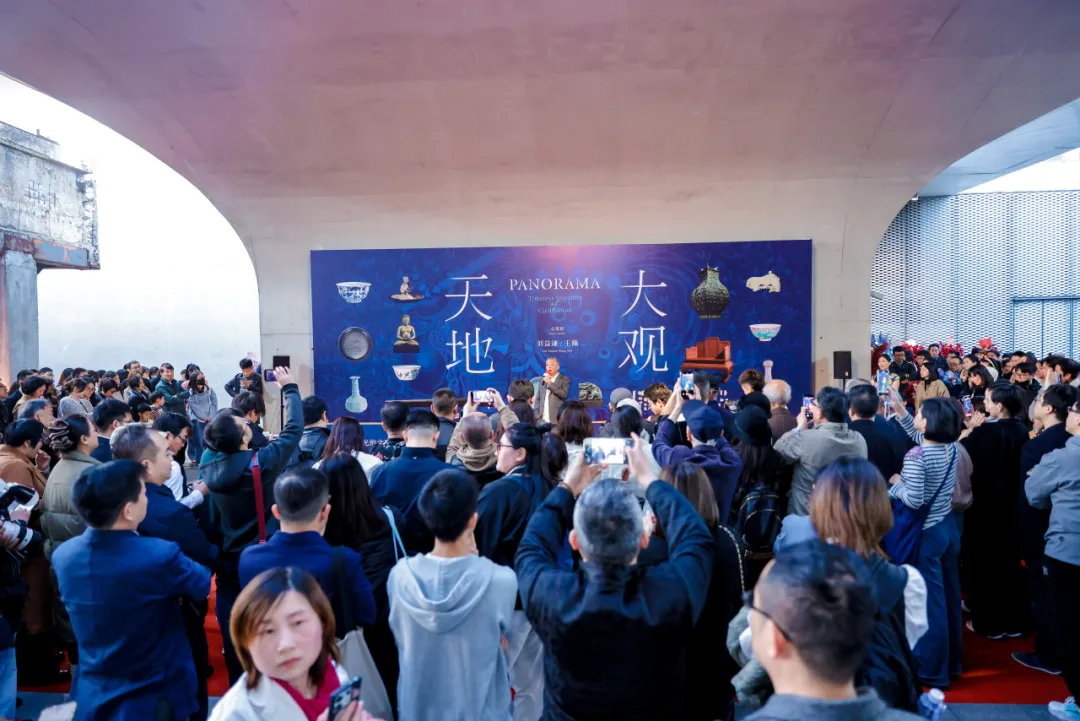
The opening ceremony of "The Grand View of Heaven and Earth - The Imprint of Civilization Across Time"
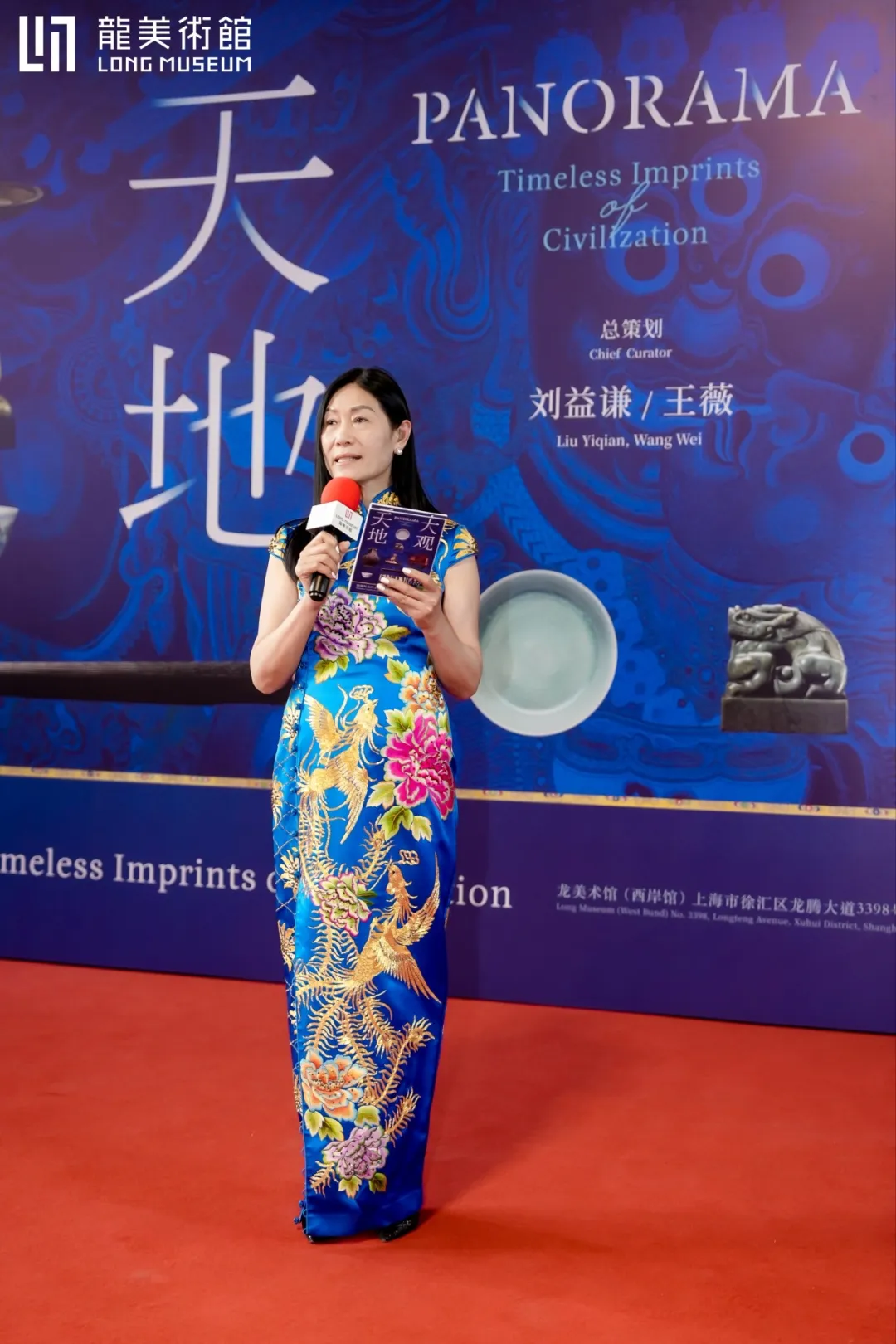
The opening ceremony of "The Grand View of Heaven and Earth - A Civilization Mark Across Time"
Wang Wei, Director of Long Museum, delivered a speech
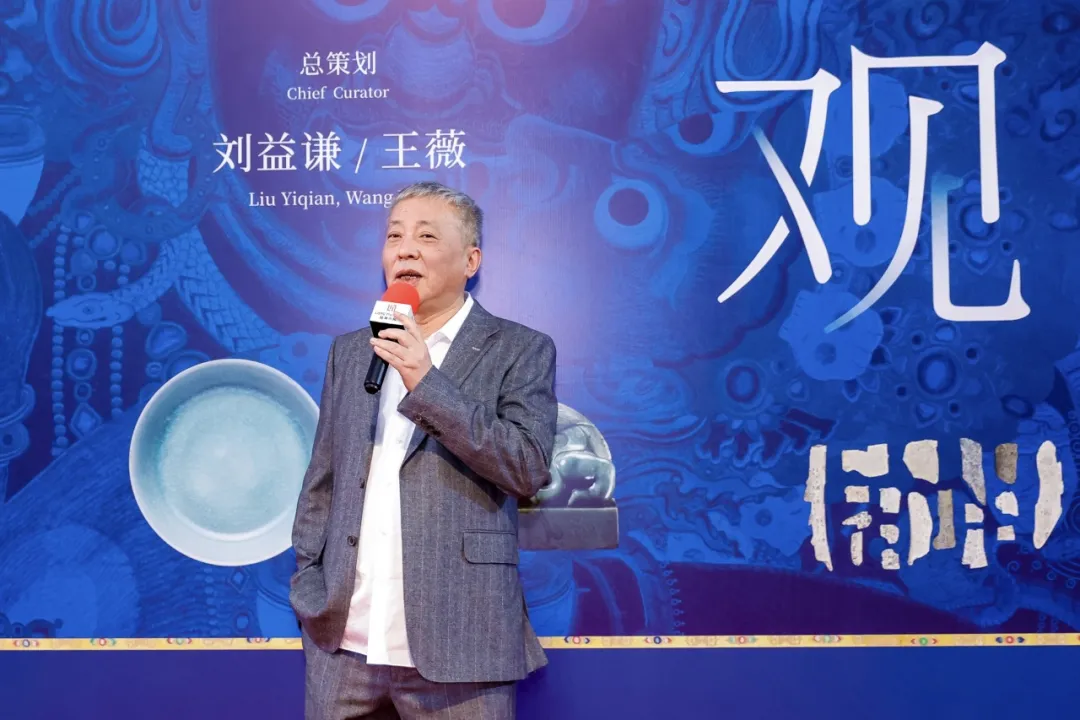
Liu Yiqian, founder of Long Museum, delivered a speech
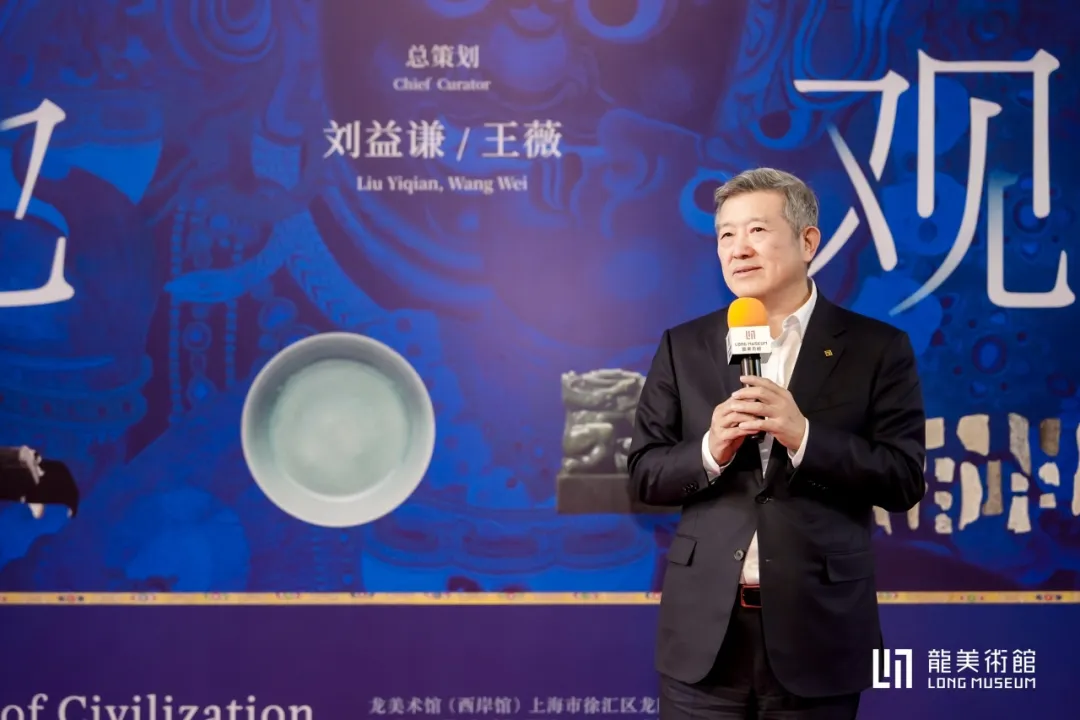
Chen Dongsheng, founder and chairman of China Guardian, delivered a speech
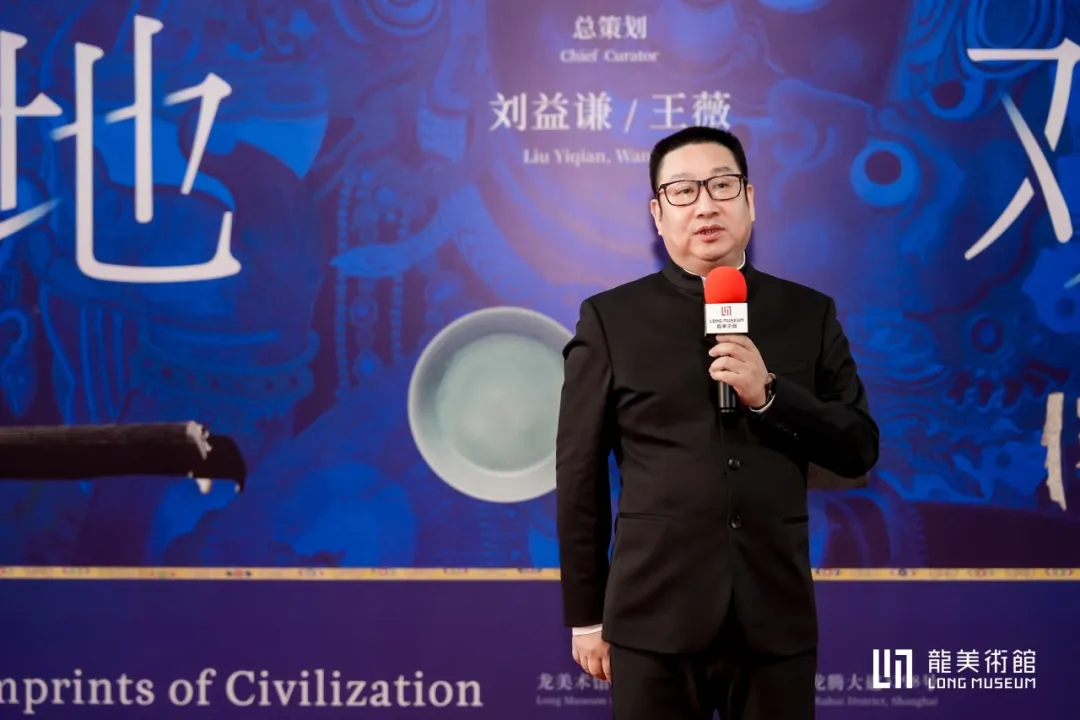
Ji Yunfei, Director of Zhejiang Provincial Museum, delivered a speech
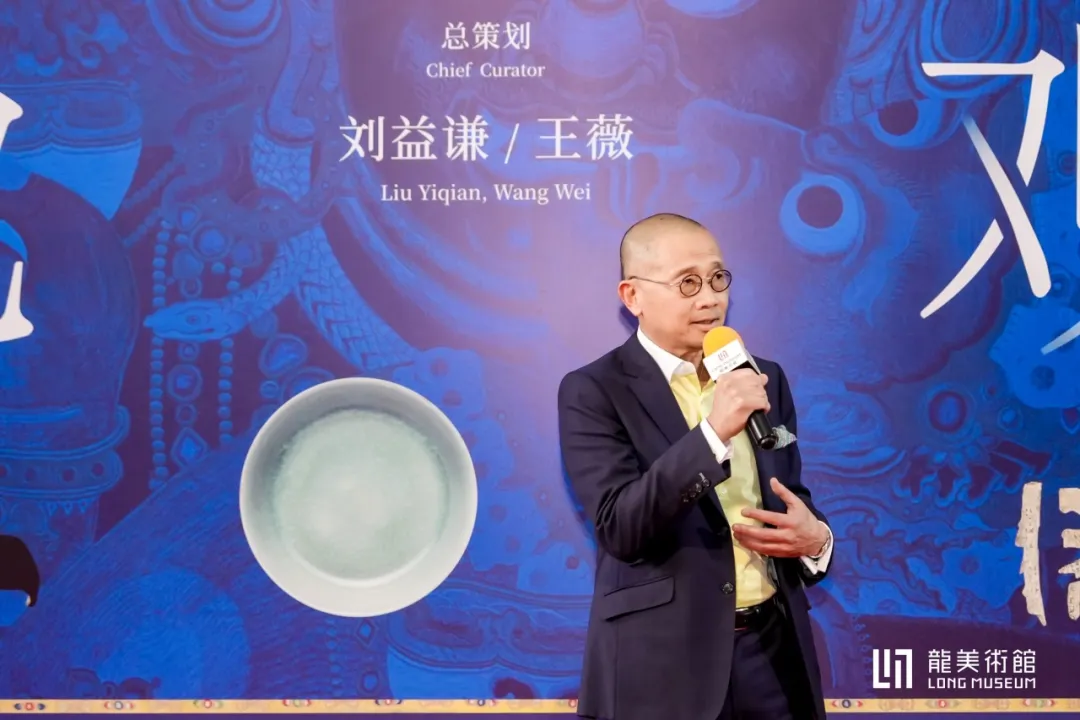
Christie's Asia Chairman Chen Shoukang delivered a speech
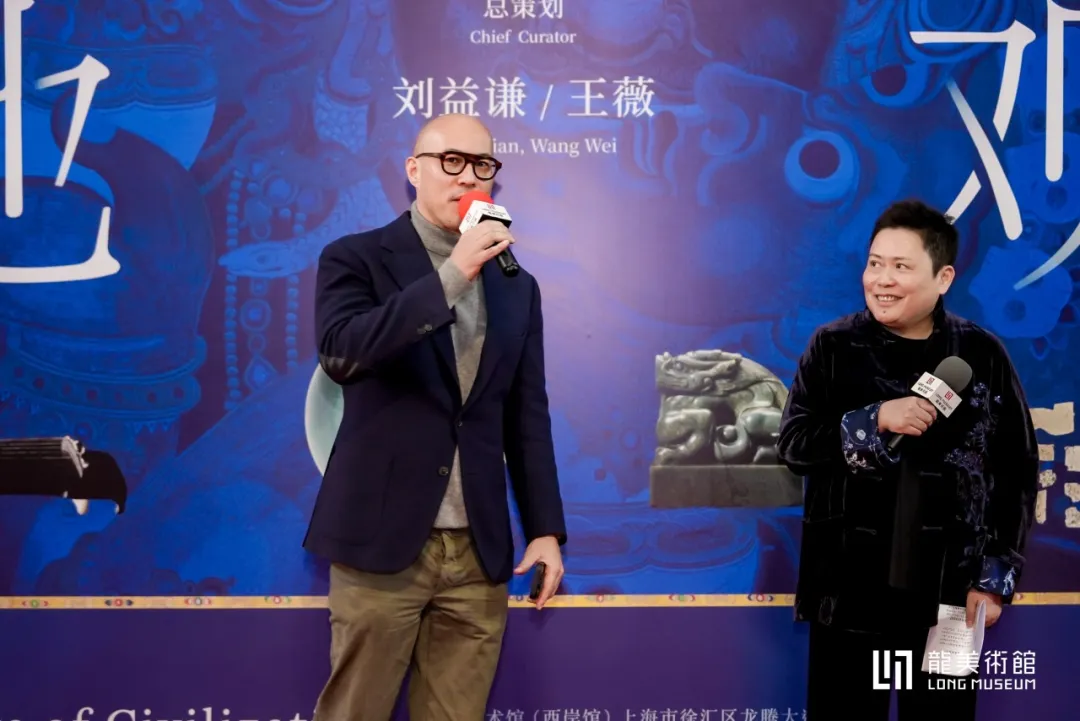
Sotheby’s Asia Chairman Chow Kwok-shih and Sotheby’s Chinese Works of Art Vice Chairman Li Jia delivered speeches
Wang Wei, director of the Long Museum, said: "My husband Liu Yiqian and I started collecting around 1992, and it has been more than 30 years now. Every piece of collection has been carefully screened for its artistic and historical value. Especially for traditional Chinese art, we pay more attention to its orderly inheritance and clear origin. These collections have also connected unique collection stories that continue to this day. During the exhibition, we published two albums, one for porcelain and one for miscellaneous items, covering all the works in this exhibition, as well as some collections that could not be exhibited for various reasons. I hope it will help everyone understand the exhibition."
Liu Yiqian, founder of Long Museum and chief curator of the exhibition, said: "The exhibition outlines the unbroken thread of Chinese civilization for three thousand years. They are not only symbols of power of emperors and generals, but also the warmth of craftsmen's fingertips, and the spark of cultural collision. When the younger generation stops or contemplates, I hope they can feel the symbols of Chinese civilization, and I hope that this traditional craftsman spirit will flow in everyone's blood. Collections are private, but civilization belongs to everyone. The thickness of three thousand years will eventually turn into the aura of every artifact in the exhibition."
Technology protects civilization, and innovation connects the future. At the opening ceremony, four Lingrui P1 robot dogs assisted, and their free movements demonstrated the high degree of innovation of modern technology. Robot dogs are witnesses of contemporary civilization, and cultural relics are solidified history. The two have collided across 3,000 years of time in the Long Museum to create sparks of thought.
The exhibition will be open to the public from March 22 to June 29, 2025, and a set of two albums with the same name will also be published simultaneously.
Part 1
Jin Shishou
Entering the exhibition hall, visitors will see the first section of the exhibition, "Longevity of Gold and Stone", which includes 34 examples of oracle bone inscriptions, bronzes, ancient jades, jade seals and other 13 pieces (sets) of rare cultural relics. Oracle bones, bronzes and jades, as important carriers of ancient Chinese culture, carry the continuation and eternal connotation of Chinese culture.
Oracle bone inscriptions are the earliest mature Chinese writing system. Using tortoise shells and animal bones as the writing medium, they not only record the divination activities of the Shang Dynasty, but also solidify the ancient people's reverence for the gods of heaven and earth and the norms of the social system on the oracle bones. Through the interpretation of oracle bone inscriptions, the historical details of the Shang Dynasty's politics, economy, religion, etc. have been reborn.
The bronze wares of the Shang and Zhou dynasties were not only practical utensils, but also symbols of power and status. The abstract patterns on bronze wares, such as taotie patterns and geometric patterns, are not only an imagination of the cosmic order, but also a concrete expression of the hierarchy of rituals. The "system of nine tripods" in the Zhou Dynasty stipulated that the emperor had nine tripods, and the social order was solidified through the number and shape of bronze wares. The inscriptions on bronze wares recorded major events such as enfeoffment, conquest, and rewards. These characters not only promoted the evolution of Chinese characters from pictographic to ideographic, but also allowed historical narratives to break through time constraints and became the basis for later generations to trace the origins of civilization.
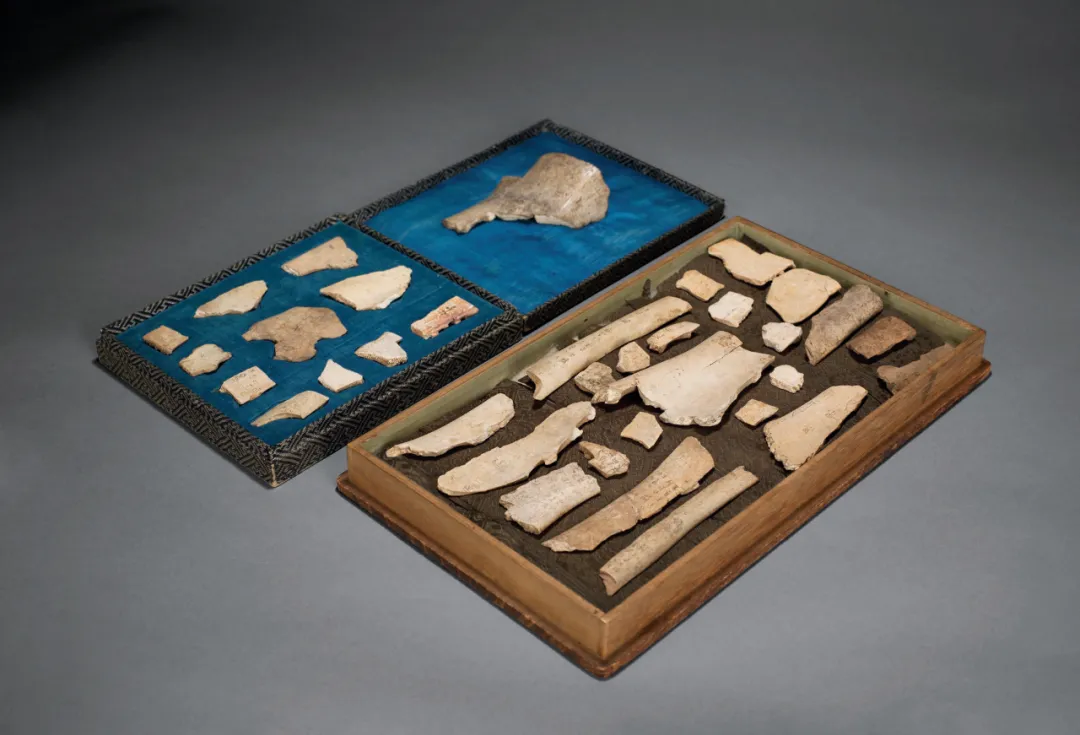
Shang Dynasty, 13th to 11th century BC: Thirty-four examples of oracle bone inscriptions
This batch of oracle bones consists of three boxes with 35 pieces, including 18 pieces of ox scapulae, 16 pieces of tortoise shells, and one suspected ivory artifact component.
Different sizes
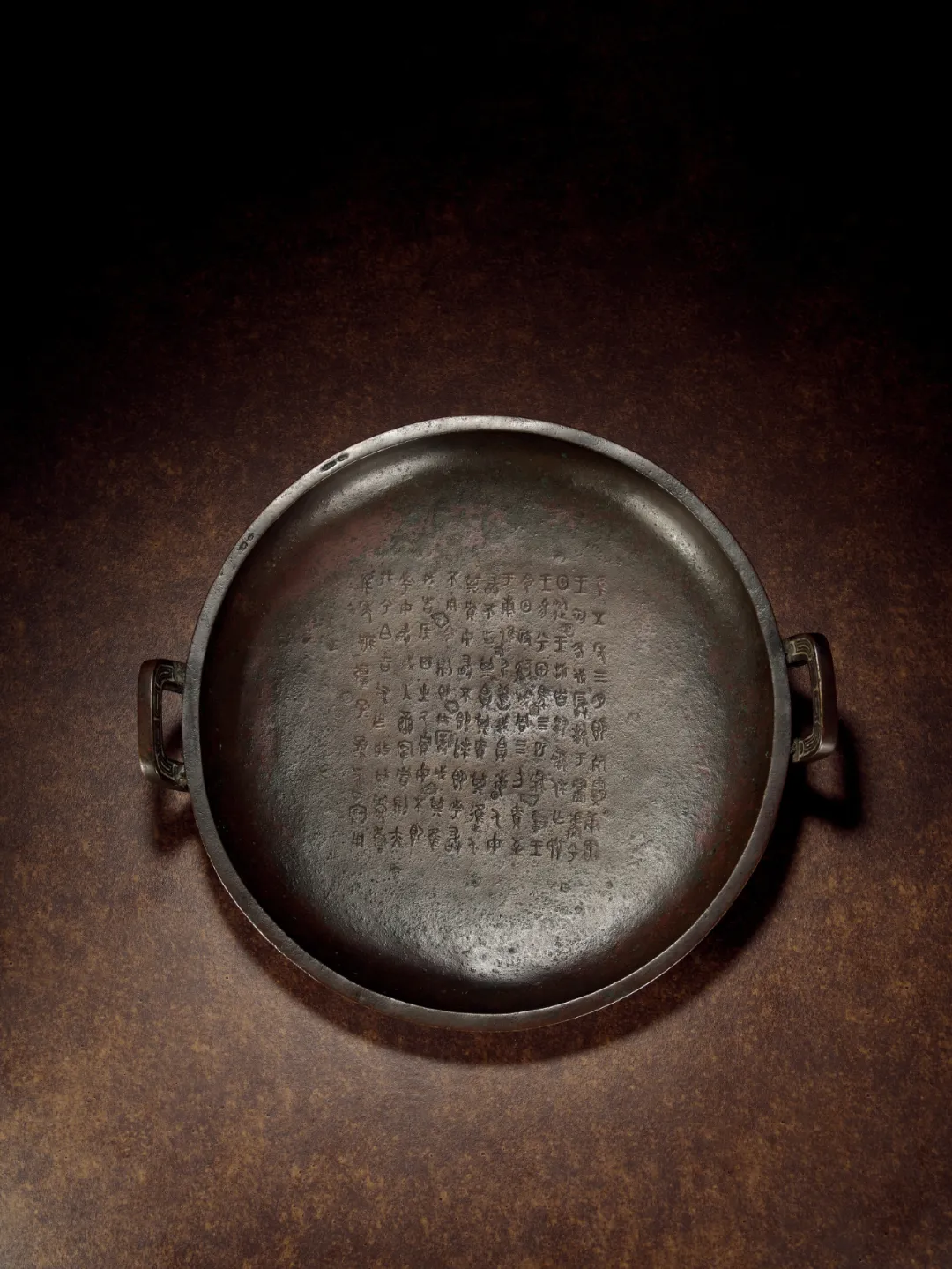
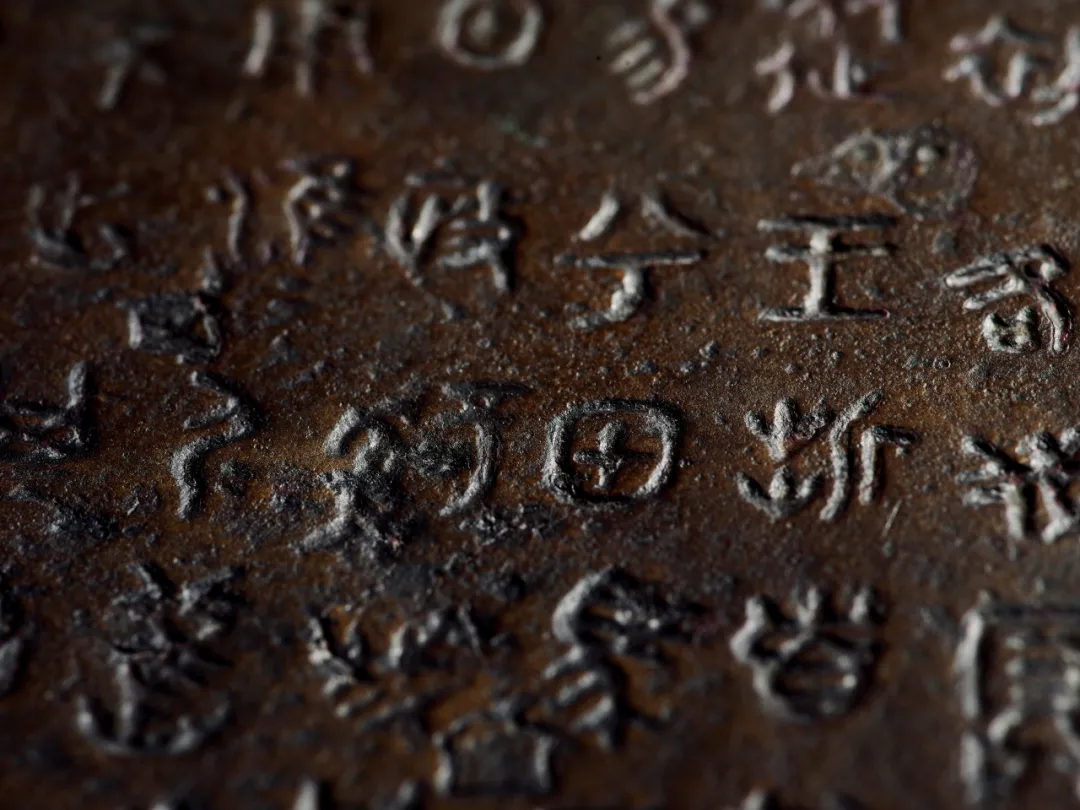
Bronze Xijia Plate, 5th year of King Xuan of the Western Zhou Dynasty (823 BC)
Height 11.7 cm, ear diameter 47 cm
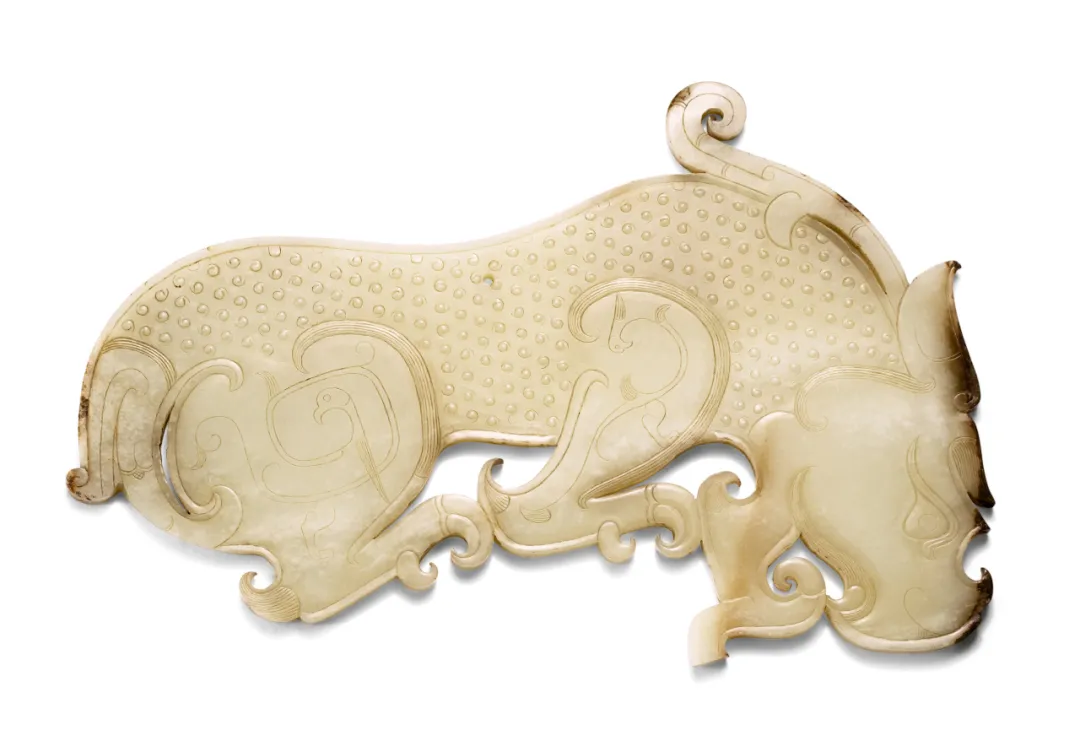
Eastern Zhou Dynasty Yellow Jade Auspicious Beast Jade Pendant
Length 22 cm
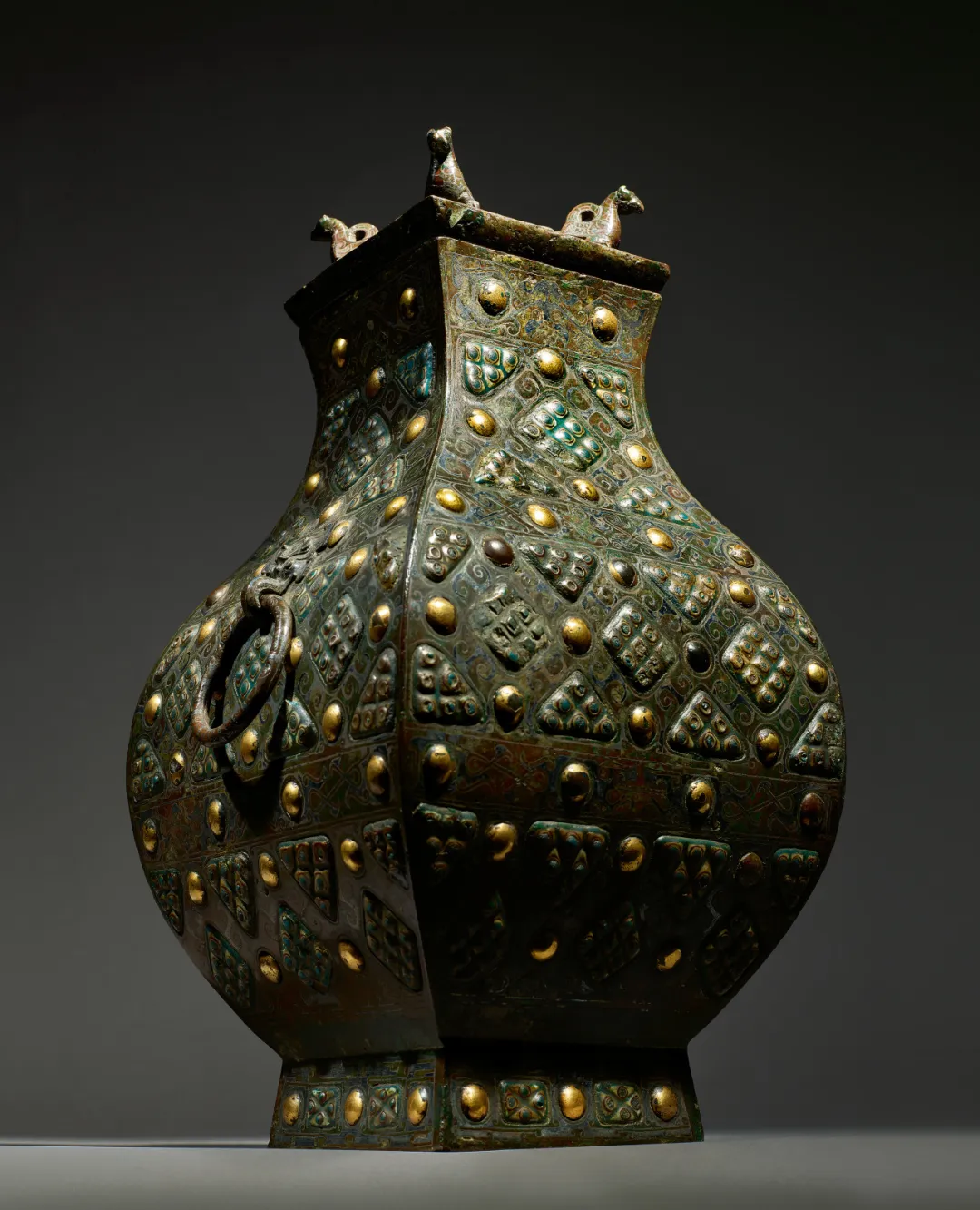
A bronze and gold, silver and glazed square pot with nipple pattern, Warring States Period, 4th/3rd century BC
Height 35.1 cm
In the Han Dynasty, the warm and tough physical properties of jade were combined with Confucian ethics, and the idea of "a gentleman is as virtuous as jade" was proposed. The jade bi symbolizes the roundness of the sky and the squareness of the earth, and the jade cong connects heaven and earth. Jade is endowed with an artistic life that transcends time, carrying the character of a gentleman and the eternity of the cosmic order. The jade seal is the "golden stone" certificate of the orthodox imperial power, symbolizing the stability of the regime. The literati of the Ming and Qing dynasties condensed their personal interests between the small pieces of gold and stone, forming a unique "seal of longevity" culture that continues to this day.
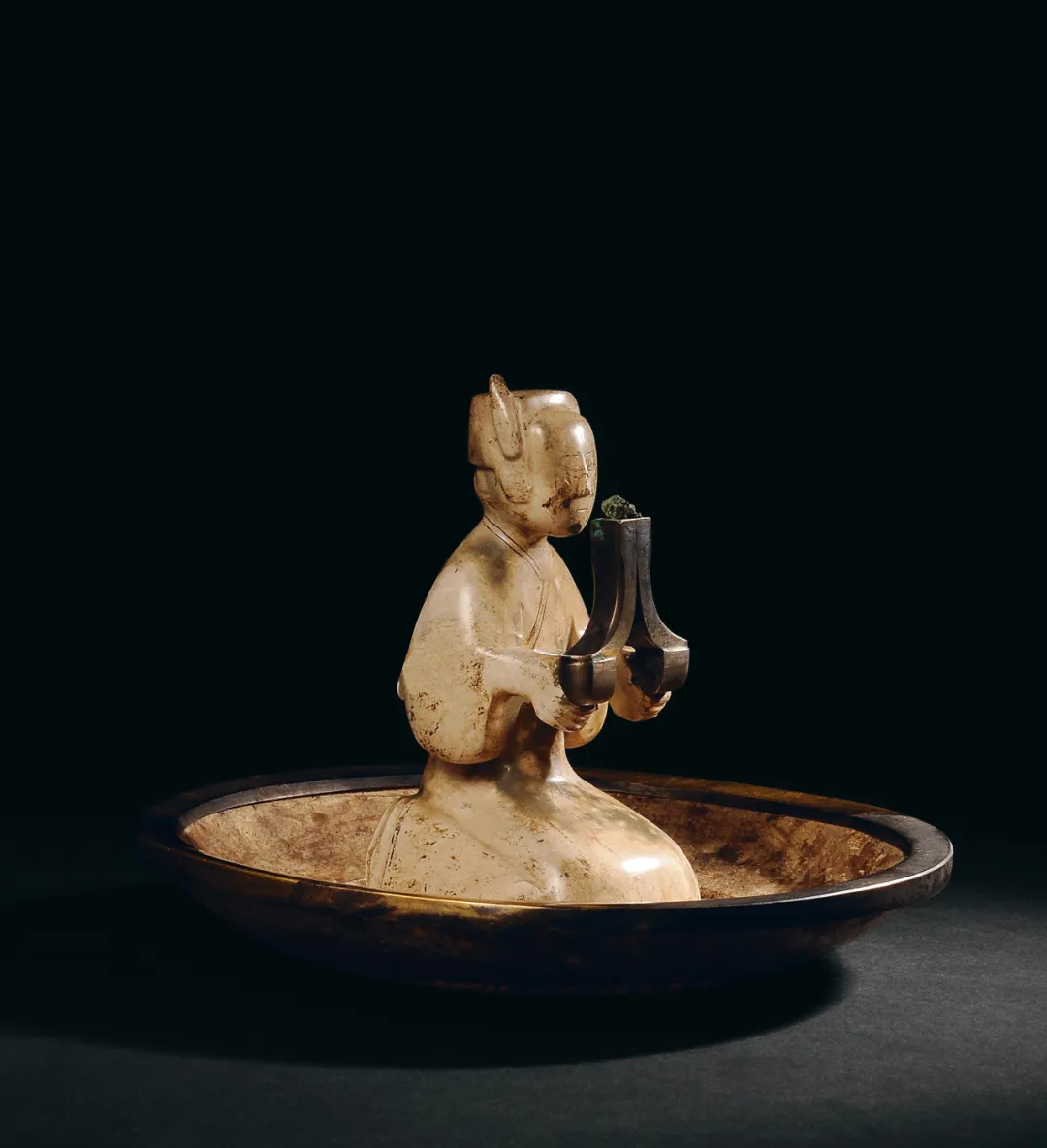
Han Dynasty: A jade lamp and a plate of a kneeling official (two pieces)
Height 8.5 cm, diameter 12.3 cm
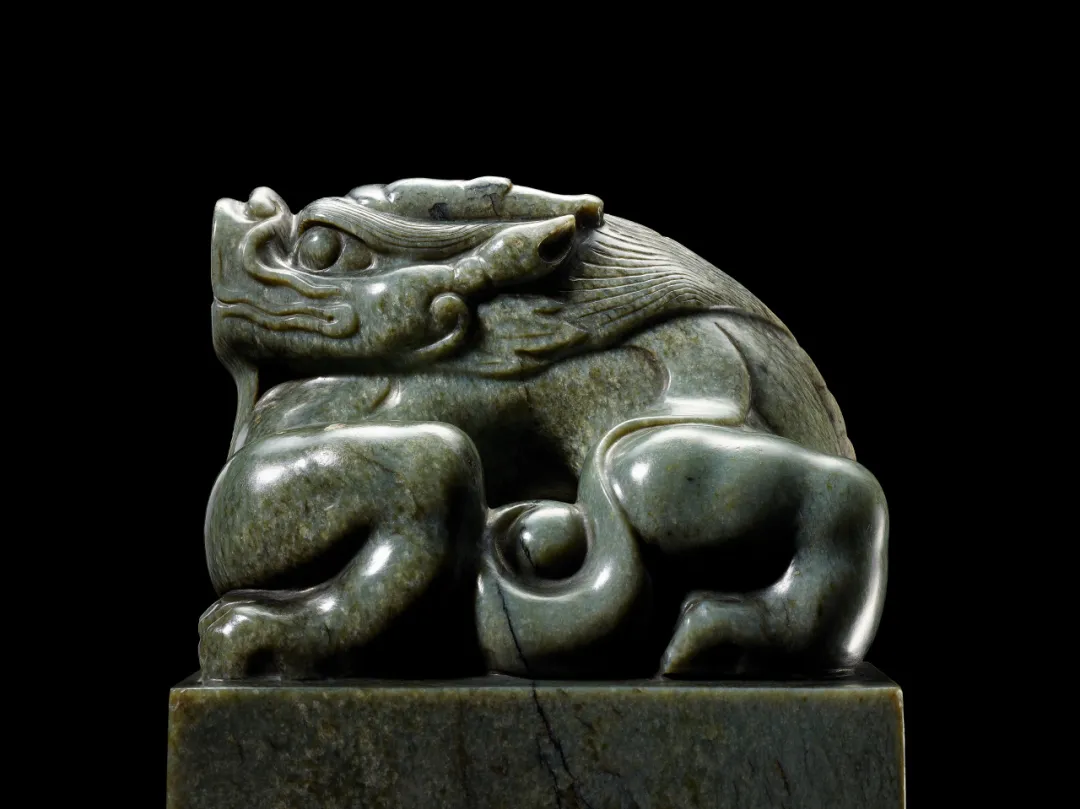
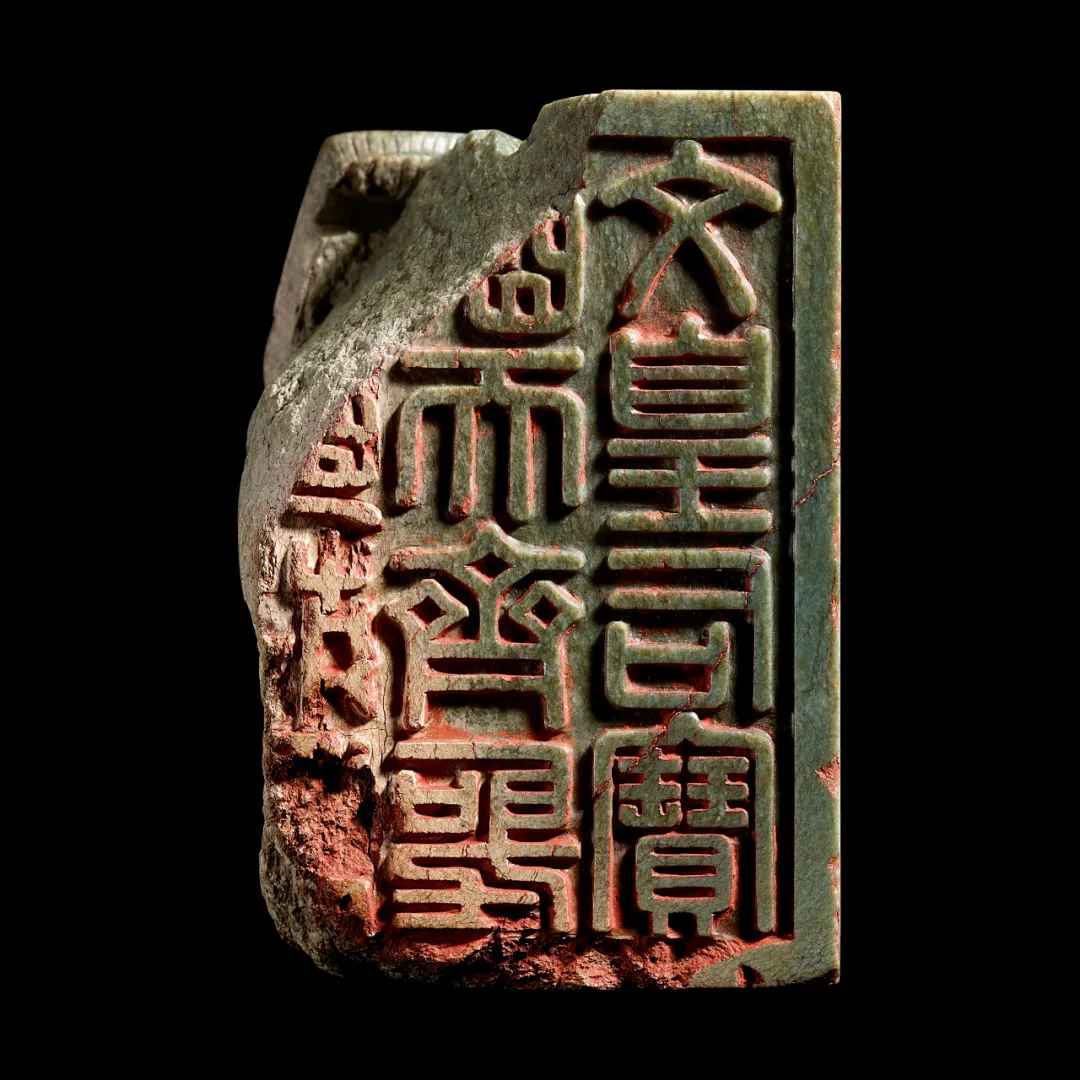
Ming Hongxi Yongle Empress Renxiaowen Qingyu Long Niu posthumous seal
10 cm, 7.2 cm, height 10.2 cm
Part 2
Instrument carrying the Tao
Porcelain is a treasure of China's long-standing traditional culture, bearing the historical changes and innovations of thousands of years. This section exhibits twelve top-grade porcelains from the Song, Yuan, Ming and Qing dynasties, presenting the achievements of Chinese porcelain culture at its peak. From the implicit and restrained Song porcelain to the gorgeous and explicit Qing porcelain, these objects are not only the evolution of craftsmanship, but also the materialized carriers of the changes in China's social power structure, philosophical thoughts and aesthetics.
The political stability, economic prosperity and prevalence of Confucian culture in the Song Dynasty had a huge impact on the development of porcelain. The Ru kiln in the Northern Song Dynasty was famous for its glaze color of "sky blue after rain", which echoed the Song people's philosophical thought of "harmony between man and nature" and the universe view of advocating truth and conforming to all things. The Cong-style bottles and li-style furnaces of the official kiln in the Southern Song Dynasty incorporated the ritual ideas of Confucian bronze ware, and the glaze colors such as gray-green and powder-green carried the personality ideal of the literati "comparing virtue to jade".
In the Yuan Dynasty, the cobalt material of Sumaliqing was introduced into China through the Islamic region, making the decorative elements of underglaze colored porcelain more abundant. Yuan blue and white porcelain became a symbol of the transition of Chinese ceramics from plain porcelain to colored porcelain. In the Ming Dynasty, Zheng He brought back the cobalt material of "Sumaliqing" from his seven voyages to the West, and Yongle and Xuande blue and white porcelain ushered in another peak after Yuan blue and white porcelain. Overglaze colored porcelain in the Ming Dynasty also developed further, and famous products of five colors and doucai emerged. In the Qing Dynasty, the overglaze color technique was innovated again, and the techniques of enamel color, pastel color, and foreign color made the decoration of overglaze colored porcelain more delicate and gorgeous. The decorative techniques of shallow relief, high relief and carving since the Song and Yuan Dynasties have further developed into fine carving and openwork techniques, making the decoration of porcelain more three-dimensional, vivid, diverse and complex. The showmanship of Qing Dynasty colored porcelain reflects the complex picture of the rise and fall of the empire and the collision of Chinese and Western cultures.
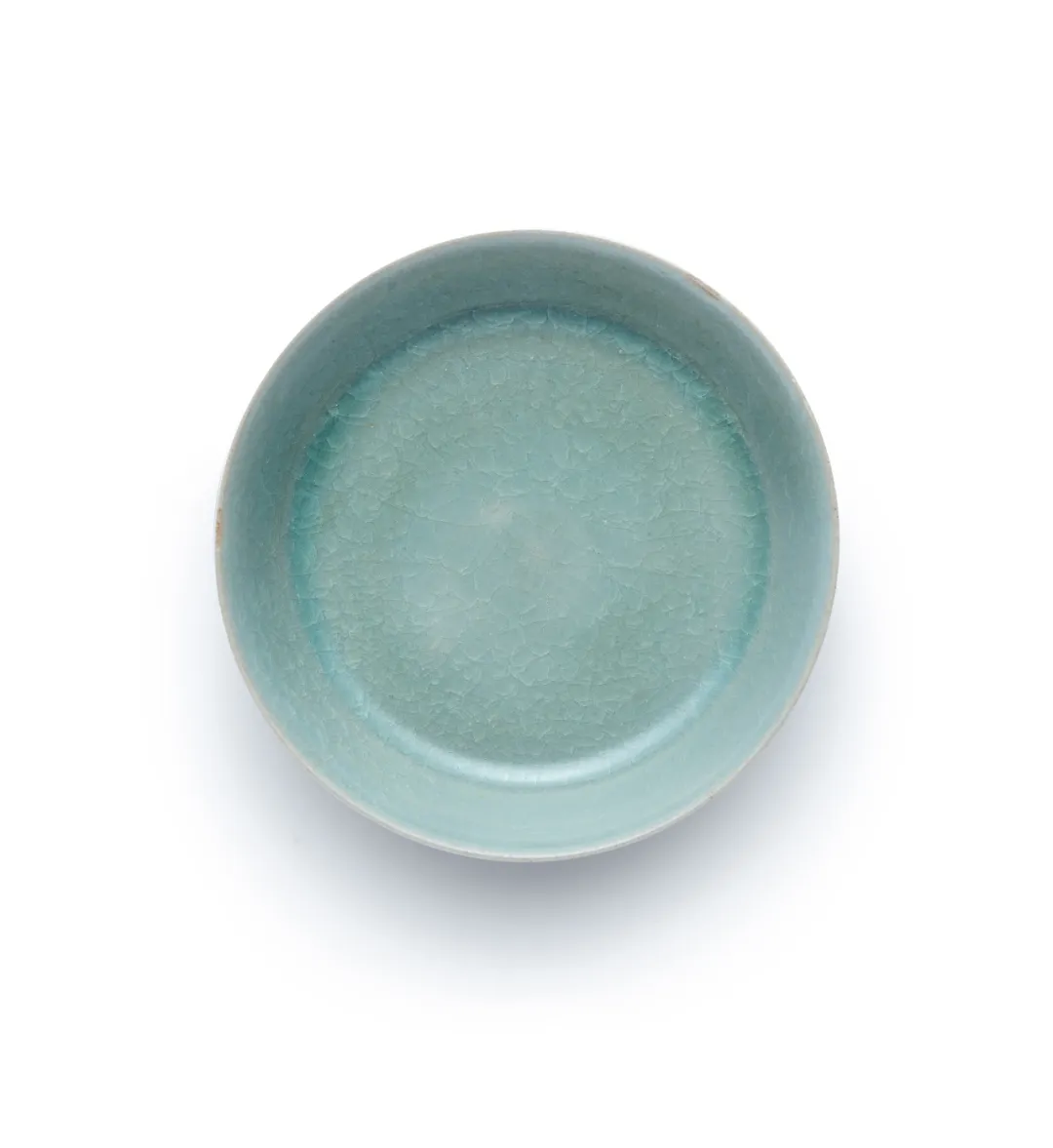
Northern Song Dynasty Ru kiln celadon glaze washbasin
Diameter 13 cm
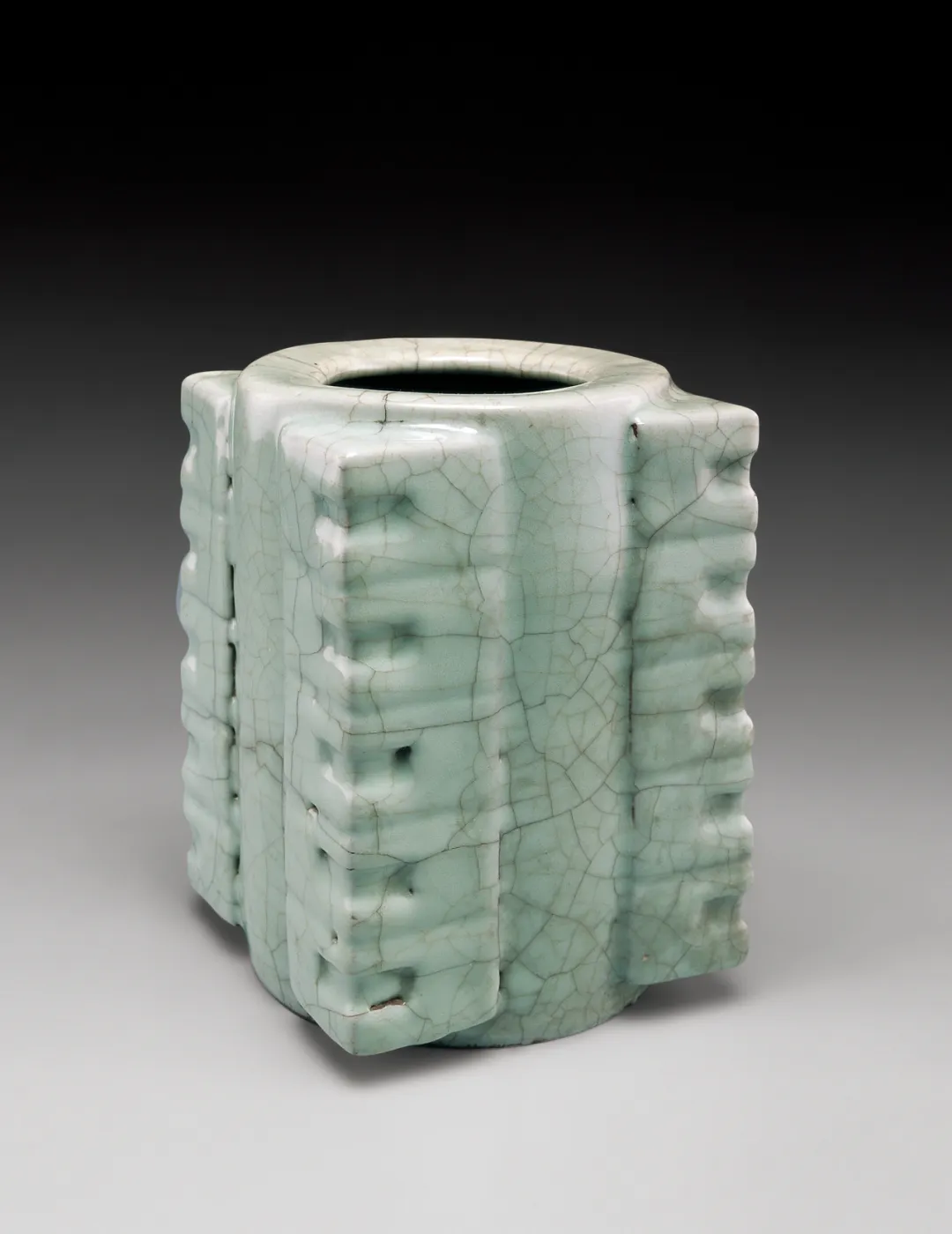
Southern Song Dynasty Guanyao Cong-style vase
Height 19.5 cm
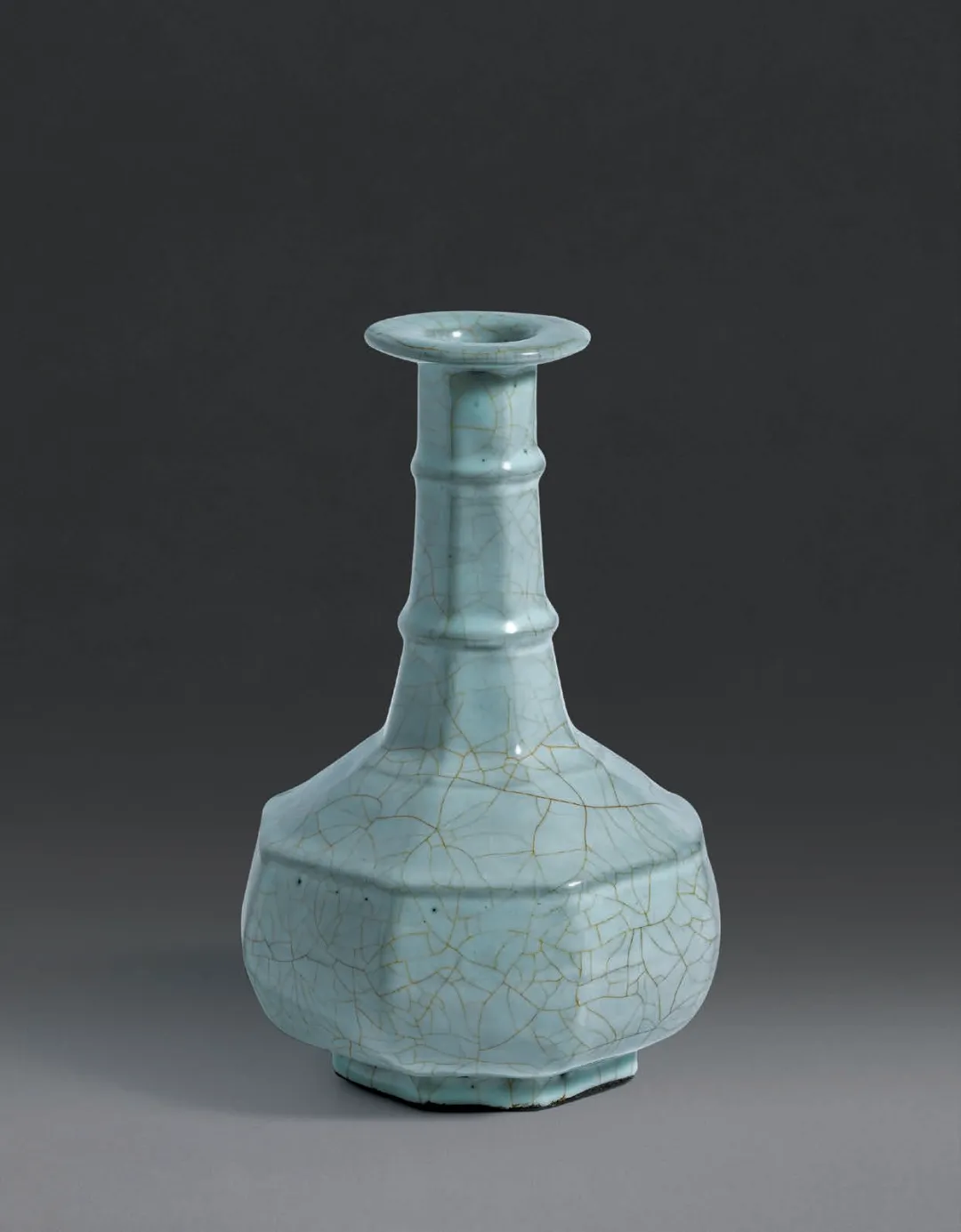
Southern Song Dynasty Guanyao Green Glaze Octagonal String Pattern Pan Mouth Vase
Height 21.9 cm, mouth diameter 6.4 cm, foot diameter 9.2 cm
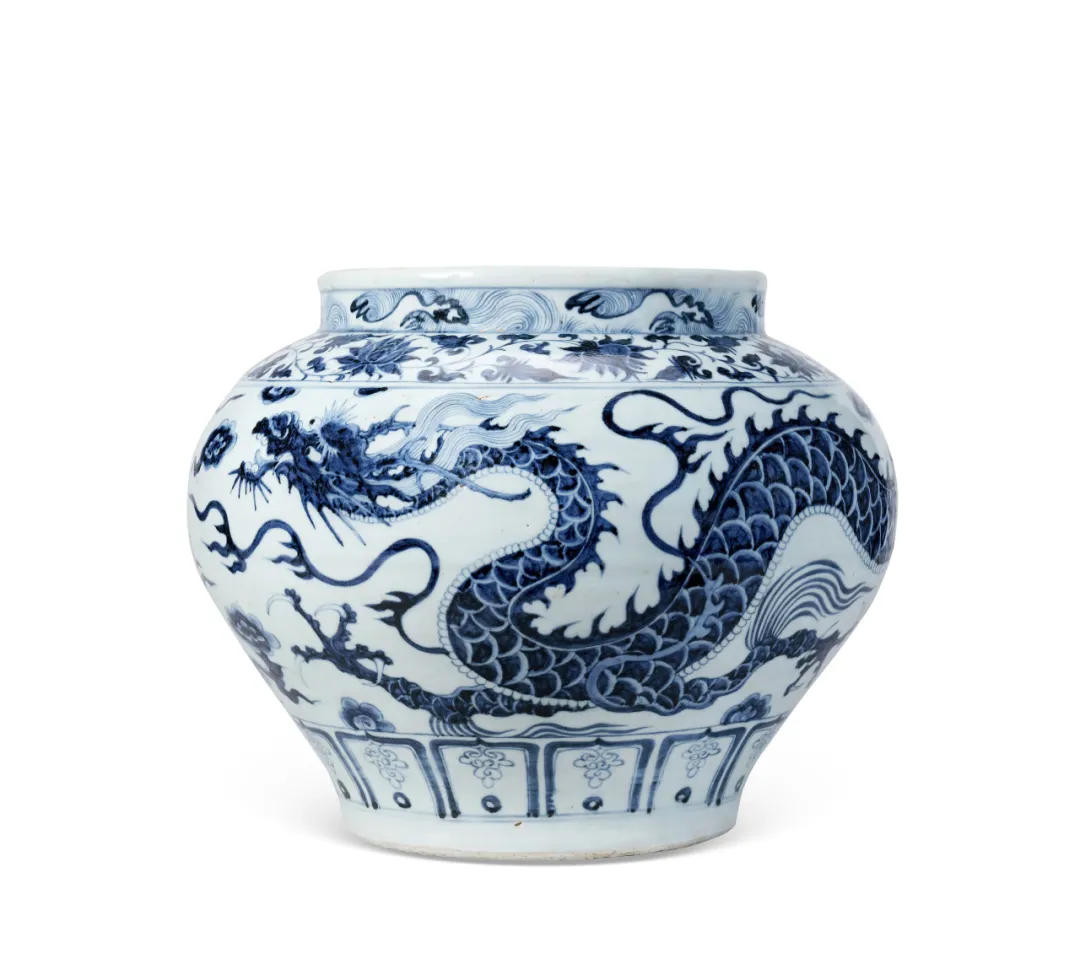
Yuan Dynasty Blue and White Vase with Water Waves, Clouds, Dragons and Lotus Design
Diameter 33 cm, height 27.5 cm
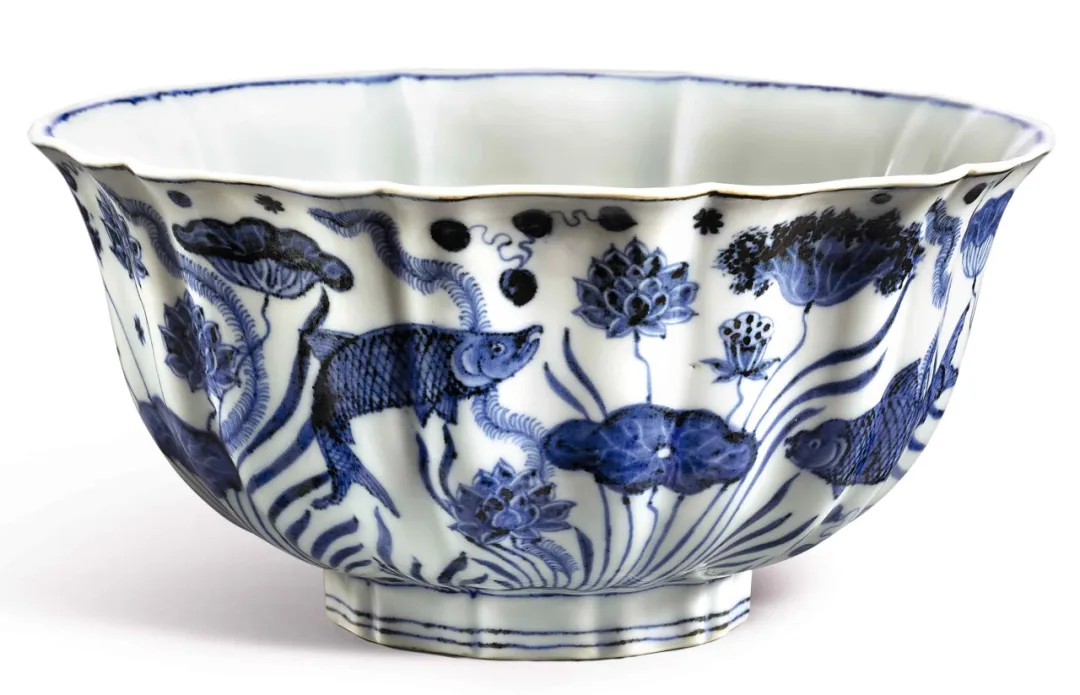
A large blue and white bowl with a ten-sided diamond-shaped mouth and fish and algae patterns, Xuande period, Ming Dynasty
Diameter 23 cm
In the Qing Dynasty, the overglaze painting technique was innovated again. The techniques of enamel, pastel and foreign color made the decoration of overglaze colored porcelain more delicate and gorgeous. The decorative techniques of shallow relief, high relief and carving since the Song and Yuan Dynasties were further developed into fine carving and openwork techniques, making the decoration of porcelain more three-dimensional, vivid, diverse and complex. The showmanship of colored porcelain in the Qing Dynasty reflects the complex picture of the rise and fall of the empire and the collision of Chinese and Western cultures.
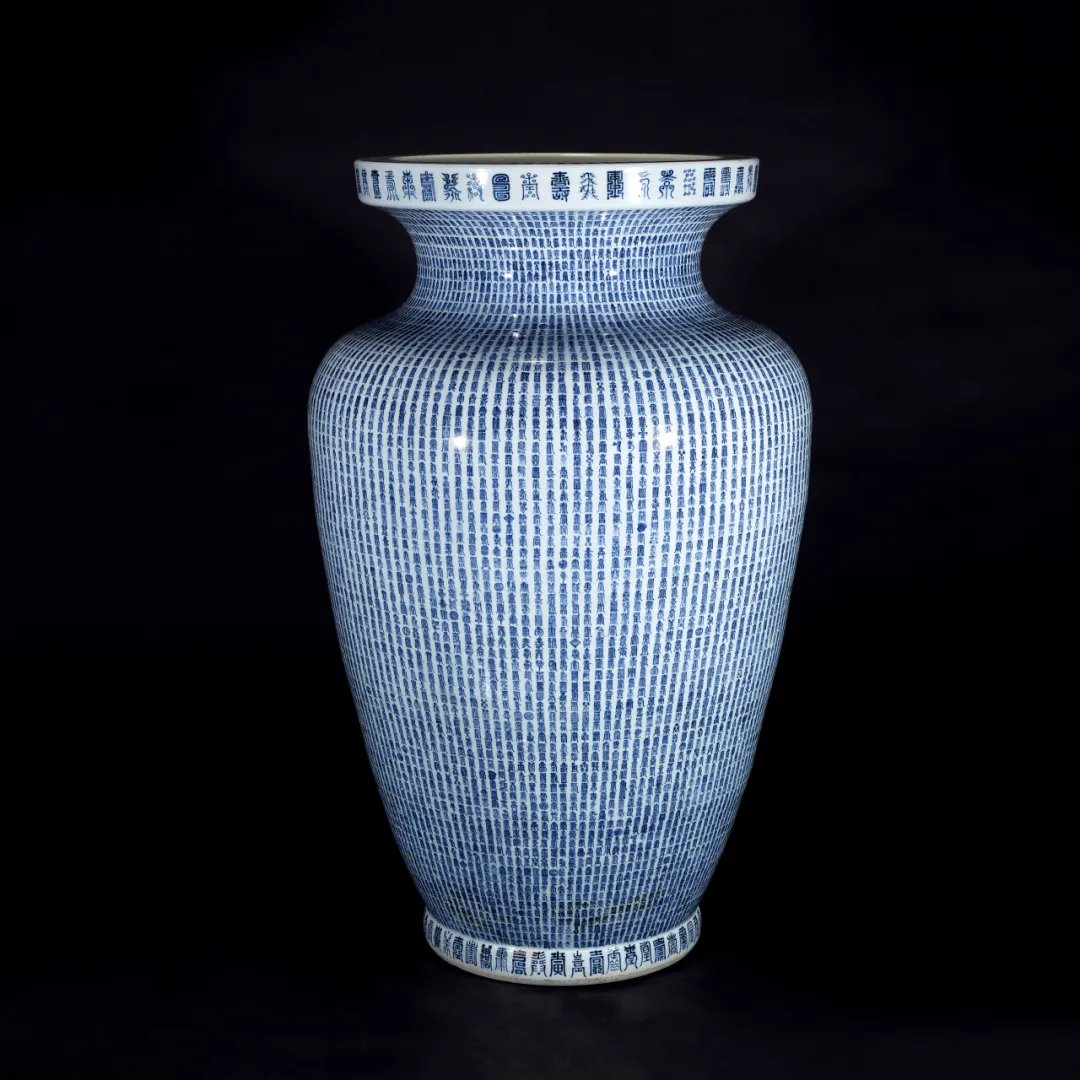
Qing Kangxi Wanshou Zun
Height 76.7 cm, diameter 38 cm
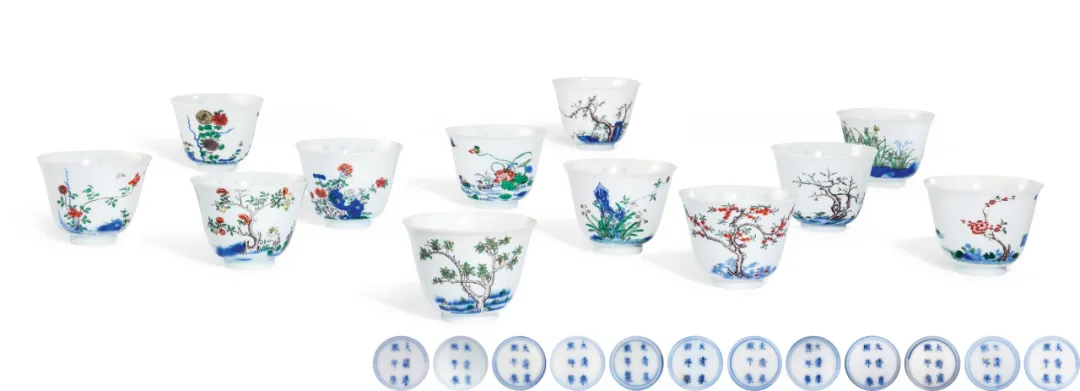
Qing Kangxi Five-Colored Twelve-Month Flower God Cup
Diameter 6.5-6.8 cm
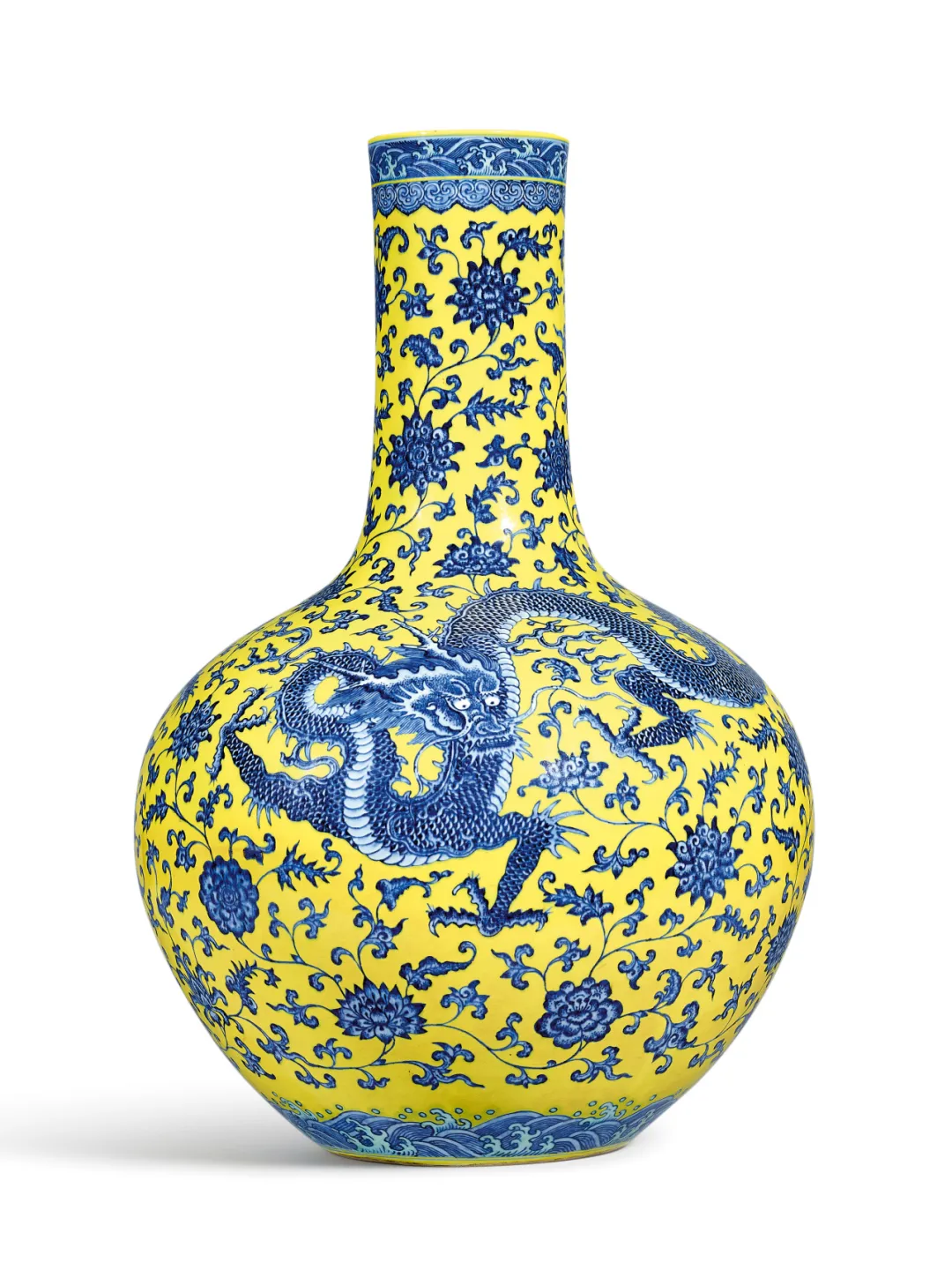
Qing Dynasty Qianlong Period Yellow Ground Blue and White Dragon Pattern Celestial Globe Vase
Height 60.8 cm
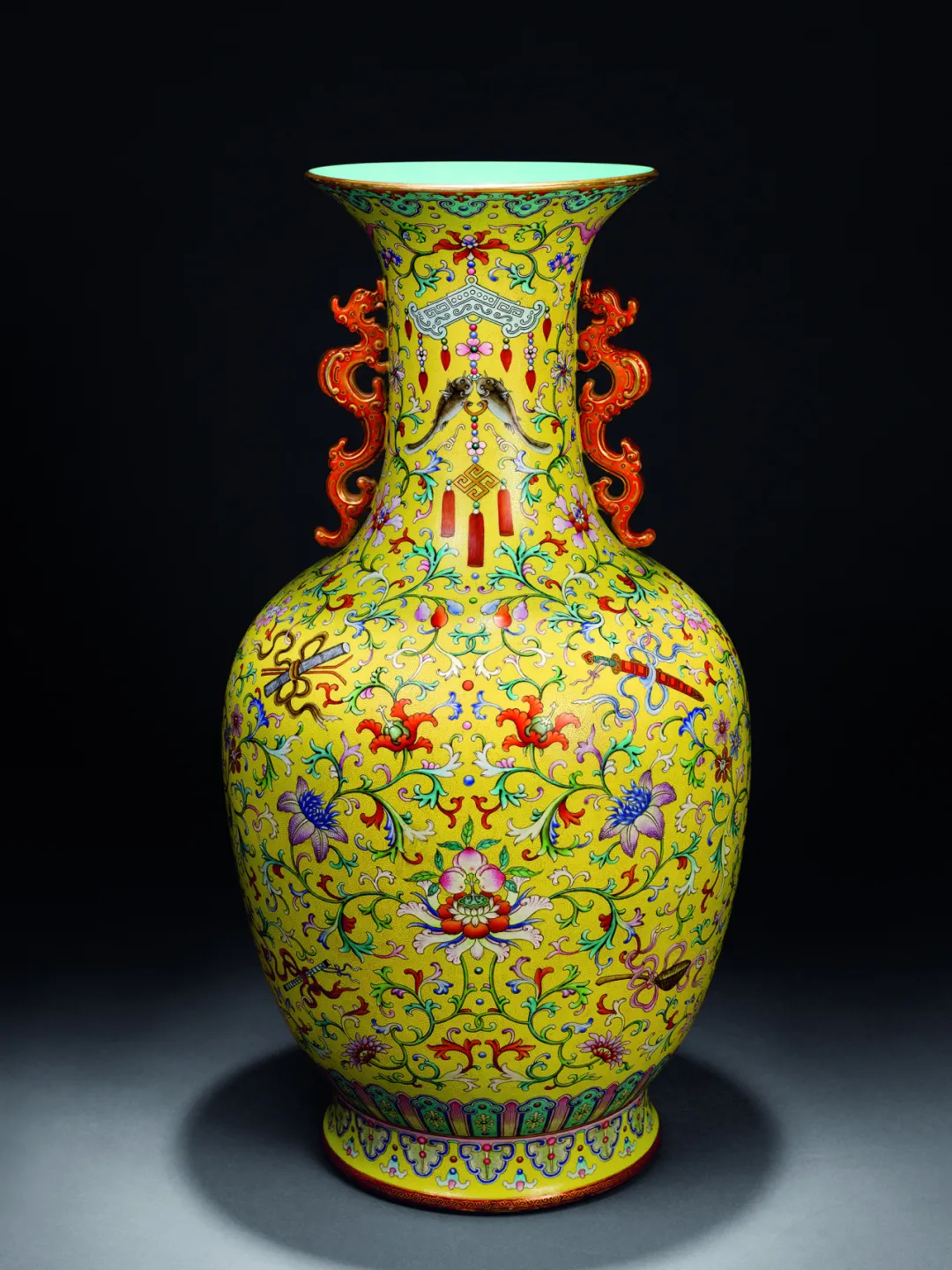
Qing Dynasty Qianlong Yellow Ground Foreign Colored Eight Immortals Double Dragon Ear Vase
Height 75 cm, mouth diameter 24.8 cm, foot diameter 26.5 cm
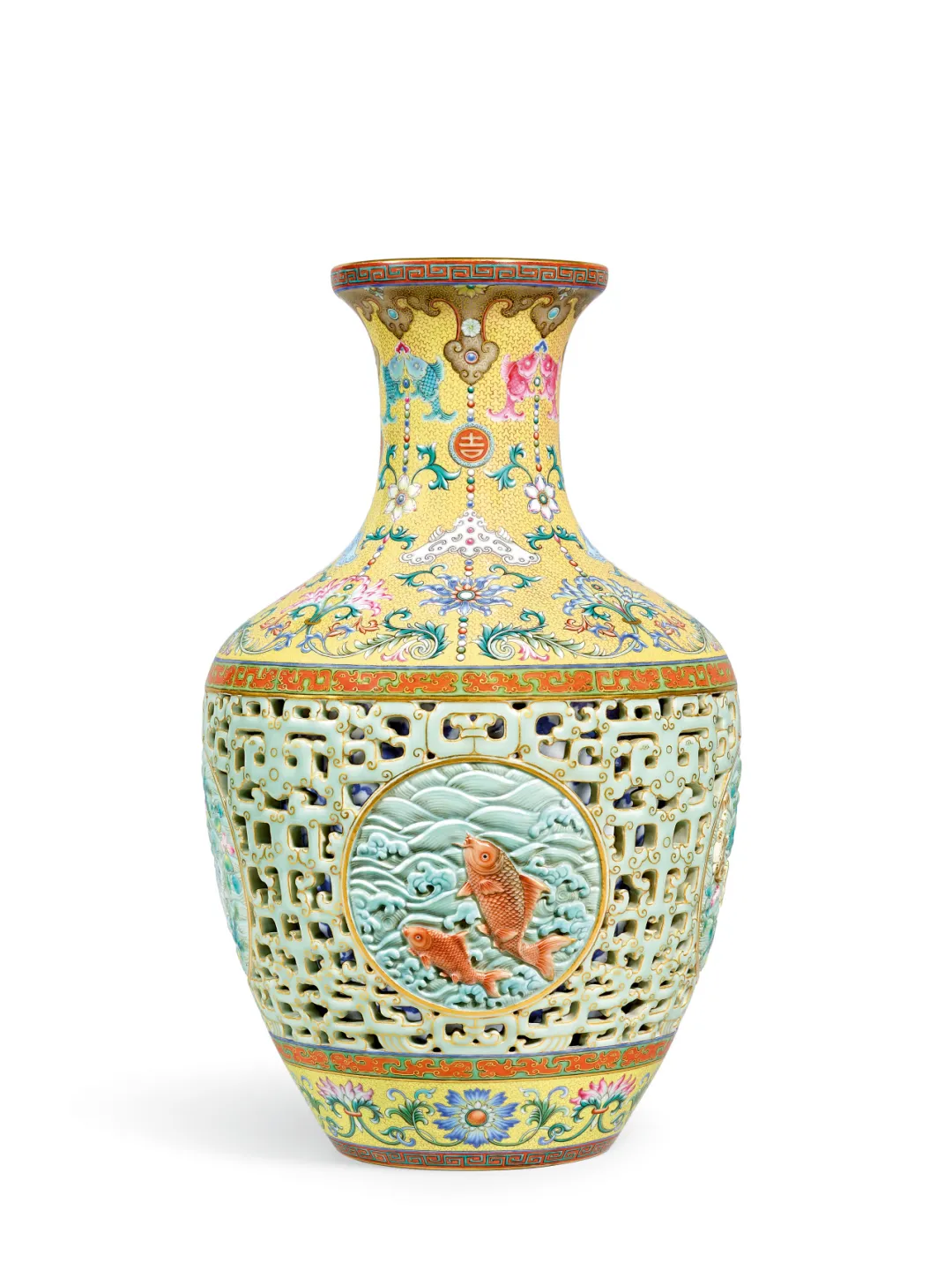
Qing Dynasty Qianlong Yangcai Yellow Ground Powder Green Dragon Sandwich Jiqing Yuyu Linglong Zun Height 40.8 cm
Part IIIThoughts without Evil
Religious belief is an important part of human spiritual civilization. It is closely related to spiritual activities such as art and philosophy, and also provides profound themes and connotations for art. Buddha statues are generally regarded as the concrete expression of Buddhist beliefs. Buddha statues in the Ming and Qing dynasties convey the core concepts of compassion, wisdom and enlightenment of Buddhism by shaping the images of Buddha, Bodhisattva, Arhat, etc. This section exhibits eight rare Buddhist cultural relics from the 11th century to the Ming and Qing dynasties.
The Tibetan bronze statue of a yogi from the 11th to 12th century is shown sitting in the lotus position, with his hands in the meditation mudra and his eyes wide open, staring forward, demonstrating the master's majesty and wisdom.
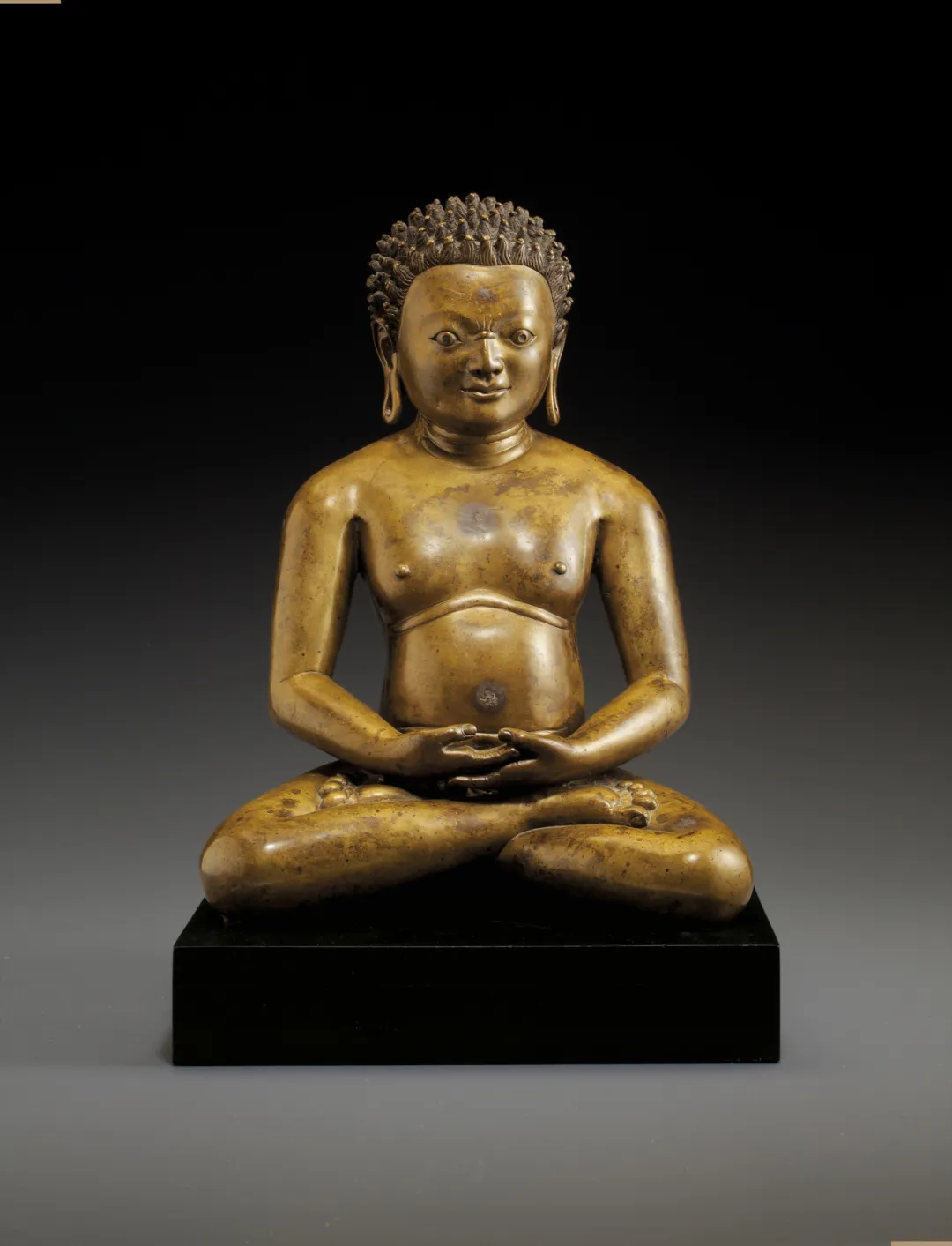
A bronze figure of a seated yogi, 11th-12th century (Tibet)
Height 34.2 cm
The red Yamadi embroidered thangka made by Emperor Yongle of the Ming Dynasty is embroidered with gold and colorful silk threads. It is brightly colored and exquisitely crafted, reflecting the extremely high level of Ming court embroidery. During the reign of Zhu Yuanzhang, the founding emperor of the Ming Dynasty, the policy of "ruling the country with Buddhism" was adopted, which led to the official support and development of Buddhist statue art. The early Ming Buddhist statues were full in shape and smooth in lines, showing the characteristics of Han Buddhism and reflecting the gentleness and solemnity of Confucian culture.
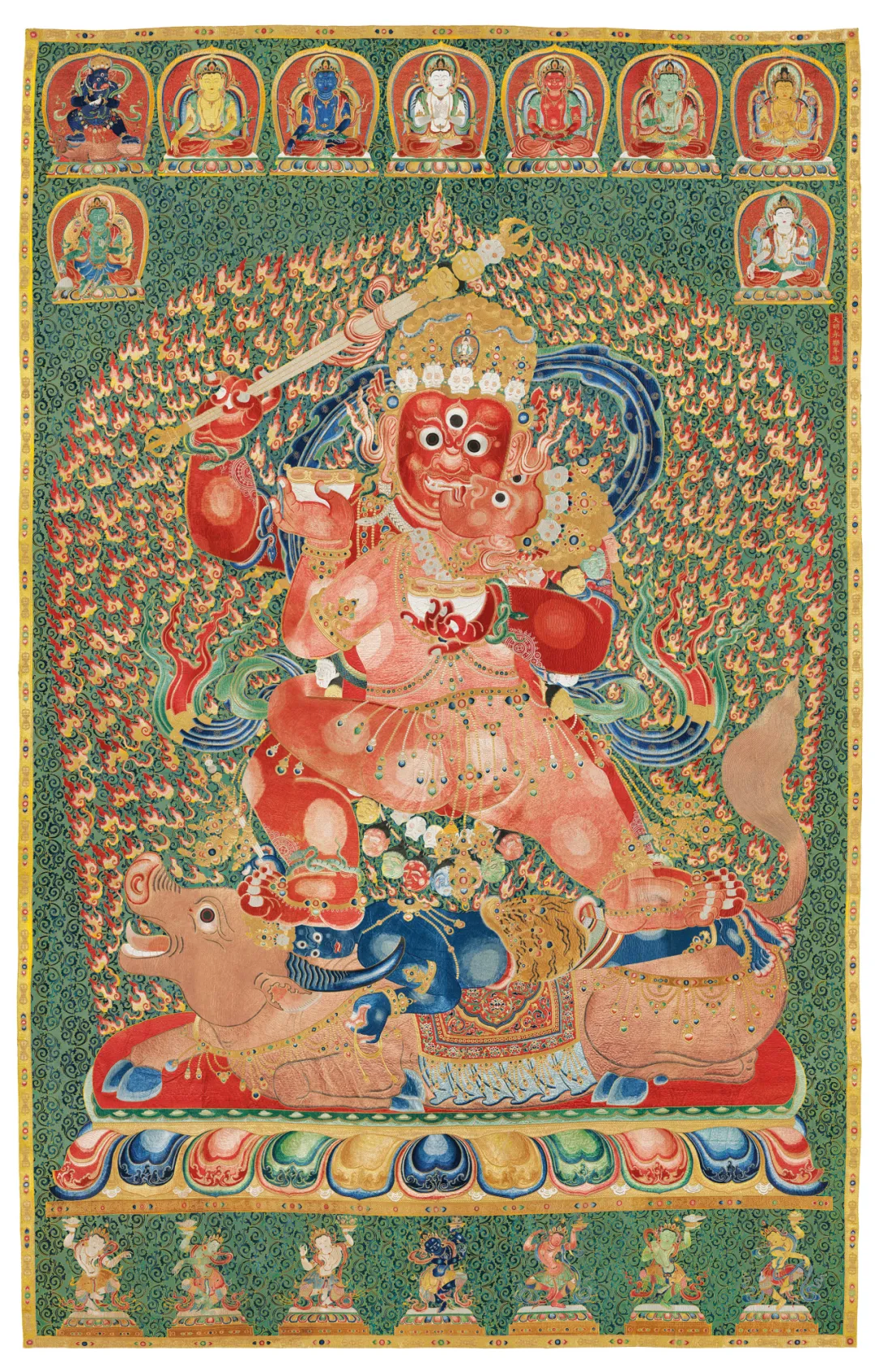
Ming Yongle Emperor Red Yamadi Embroidered Thangka
Length 335.3 cm, width 213.4 cm
Emperors Kangxi and Qianlong of the Qing Dynasty adopted an active policy of supporting Tibetan Buddhism. The Buddha statues at this time incorporated more elements of Tibetan Buddhism, with beautiful shapes and attention to detail. The design of the Buddha statues' costumes, accessories (such as necklaces and shawls) and pedestals reflected the aesthetic taste and craftsmanship of the time, and reflected the interactive relationship between the religious beliefs of the emperors of the Ming and Qing dynasties and social culture.
Part 4: Endless Treasures
"Endless Treasure" is the last section of the exhibition. As a concept derived from Buddhist philosophy, "Endless Treasure" has been endowed with multiple cultural connotations through historical evolution, especially in the practice of collectors of successive generations, showing a profound meaning beyond material accumulation. In the "Preface to the Red Cliff", Su Shi of the Song Dynasty used "Endless Treasure" to describe the beauty of nature, sublimating it from a religious context to a philosophical height, and proposing the aesthetic concept of "the Creator's Endless Treasure".
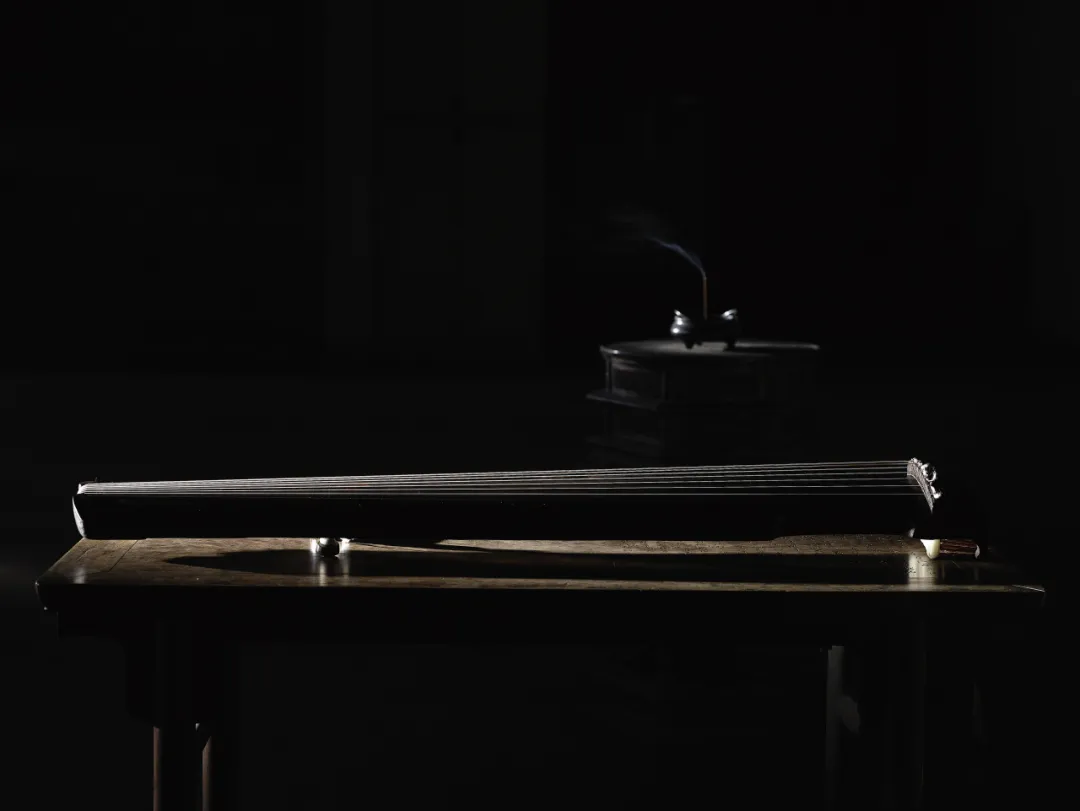
Late Tang-Northern Song Dynasty Taigu Yiyinqin
Length 111 cm
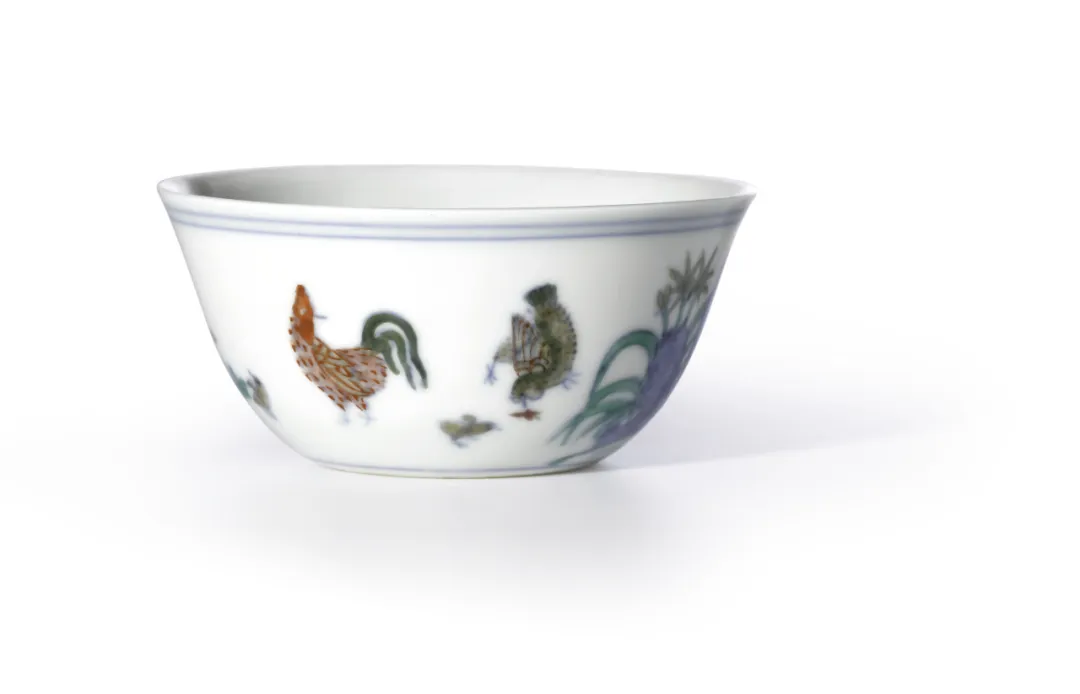
Ming Chenghua Doucai Chicken Cup
Diameter 8.2 cm
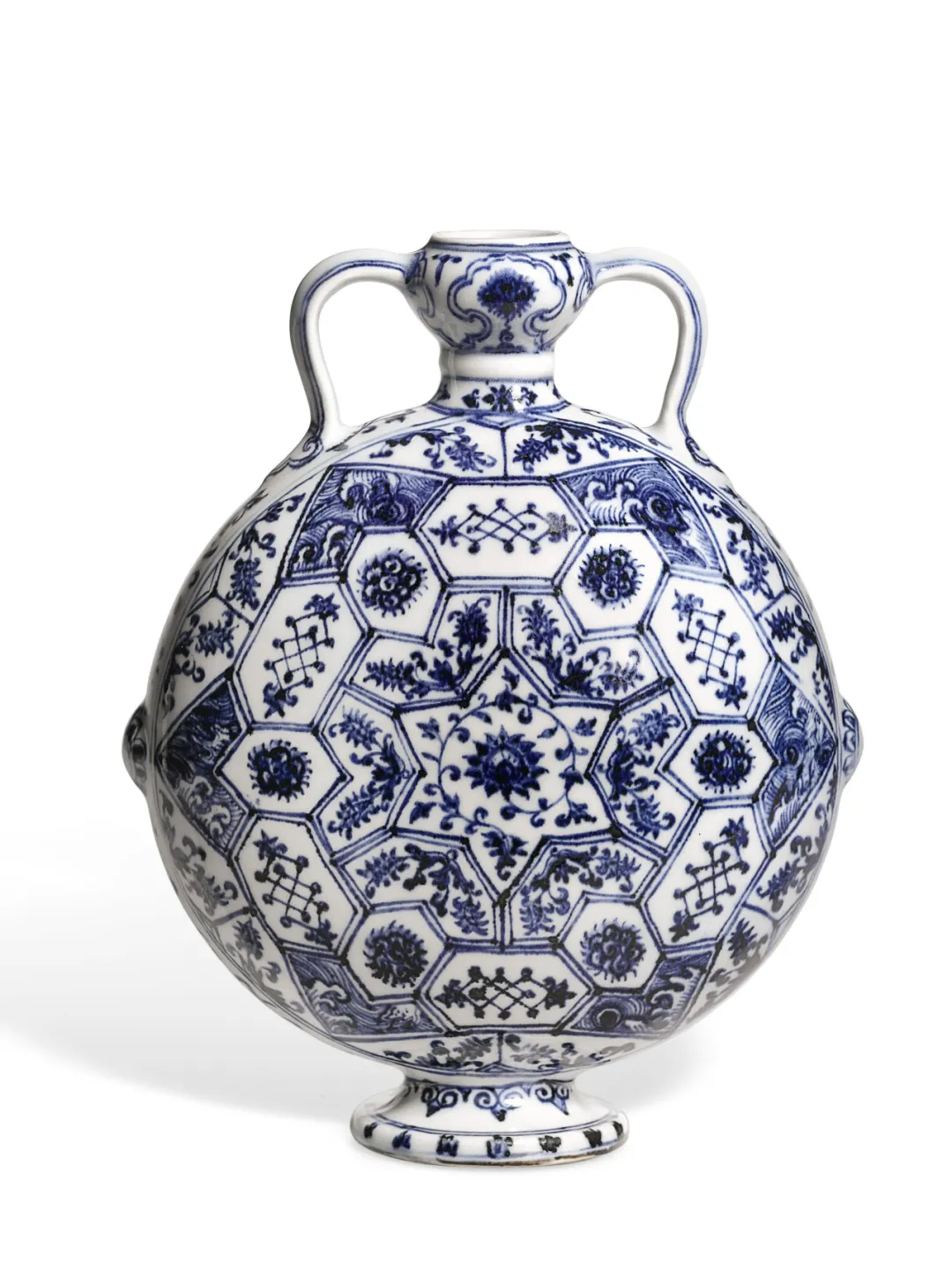
Ming Yongle
Flat pot with blue and white floral pattern and Ruyi handles
Height 24.5 cm
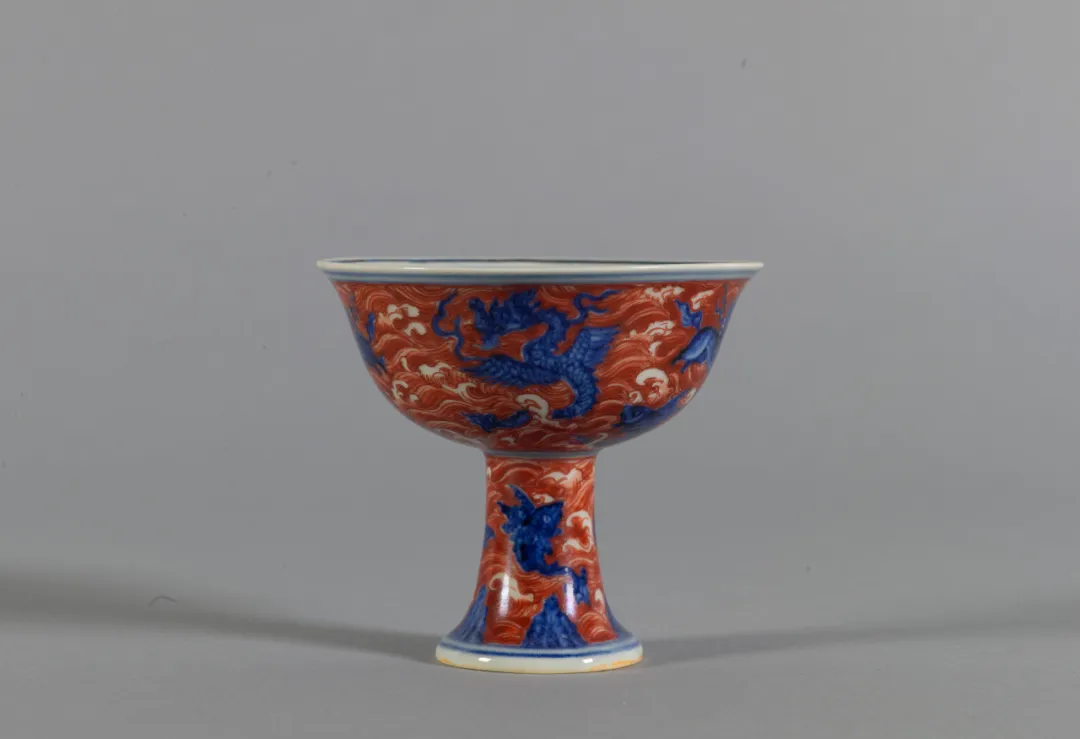
Ming Xuande
A high-footed cup with a blue-and-white alum-red pattern and a “sea beast” pattern
Height 9.9 cm
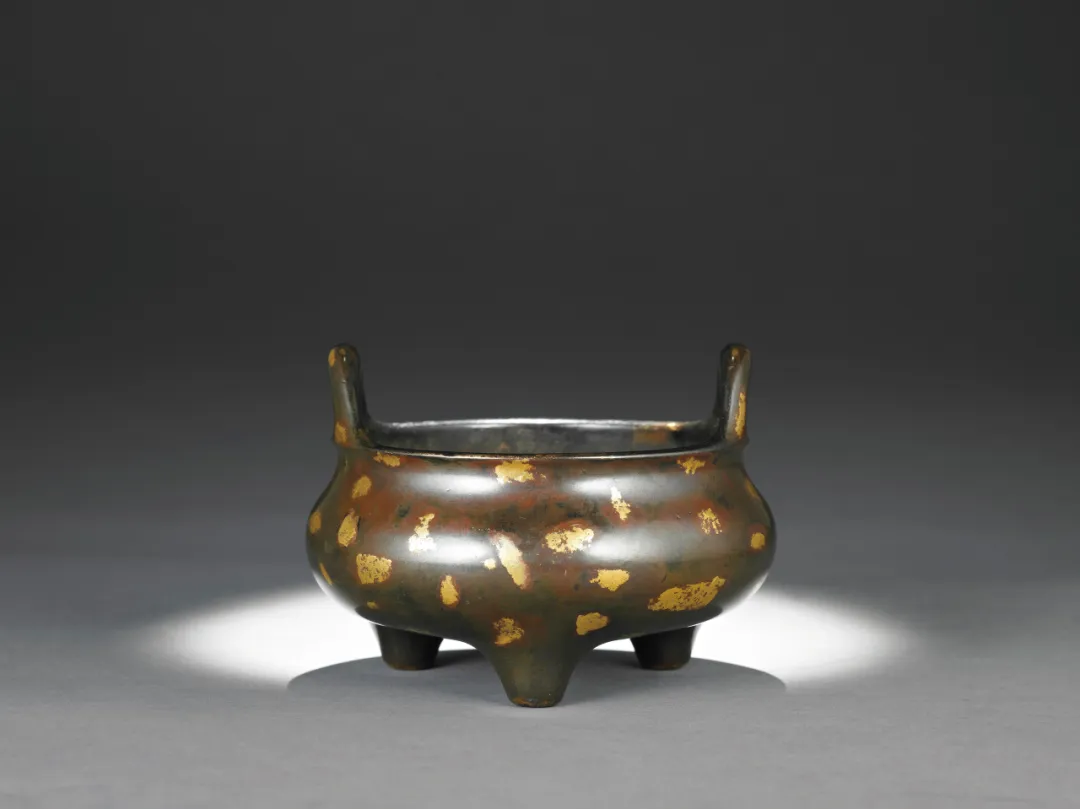
Ming Chongzhen
"Supervised by Qinglai in the winter month of the reign of Emperor Chongzhen" three-legged furnace with gold foil and sky-high ears
Ear height 10.3 cm, mouth height 8 cm, mouth diameter 12 cm
Song Huizong compiled the "Xuanhe Calligraphy Collection" and "Xuanhe Painting Collection", and made the collections "carriers of cultural memory" through cataloging; Emperor Qianlong of the Qing Dynasty compiled the "Shiqu Baoji" and "Secret Palace Pearl Forest" and other catalogs, showing the scale of his collections. It is the concept of endless treasures in the "endless collection". Collectors of all generations have transformed material accumulation into the continuation of cultural genes through systematic collection, theoretical construction and spiritual projection. Its significance far exceeds the artifacts themselves and has become a metaphor for the "endless life" of Chinese civilization. This concept shows that the real "treasure" is not in the depths of the warehouse, but in the cultural vitality that is constantly regenerated in intergenerational inheritance.
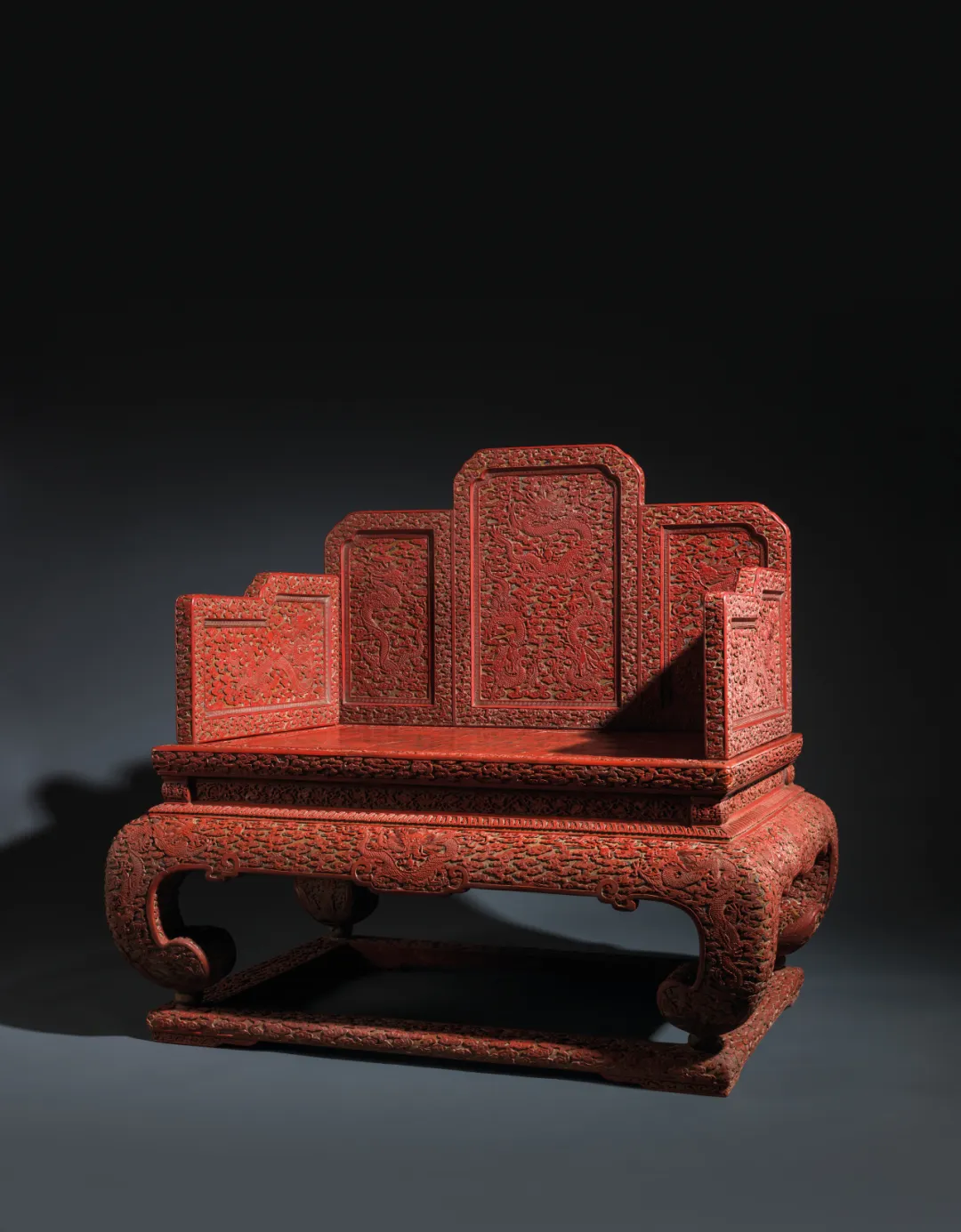
Emperor Qianlong of the Qing Dynasty, carved throne with dragon and cloud patterns
Length 111.1 cm, width 85.7 cm, height 115.5 cm
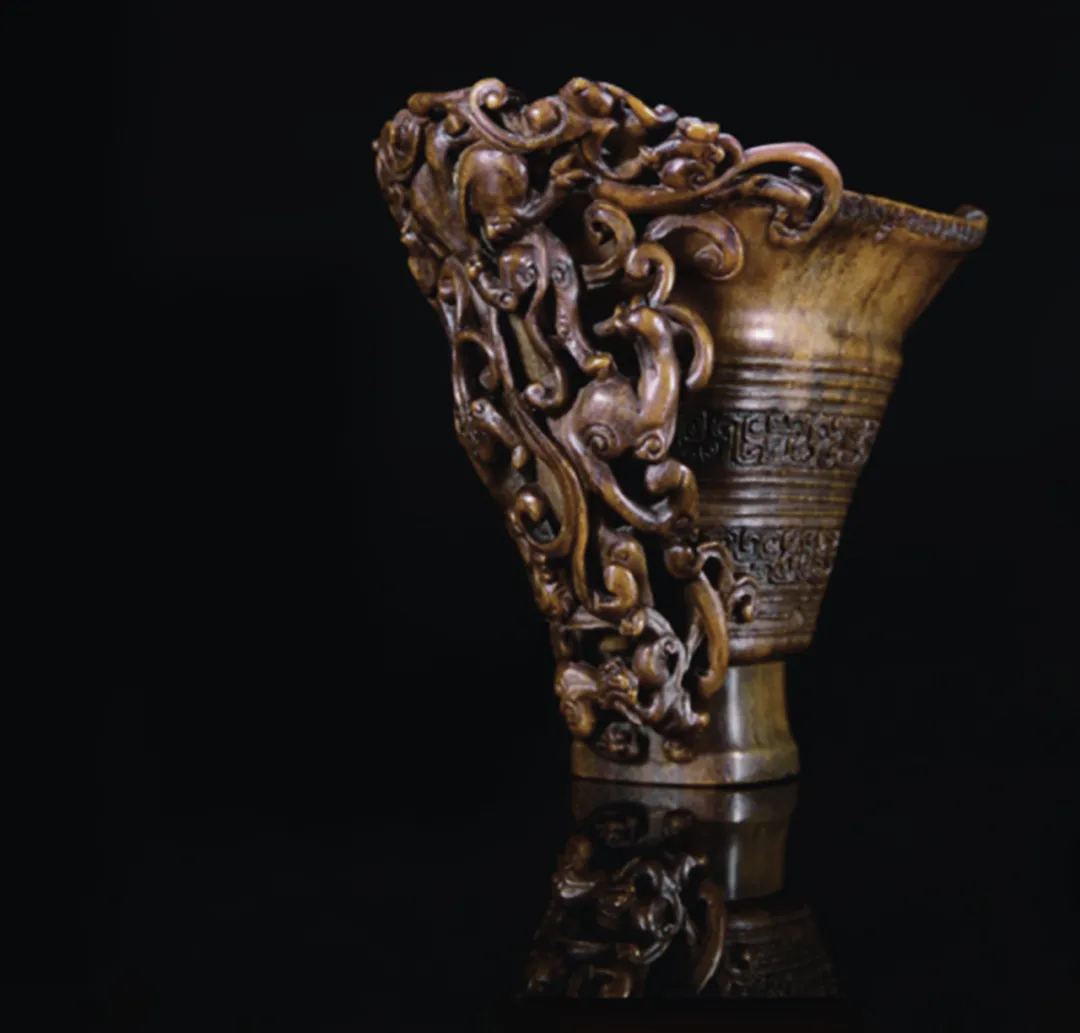
Early Qing Dynasty
A Hu Xingyue-marked rhinoceros horn cup with a dragon pattern
Diameter 16.5 cm
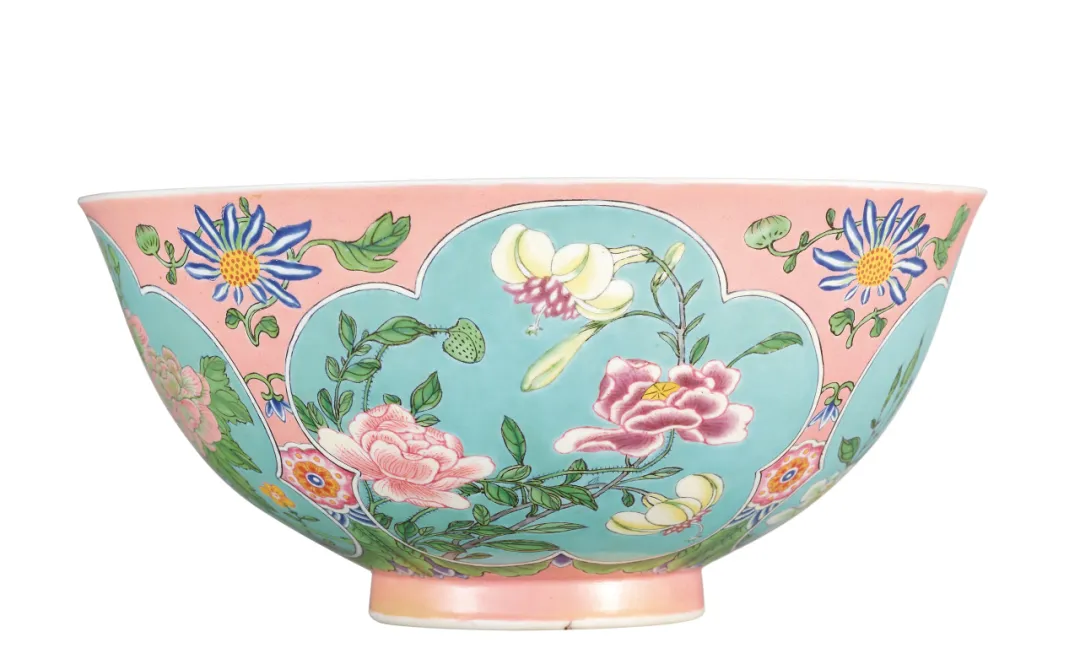
Qing Kangxi Pink Enamel Flower Bowl "Kangxi Imperial Design" Red Material Mark
Diameter 14.7 cm
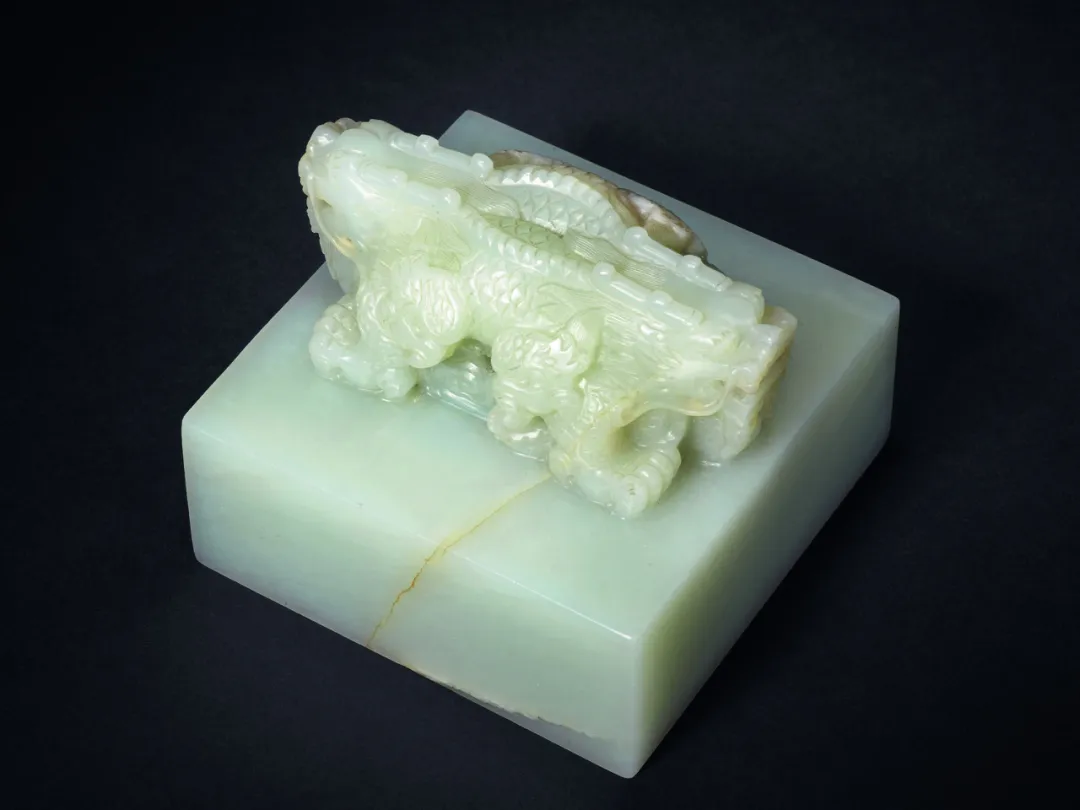
Qing Dynasty Qianlong "Chun Ou Zhai" white jade seal
Length 10.3 cm, width 10.3 cm, height 9.8 cm
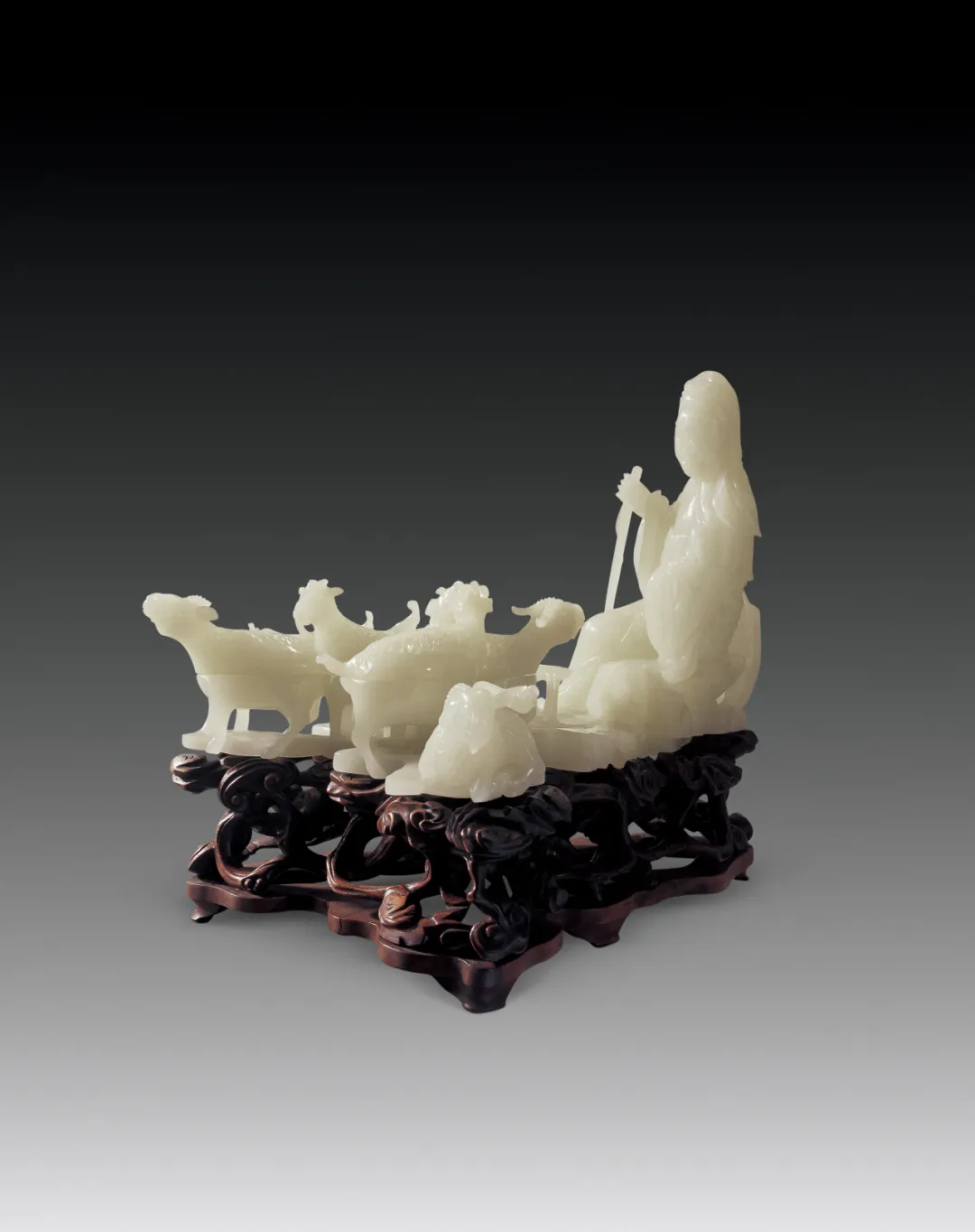
Qing Dynasty Qianlong White Jade Su Wu Herding Sheep Ornament
Height 13.5 cm
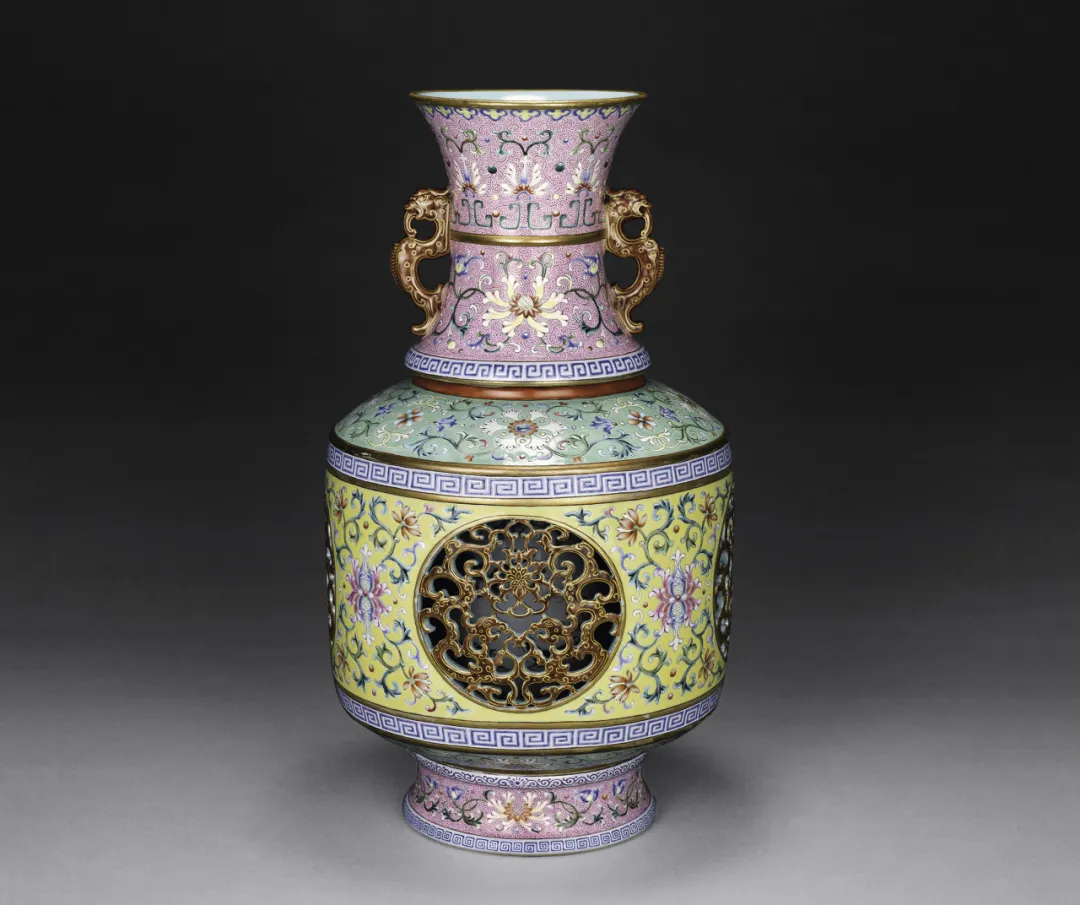
Qing Dynasty Qianlong Period Famille Rose Hollow Round Dragon Pattern "Always Bringing Happiness" Rotating Heart Vase
Height 38.1 cm, mouth diameter 12 cm, foot diameter 13.5 cm
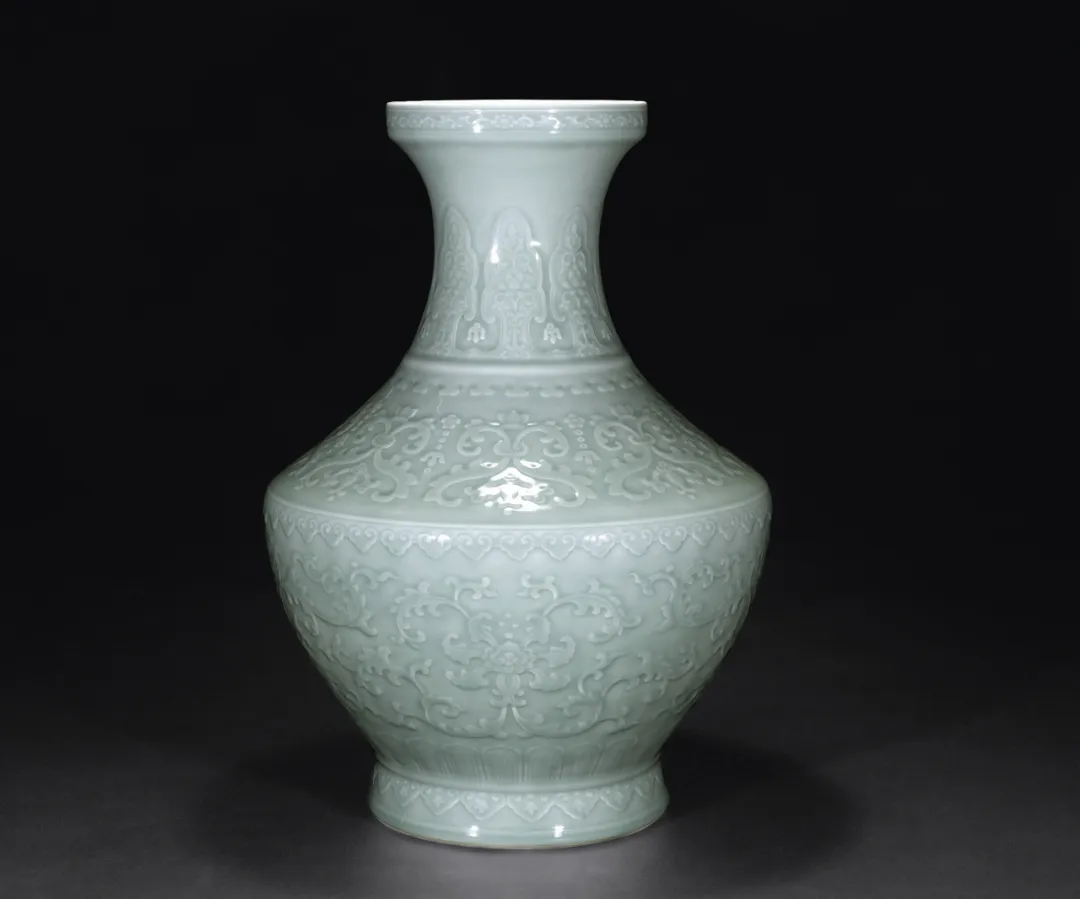
Qing Dynasty Qianlong Period Powder Green Glaze Relief Flower Pattern Large Pot
Height 53 cm, mouth diameter 19 cm, foot diameter 22.5 cm
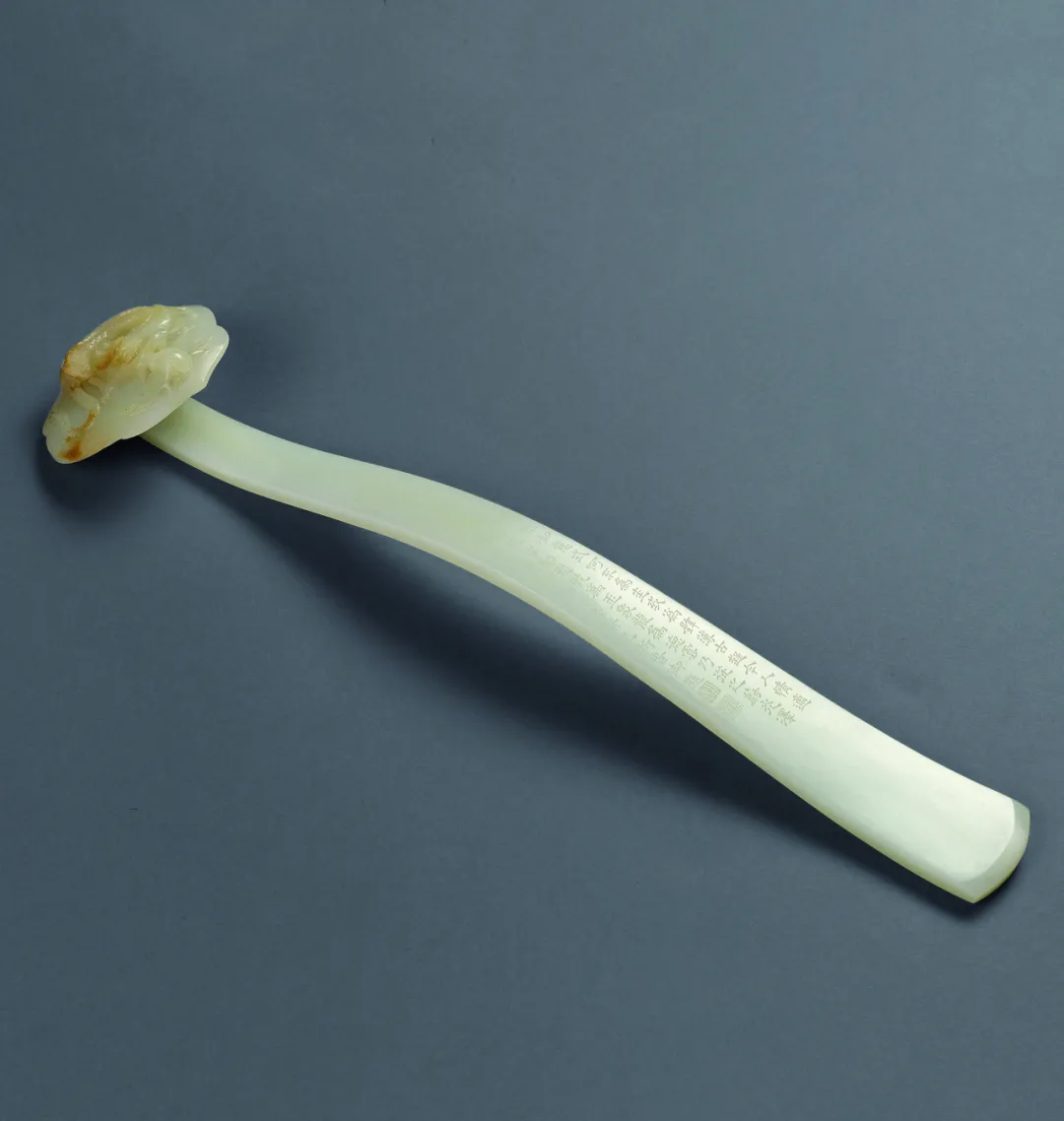
Qing Dynasty Qianlong Khotan White Jade Ruyi with Imperial Poem "Chasing Pearls and Clouds"
Length 37.5 cm
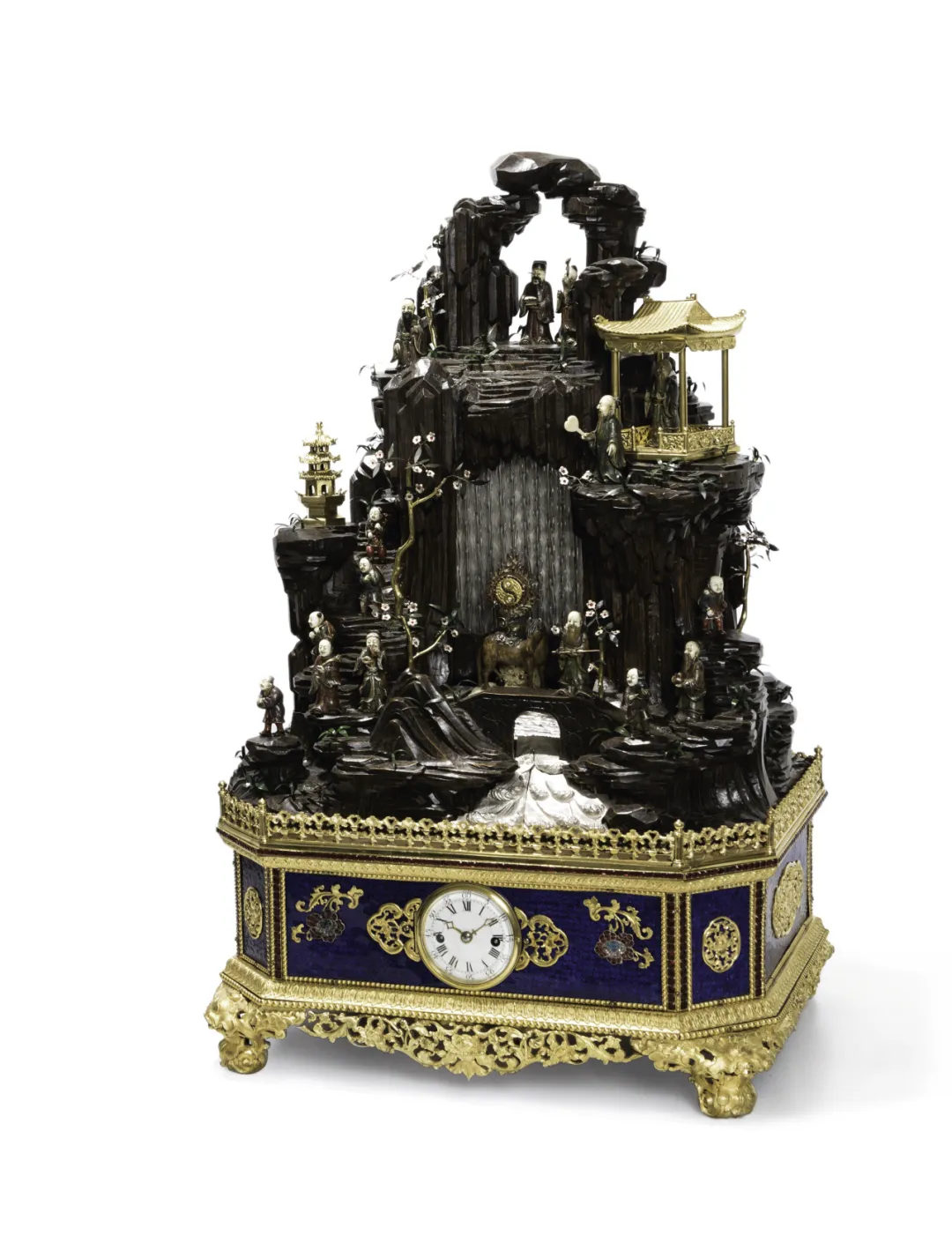
A Gilded Bronze Table Clock with the Eight Immortals of Penglai, Qianlong Period of the Qing Dynasty
Height 74 cm
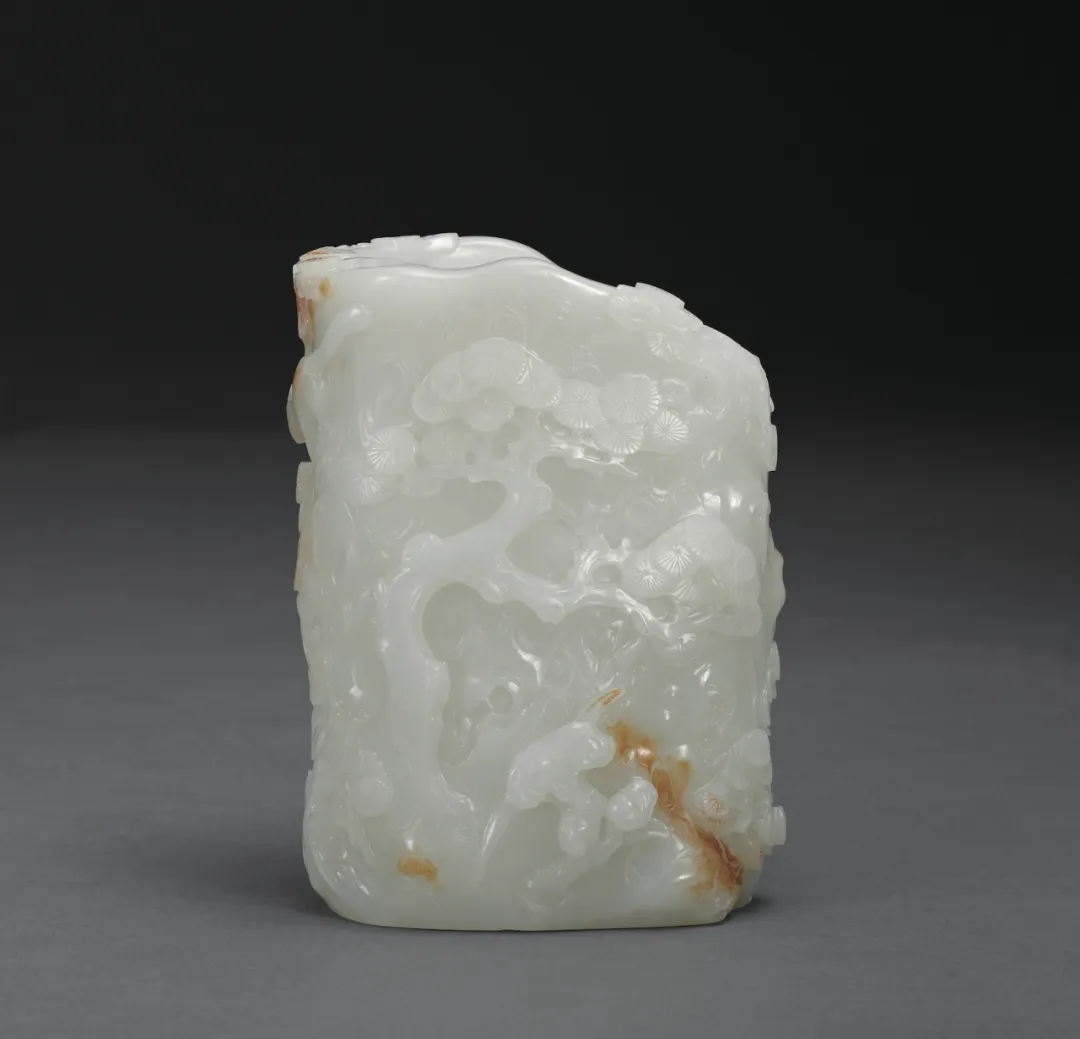
Qing Dynasty Qianlong Imperial White Jade Brush Holder Carved with Ruyi, Evergreen Pine Branches and Auspicious Rat Pattern
Height 15 cm
Exhibition View
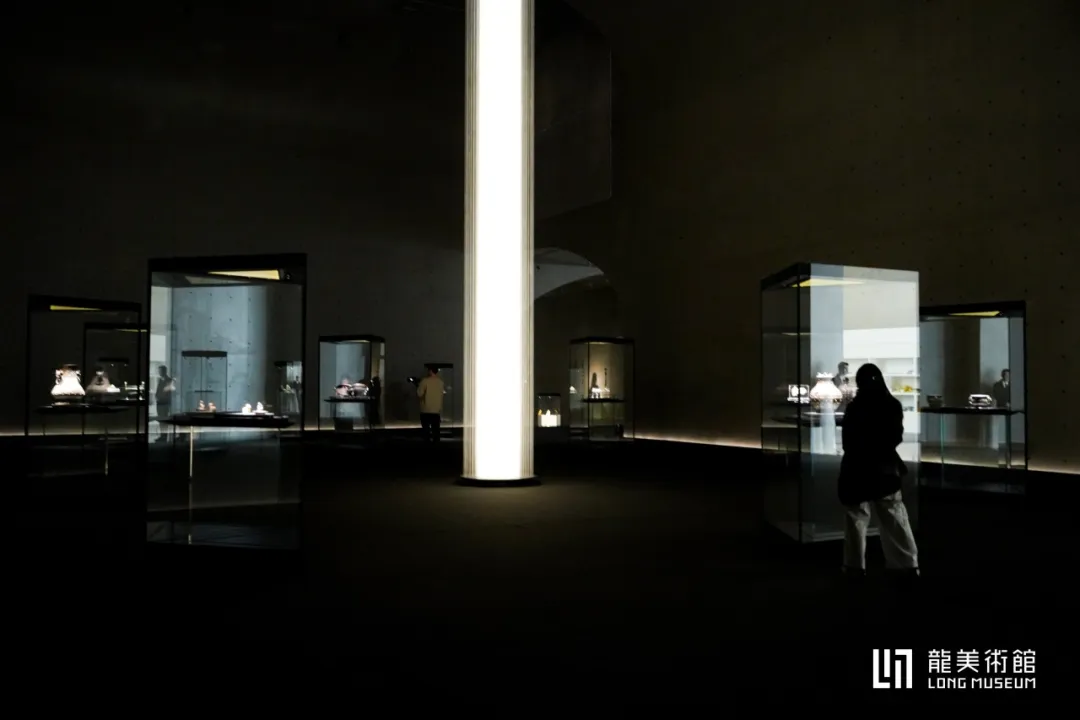
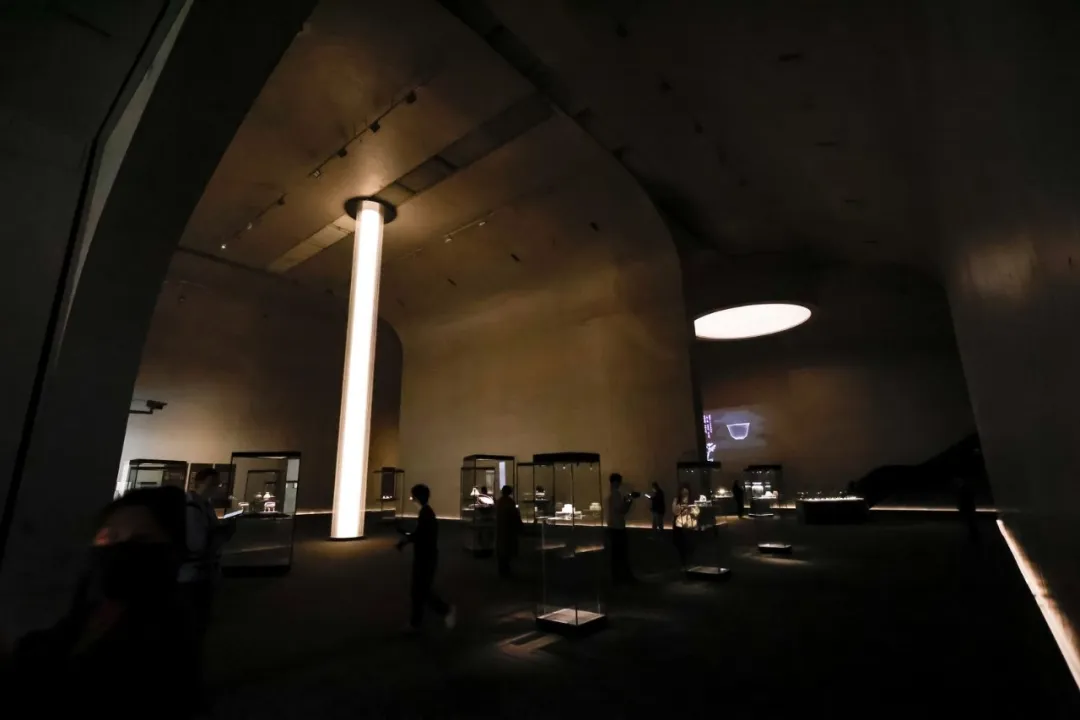
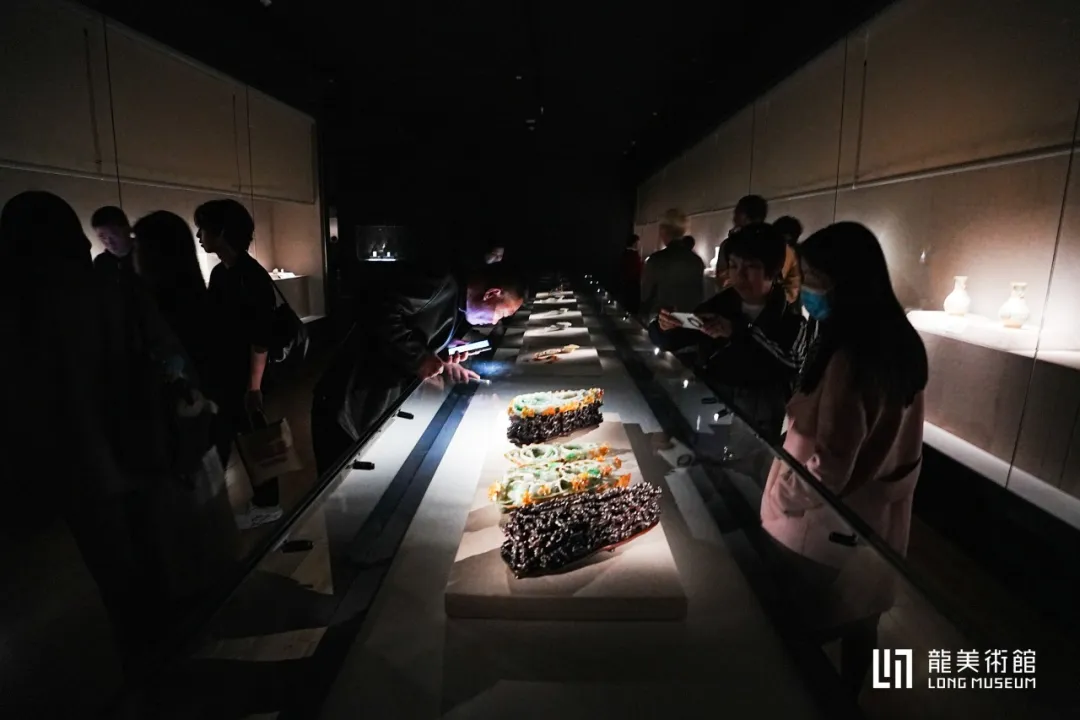
"The Grand View of Heaven and Earth - Imprints of Civilization Across Time" exhibition site
Today, this idea has finally been put into practice. Liu Yiqian said: "For Long Museum, we are just the guardians of these cultural relics and treasures. We hope that our 3,000-year-old culture can be displayed in such a modern reinforced concrete space in a modern way, transcending time and space."
The cultural relics on display are all heavyweight masterpieces. The Ming Chenghua Doucai Chicken Cup, which has been longed for by the audience, will be on display again. In addition, more precious cultural relics are also on display to the public for the first time: oracle bone inscriptions from the Shang Dynasty (34 examples), involving sacrifices, conquests, hunting, praying for rain, and tribute; the bronze Xi Jia plate from the fifth year of King Xuan of the Western Zhou Dynasty, engraved with an inscription of 133 characters, is the oldest national treasure; the bronze square pot with inlaid gold and silver inlaid with glazed nipple patterns from the Warring States Period, with elaborate craftsmanship and gorgeous colors, represents the pinnacle of luxurious craftsmanship in the Warring States Period; the Han Dynasty kneeling official jade lamp and plate, the only visible jade carving lamp figurines excavated and handed down so far, are of great archaeological value; the Northern Song Dynasty Ru kiln sky blue glaze washbasin, the glaze is like solidified fat, the sky blue is still green, the ice cracks are clear, the shape is elegant, and it presents the ultimate The aesthetics of the Song Dynasty; the large Yuan blue-and-white jar with water waves, clouds, dragons and lotus flowers, with a steady shape, glazed inside and outside, with a white glaze and blue, is an extremely rare Yuan blue-and-white porcelain handed down from generation to generation; the posthumous seal of the Empress Renxiaowen of the Hongxi and Yongle periods of the Ming Dynasty, with a green jade dragon button, is the only posthumous seal in the Ming Dynasty Taimiao collection, and has important historical significance; the five-color twelve-month flower god cups of the Kangxi period of the Qing Dynasty, are a set according to the number of lunar months, with one flower for one month, and are accompanied by poems, and have always been regarded as treasures of the Kangxi imperial kiln; the throne with carved cloud dragons and auspicious and abundant patterns made by Emperor Qianlong of the Qing Dynasty, decorated with nine dragons, cloud bats and lotus patterns, reflects the emperor's pursuit of peace and prosperity...
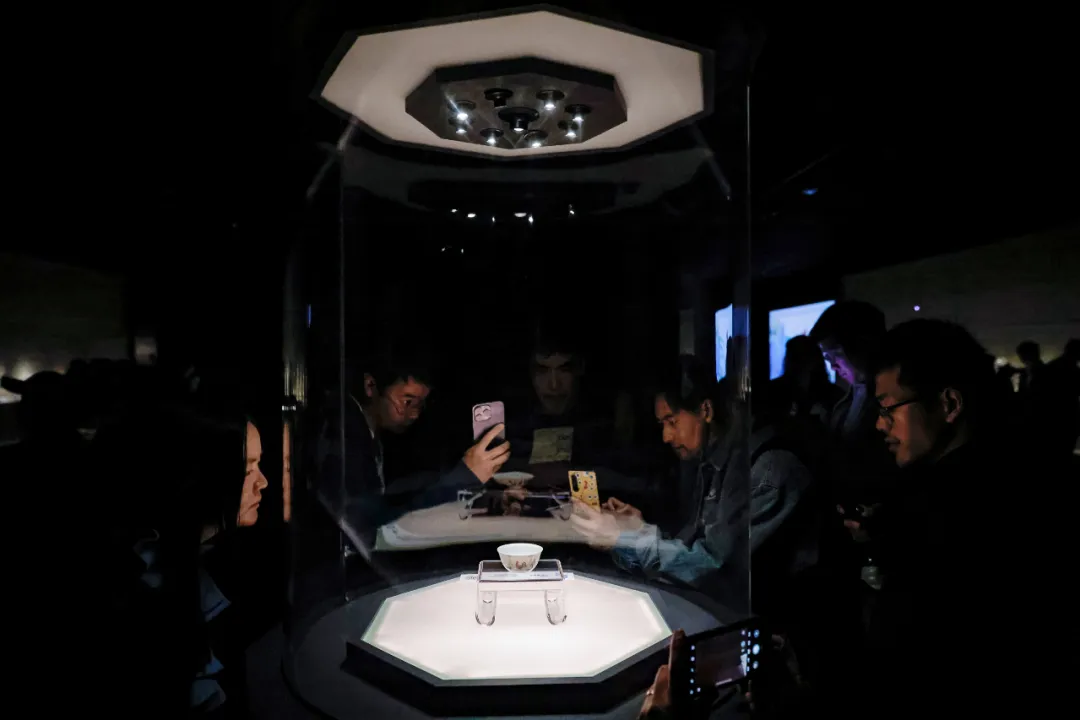
The exhibition site of "The Grand View of Heaven and Earth - Imprints of Civilization Across Time"
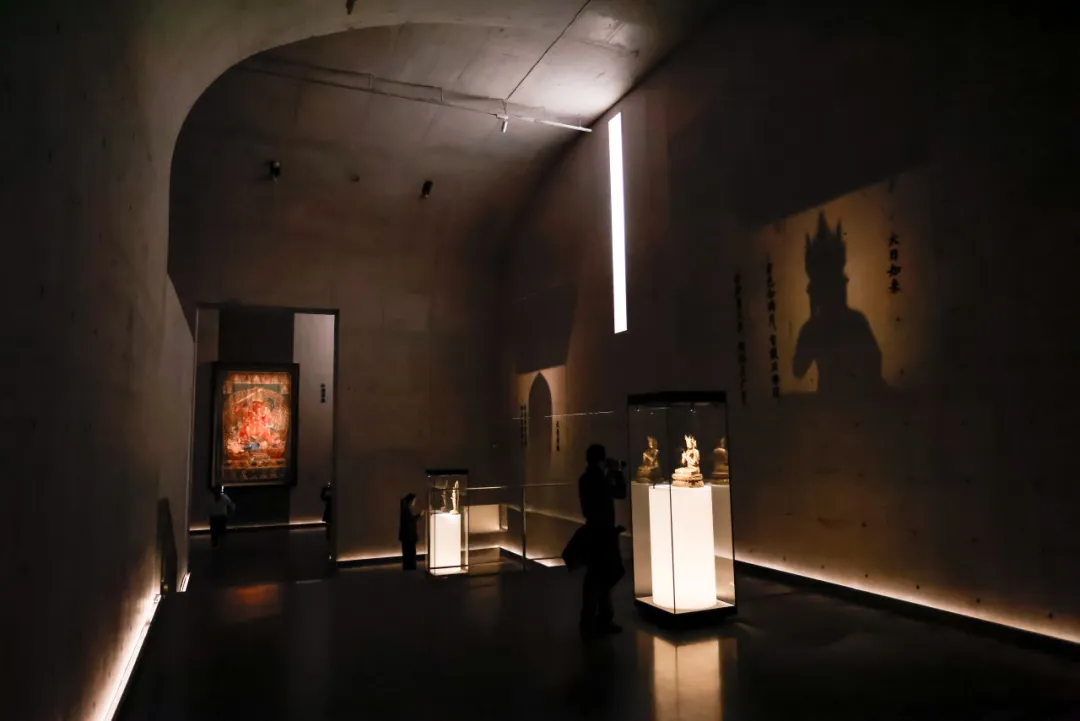
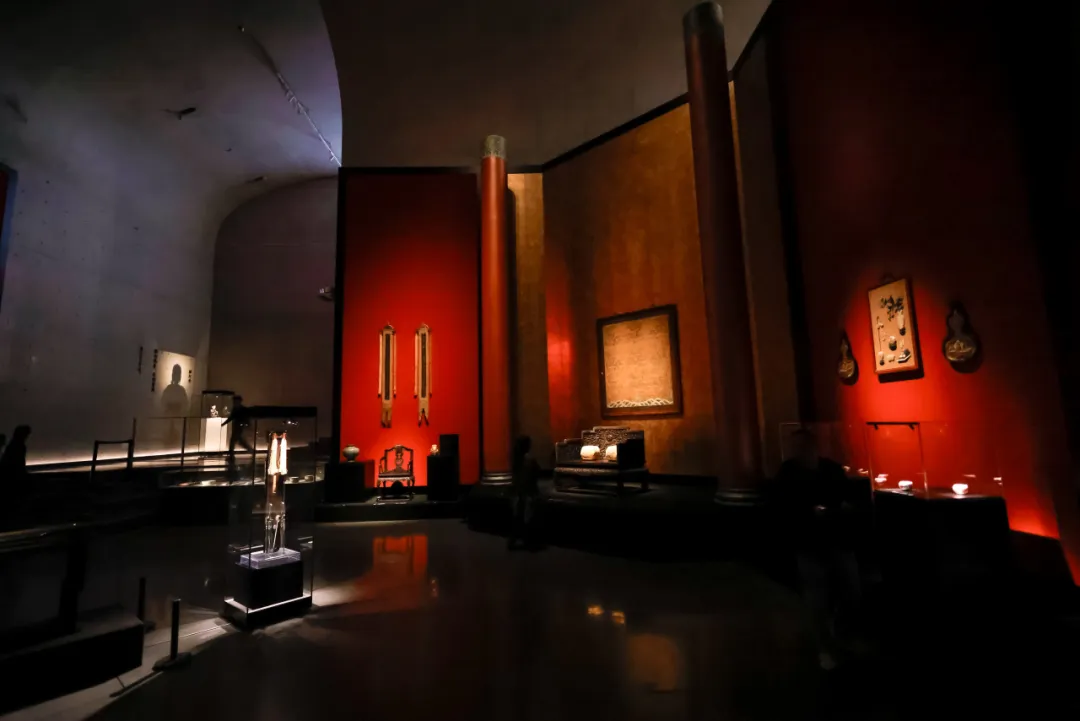
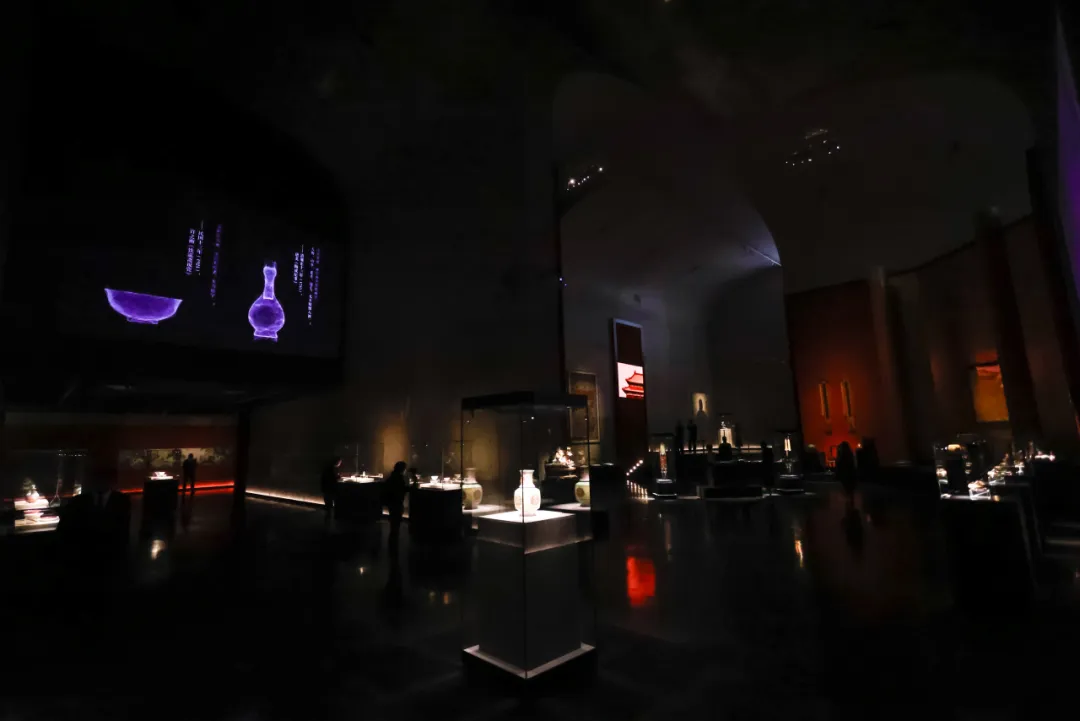
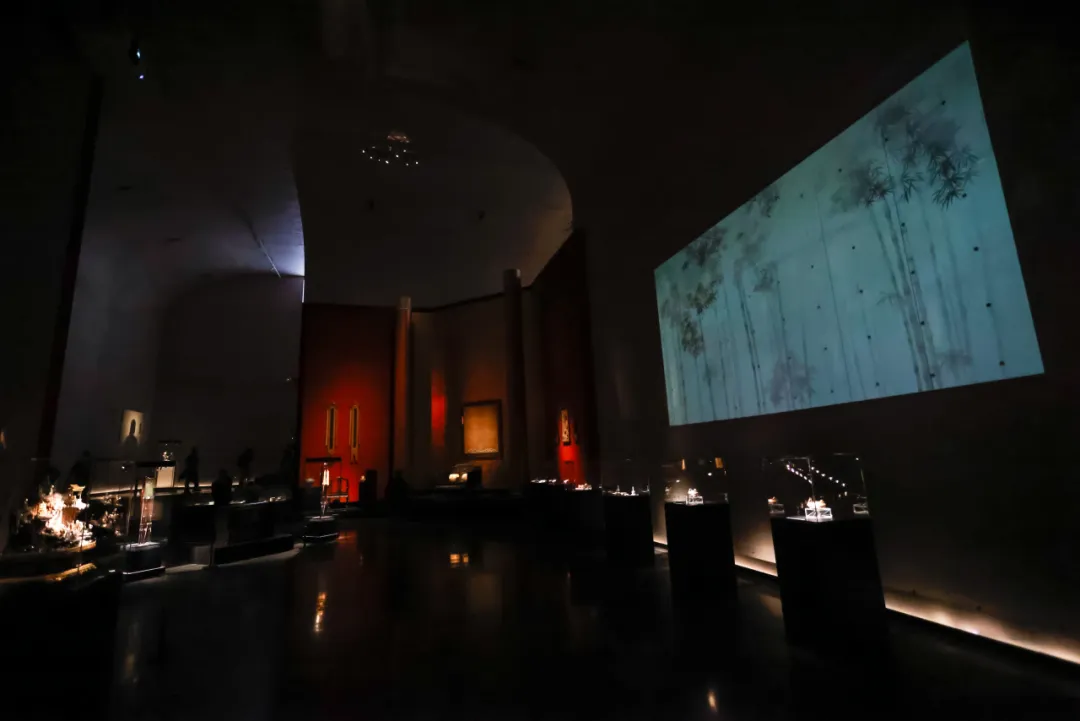
"The Grand View of Heaven and Earth - Imprints of Civilization Across Time" exhibition site
Image information source|Long Museum