
In-depth | Lu Hong: Source of Heart and Source of Vision – On the Light of the Times – An Art Dialogue Exhibition between Li Keran and Li Yushuang, Father and Son
The exhibition "Light of the Times: An Art Dialogue Between Li Keran and Li Yushuang, Father and Son," hosted by He Art Museum and co-organized by Ting Hsin Charity Foundation, officially opened on November 28, 2025, at He Art Museum in Wuhan. Curated by Lu Hong, Executive Director of He Art Museum, with young curators Xu Baicheng and Li Sha responsible for the sections on Li Keran and Li Yushuang respectively, the exhibition uses "light" as its core keyword. Through over 200 exhibits encompassing artworks, manuscripts, models, photographs, and video materials, it constructs an artistic dialogue space between the two generations of artists.
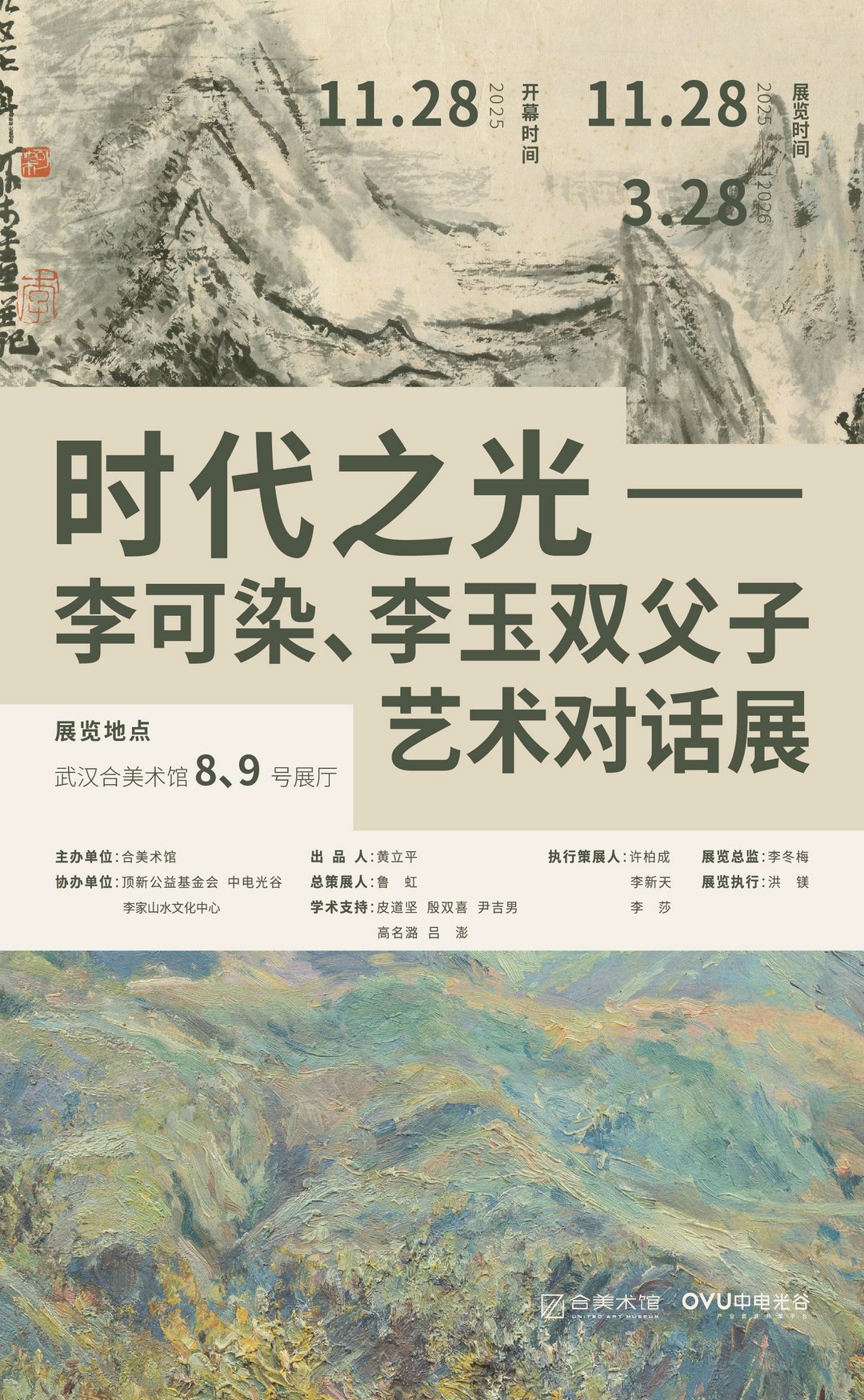
The exhibition aims to trace and present the artistic explorations of Li Keran and his son Li Yushuang, focusing on their remarkable practices in advancing the modern transformation of Chinese painting through differentiated artistic paths in different historical periods. It profoundly demonstrates the artistic pursuits of these two generations of artists, who, against the backdrop of the integration of Chinese and Western art and the intertwining of art and science, both upheld spiritual inheritance and dared to innovate visually. Further in-depth discussions can be found on [the website/platform name - missing from original text].The following is the text of Lu Hong's article, "The Source of the Heart and the Source of the Eye: On the 'Light of the Times: Art Dialogue Exhibition of Li Keran and Li Yushuang, Father and Son'".
Looking back at the history of Chinese painting over the past century, it's easy to see that every artist with a sense of mission inevitably faces the unavoidable question of how to effectively integrate Chinese and Western art. This means correctly drawing upon beneficial elements from both traditional and Western art, based on new cultural contexts, aesthetic ideals, and individual characteristics. The reason the He Art Museum is hosting the "Light of the Times—A Dialogue Between the Art of Li Keran and His Son Li Yushuang" exhibition is because the artistic explorations of the Li family have not only answered this question well in their own ways but also constitute a perfect "dialogue" framework with historical depth. This event is believed to be of great significance for our research and understanding of the evolution of Chinese painting over the past century!
So why is this exhibition titled "The Light of the Times"?
This is mainly based on the following considerations:
First, from a technical perspective, the theme of "light" directly refers to the two artists' artistic representation of "light" in their paintings.— For example, Li Keran's "Backlit Landscape" incorporates the light and shadow effects of Western sketching into ink painting; Li Yushuang, on the other hand, starts from the aesthetic pursuit of "spirit resonance" or "imagery" in Eastern aesthetics and reshapes the Western scientific observation method of natural light and color and some related expression methods.
Secondly, from a spiritual and contemporary perspective, "light" symbolizes enlightenment, creation, and guidance.The title of this exhibition signifies that they brought new "light" and inspiration to their respective eras, which, to some extent, illuminated a new path for the development of Chinese painting.
Secondly, from the perspective of dialogue, the explorations of the father and son are like the refraction of a connected "holy light" through different prisms.—In presenting both continuity and variation within the spectrum, they collectively constitute a magnificent panorama of the pursuit of modernity in Chinese art: In terms of continuity, Li Yushuang, like his father, is incredibly devout to nature, extremely persistent in innovation, and actively responds to the contemporary theme of Sino-Western integration; in terms of variation, the father focuses more on "breaking out" from within tradition, while the son focuses more on "integrating" into tradition from a scientific and Western perspective. Therefore, the artistic problems and solutions they face are entirely different, which can be described as: similarities within differences or differences within similarities.
The following section will analyze the artistic pursuits of the father and son, combining the two parts of this exhibition.
one
Li Keran's emphasis on the issue of "sketching" is traceable.
According to historical records, the inaugural issue of *People's Fine Arts* (later *Fine Arts*) in 1950 specifically invited Li Keran, Li Hua, and Hong Yiran to write articles on the reform of Chinese painting. Although the three authors approached the subject from different angles, they all emphasized the need to use realistic methods to reflect the vibrant reality of life and to strive to serve the workers, peasants, soldiers, or the political cause. It is certain that this discussion, while setting the tone for the development of "New Chinese Painting," also made sketching an important way to reform traditional Chinese painting. [1] Subsequently, Li Keran practiced what he preached, continuously sketching in various places and holding some related exhibitions. For him, sketching was actually a method of observing or studying nature, and it was precisely because he transformed theoretical discussions into vivid visual presentations that he profoundly influenced the modern transformation of Chinese landscape painting.
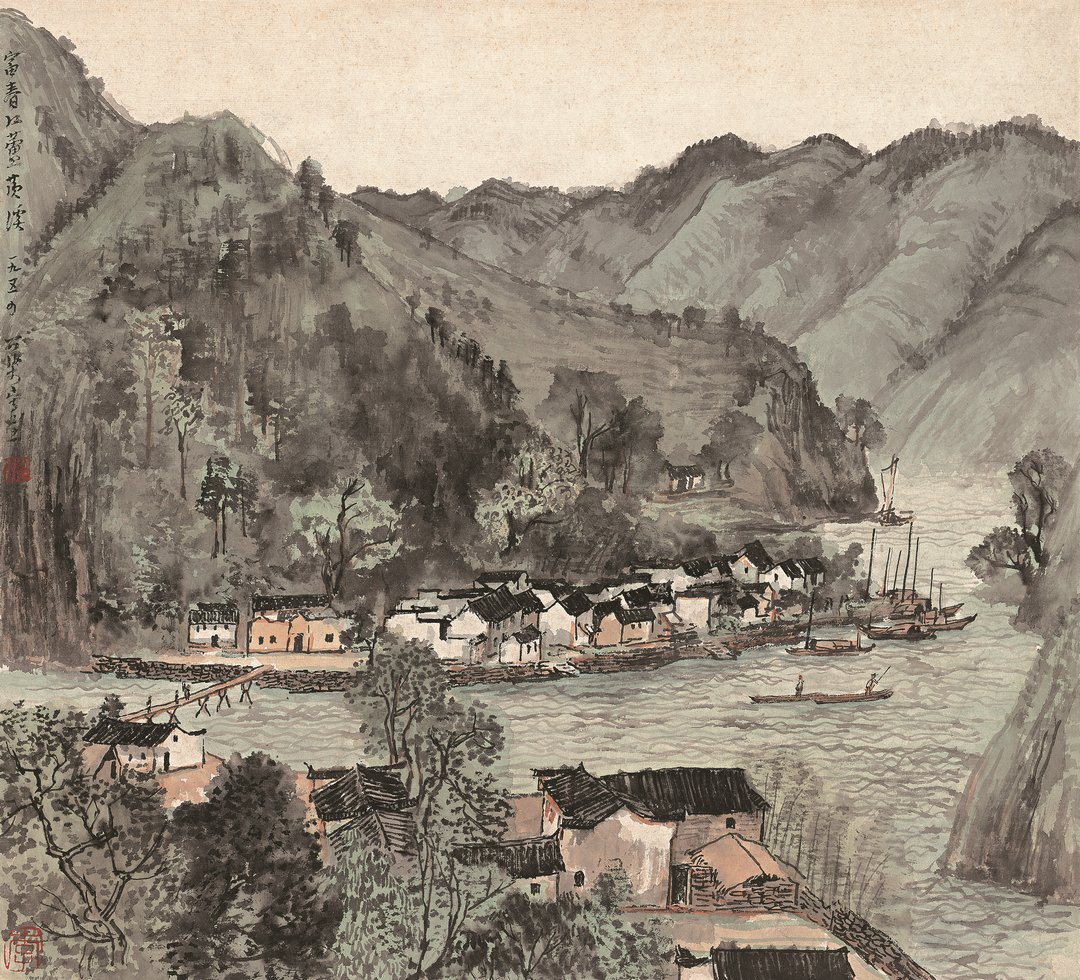
Li Keran
Every house is in a painted screen
40.5 × 44.5 cm
Paper ink and color
1954
For example, in 1954, after receiving sponsorship from the magazine *New Observer*, he embarked on his first long-distance sketching trip in the first half of the year, lasting three months, from Jiangnan to Huangshan, filling his basket with sketches. In 1956, he again embarked on a long-distance sketching trip, traveling to Jiangsu and Zhejiang, traversing the Yangtze River, passing through the Three Gorges, and immersing himself in nature, lasting eight months, covering tens of thousands of miles, and creating nearly 200 paintings. He also developed from "sketching from nature" to "creating from nature." In 1959, he went to Guilin to sketch. In September and October of the same year, the China Artists Association held the "This Land So Rich in Beauty: Li Keran's Ink Sketch Exhibition" in Beijing. His works have toured eight major cities including Shanghai, Tianjin, Nanjing, Wuhan, Guangzhou, Chongqing, and Xi'an. In December 2011, the Beijing Fine Art Academy Art Museum held the "A Thousand Difficulties, One Easy – Li Keran's World Series Exhibition (Sketching)"... Perhaps for the reasons mentioned above, whenever Li Keran's historical status is discussed, some believe that his brilliance lies in his perfect fusion of Western realism techniques with traditional Chinese brush and ink, coupled with his extraction of new brush and ink language and artistic conception from nature. This resulted in the creation of the "Li Family Landscape" paradigm, which is both profound and majestic, yet full of life and poetry. Based on this, some scholars emphasize that sketching is the foundation of all visual arts, and nature is the artist's best teacher. To create great landscape paintings in the new era, one must emulate nature and master the fundamentals of sketching. I largely agree with this view, but I also feel that its expression is somewhat simplistic. Specifically, it's easy to misunderstand that Li Keran's "sketching" merely incorporated Western techniques of perspective and light and shadow while drawing on traditional ink painting methods. Without clarification, this misconception will continue to spread.
In my opinion, the sketching method created by Li Keran, in addition to attaching great importance to in-depth observation and careful study of nature, also has a deep blood connection with the traditional Chinese "traveling and viewing" and "memory painting". It is precisely because he made a good transformation on this basis that a unique "dynamic mental image sketching method" was formed. Li Keran's sketching notebook recorded his observation method of the Li River: "When climbing high, record its momentum; when the boat is moving, observe its texture". I think this creative method is similar to the superposition state in quantum physics. The result is that the microscopic effect of the eye and the macroscopic structure of the eye are presented in one painting at the same time. Obviously, this is completely different from the "Western sketching" method, that is, painting what the naked eye sees from a fixed viewpoint. For example, in the work "Li River Scenic Spot", [2] the ripple texture of the bamboo raft in the foreground is obtained by squatting and sketching, while the S-shaped direction of the river needs to be created based on the imagination of climbing high.
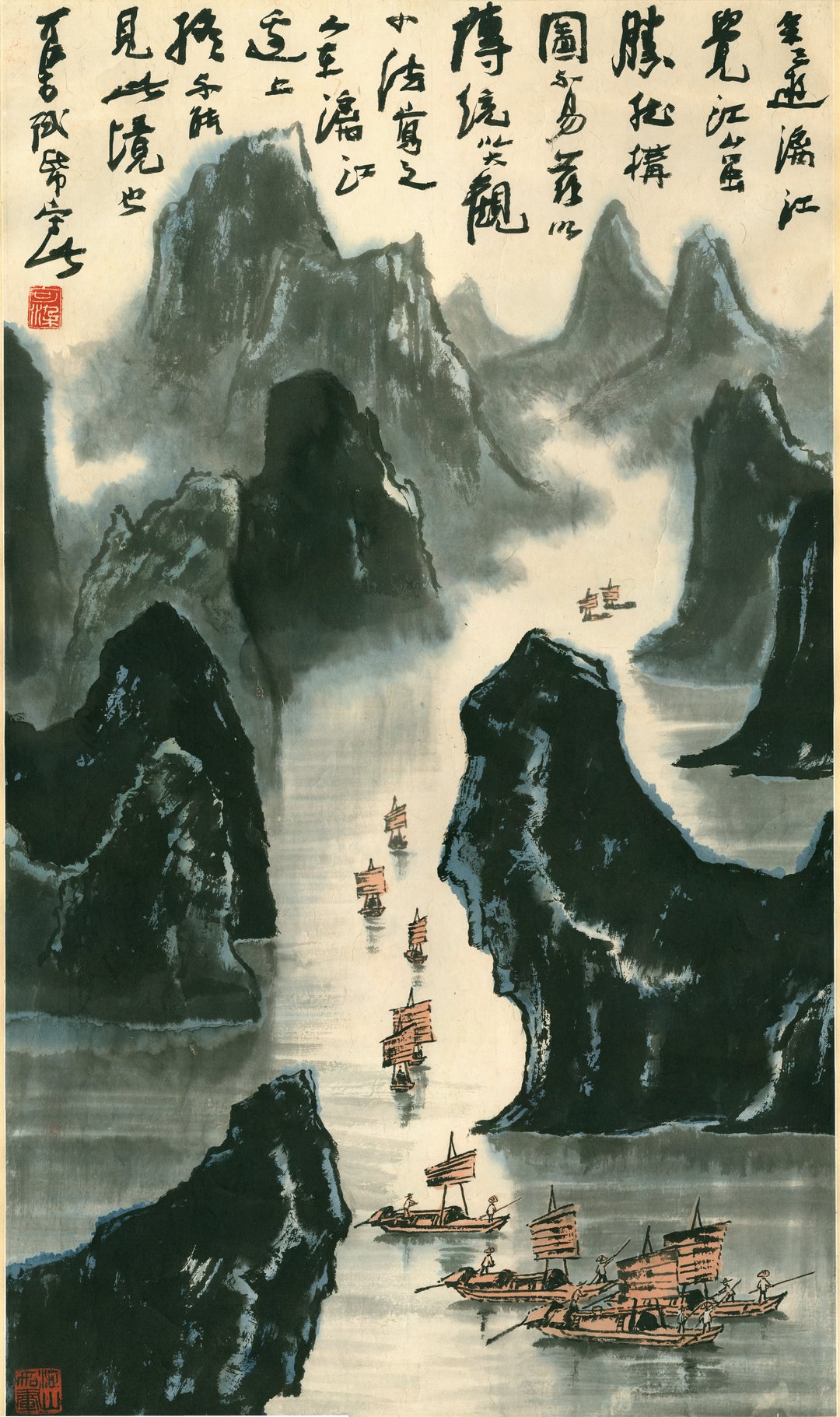
Li Keran
Li River
81.7×48.3cm
Ink on paper
1973
Furthermore, in order to achieve the effect of "inspiration and enlightenment" during sketching and to possess the ability to capture natural objects in an imagery-like manner, Li Keran frequently practiced visual persistence. His diary entry from 1957 records a process of gazing at the Li River for 15 minutes before closing his eyes to paint. This artistic experiment of "learning from nature and finding inspiration within" can be seen as a modern translation of the traditional "traveling and observing" methodology. If we analyze it further, we can even argue that Li Keran was actually undertaking a revolution that integrated Western and traditional visual cognition—that is, establishing an active visual cognitive system through three modern transformations: sketching from life, visual memory, and spatial reconstruction. This differs from Shi Tao's empiricist approach of "searching out every peak to make drafts," and also from Lang Shining's simple grafting of Chinese and Western techniques—it is closer to the rebirth of the Tang dynasty poet Zhang Yanyuan's concept of "the idea precedes the brush, the painting fully expresses the idea" in the new era.
The above discussion focuses more on Li Keran's exploration of Chinese and Western observation methods or compositional techniques. Below, we will discuss how he combined traditional ink painting techniques with Western realism.
I've noticed that regarding Li Keran's brushwork and ink expression, one view holds that his greatest contribution was introducing Western sketching techniques, specifically the use of light, into ink painting. However, this is undoubtedly somewhat one-sided. His works clearly demonstrate that his borrowing of Western light and shadow techniques was not a simple "ink-to-sketch" approach, but rather a bold selection and variation of Western chiaroscuro techniques based on the inherent characteristics of ink painting itself. In other words, he selected the DNA suitable for Chinese ink painting and removed the DNA unsuitable for it. For example, in the work "Tree Branches Backlit," there are only three levels of variation from shadow to light; while in the work "Lingyin Tea House," the shadows on the foreground eaves are almost the same brightness as the lit parts of the distant mountains. This simplification and omission of midtones creates visual impact. Therefore, it is evident that Li Keran's handling of light in his paintings actually contained a considerable degree of subjectivity, driven by the needs of artistic expression.
His specific methods are as follows: First, he recombined the genes of ink and brush in a three-part manner, that is, he often transformed the three tones of "light, gray and dark" in sketching into: ink accumulation, outlining and shading. For example, the light and dark expression of the cow's back in "Herding Cattle" is actually the alternation and repetition of these three "elements". Second, he adopted different coping strategies when facing different situations. For example, based on the characteristics of Xuan paper fibers, he developed a special ink expression method - the work "Landscape in the Rain" uses the radial texture stroke, while "Huangshan Clouds and Mist" uses ink and brush to highlight the feeling of humidity in the air. For another example, based on the elasticity of the brush, he also invented the pulse brush movement - the work "Fishing Boat on Willow Creek" uses trembling line drawing... There are many such examples, but all related creations have activated the dormant expressive potential of ink painting, so that his landscape painting language has gained an expressive power that transcends tradition.
In conclusion, I tend to believe that Li Keran's artistic explorations, aimed at modernizing traditional landscape painting, have successfully constructed a "synthetic ink painting theory." This involves, while reasonably drawing upon tradition, intelligently incorporating Western optical and perspective knowledge into the expressive medium of brush and ink. On one hand, he designed a new "light-ink-brush" expressive model—which naturally involves understanding the characteristics of raw Xuan paper fibers, as evidenced by the "capillary" visual effect in his work "Waterfall After Rain." On the other hand, he also designed a "Chinese-Western combined" Li-style sketching method. Undoubtedly, this is the true embodiment of "brush and ink should follow the times."
two
Although Li Yushuang was deeply influenced by her father in her artistic career,[3] and paid special attention to studying and recreating nature through sketching, unlike her father who was committed to solving the problem of modernizing traditional landscape painting, Li Yushuang has always been concerned with how to Sinicize Western painting genres and related painting methods.As I understand it, this stems from differences in historical context, knowledge structure, and personal interests. This also reveals two complementary paths in the exploration of modernity in Chinese art: one is the "from China to the West" path taken by Li Keran, which involves absorbing foreign influences from a deep foundation of tradition and achieving creative transformation; the other is the "from the West to China" path taken by Li Yushuang, which uses foreign methods and perspectives as entry points to ultimately return to and validate the modernity and universality of the Eastern spirit. The artistic explorations of the Li family tell us that true artistic innovation is not a matter of either/or, but rather a deep understanding and integration, and a sublimation after spiritual convergence. Only by deeply exploring the essence of both can we find a unique "point of fusion" that belongs to both the individual and the era.
According to Li Yushuang's chronology, although he loved painting since childhood, he applied to the National Higher Technical School (later renamed Beijing Mechanical Manufacturing School) at the age of 17 in response to the government's call. If we start counting from when he was assigned to work in Zhengzhou in 1956, [4] until he returned to Beijing in 1986 to start painting full-time. For a full 30 years, he used his spare time to sketch and create in the natural environment near his workplace. The advantage of this non-professional status was that, in special times, he was able to devote all his creative time to the topics he chose or loved. Specifically, in the 1950s to 1970s, when most professionals were wholeheartedly engaged in the creation of the topics arranged above, he, under the guidance of science, seriously studied the relationship between human vision and art, and finally formed what he called the "light coding" painting system in 1975. It is particularly noteworthy that in his later years, the visual level of his "light coding" underwent a great leap with the expansion of his creative locations and the diversification of his media choices. That is, he established a completely new worldview of painting between light, retina and brushstrokes.
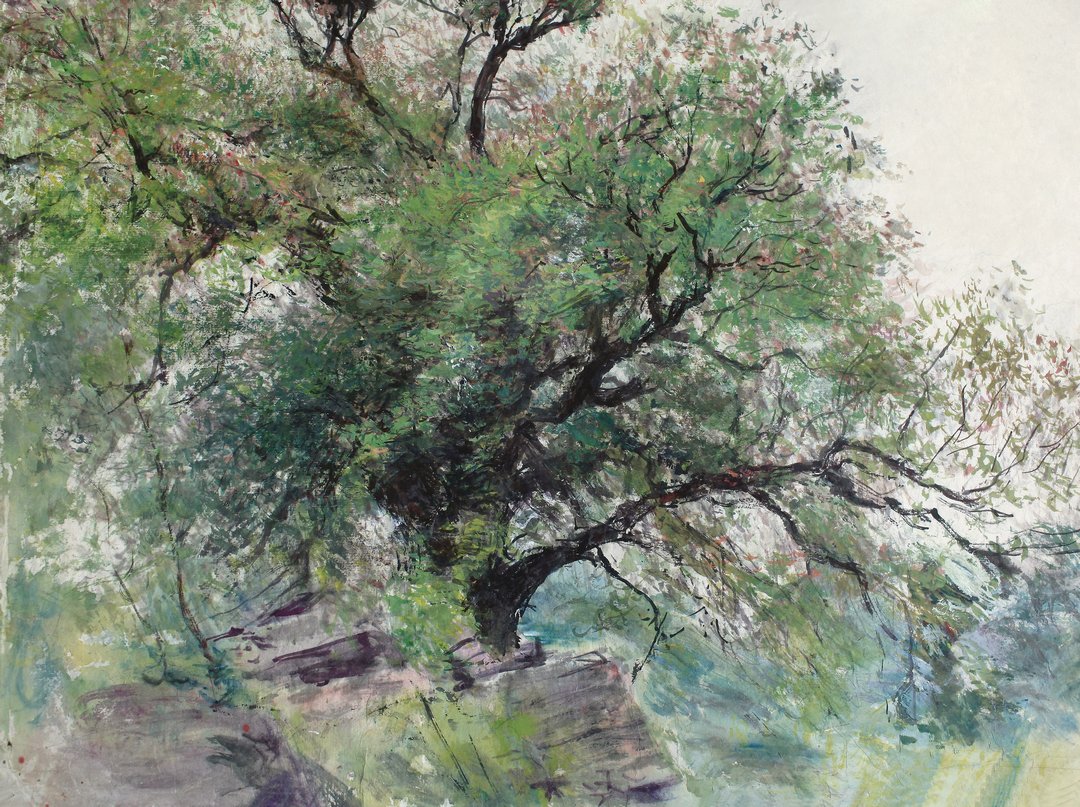
Li Yushuang
Ancient Coptis chinensis tree in early summer
38.5×51cm
ink and rice paper
1970s
This can be understood from the following three perspectives:
First, Li Yushuang's most significant contribution lies in his attempt to use scientific language and a rational framework to deconstruct and reconstruct the most emotional and mysterious part of artistic creation—namely, vision and perception.He breaks down the act of "viewing" into a series of physical and physiological processes, including light, retinal imaging, and brain decoding. Therefore, his painting process is far from simply "depicting objects," but rather an attempt to simulate and present "how vision itself is formed"—essentially, it is a kind of meta-painting or an ultimate reflection on "how painting becomes possible." Compared to Li Keran's emphasis on "immersing oneself in life" in sketching, he clearly went to another dimension. If Li Keran digested nature with his heart and refined the expressive order of brush and ink, then Li Yushuang used science to understand vision and constructed the order of light and color. Father and son, one starting from the "source of the heart" and the other from the "source of the eye," ultimately reached the supreme realm of "the fusion of self and object," a remarkable story in the history of modern Chinese art, worthy of serious consideration. This is why this article is titled "The Source of the Heart and the Source of the Eye."
Secondly, Li Yushuang's artistic journey actually went through an evolution from "seeing mountains as mountains" to "seeing mountains as not mountains," and then back to "seeing mountains as mountains again."During his early stages of learning to paint, when he "saw mountains as mountains," he was like any ordinary person, only seeing the surface of nature. However, when he began studying the relationship between human vision and art, and "saw mountains not as mountains," he actually assumed the dual identities of scientist and artist: he saw not only light, wavelengths, and neuronal signals, but also shape, color, and composition. And when he reached the stage of "light encoding," entering the realm of "seeing mountains as mountains again," he not only internalized the "light encoding" system as instinct, but also brought his creation into a realm of "no method"—the unrestrained textures and vibrant colors expressed with freehand brushstrokes combined with scientific calmness and the surging power of life. From this perspective, what he paints is not merely a tree, but "the process of generating light information about a tree in the visual system." This is sufficient to demonstrate that the world Li Yushuang sees is already a highly encoded world.
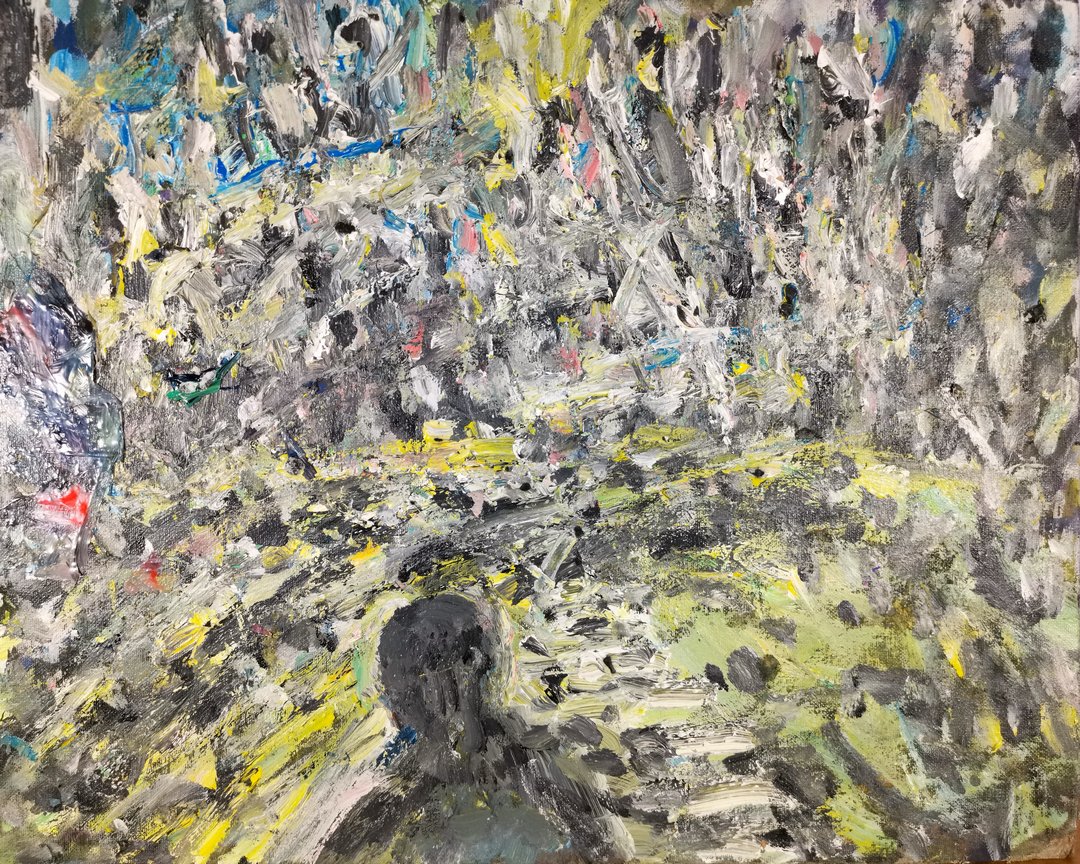
Li Yushuang
Shadows in the Sunlight (Self-Portrait)
40.5×50.5cm
acrylic wood
2023
Third, Li Yushuang's works—especially in his later years—used Eastern aesthetic spirit and material language to "domesticate" and "sublimate" Western visual concepts, making them Sinicized and poetic.For example, he no longer uses only Western media such as oil painting and watercolor for his creations, but intentionally uses Western materials such as ink, acrylic, and pastel on rice paper. Since rice paper and ink itself symbolize the Chinese aesthetic spirit, coupled with his bold addition of Western materials like acrylic and pastel—which offer vibrant colors, strong coverage, and direct expression—the result is not only a good preservation of the unique sensitivity, breathability, fluidity, and diffusion of traditional ink materials, but also a more intense, saturated, and dynamic image than traditional ink painting. Of course, particularly important is the high degree of compatibility between the relevant media and the fluid and ever-changing nature of "light," which helps him better capture the ever-changing, intermingling, and permeating "light encoding." In fact, after entering the mature stage of "light encoding," Li Yushuang is no longer satisfied with simply explaining visual mechanisms, but uses this system as a new tool for expressing personal artistic conception. This is significantly different from his early research on "light encoding," which focused more on simulating and reproducing the visual formation mechanism and was highly research-oriented and experimental.
I could certainly discuss this from many more perspectives, but the above analysis alone is sufficient to demonstrate that Li Yushuang's artistic path is, in fact, a unique journey interwoven with extreme rationality and extreme sensibility. In his exploration of breaking down the barriers between science and art, he did not limit himself to using science to justify art, but rather used science as the methodology and philosophical foundation of artistic creation, thus achieving a transcendence and tribute to his predecessors. Therefore, I believe that...Li Yushuang is not merely an outstanding landscape painter, but also an important art philosopher and visual explorer.His value will undoubtedly become increasingly clear and important over time—this is because he found a personalized and creative way to integrate the Eastern concept of "the source of the mind" with the Western view of "science."
September 6, 2025, at Yangchunhu area of Wuhan Central Hospital
Note:
[1] Influenced by ultra-leftist ideology, during that special period, some people held the extreme view that traditional landscape painting was feudal scholar-official art and must be abolished. Against this backdrop, artists such as Li Keran and Fu Baoshi not only expressed the themes of "Mao Zedong's poems and paintings," "New Look of Mountains and Rivers," and "Revolutionary Holy Land" in their own ways, but also appropriately incorporated realistic techniques. As these painters solved the contemporary issues of "what to paint" and "how to paint" by the standards of the time, they also saved landscape painting to a great extent.
[2] "The Scenic Beauty of the Li River" was demonstrated by Li Keran to Li Yushuang in 1971, and then Li Yushuang completed it.
[3] Li Yushuang maintained long-term artistic exchanges with his father: sometimes face-to-face, sometimes through letters. The former also inspired the latter. For example, in November 2021, when I viewed the "High Mountains and Long Rivers, Myriad Melodies—Artistic Dialogue Exhibition between Li Keran and Li Yushuang" at the Guangdong Museum of Art, I discovered that a relatively small watercolor painting by Li Yushuang from the 1950s had been hanging in Li Keran's studio for a long time. I suspect that this watercolor painting by Li Yushuang, which has a somewhat ink-wash feel, may have inspired Li Keran to some extent, because it already shows the influence of Li Keran's later methods of painting trees. If we try to compare the works Li Keran painted before and after Li Yushuang's small watercolor painting, we might find some differences.
[4] In 1967, Li Yushuang’s workplace was moved from Zhengzhou to Lushan.
Light of the Times: An Artistic Dialogue Exhibition between Li Keran and Li Yushuang, Father and Son
Date of Event: November 28, 2025
Opening date: November 28th
Exhibition Dates: November 28, 2025 – March 28, 2026
Exhibition Venue: Halls 8 and 9, He Art Museum
Organizer: He Art Museum
Co-organizers: Ting Hsin Charitable Foundation, China Electronics Valley, Lijia Mountain and Water Culture Center
Producer: Huang Liping
Chief Curator: Lu Hong
Academic support: Pi Daojian, Yin Shuangxi, Gao Minglu, Yin Jinan, Lü Peng
Exhibition Director: Li Dongmei
Exhibition Executive: Hong Mei
Executive Curators: Xu Baicheng, Li Xintian, Li Sha
Academic Committee: Xia Kejun, Yan Dong, Fang Zhiling, Wang Shaoqiang, Sun Yongzeng, Lin Song, He Anyi, Yang Xiaoyan, Zhang Huanrong, Li Yilin, Zhang Xin, Pei Gang
Curatorial Assistants: Gao Shansong, Li Yang, Guo Mingyang
Collection Support: Yu Yuhua, Su Manyi
Graphic Design: Wang Weiqi
Space Design: Chao Jinxin
Exhibition Committee: Huang Liping, Lu Hong, Qiu Haibo, Sun Jiangshu, Hong Mei, Ai Xiaozheng, Wang Weiqi, Chao Jinxin, Shen Zihe, Hu Lu, Zhou Yifan
Li Keran, a leading figure in the reform of modern Chinese landscape painting, proposed the idea of "entering with the greatest effort and emerging with the greatest courage." He integrated Western sketching and light and shadow techniques into traditional brush and ink painting, creating the profound and majestic "Li Family Landscape." Through unique techniques such as "backlit landscapes," he introduced external light into ink painting, reconstructing the space and artistic conception of Chinese landscape painting, and was hailed as a model of "brush and ink should follow the times."
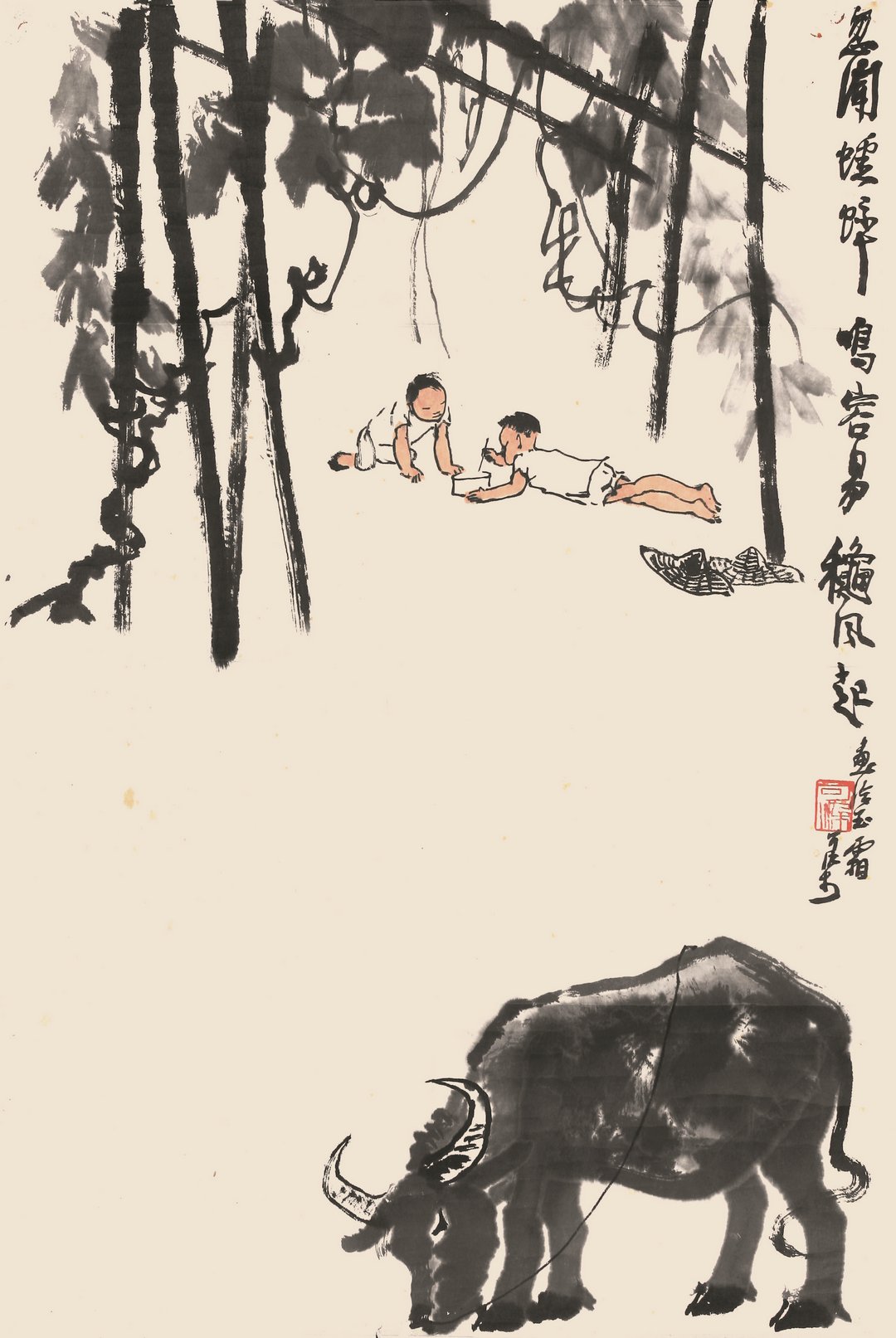
Li Keran
"Cattle Herding Picture"
69×46cm
Ink on paper
1960s
The first three sections of the exhibition showcase more than 40 works and manuscripts (including reproductions) by Li Keran from 1940 to 1989, covering his signature "backlit landscapes".Visitors can experience the brilliance of Li Keran's brushstrokes up close. Curator Xu Baicheng divided the exhibited works of Li Keran into three themes: "Writing a Chronicle for the Motherland's Mountains and Rivers," "The Diligent Ox: The School of Hard Work," and "Records of Art in Jingchu." The exhibition features landscape paintings and related documents, works and documents with oxen as the subject, and documents related to Li Keran's three encounters with the Jingchu region during his artistic career. Beyond the artist's representative works, it presents an in-depth study of his contemporary place.
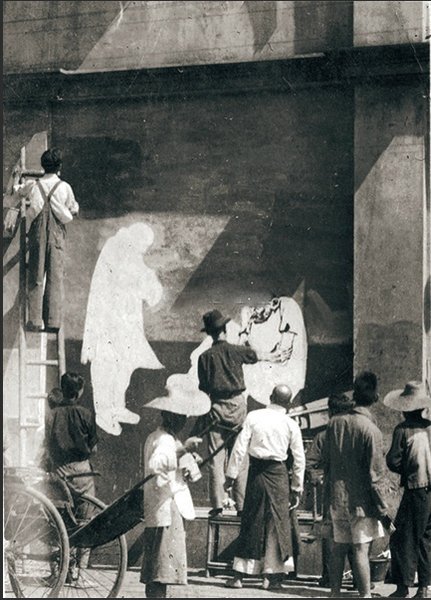
Li Keran painted murals on the streets of Wuhan.
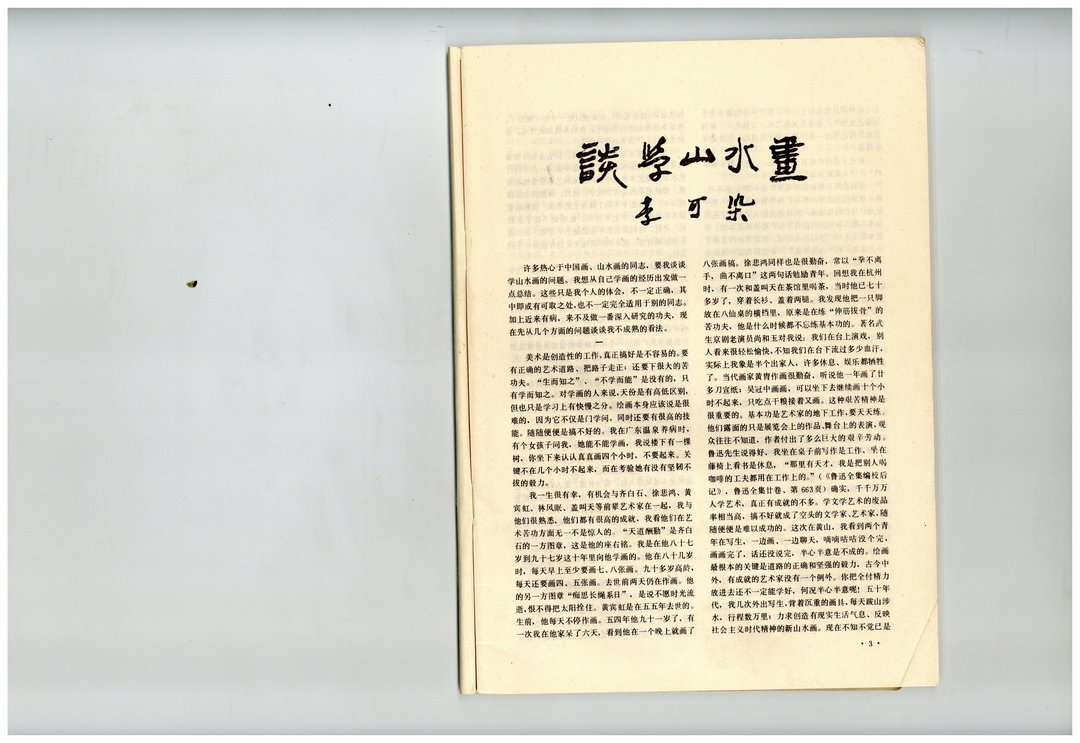
"On Learning to Paint Landscapes", Art Research, 1979, No. 1, p. 3
From June 28 to mid-July 1978, Li Keran, at the invitation of the Hubei Provincial Arts and Crafts Company, held a Chinese painting workshop in Cuiliu Village, East Lake, Wuhan. The Hubei Provincial Arts and Crafts Company Research Office compiled "Lecture Notes of Mr. Li Keran" based on the content of these lectures. Later, art historian Sun Meilan, combining this with Li Keran's usual notes on painting, compiled it into "On Learning to Paint Landscapes."
His son, Li Yushuang, has forged a unique path "from West to China." As an artist with a background in mechanical engineering, he blends scientific rationality with artistic sensibility, creating the "Light Encoding" painting system. Starting from the physical and physiological mechanisms of visual formation, he explores the intrinsic connection between light, the eye, the brain, and painting. His works embody the "spirit" and "imagery" of Eastern aesthetics while demonstrating a high degree of generalization and abstract expression of light and color phenomena, achieving a cross-disciplinary fusion of art and science.
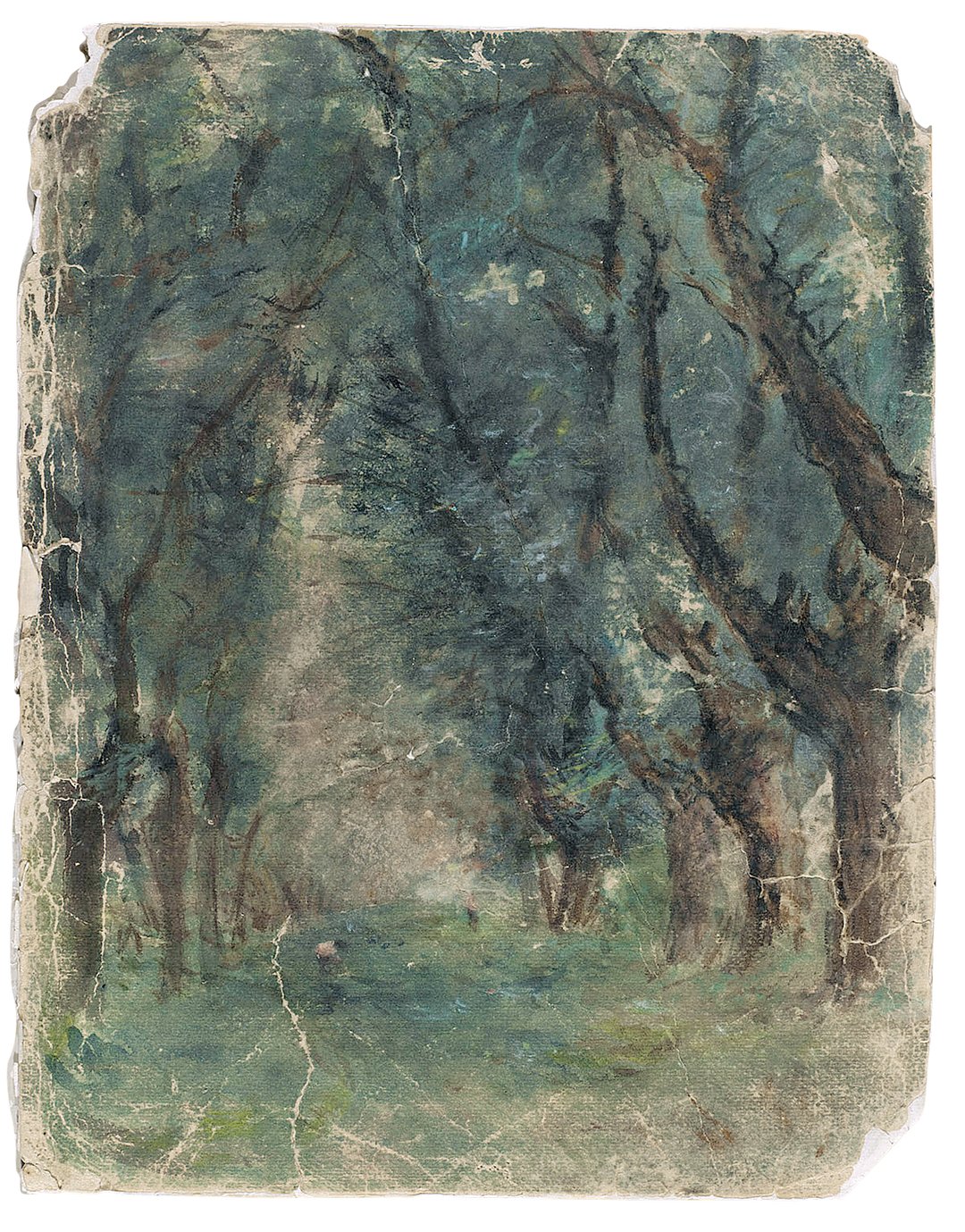
Li Yushuang
Old Trees in Bishagang Park, Zhengzhou
35×27cm
Watercolor on paper
1960s
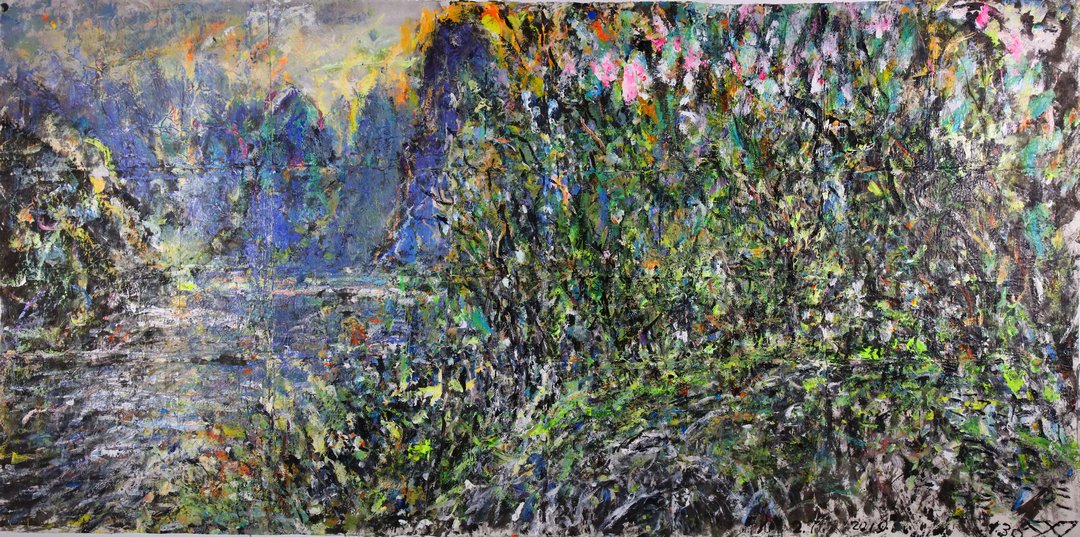
Li Yushuang
Guilin Yangshuo
98×197cm
Mixed materials
2018
In sections four through eight, curator Li Sha reconstructs nature through a "scientific eye."The exhibition not only features multiple video works documenting Li Yushuang's 60-year sketching journey, but also over 120 representative works from his early sketching to his later "light coding" series, including Li Yushuang's 1970s copy of his father's work, the original manuscript of "Lushan Notes," and two 2-meter-long masterpieces from 2019, "Yangshuo Park" and "Guilin Yangshuo." The exhibition systematically traces the 60-year journey of his "light coding" theory from its inception to its maturity.
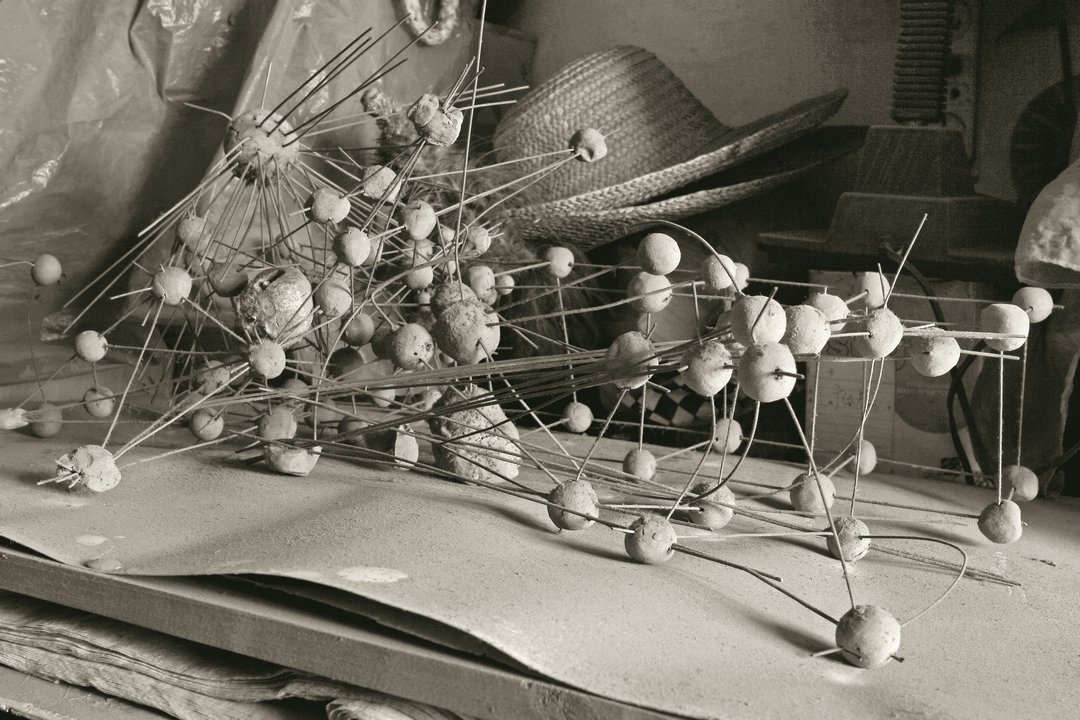
Li Yushuang's model for the principles of painting based on vision and the brain
The exhibition uses "Source of the Heart" and "Source of the Eye" as a dialogue framework to present the continuity and evolution of the artistic concepts, creative methods, and spiritual pursuits of Li Keran and his son Li Yushuang.Li Keran started from the "source of the heart," using brush and ink to digest nature; Li Yushuang, on the other hand, approached it from the "source of the eye," using science to understand vision. The two, though different in their paths, arrived at the same goal, jointly expanding the modern expression of Chinese art. At the same time, precious documents such as letters between father and son, manuscripts, research notes, and visual models are exhibited, comprehensively presenting the creative lineage and intellectual exchanges between the two generations of artists.
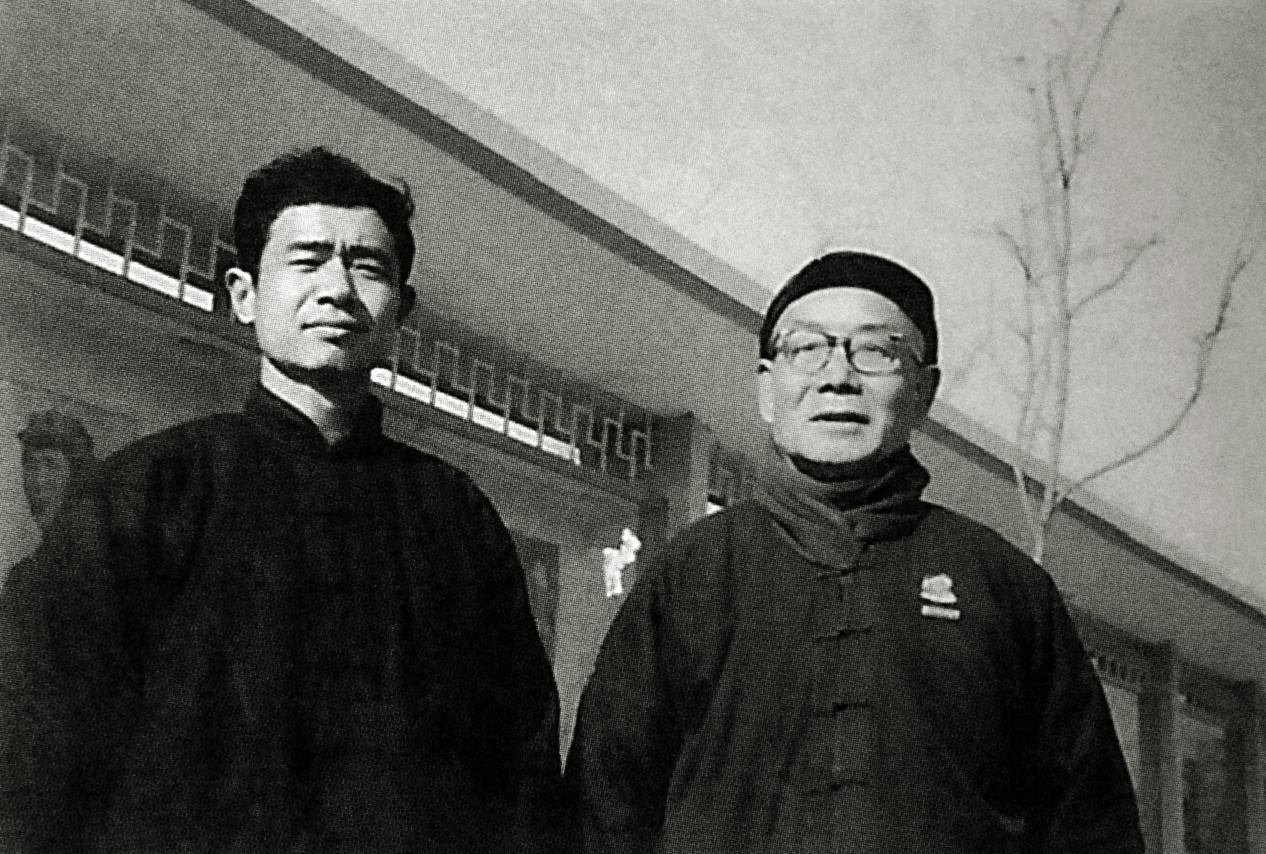
A photo of Li Keran and his son Li Yushuang.
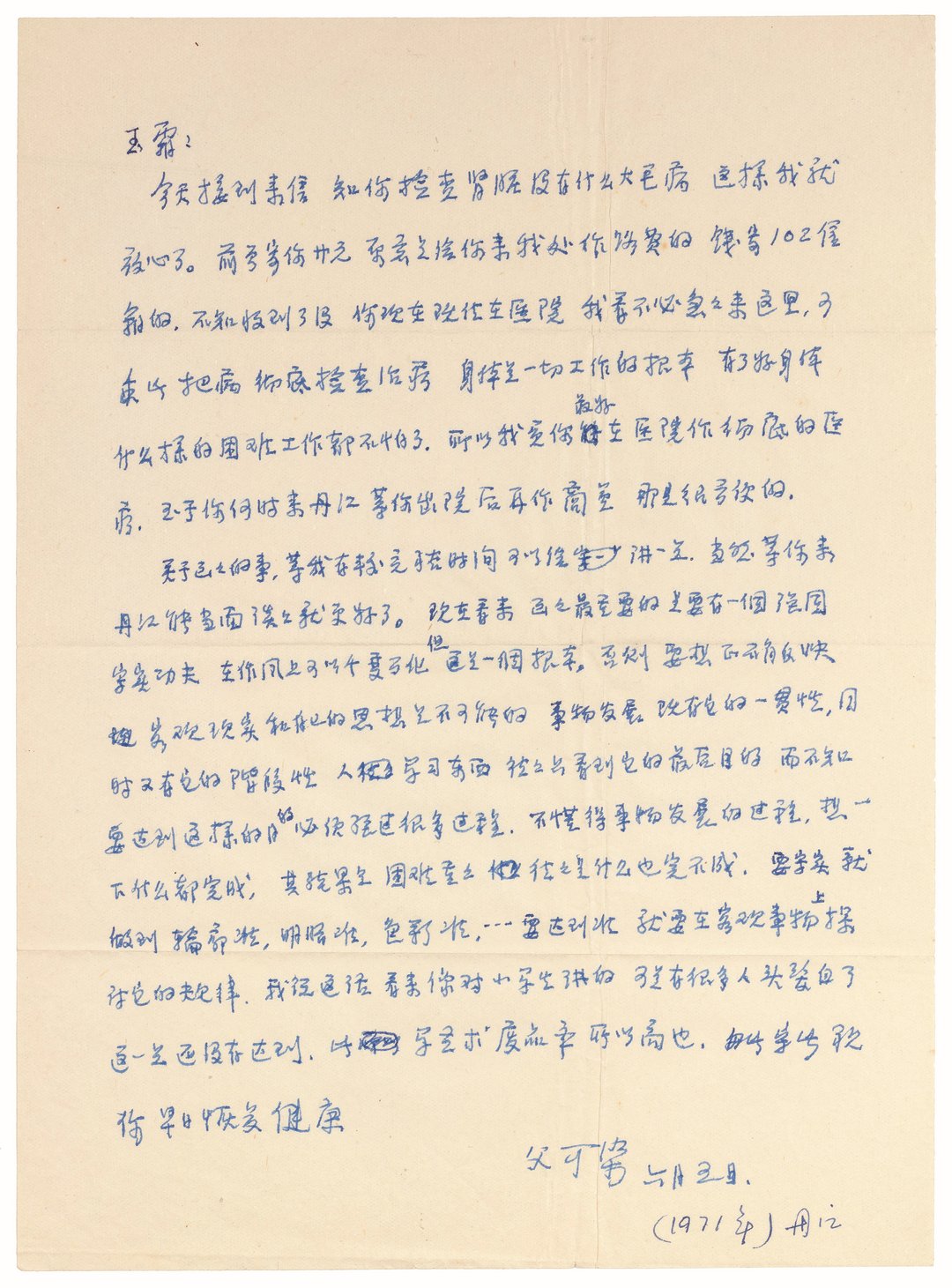
Li Keran's letter to Li Yushuang (inner page), 1971
This exhibition is not only a dialogue between father and son in art history, but also a comprehensive presentation of the aesthetics, science, and philosophy of "light." Under the illumination of the "Light of the Times," Li Keran and Li Yushuang illuminated the path of Chinese painting with their respective explorations, and also provided contemporary audiences with a profound reflection on tradition and innovation, East and West, and mind and vision.
Li Keran
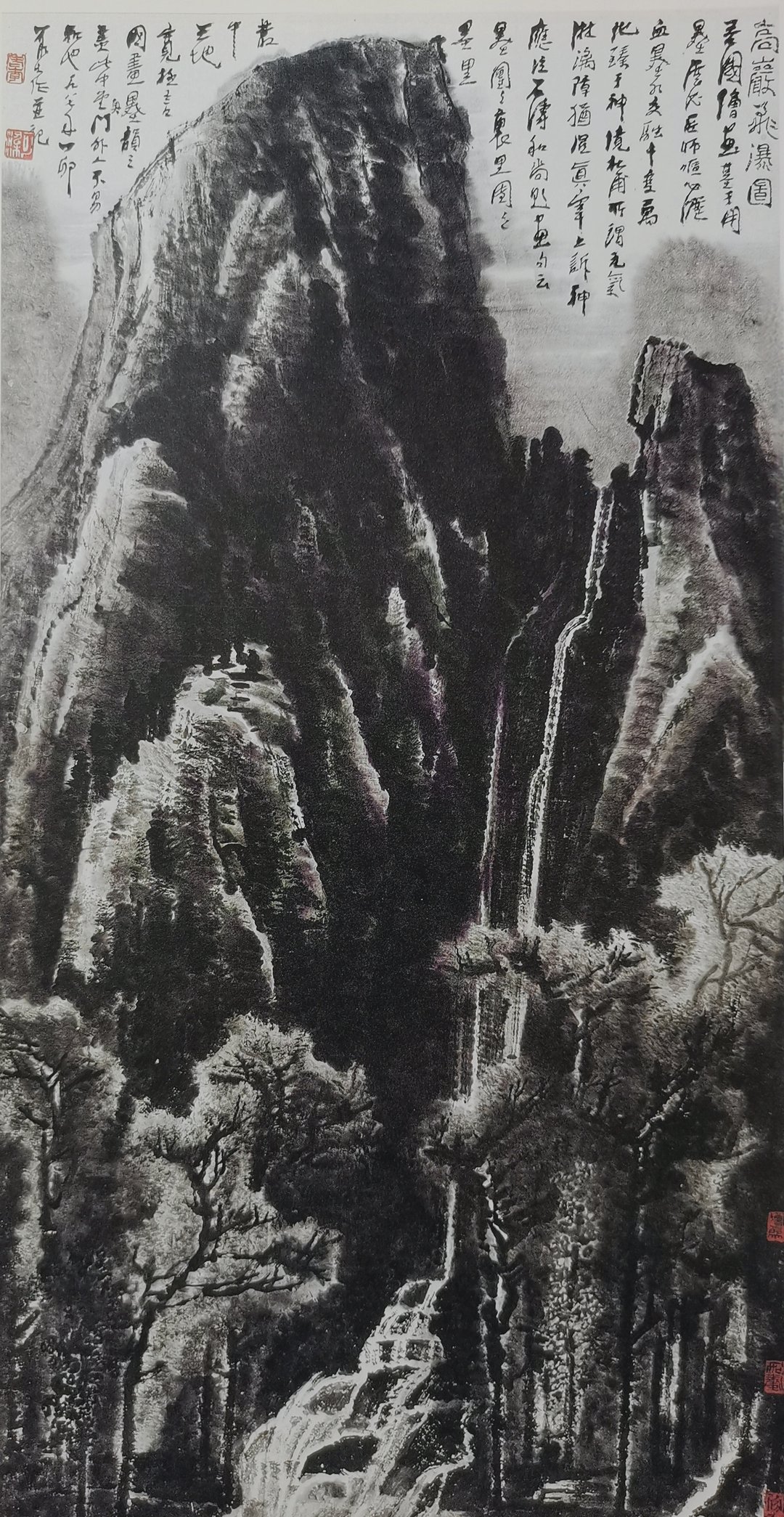
"High Cliff Waterfall" (reproduction)
130×68cm
1983
Li Keran;
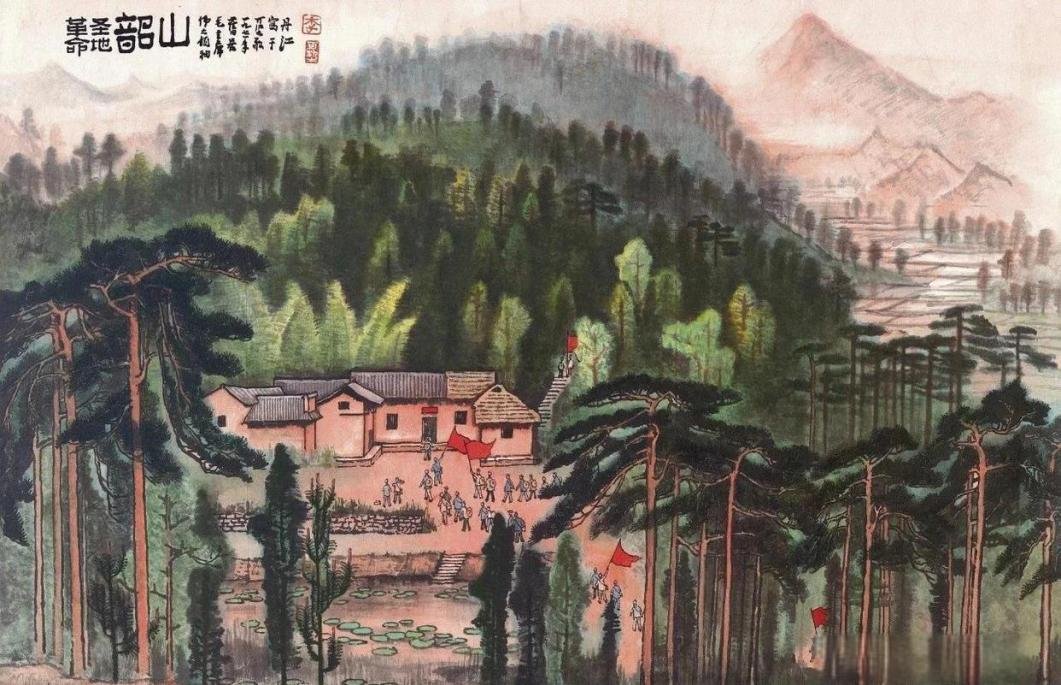
Shaoshan, the Holy Land of the Revolution (copy)
1971
Li Yushuang
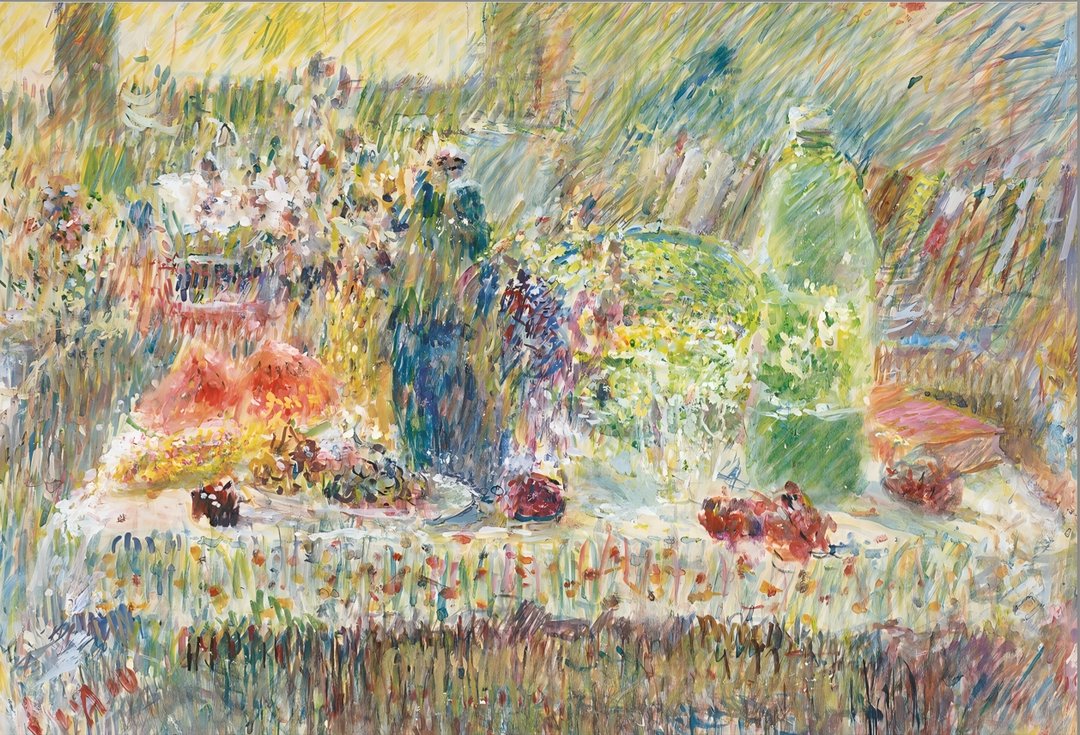
Still Life by the Window
38×52cm
Watercolor on paper
1988
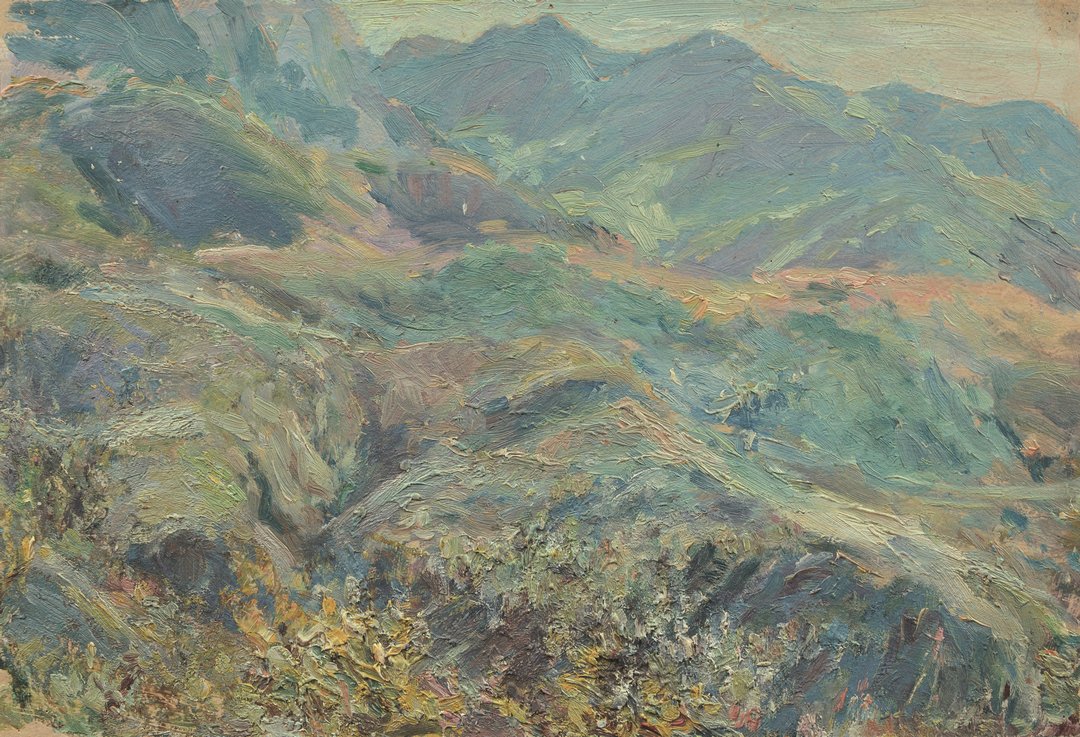
Li Yushuang
Backlit Mountain at 10 AM
20×30cm
Oil on paper
1979
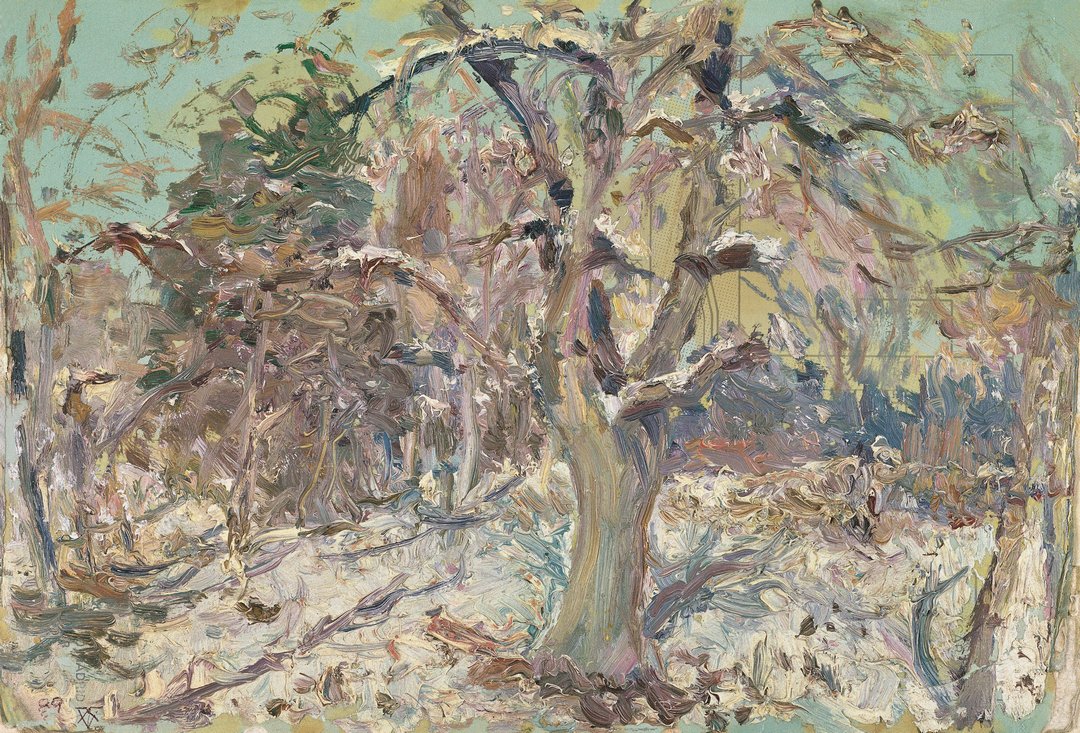
Li Yushuang
Clear Snow
20×29cm
Oil painting on paper
1989
Stay tuned to ArtPro for the latest updates on the global art market.