
[2026 Spring Auction] Bonhams March Highlights: Yayoi Kusama and Hsiao Chin in Dialogue on "Infinity"—Asian Pioneers Rewriting Post-War Abstract Art
Hong Kong – 2026 With the opening of Hong Kong Art Month, Bonhams Hong Kong presents two exciting projects in March: “More Than Red: The Yayoi Kusama Collection from a Single Japanese Collector” auction (March 28) and “Hsiao Chin: The Great Self Within Limits” exhibition and sale (March 18 to April 9).
This dialogue, transcending time and space, outlines a crucial trajectory of Asian abstract art on the international stage after World War II: one is an internationally renowned master of Japanese contemporary art, and the other is a Chinese pioneer who propelled Asian modern art onto the world stage. Both explore the essence of self and existence through highly personalized abstract language; in questioning the "infinite," they expand the infinite realm with finite forms.
Marcello Kwan, Head of Modern and Contemporary Art, Bonhams AsiaThe statement indicates that the collections of Yayoi Kusama and Hsiao Chin have become highly internationalized, ranging from top museums worldwide to leading private collectors, with their abstract works being a recent market focus. Through a combination of auctions and exhibitions, we hope to allow collectors not only to see market prices but also to gain insight into how this generation of Asian art masters has used abstract language to participate in and rewrite the landscape of 20th-century art history.
"More Than Just Red: Treasures from a Single Japanese Collector's Collection of Yayoi Kusama" Special Sale
Auction: March 28
Preview: March 18 to 28
This auction brings together six works by Yayoi Kusama, spanning different media.Its origin is clear and it has never been exposed in the market.The 2000 work "Pumpkin" (estimated at HK$15,000,000 – 25,000,000) serves as the lead piece, setting the tone for this auction's focus on "red." Since the 1960s, Yayoi Kusama has viewed color as an independent visual language. For her, red is an external expression of her inner world of illusion, life experiences, and spiritual pursuits. Her red pumpkin works are rarer and more meaningful than her classic yellow pumpkin series.
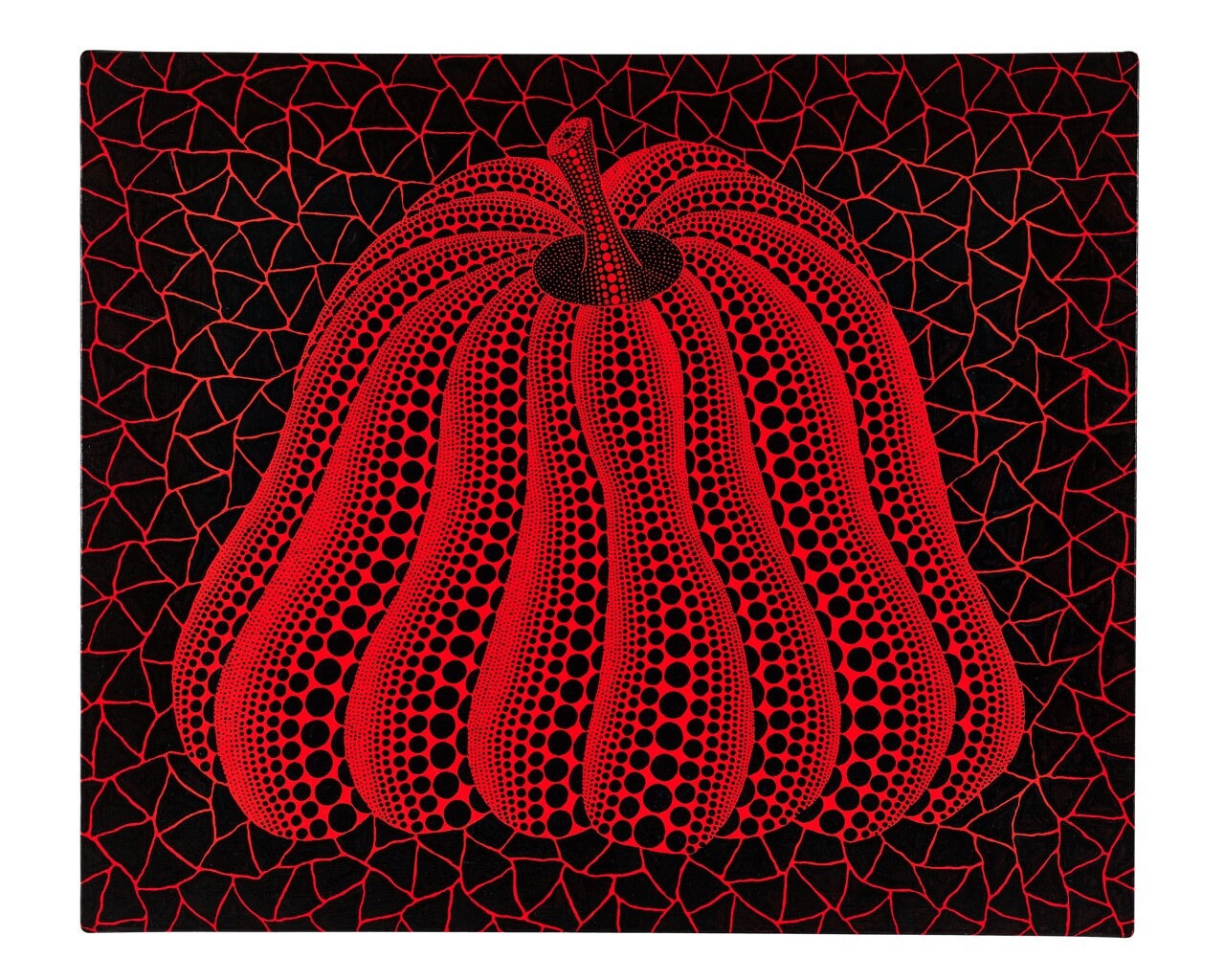
Yayoi Kusama, *Pumpkin*, 2000.
Acrylic canvas, 60 x 72 cm
Estimate: HKD 15,000,000 – 25,000,000
If red is the soul color of her art, then the pumpkin is the most intimate material embodiment of her spirit. Yayoi Kusama views the pumpkin's rounded, resilient, and humorous form as an object possessing "powerful spiritual stability," sublimating it into a projection of herself. At the heart of her work are the concepts of "infinity," "dots," and "grids" that permeate her creations. These repetitive elements covering the pumpkin's surface symbolize the infinite proliferation of the universe and the dissolution of individual boundaries. Each of Kusama's pumpkin works is a unique "living entity," its shape, contour curves, and even the subtle differences in the drawing of the dots reflecting the artist's state of mind at the moment of creation.
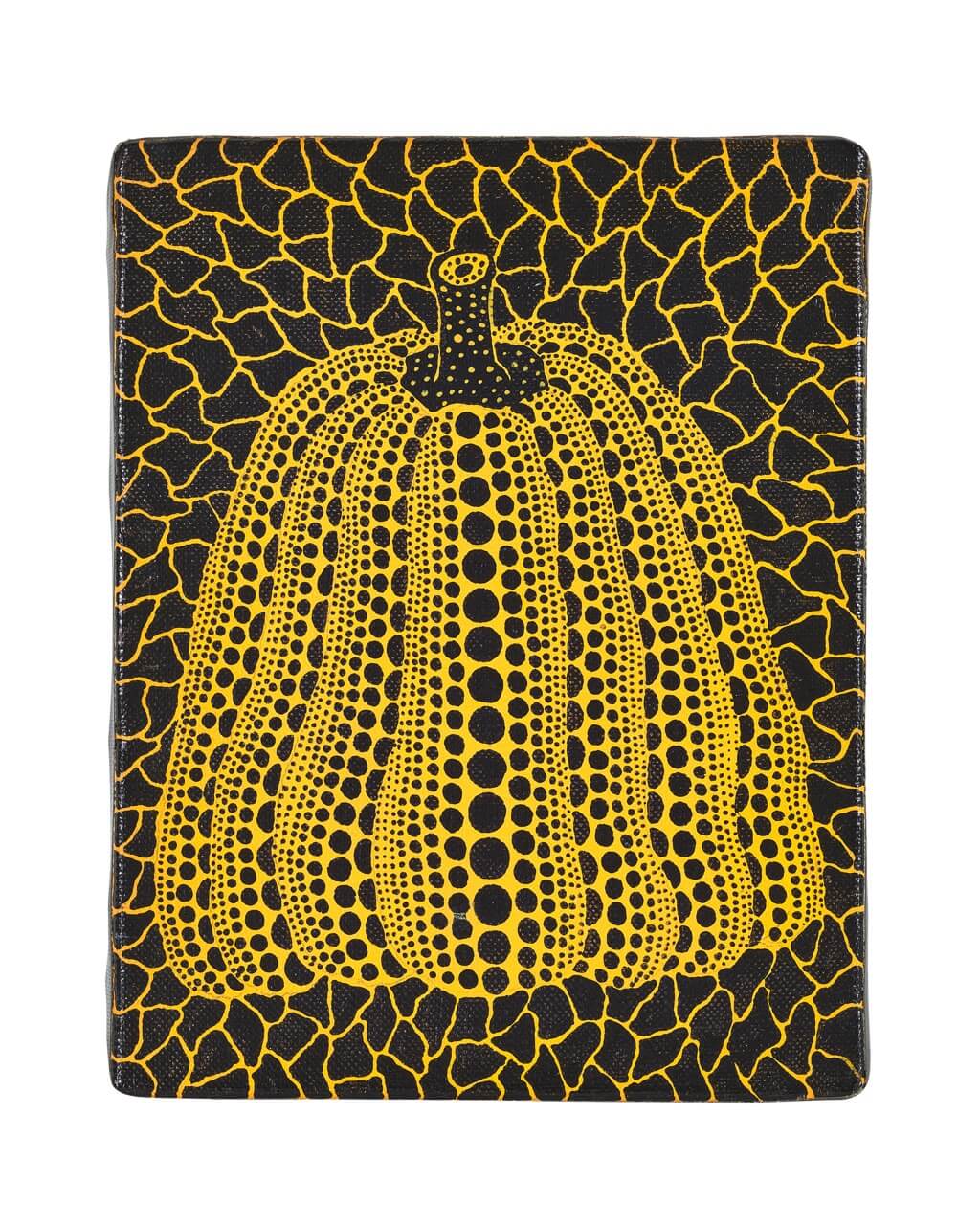
Yayoi Kusama, *Pumpkin*, 1990
Acrylic canvas, 18.2 x 14.2 cm
Estimate: HKD 2,000,000 – 4,000,000
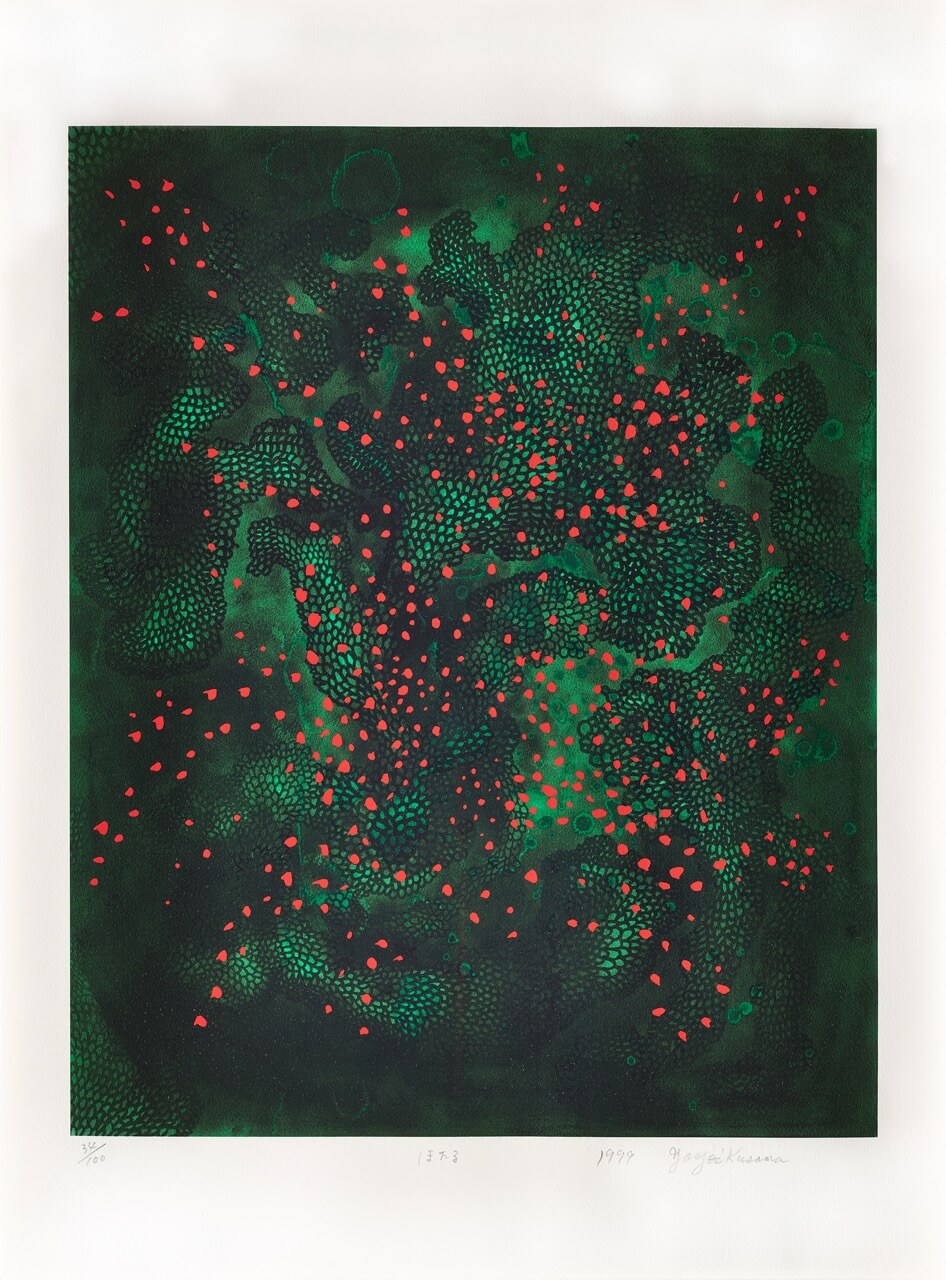
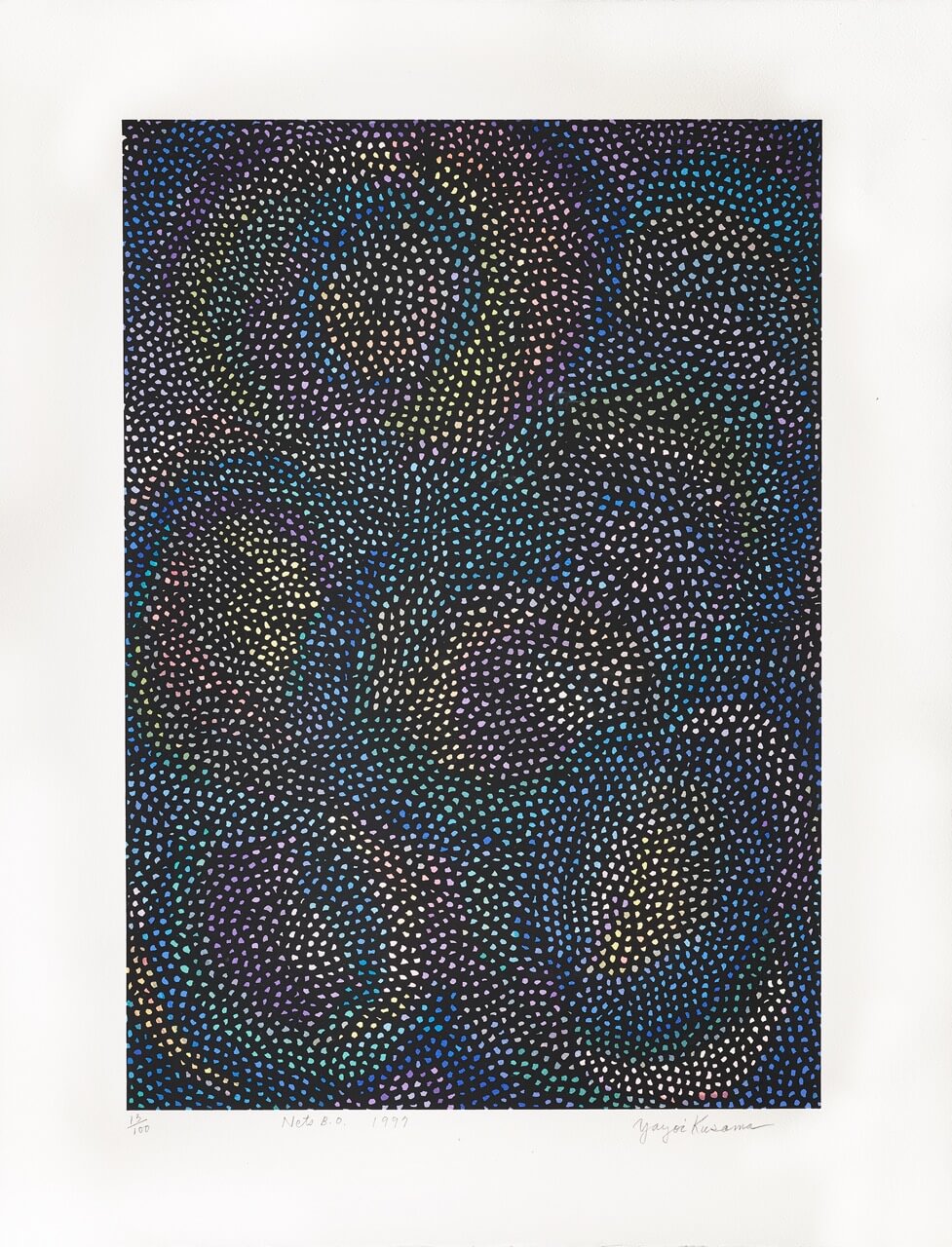
In addition to the lead piece, the auction also includes classic yellow pumpkin paintings, palm-sized pumpkin sculptures, and abstract prints exploring the concept of "infinite nets," showcasing how the artist fuses personal illusions with universal symbols, ultimately returning to the eternal pursuit of infinity.
Hsiao Chin: The Great Self Within the Infinite
Exhibition and sales: March 18 to April 9
Another key event is the "Hsiao Chin: The Greater Self Within the Infinity" exhibition and sale. As a master of postwar abstract art, Hsiao Chin is one of the few pioneers who could simultaneously stand in the East and West, and who was among the first to engage in dialogue between Eastern spiritual abstraction and Western avant-garde art. This exhibition presents over 20 of Hsiao Chin's masterpieces, starting with his studies in Spain in the 1950s, and tracing his creative stages across seventy years. Viewers will begin with his signature term "Punto" (meaning "point"), witnessing how the artist, starting from his own origin, embarked on a lifelong exploration of "Tao" and "infinity."
Curator's message
Hsiao Chin is hailed as a pioneer of modern abstract art, with a profound influence on the development of modern abstract art in China. In the art world, few themes penetrate the core of life as directly as "self" and "infinity." This exhibition, "The Greater Self in Infinity," is a spiritual inquiry into his signature vocabulary—especially "Punto" ("point")—gazing at how he used the point as an origin, starting from the individual, to engage in dialogue with the infinite universe. From the 1960s, when Hsiao Chin began his exploration of "light," until his passing in 2023, he consistently demonstrated his ability to guide spirit and consciousness towards harmonious unity, and the eternal connection to cosmic energy.
—Xu Jianlong (Curator of this exhibition, co-founder of 3812 Gallery)
Creative Process and Representative Works
This exhibition takes Hsiao Chin's creative period during his studies in Spain in the 1950s as its starting point, presenting his artistic transformation and core works in chronological order:
1950s: East-West fusion, the beginning of artistic exploration
In 1956, at the age of 21, Hsiao Chin traveled to Spain, where he blended his own cultural roots with Western modern art amidst the collision of Eastern and Western cultures, creating a unique abstract vocabulary. In the same year, he participated in the founding of the Oriental Painting Society, one of the earliest postwar Chinese art groups in Taipei.
Early 1960s: Milan's Transformation, the Visual Transformation of the Ponto Movement and Eastern Philosophy
Hsiao Chin moved to Milan and underwent a pivotal creative transformation, transforming Taoist and Zen philosophies into a visual language imbued with Eastern charm. He launched the "Punto" movement, advocating "contemplative spirit" and exploring the essence of humanity, cognition, and existence. In his creative philosophy, the "point" symbolizes the intersection of personal consciousness and the universe, with each point containing a potential universe.
- Representative works:"Lying Down" (1961, acrylic on canvas, ink, 140 x 110 cm) and "Light Leaps - 14" (1963, acrylic on canvas, 110 x 140 cm)
- Series Value:The "Light Leap" series is a core representative work of this period, showcasing the cyclical nature of "qi" and "stillness," and is collected by the Guggenheim Museum Abu Dhabi and MGM Macau.
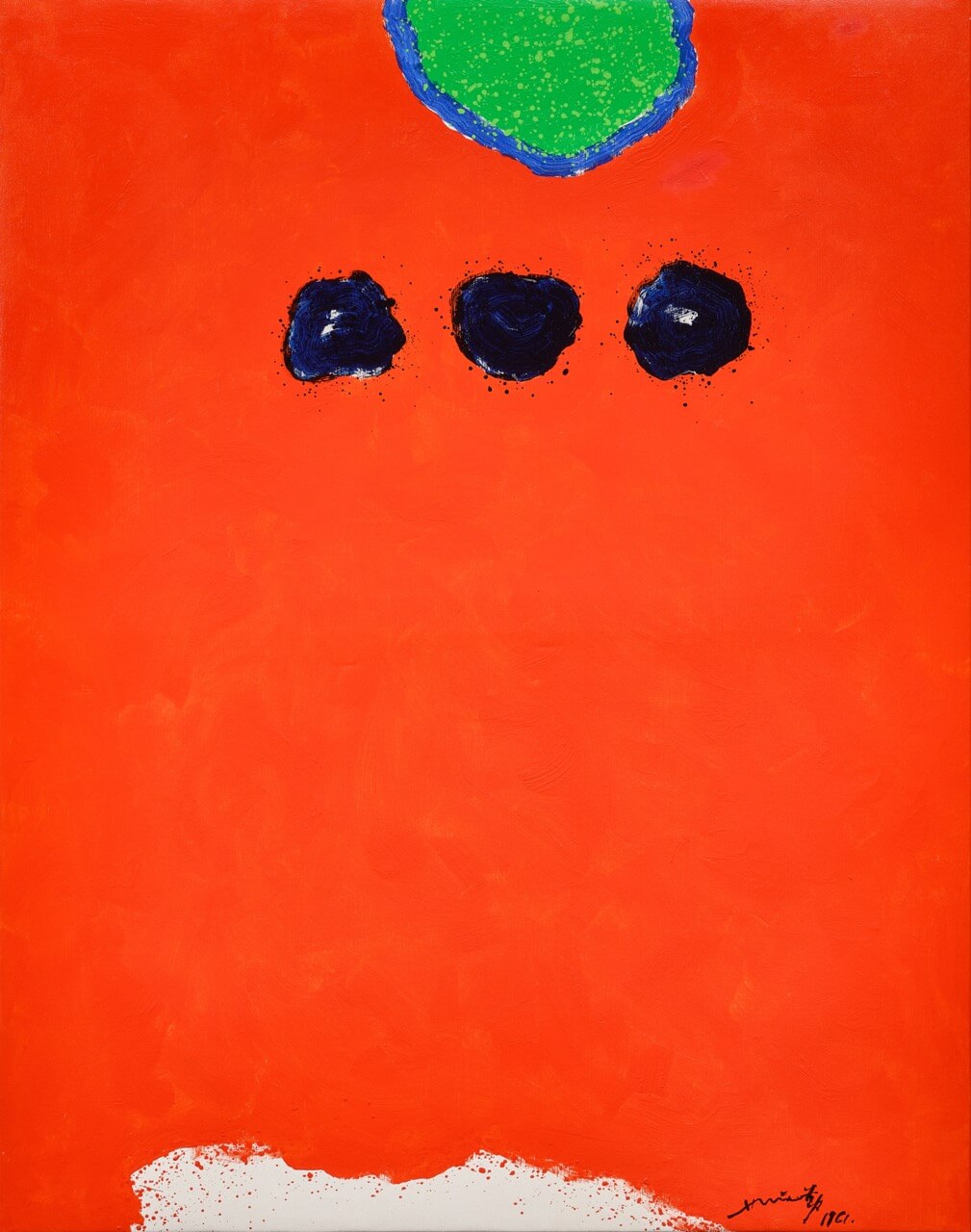
Hsiao Chin, "Hidden" (伏), 1961
Acrylic canvas, ink painting
140 x 110 cm
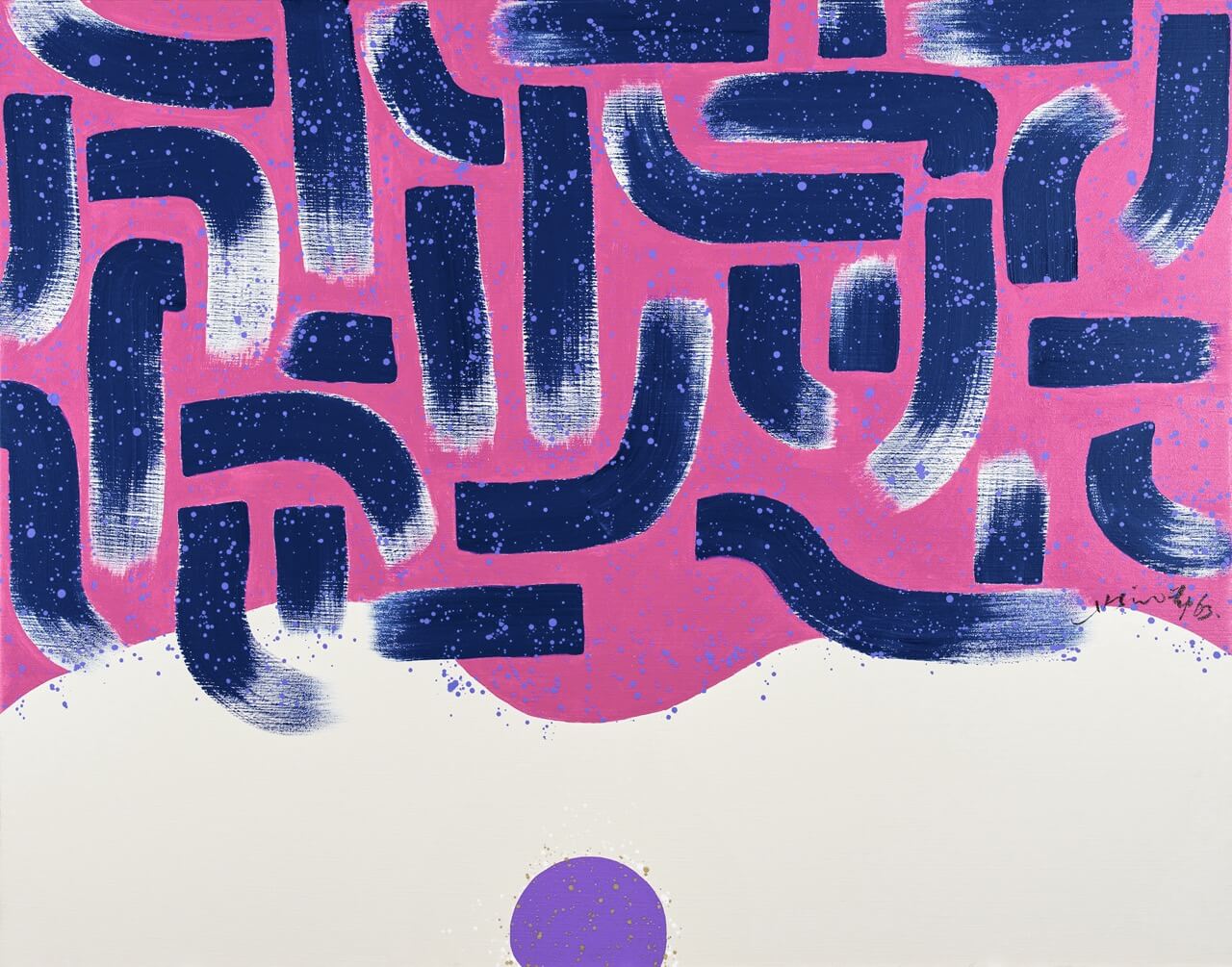
Hsiao Chin, *The Leap of Light - 14*, 1963.
Acrylic canvas
110 x 140 cm
Mid-1960s: A fusion of Western avant-garde, focusing on "Qi" and cosmic energy.
Hsiao Chin further integrates Western avant-garde art forms such as hard-edged and Op Art, taking "Qi" and "energy" as the core of his creations, and paying tribute to the infinite energy of the universe around themes such as "sun," "cosmic energy," and "light." He uses the concentric circle pattern of the mandala to transform ancient spirituality into modern abstraction, symbolizing the connection to infinite wisdom through quiet contemplation.
- Representative works:Solar Illusion-1 (1965, acrylic on canvas, 130 x 160 cm)
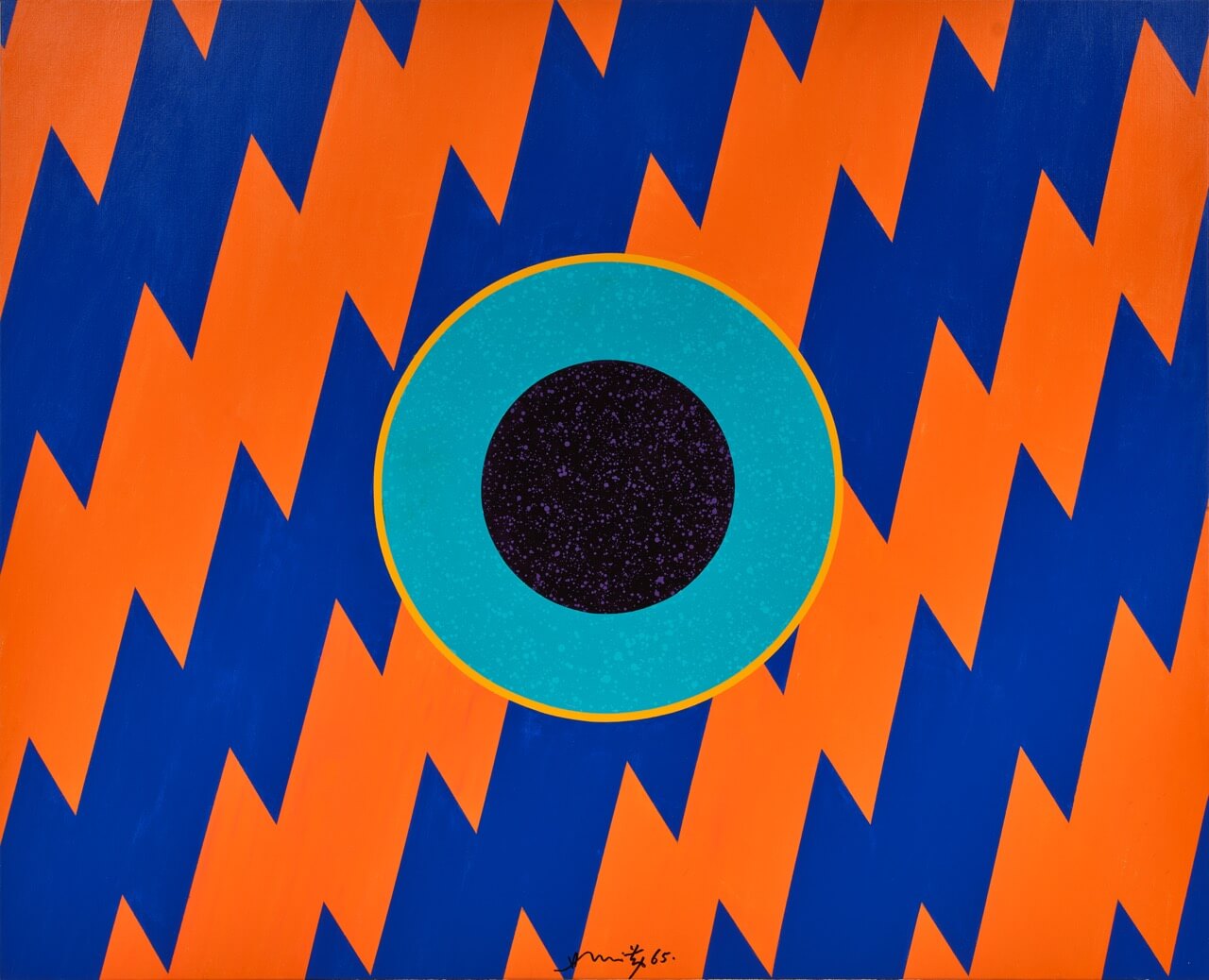
Hsiao Chin, *Solar Illusion - 1*, 1965.
Acrylic canvas
130 x 160 cm
1967: Moved to New York, transitioned to hard-edged abstraction, and awakened the spirit of the "greater self".
After moving to New York, Hsiao Chin's creative style became increasingly sharp and introspective, completing a key transition to hard-edged abstraction. His representative work, "The Great Self in the Infinity," became a landmark work of this period. The vermilion "Pangtu" in the center of the painting reflects the spiritual awakening of the individual self merging into the greater self.
- Representative works:The Great Self in the Infinity (1967, acrylic on canvas, 75 x 90 cm)
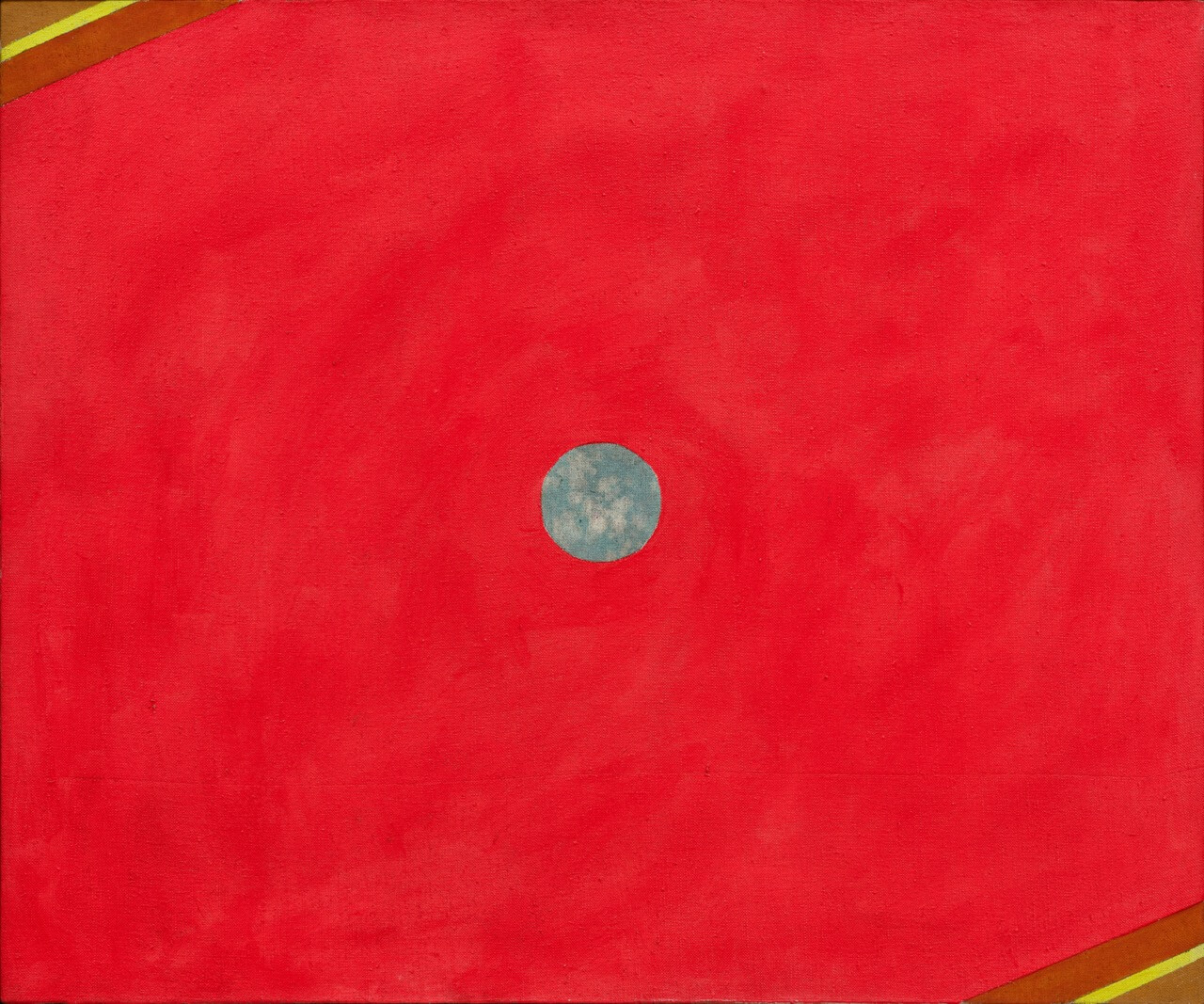
Hsiao Chin, "The Greater Self in the Infinite," 1967.
Acrylic canvas
75 x 90 cm
The 1990s: Questions about life, the grief and reflections of "The Everlasting Garden"
Hsiao Chin's exploration of life and existence deepened after the sudden death of his beloved daughter. In the midst of profound grief, he began the "Eternal Garden" series, infusing his pain and reflections on life into his art.
- Representative works:In the Everlasting Garden - 7 (1998, acrylic on canvas, 120 x 190 cm)
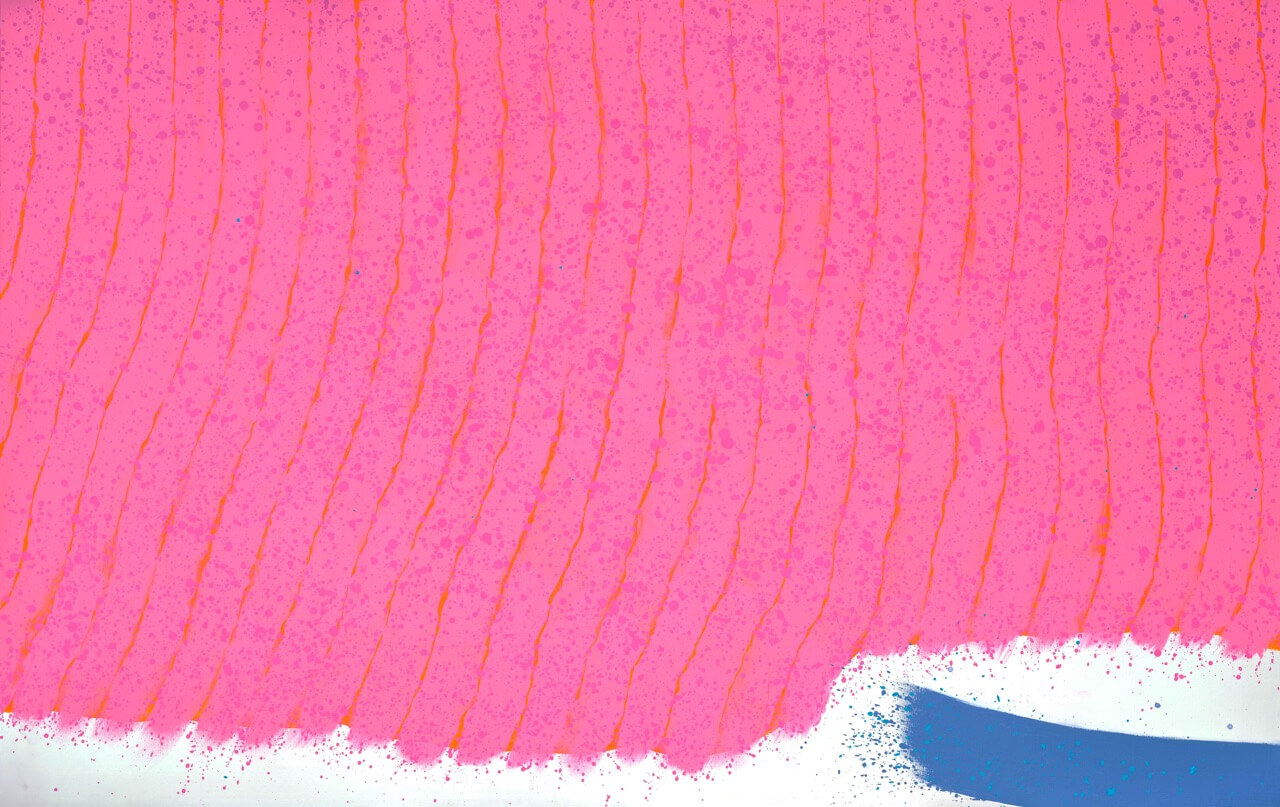
Hsiao Chin, "In the Eternal Garden - 7", 1998.
Acrylic canvas
120 x 190 cm
Later Years: Clear-headed and carefree, returning to the original passion for art.
Having weathered the test of time, Hsiao Chin's later works present an increasingly pure and romantic artistic realm. From the initial "point" of his heart to the final clarity, he has always used art to convey his beliefs and practice the fulfillment of life by "following this arduous journey to reach the sky".
- Representative works:Mood - 2 (2016, acrylic on canvas, 200 x 270 cm)
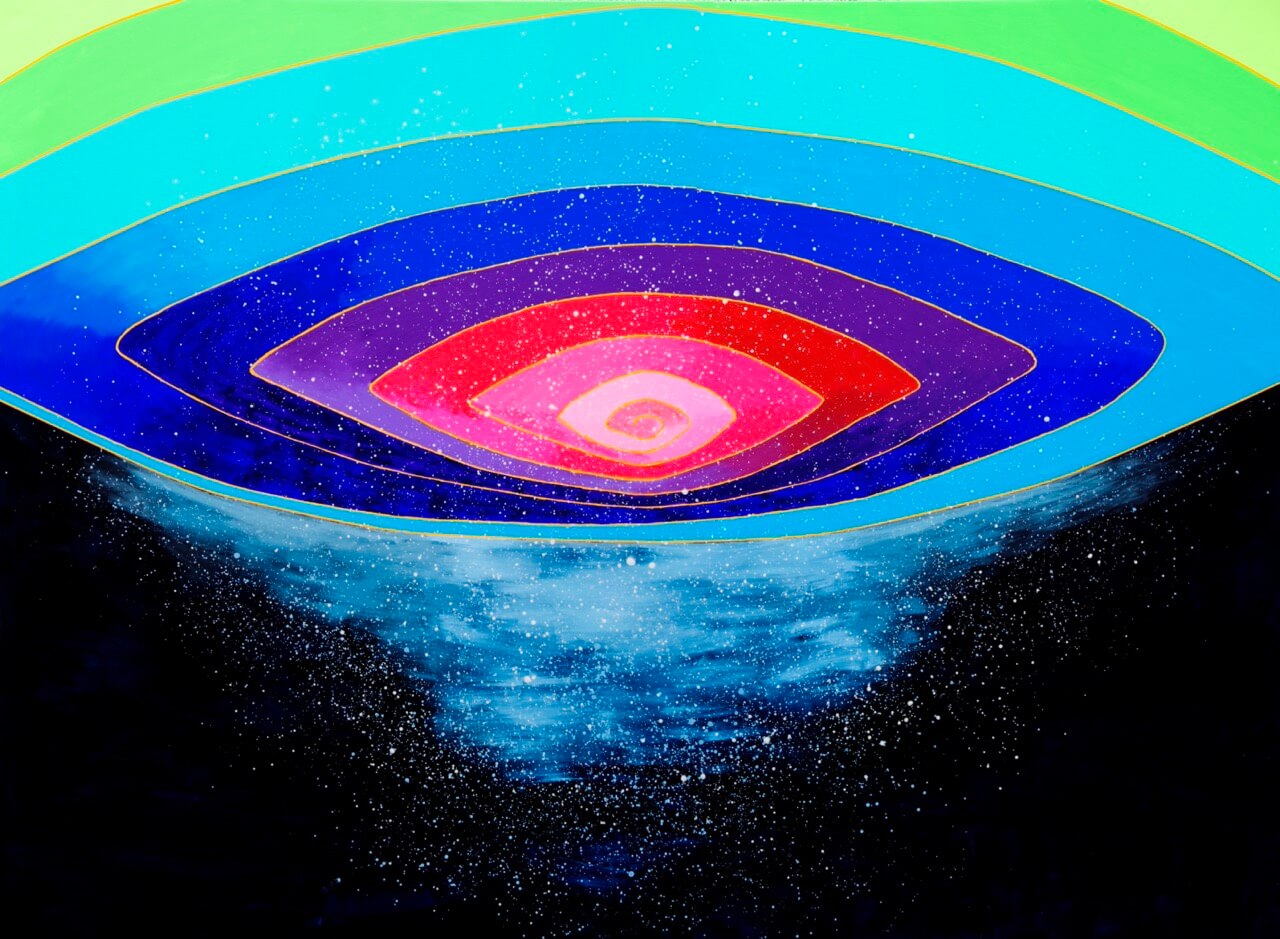
Hsiao Chin, *Mindset-2*, 2016.
Acrylic canvas
200 x 270 cm
Artist Biography: Hsiao Chin (1935 – 2023)
Born in Shanghai in 1935, he moved to Taiwan with his family in the late 1940s and began studying painting in 1952. In 1956, he went to Europe to begin his artistic career, and thereafter traversed the art world of both the East and the West for decades. In 1961, he launched the "Ponto International Art Movement" in Milan, advocating "contemplative spirit." This was the only postwar international avant-garde art movement in the West initiated by an Asian artist and based on Eastern philosophy. It also enabled him to successfully promote Chinese modern art overseas and made significant contributions to the development of Chinese modern art.
Hsiao Chin's core art is to integrate the philosophies of Zen, Taoism, and Lao-Zhuang into modern abstract creations, while also incorporating his exploration of astrophysics and cosmic phenomena. Throughout his life, he has pursued a broad artistic and life realm that transcends the limitations of life and death, achieving harmony between humanity and nature.
Collection of works
His works are collected by world-renowned art institutions such as the Museum of Modern Art in New York, the Metropolitan Museum of Art, the Guimet Museum of Asian Art in Paris, and the M+ Museum in Hong Kong.
Stay tuned to ArtPro for the latest updates on the global art market.