
[2026 Spring Auction] Bonhams Hong Kong: More Than Red: The Yayoi Kusama Collection from a Single Japanese Owner, March 28th Auction
"More Than Just Red: A Single Japanese Collector's Collection of Yayoi Kusama"
Live auction: March 28
Preview: March 18 to 28
This auction, "More Than Red: A Single-Handed Collection of Yayoi Kusama from Japan," presents six exquisite works across themes and media, forming a meticulously arranged visual symphony. Yayoi Kusama became active on the international art scene in the mid-20th century and later became one of the world's most influential artists. Her work emphasizes not only concepts, forms, and materials, but also, and more importantly, the powerful manipulation of color. Leading this auction is a highly evocative red pumpkin painting, harmonizing and varying with other works on canvas, sculptures, and prints in various colors, showcasing the rich and diverse artistic spirit of Yayoi Kusama.
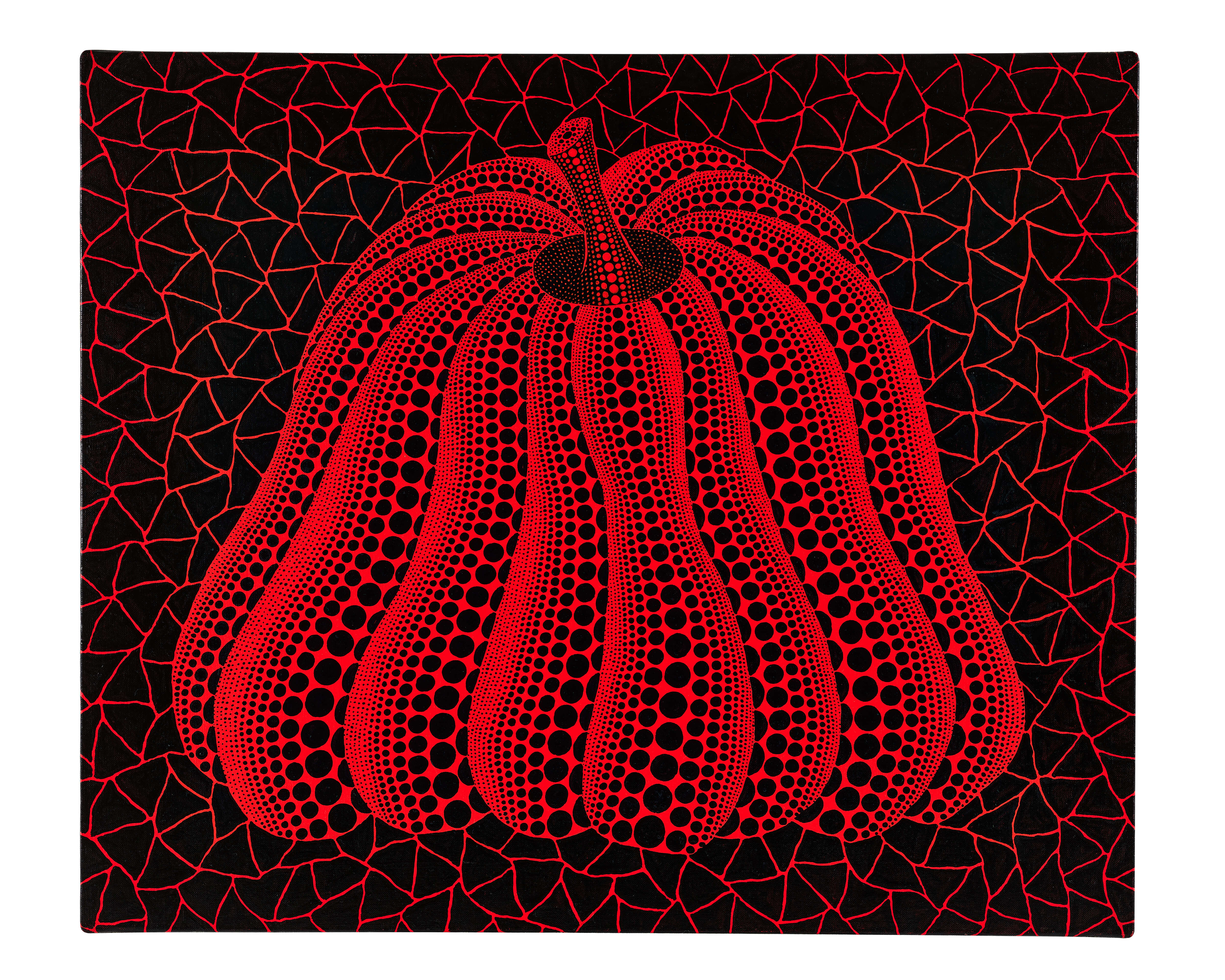
Yayoi Kusama, *Pumpkin*, 2000.
Acrylic canvas, 60 x 72 cm
Estimate: HKD 15,000,000 – 25,000,000
Color as the first language of art
Over the centuries, visual art has evolved, and color is no longer merely an adjunct to subject matter, technique, and composition, but a core element that reaches the depths of human spirit and emotion. Nineteenth-century Impressionist painters broke with tradition, capturing fleeting moments of light and shadow with color. Matisse further refined the individuality of color, and in the post-war contemporary art context, color became an independent language for artists to express themselves and convey spiritual power, its subjective status increasingly prominent. Yayoi Kusama, who rose to prominence in the American contemporary art scene in the 1960s, had already begun to view color as an independent visual language, thus developing monochrome abstract painting; archival images show that red, besides white, was her favorite color at the time. The allure of red was brought to its fullest potential by the remarkably creative Yayoi Kusama.
Red: The Soul Color of Art History
From a color theory perspective, red, as one of the three primary colors, possesses inherent visual advantages and emotional resonance, establishing its irreplaceable core position in artistic creation. This position stems not only from its physical properties but also from the diverse symbolism bestowed upon it by different cultures throughout human civilization: In East Asian cultures such as China and Japan, red primarily symbolizes holiness, authority, celebration, auspiciousness, and the power to ward off evil and misfortune, playing a transcendent and indispensable role in everything from religious architecture and traditional festivals to daily customs. In Western art history, red is both a color symbolizing sublimity and redemption in religious paintings and a vehicle for expressing rebellion, freedom, and emotional catharsis in modern art.
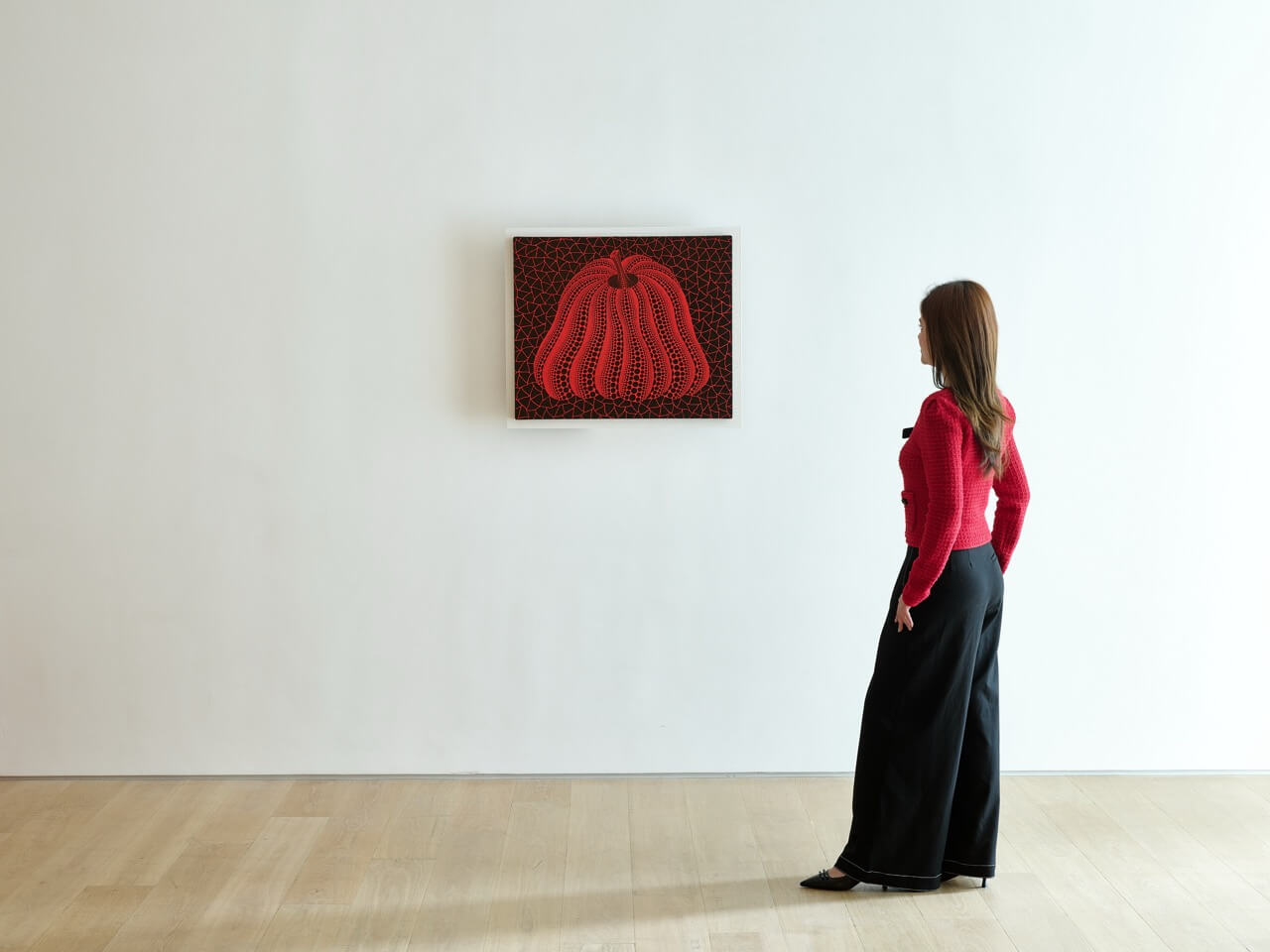
Turning the pages of art history, countless masters have left behind classic works using red as a medium. In Titian's *Assumption of the Virgin* (1516-1518), red is cleverly used as a visual bridge, connecting God, the Virgin Mary, and the apostles, allowing the viewer to directly experience the solemnity of religious faith. Matisse's masterpiece, *The Studio of Red*, fills the space with red, eliminating all illusions of perspective and depth, highlighting the pure power of color. Mark Rothko's use of red pushes emotional expression to its extreme; his vibrant red conveys warmth, passion, and a religious ecstasy. This immersive expression of "color as emotion" resonates across time with Yayoi Kusama's use of red. "One day I saw the red pattern on the tablecloth, and when I shifted my gaze, I discovered that the same pattern appeared on the ceiling, the windows, the pillars—the entire room was covered in it, even my body was covered in patterns. At that moment, I felt a sense of self-dissolution." From this recollection, it's clear that red has become a color imbued with destiny.
The Origin of Life: Yayoi Kusama's Vision and Soul
To understand Yayoi Kusama's "red," one must return to the artist's unique life experiences. From childhood, she was accompanied by severe hallucinations and mental distress. These visual experiences—especially the endlessly spreading dots and net-like structures—became the most fundamental driving force and material for her artistic creation. Her art is a magnificent ritual of poverty, externalizing and mastering inner illusions. Every color on her canvas, especially the dominant red, is a direct manifestation of her inner landscape. This red is the burning sensation of nerve endings, an eruption of vitality. Red is closely linked to Kusama's philosophy of "self-dissolution." Red permeates every corner of the painting, connecting the pumpkin itself with the net-like patterns in the background, creating a natural fusion between the two. Kusama views each grid as a tiny element that makes up the vast universe; therefore, the pumpkin is not an isolated existence, but rather one with heaven and earth.
Pumpkin: A symbol of life and self-incarnation
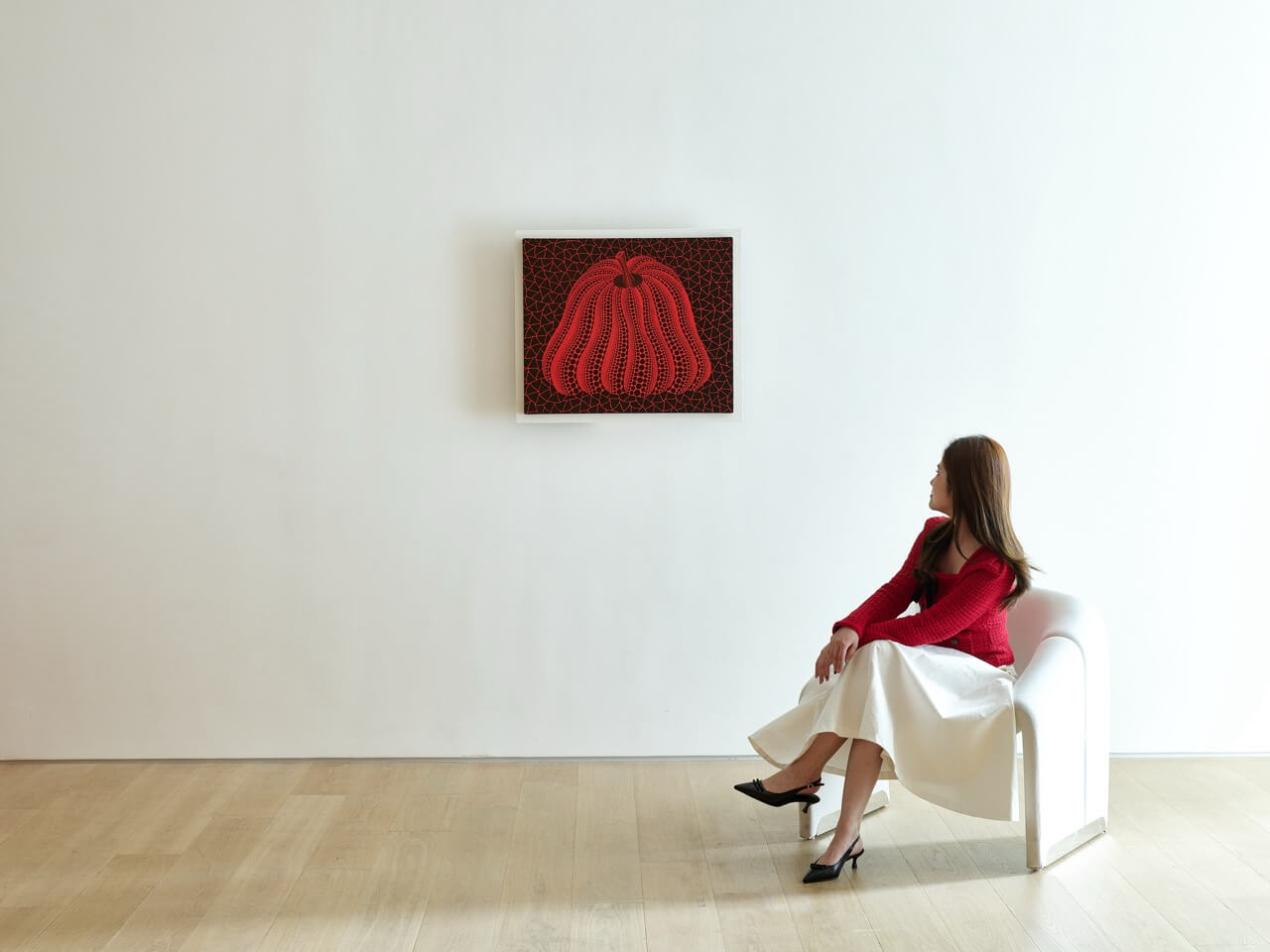
Beyond the abstract "infinite net," the pumpkin is undoubtedly Yayoi Kusama's most recognizable theme. The pumpkin is not merely a subject for still life painting; it is more like a spiritual symbol and self-incarnation of the artist, an emotional connection linking childhood memories to the infinite universe. This symbol originates from her upbringing—she was born into a family involved in agriculture in Japan, growing up surrounded by various plants, with the pumpkin being the most familiar and comforting among them. In her memory, the pumpkin is round and plump, resilient and unyielding, possessing a powerful vitality despite its lack of ostentatious appearance. This quality resonates deeply with her own personality, becoming a concrete projection of her spiritual world.
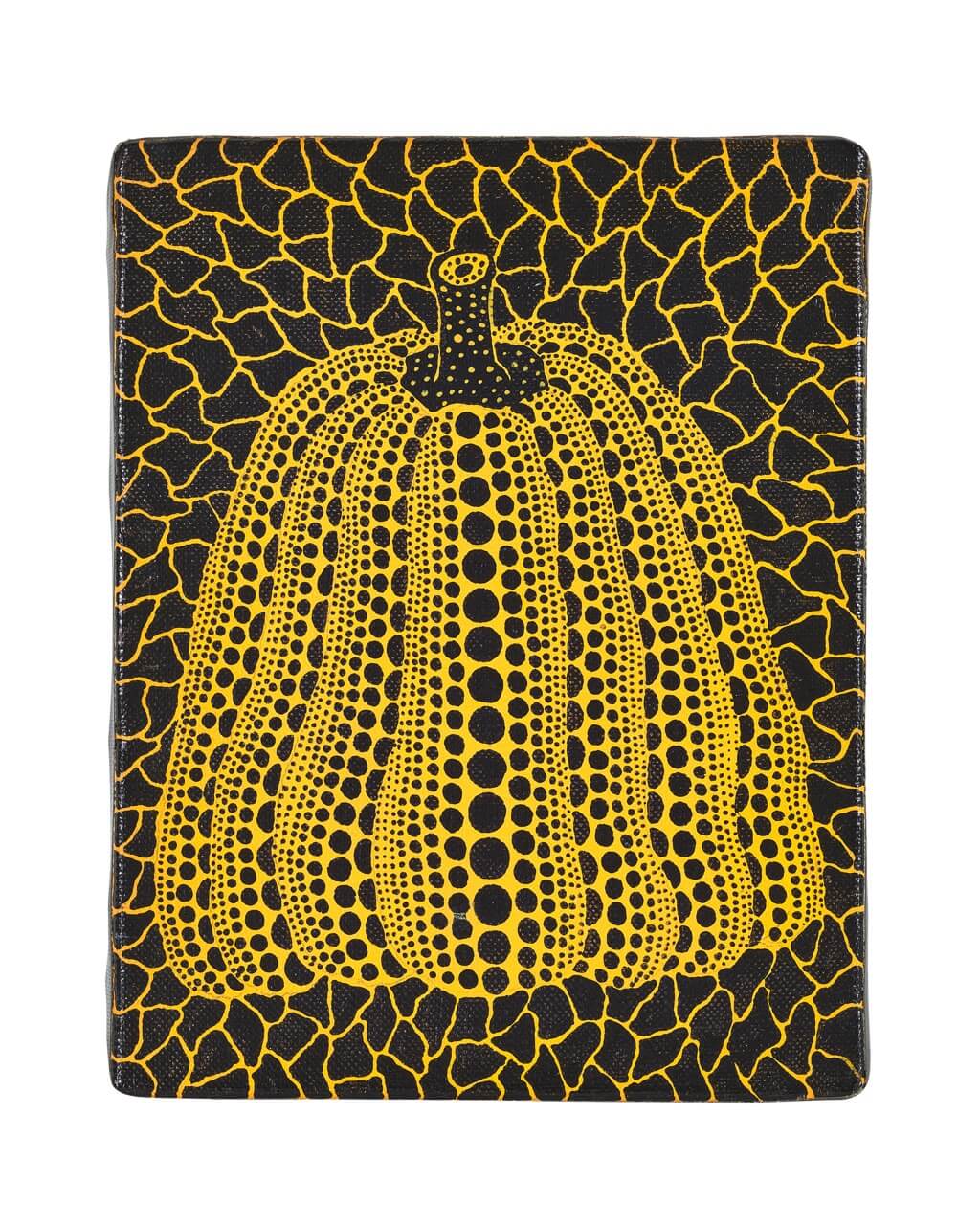
Yayoi Kusama, *Pumpkin*, painted in 1990.
Acrylic canvas, 18.2 x 14.2 cm
Estimate: HKD 2,000,000 – 4,000,000
The pumpkins familiar to the world, especially those by Yayoi Kusama, are predominantly yellow. Their warm and bright hue gives them a friendly appeal, making them a classic symbol. In 1993, at the Venice Biennale's Japanese Pavilion, Kusama created a sculpture of endless yellow pumpkins reflected in a mirror, a scene that became a classic in contemporary art history. Objectively speaking, red pumpkins are rarer, and compared to yellow pumpkins, they possess a different kind of innate nobility and grandeur.
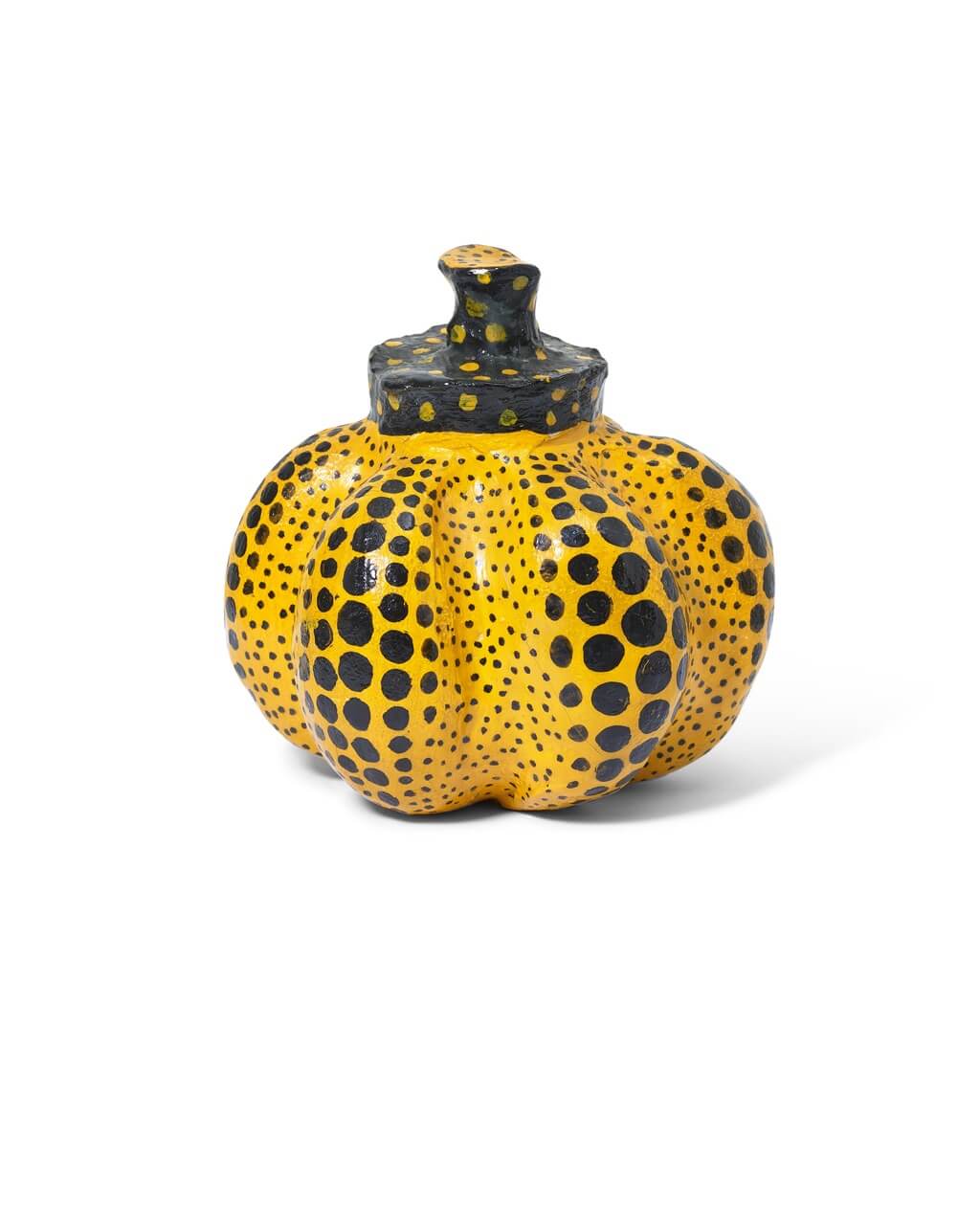
Pumpkin and Campbell's Soup
Yayoi Kusama's pumpkins have become a classic symbol in global contemporary art because they reflect the historical context of the Pop Art movement. Pumpkins, along with Andy Warhol's Campbell's soup pot, are among the most representative "everyday symbols" in postwar contemporary art history. In the 1960s, Pop Art broke down the boundaries between high art and popular art. Artists drew inspiration from everyday life, using flat, symbolic, and recognizable techniques to reconstruct artistic aesthetics and reflect the characteristics of postwar consumer society. Kusama's pumpkin paintings break free from the objective framework of depth and light and shadow, condensing into a highly recognizable symbol. In most cases, Kusama's pumpkins occupy the focal point of the composition, making the works not only the subject of still lifes but also a portrait of the artist.
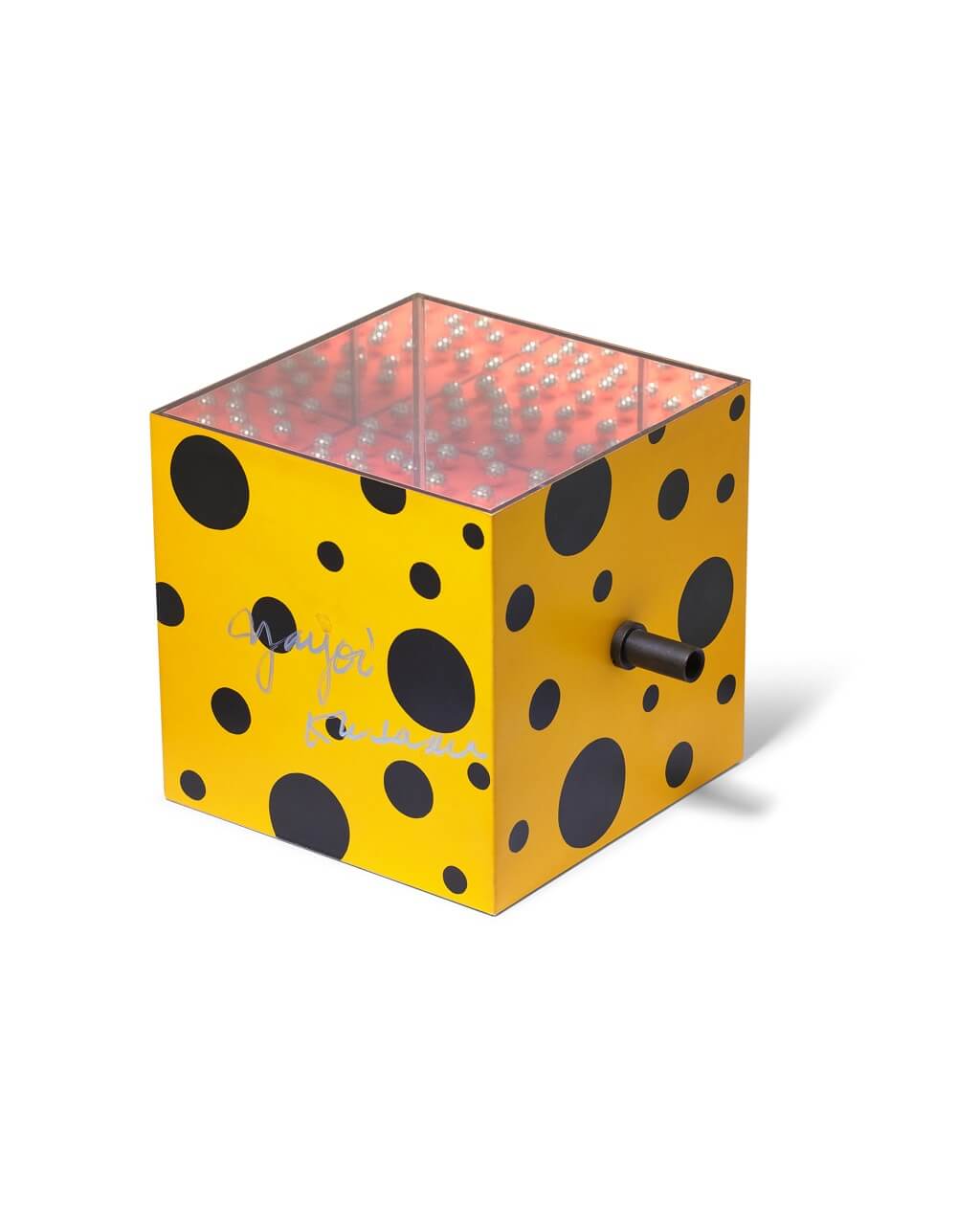
Each pumpkin artwork, though sharing the same theme, is a unique individual. Like humans, they possess distinct "personalities" and "forms." Some are slender, some round; some tilt slightly with a sense of movement, while others sit balanced and composed. A closer look at the undulations of their contours and the density, boundaries, and rhythm of their dots reveals subtle yet crucial differences in character within the same motif; it is precisely this "sameness within difference" that allows the pumpkin to become a memorable symbol for the public while retaining traces of the artist's craftsmanship and spiritual warmth. Andy Warhol's Campbell's Soup Pot emphasizes replication and standardization, reflecting on consumer society. Yayoi Kusama, on the other hand, emphasizes uniqueness and spirituality, viewing the pumpkin as a self-incarnation and spiritual totem. Even within the same Pop Art language, her unique spiritual connotations secure her an irreplaceable position in contemporary art history.
More than just red, it leads to infinity.
"More Than Red" is like a multifaceted prism, allowing us to glimpse the vast and profound creative universe behind a signature red masterpiece. Each piece is an entrance, leading to the same spiritual world of life, memory, obsession, and eternity. This is not merely a collection of works, but a rare and systematic aesthetic experience, inviting collectors to step into Yayoi Kusama's infinitely repetitive yet infinitely rich artistic realm.
Stay tuned to ArtPro for the latest updates on the global art market.