

Alberto Giacometti | Auction Market Personal Report
Alberto Giacometti is the creator of "the world's most expensive sculpture". His sculpture works are unforgettable. In auction market, Giacometti had three works sold above USD $100 million. From the beginning of 2020 to November, he had 3 works sold above USD $10 million and 4 works exceeded one million dollars on auction market. His sculpture Femme Leoni of female figure was sold for USD $25.91 million on October 28 which is the highest priced lot in Impressionist and Modern Art Evening Sale of Sotheby's New York. Now, ArtPro will takes you to explore Alberto Giacometti, this greatest and most expressive sculptor in post-war Europe.

Alberto Giacometti, born in Stampa, Switzerland in October 1901, died in Chur in 1966, a superexistentialist sculptor, painter and poet. In Giacometti's creation of his whole life, the greatest achievement is the ingenious figurative sculpture. He create these slender and obscure sculptures to reflect the psychological fear and loneliness that prevailed after the Second World War. Alberto Giacometti's artistic creation has experienced three stages: Early Studying Period (before 1926), Surrealism Period (1926-1935) and Realism Period (after 1936).
Part I. Auction Market Observation
1.Ranked among the 100 million dollar club for six times, price index reached peak in 2013
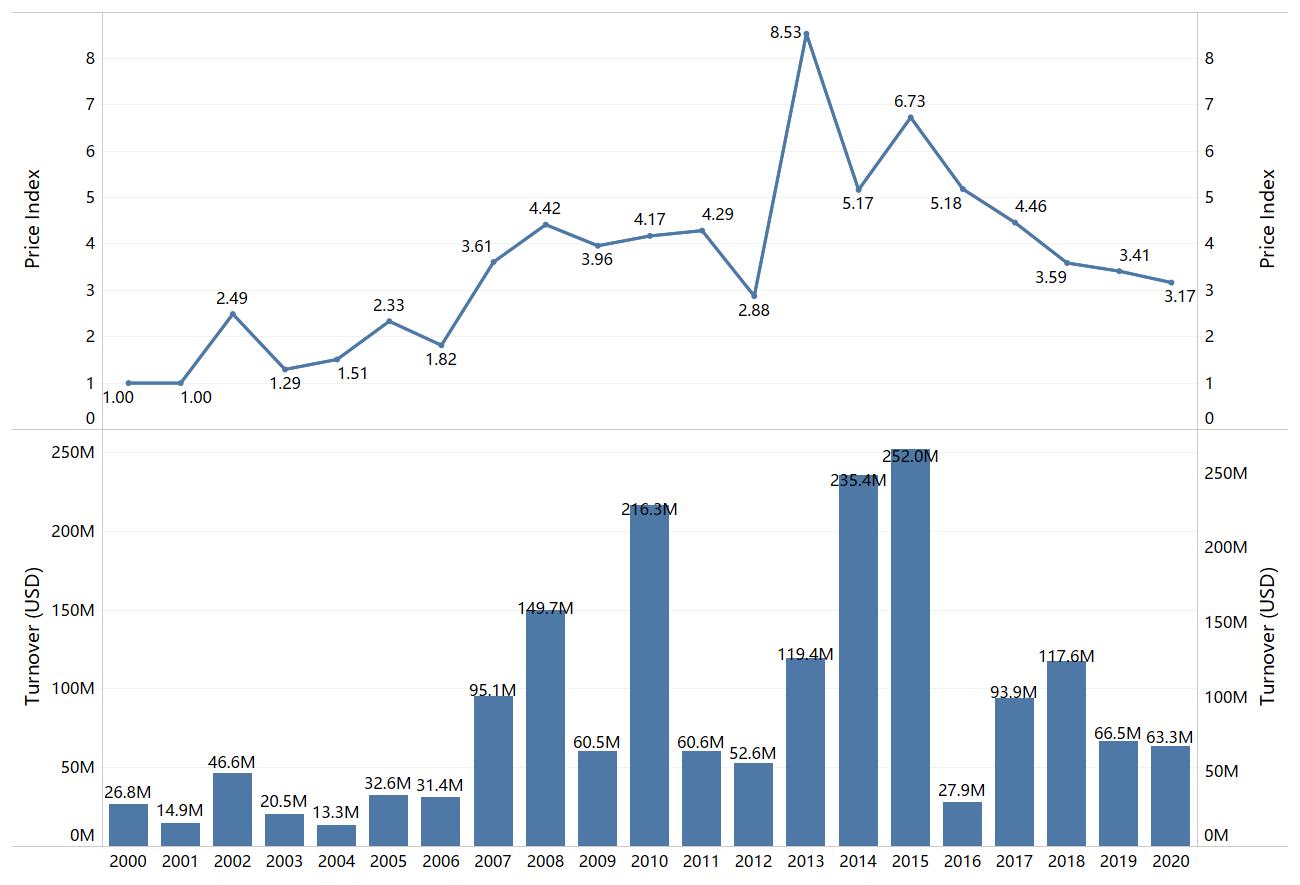
Alberto Giacometti's turnover on market has expericed fluctuations in over 20 years. He has been among the 100 million dollar club for six times, and the annual turnover has exceeded 200 million dollars for three times. The total volume of transactions is closely related to the release of important works in auction market, such as in 2010, 2014 and 2015, there are sculptures of Giacometti have been successively sold in high prices of 100 million dollars. In the Top20 list of world's most expensive artworks, sculptures occupy only 4 places, which include 3 works of Giacometti that are above 100 million dollars. From 2000 to 2012, Giacometti's market price index maintained a steady growth. Until 2013, his price index risen to the highest point on history. After setting a new personal auction record in 2015, Giacometti's market price index has been slightly called back.
2.High-priced works are concentrated on Realism Period
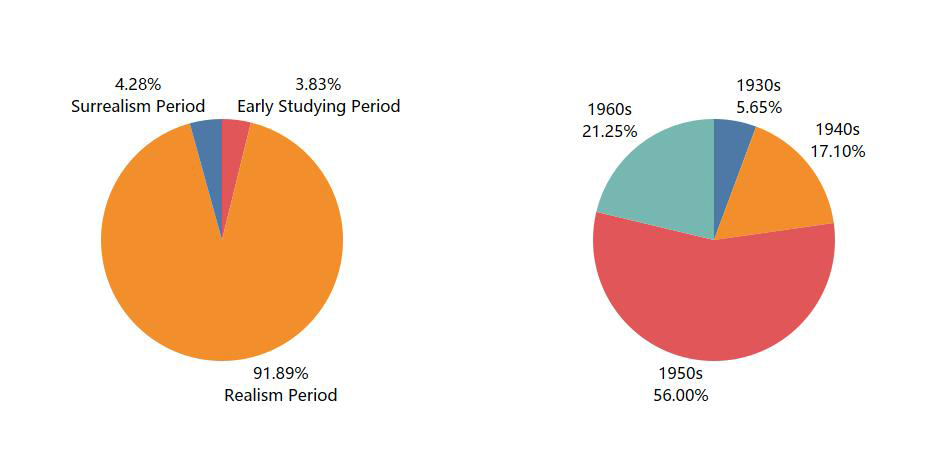
Right:Proportion of the number of works sold over one million dollars in different periods
Giacometti's works from the Realist Period (after 1936) accounted for 90% of the total turnover. The importance of the Realist Period in his career goes without saying. Among the works sold for over one million dollars, the number of works from 1950s was far ahead, followed by the 1960s, then 1940s, and 1930s had the least proportion.
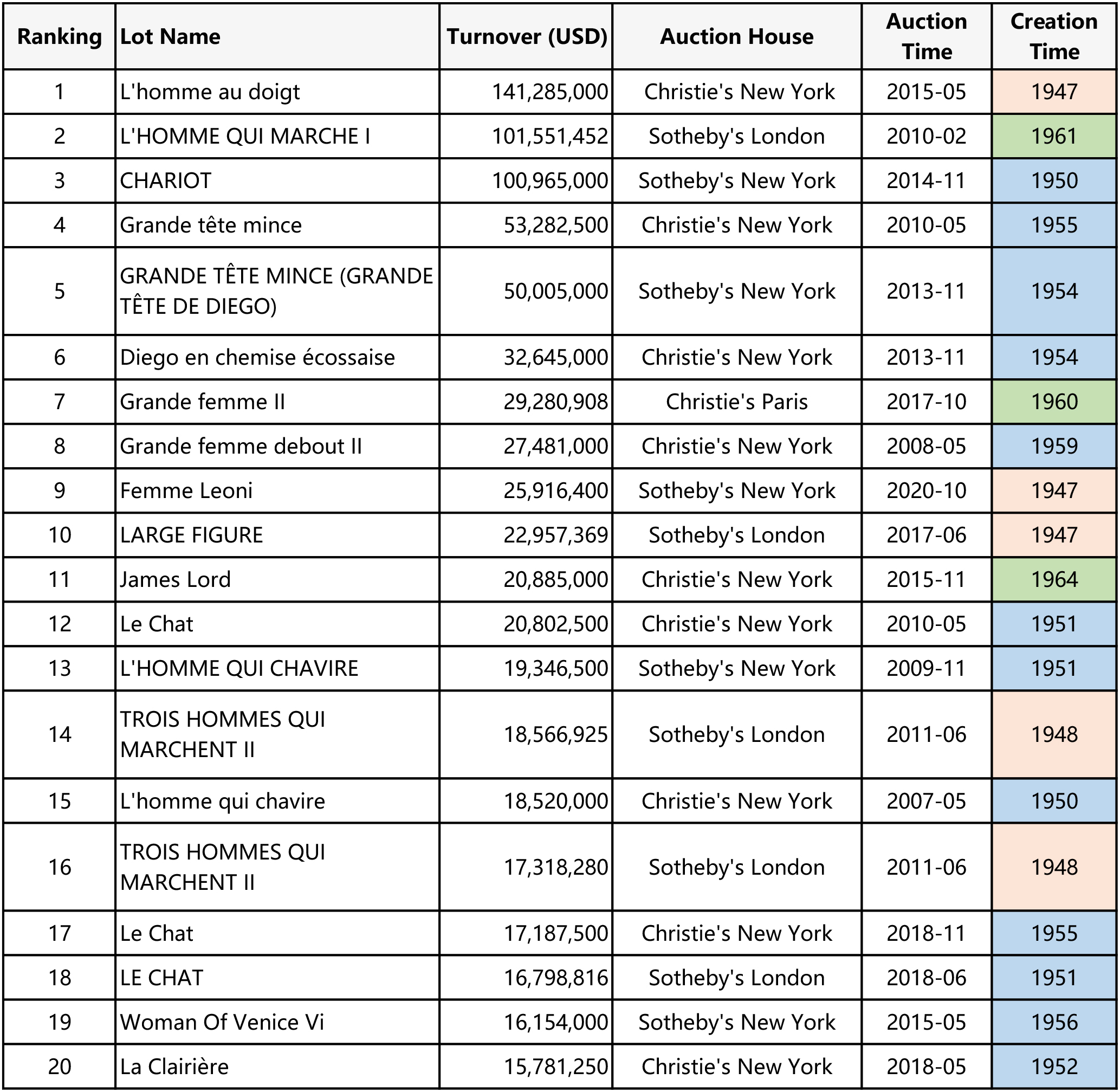
In auctions over the years, Giacometti's works have been sold for more than 10 million US dollars for 44 times. Looking at the list of his Top 20 works, all of them are from the Realist Period (after 1936), and the works completed in the 1950s occupy 12 seats, 5 are 1940s, and 3 in 1960s. On October 28, 2020, the sculpture Femme Leoni presented at Sotheby's New York ranked as Top 9 in Giacometti's masterpieces list with a high price of USD $25.91 million.
3.The main battlefield of sales of Giacometti's works is in New York
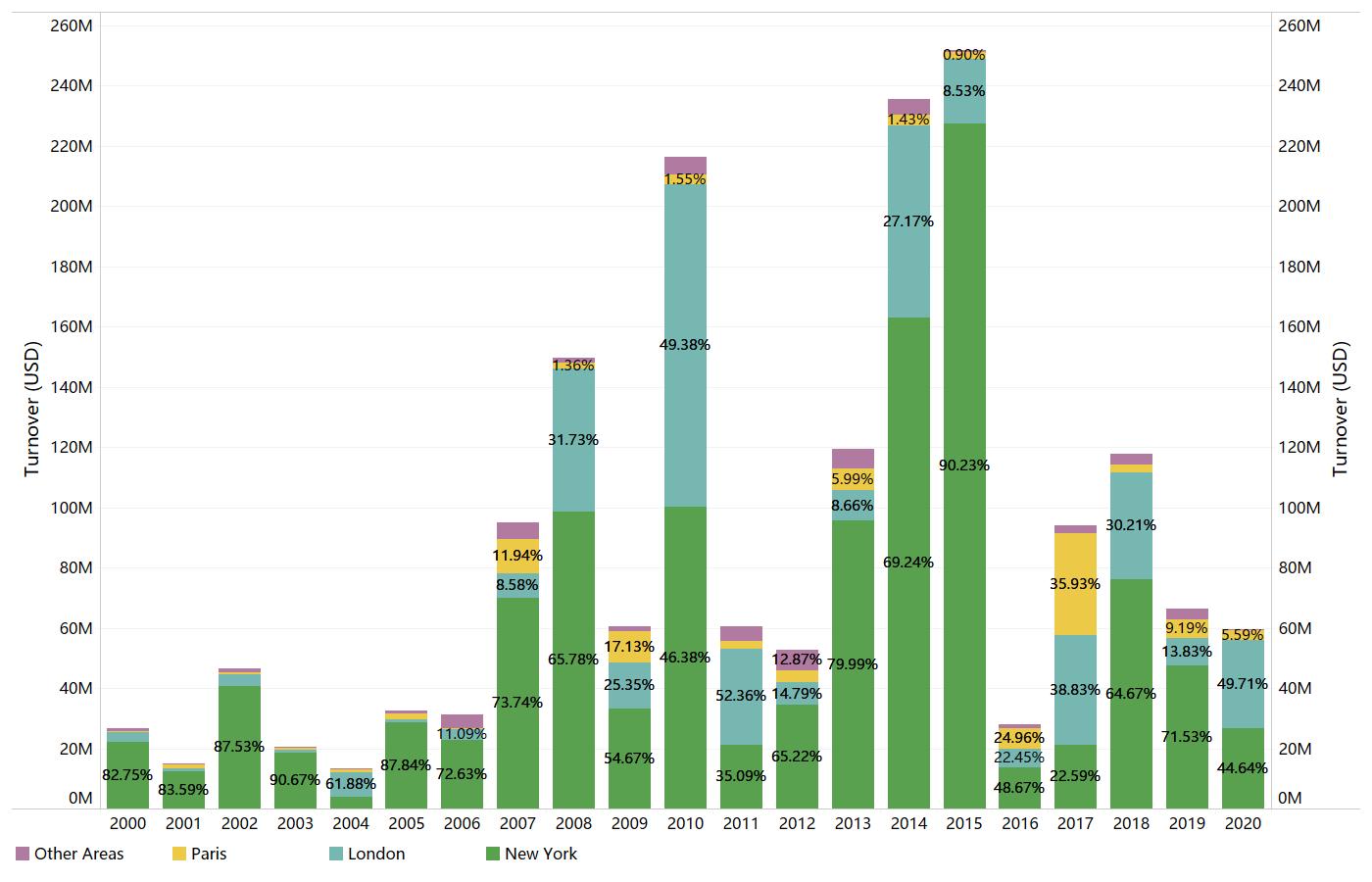
Alberto Giacometti was born in Switzerland, but his works are highly recognized in New York. In the auctions over the years, his works were mainly sold at New York, followed by London and Paris. Among Giacometti's Top 20 works, 14 of them were sold in New York, 5 were sold in London, and 1 was sold in Paris.
Part II. Interpretion of Art Career
1.Early Studying Period: Before 1926
Alberto Giacometti was born in a family of artists. His father was the impressionist painter Giovanni Giacometti. However, looking at Giacometti's life-long career, impressionism are not the main influence of his creation. He started to draw sketches at the age of 9, and making color paintings at 12, then created the first sculpture work when he was 13. In 1919, he studied at the Geneva School of Arts and Crafts; from 1920 to 1922, he studied Italian painting in Italy, under the influence of Tintoretto. In 1922, Giacometti moved to Paris, and studied the sculptor Antoine Bourdelle, during this time he had sketched sculptures of the ancient civilizations along the Persian Gulf and Egypt, making copies of portraits from the middle Ages. In Paris, he began to be influenced by Cubism and showed a lot interest in Aboriginal sculptures of Oceanic art.
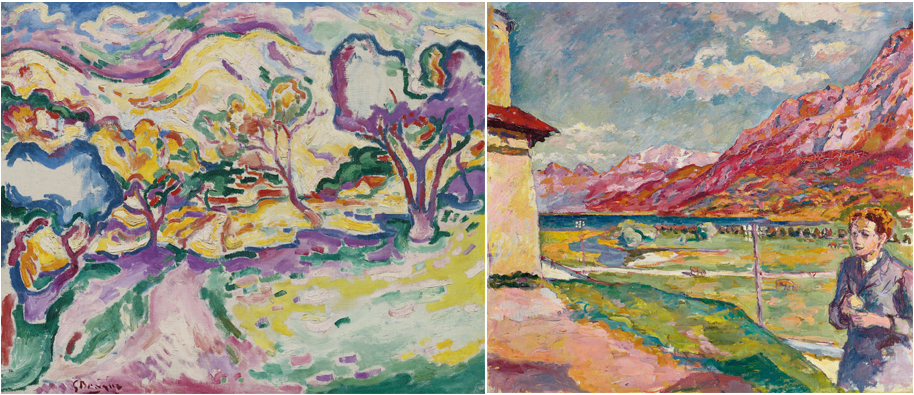
Right:Work of Alberto Giacometti
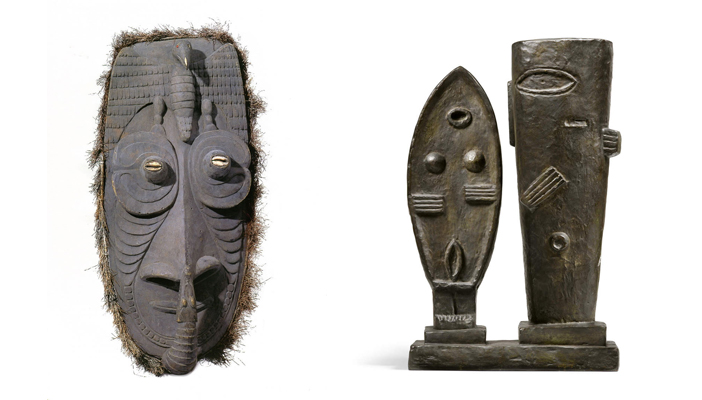
Right:Early sculptures of Alberto Giacometti
2.Surrealism Period: 1925-1935
From 1926 to 1935, was the Surrealism Period of Alberto Giacometti. At the end of the 1920s, in the works of Giacometti, figures were seen as transparent structures rather than as clumps of entities. In 1929, he entered the world of surrealist artists in Paris, met Mathieu, Miro and others, and created a series of sculptures. In the surrealism period, the two works The Palace at 4 a.m. and Hands Holding the Void are regarded as the best and most original.
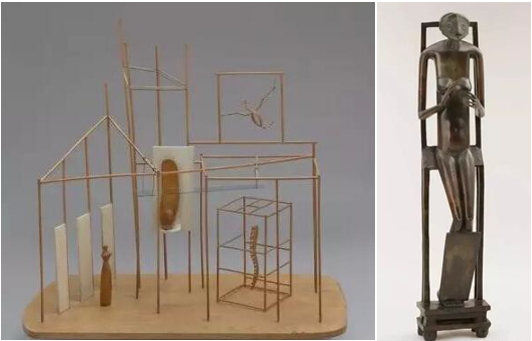
Right:Hands Holding the Void,1934
3.Realism Period: after 1935
After 1935, Giacometti broke up with the Surrealists and turned to realism. He began to study real models and entered a five-year exploration period. He prefers to choose close people as models, including his brother, wife, lover and friends. In 1938, Giacometti was in hospital due to an accident, and he had more thoughts about art. From 1940 to 1945, during World War II, he began to create miniature sculptures based on memory in Geneva, and developed a unique style of figures and busts. His stick-think characters are the symbols of people who have been scorched and tortured by the war, that reveal the evils of violence.
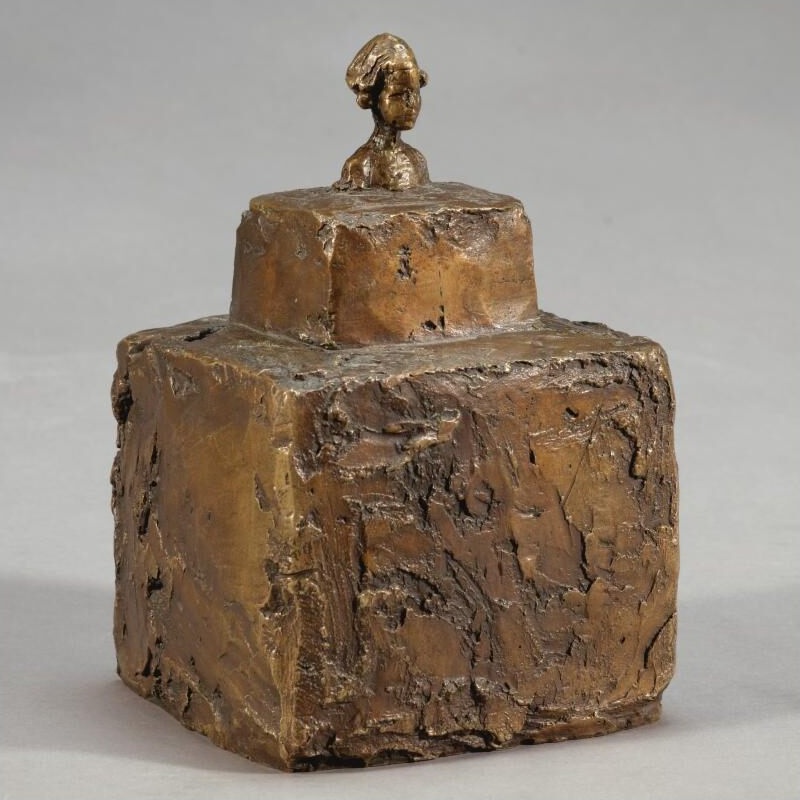

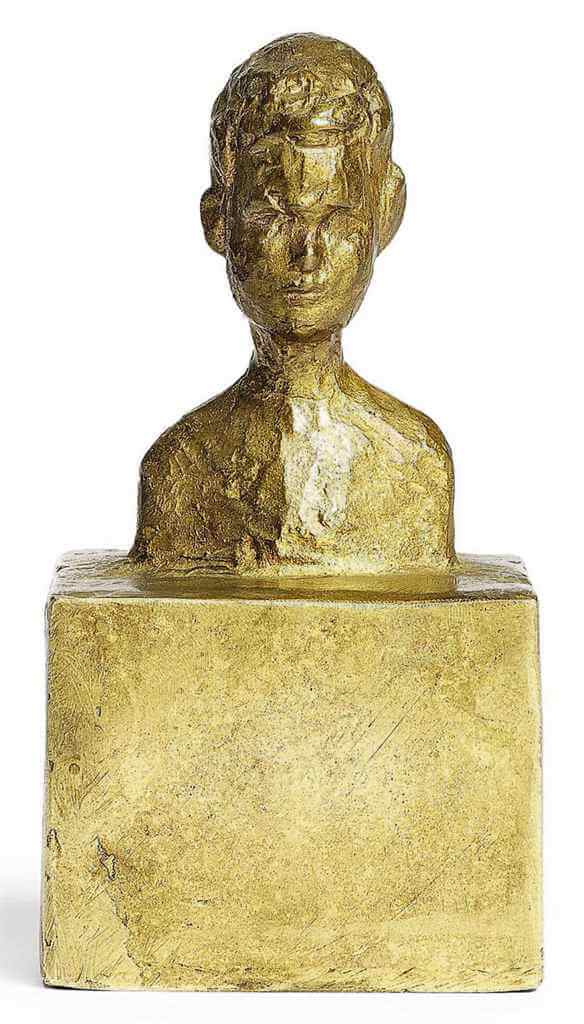
After 1946, Giacometti returned to Paris from Switzerland. He continued the previous style to create characters with rough, eroded, and heavily worked surfaces like ghosts. But the sculptures have changed from miniature to a larger size, with the beauty of nihilism. These works have become his most recognizable creations in the future. From the end of the 1940s, Giacometti no longer polish the surface of his works to be as smooth as classical sculptures, instead, he meticulously left the marks of hand working, keeping them in the original materials and becoming part of the work.
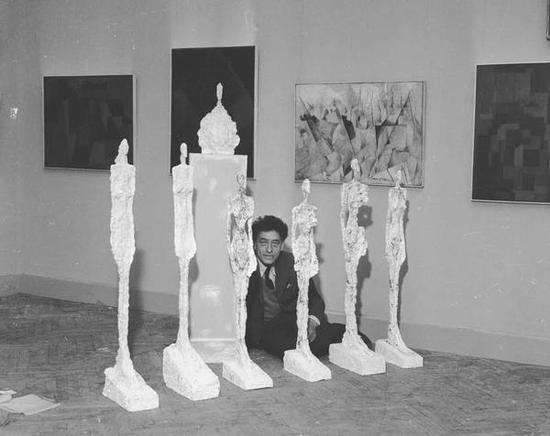
Lots sold over 100 million dollar
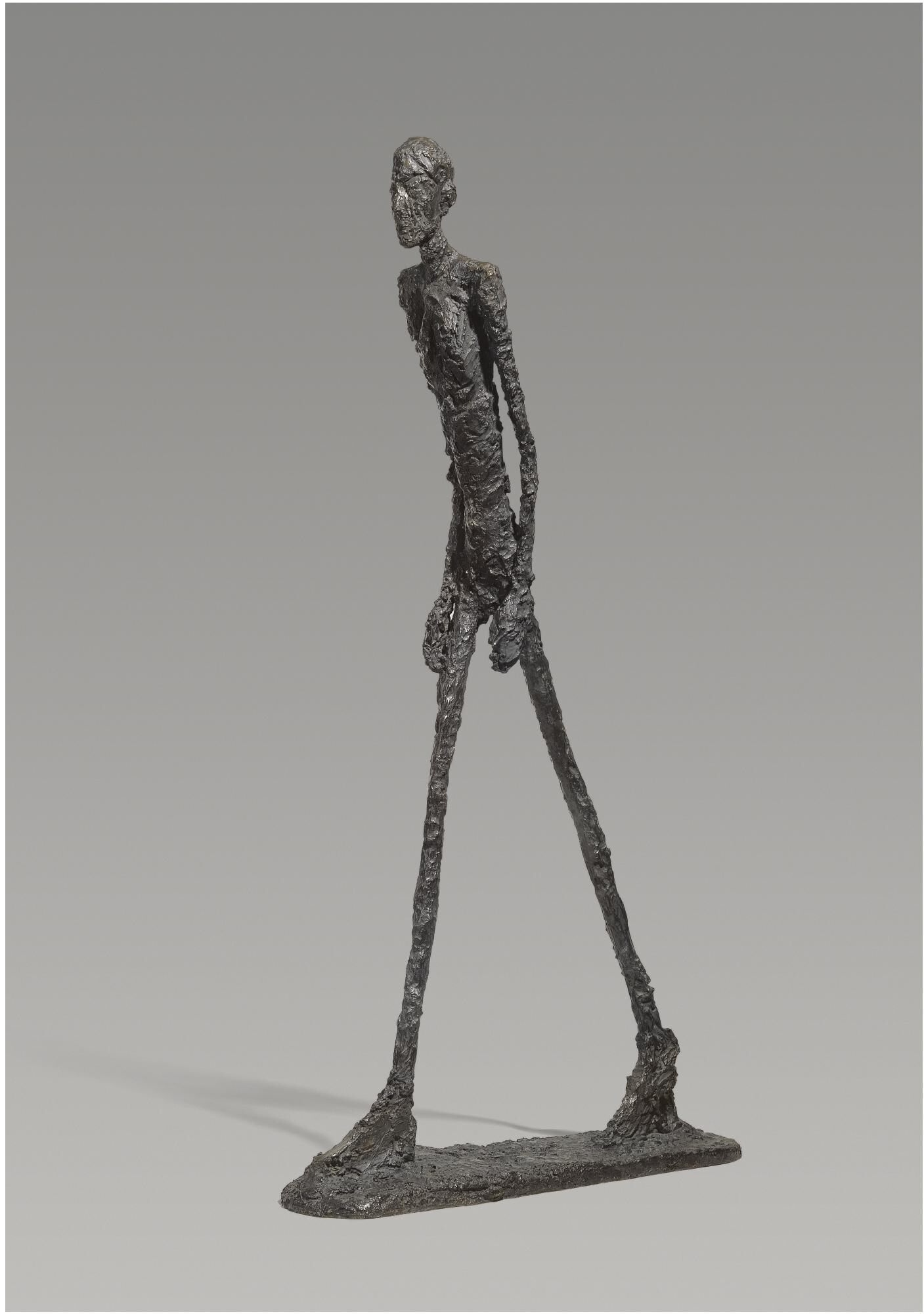
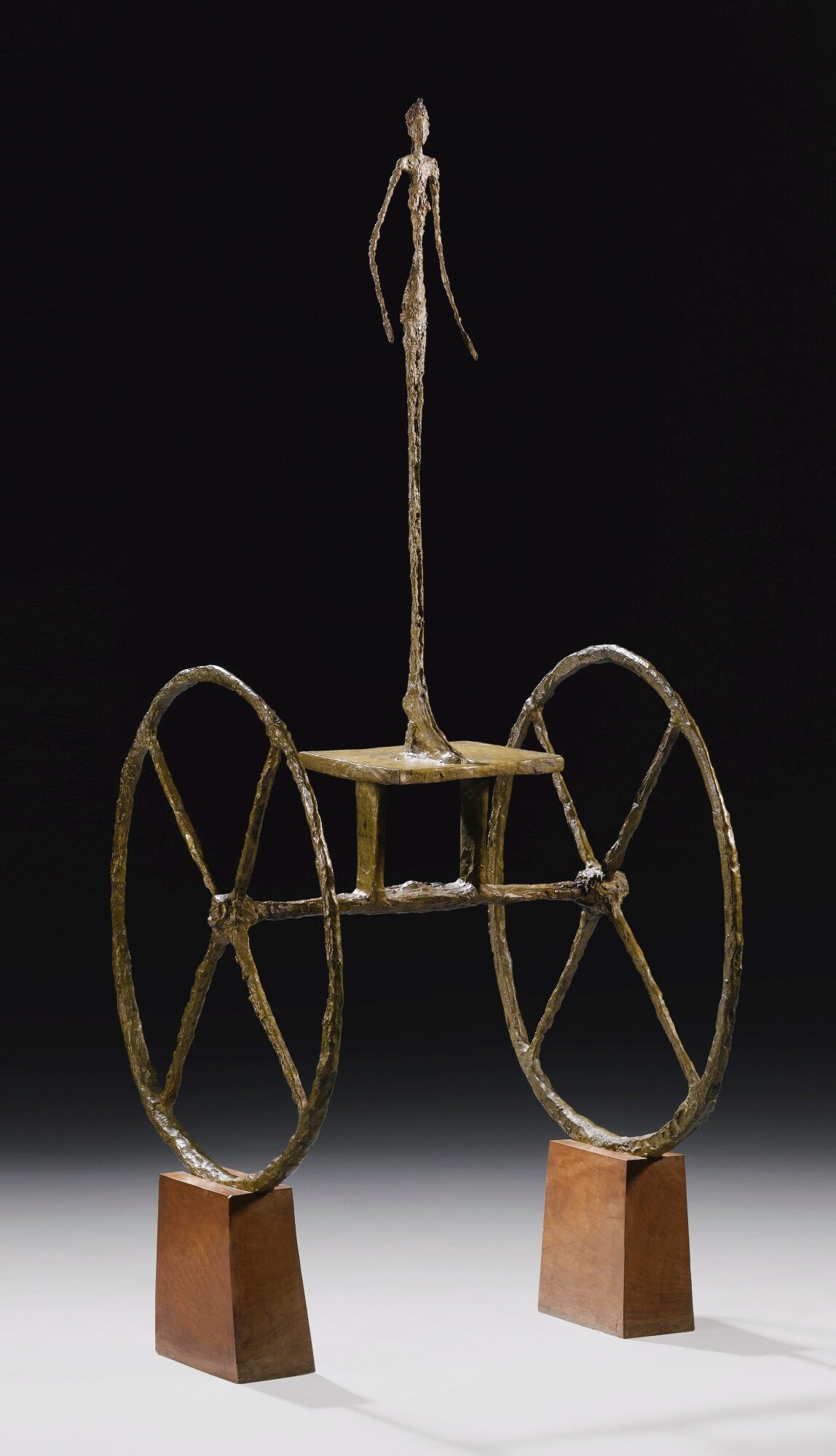
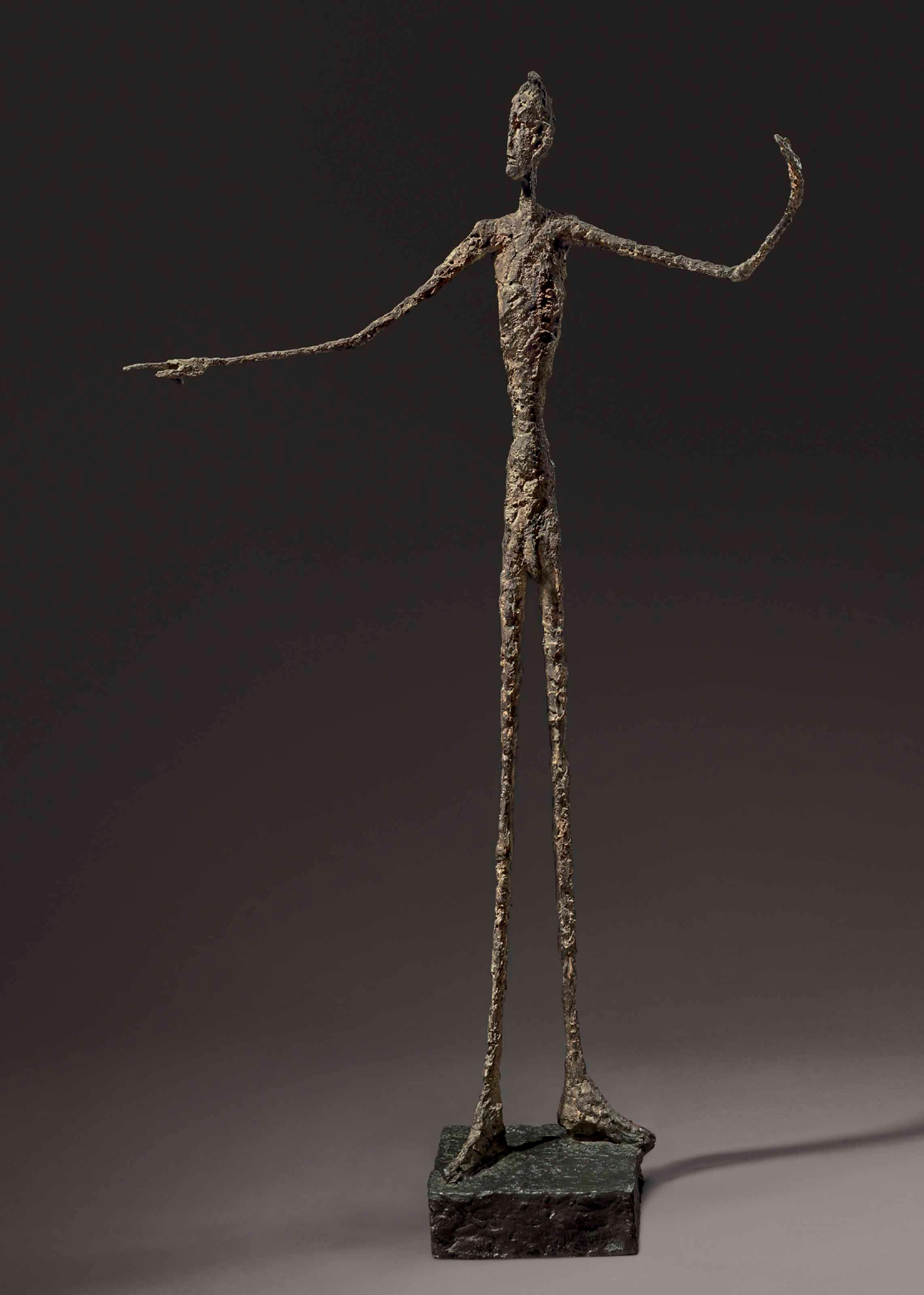
In 2010, L'HOMME QUI MARCHE I (more than 1.8 meters high) made in 1961 was sold for USD $101.5 million at Sotheby's; in 2014, the bronze sculpture CHARIOT (1.4 meters) was sold for USD $101 million; in 2015, L'homme au doigt (over 1.7 meters high), completed in 1947, was sold for USD $141 million at Christie’s, setting the auction record of Giacometti until today and becoming the most expensive sculpture in the world.
Bust Sculptures:
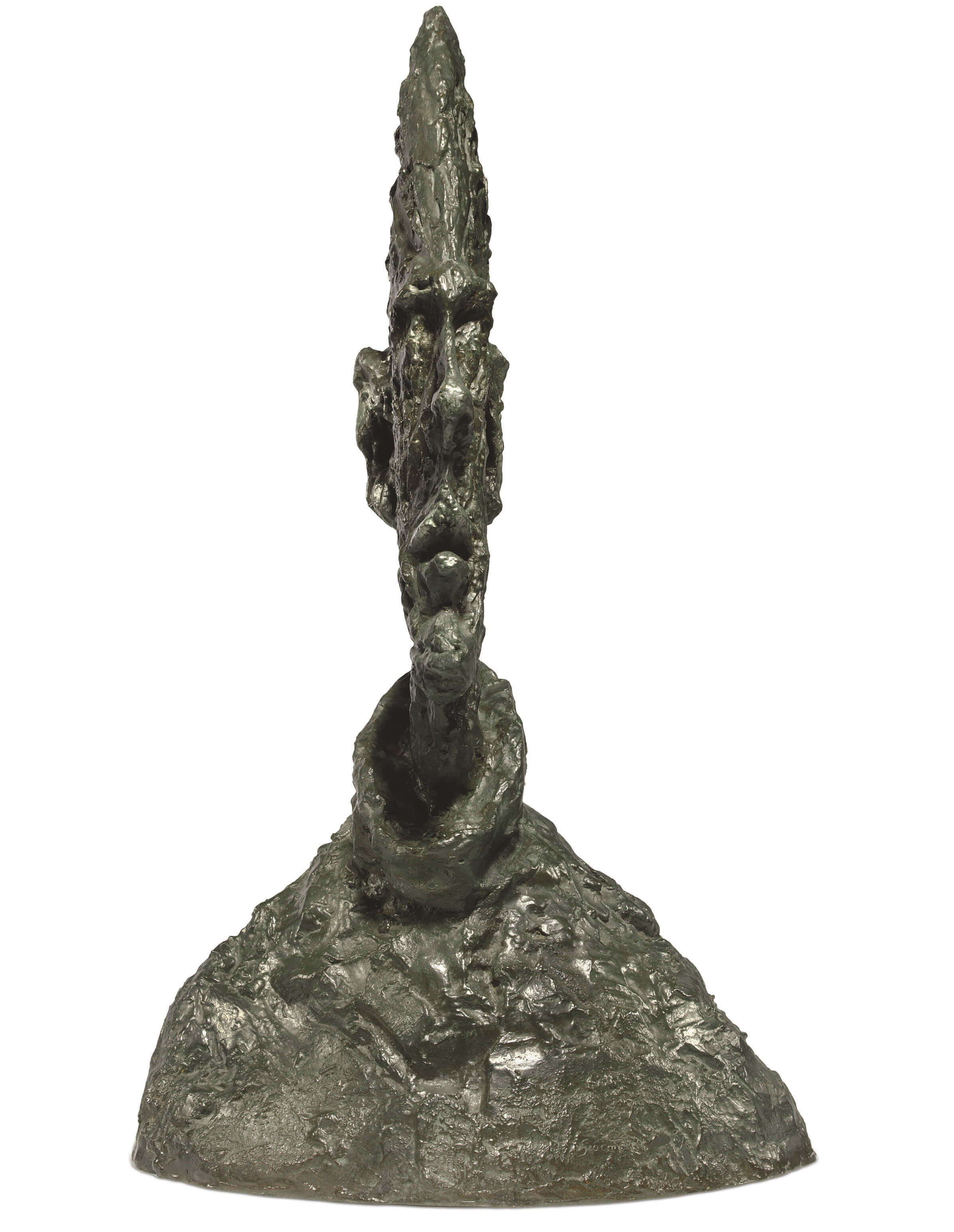
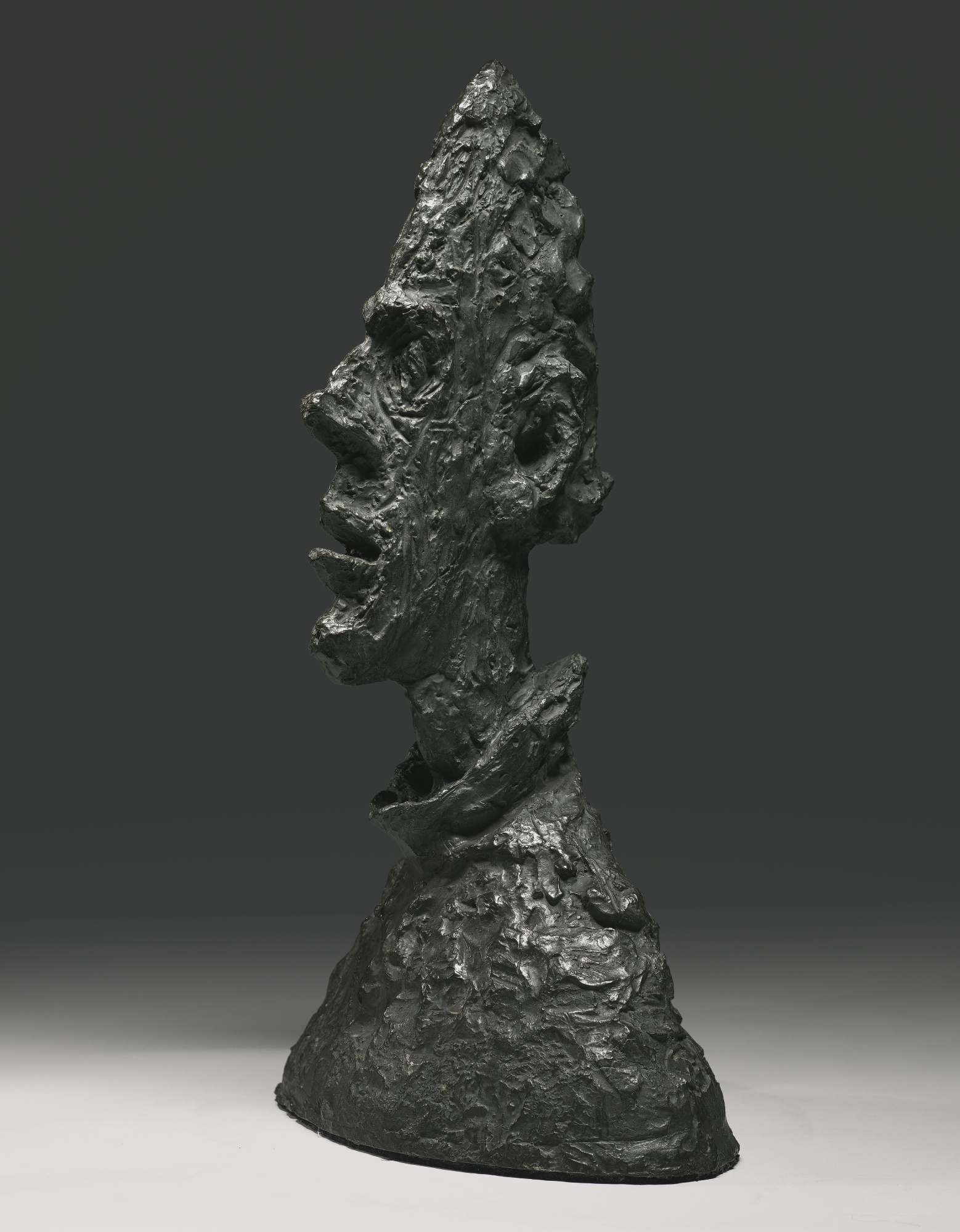
Besides the most iconic tall and slender figurines, Giacometti's masterpieces have also included large-size busts. In the list of his Top 10 works, 2 of them are head sculptures from the 50s. In 2010, Grande tête mince created by Giacometti in mid-1950s was sold at Christie's for USD $53.28 million; in 2013, his work GRANDE TÊTE MINCE (GRANDE TÊTE DE DIEGO) based on his brother Diego, was sold at Sotheby's with a high price of USD $50 million.
Painting Works
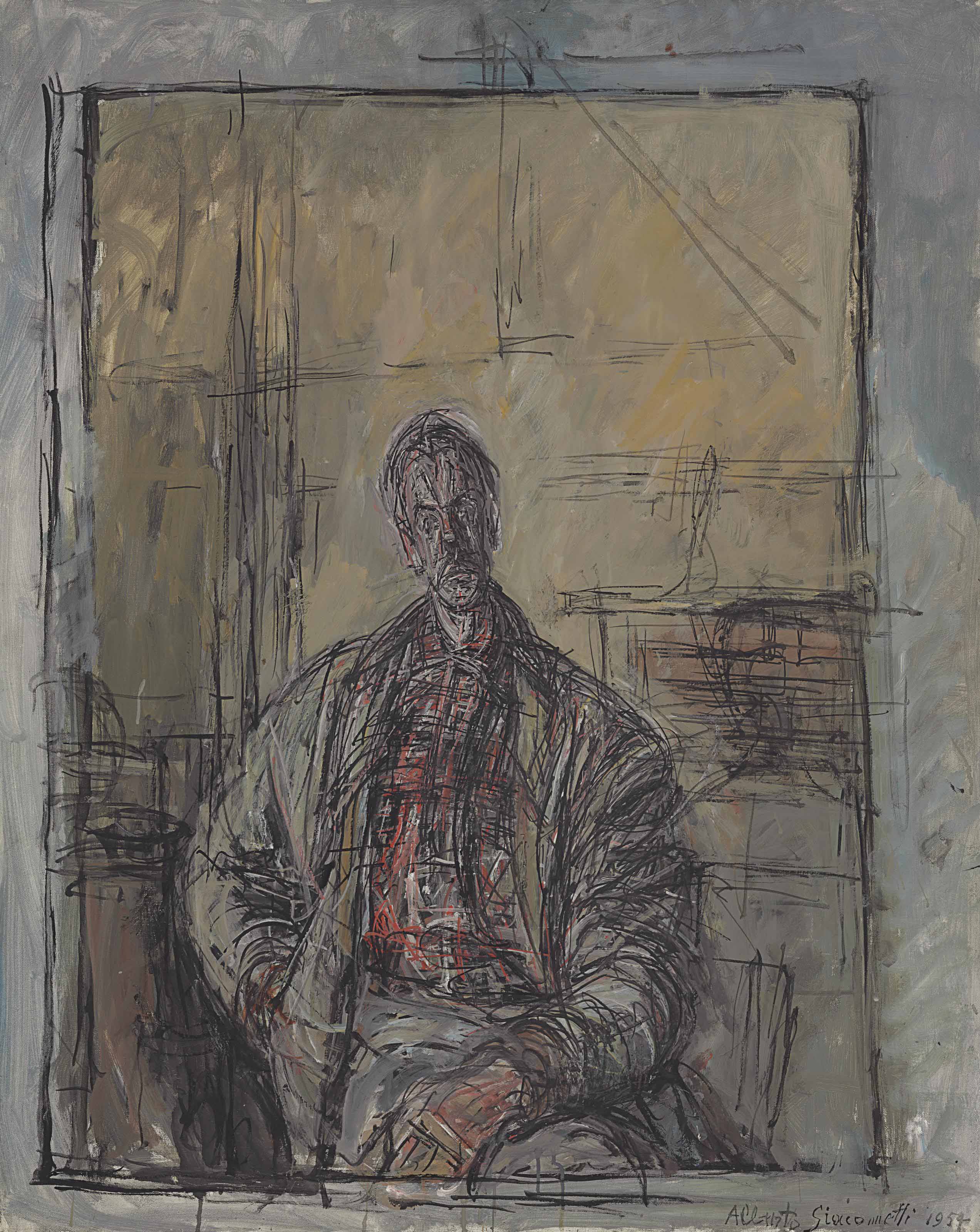
A large part of Giacometti's paintings were created after 1947, mostly sketches. The color of his paintings are limited in warm grey, black, brown and milky white. The people in his paintings are as slim as the sculptures with loneliness and desolation. Among his Top20 list, two of them are paintings.
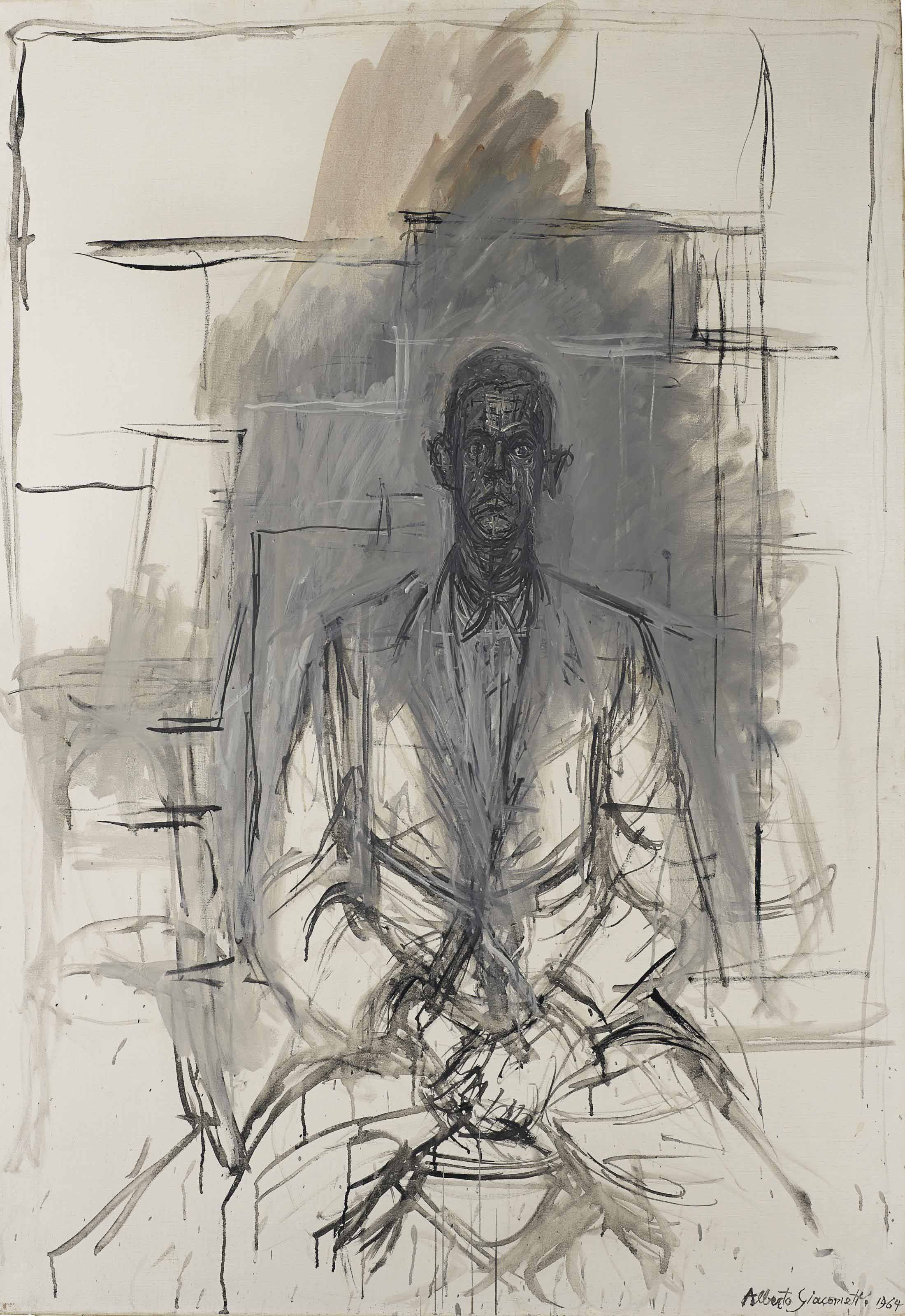
Regardless of artistic achievement or market price, Giacometti is a well-deserved master. His unique works have strong vitality and a sense of historical time and place, that directly reveal the loneliness and sadness of people in various ages. The multiple high priced sales on the sculpture market have made Giacometti a legendary figure in the history of global auctions.
