
Exhibition | Visions of Lush Waters and Green Mountains: Ecological Philosophy and Future Visions in a Major Art Exhibition
From September 16 to October 8, 2025, a high-value art exhibition not to be missed, "Habitat Painting - Painting Art Exhibition of the 5th World Biosphere Reserve Conference", will be held on the second floor of the Ecological Research Center in Tianmu Future Valley, Lin'an District, Hangzhou.
This is not only a visual feast, but also a spiritual journey into nature. Nearly one hundred carefully selected paintings—the ethereal beauty of traditional Chinese painting, the rich intensity of oil paint, the clarity of watercolor, and the profoundness of printmaking—use diverse artistic languages to engage with the ecological beauty of Tianmu Mountain and Qingliang Peak. Three thematic exhibition areas progress step by step, from the natural beauty of "the coexistence of all things" to the humanistic thinking of "everlasting greenery" and finally to the sustainable vision of "harmony and sustainability," offering an immersive experience of the harmonious landscape of humanity and nature, from mutual observation to mutual support and coexistence.
"Inhabiting the World" goes beyond the typical landscape exhibition. It is an ecological enlightenment through art, a dialogue of civilizations for an international audience, and a reminder that protecting nature is not just the responsibility of scientists or governments. It is about aesthetic inheritance, cultural awareness, and how every ordinary person views the relationship between themselves and all things.
As soon as you step into the exhibition hall, Xu Jiang's series of paintings "Towering Trees" captures everyone's attention with its silent and tremendous power."Trees are sculptures of time." Standing alone, these towering giants bear witness to history and change. Their trunks are as thick as the earth's spine, their branches twisted like struggling arms. Their majestic vitality, mingled with the vicissitudes of time, looms large before our eyes. Chen Haiyan, long based in Lin'an, Zhejiang, transforms the lush greenery of her surroundings into a flowing pastoral poem in her "Tianmu Mountain" series. One with strength, the other with tenderness, one with power, the other with grace, these two artists, through their distinct artistic languages, express a shared reverence and attachment to nature. As we pause before the works in the "Symbiosis of All Things, Natural Spiritual Realm" section, taking in the grandeur of the thousand-year-old cedar, the tranquility of the lakeside dawn, and the sheer depths of the canyon, we witness a magnificent "epic of nature" that remains untouched by human intervention.
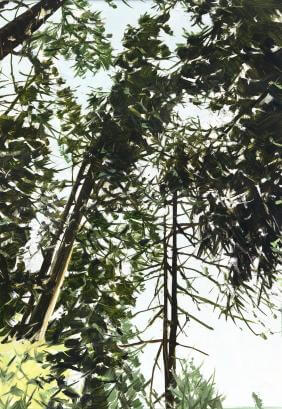
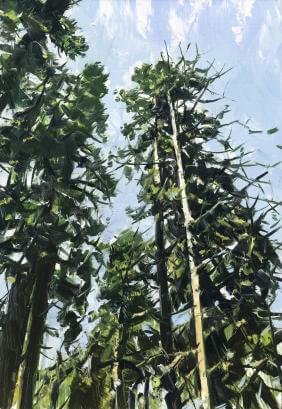
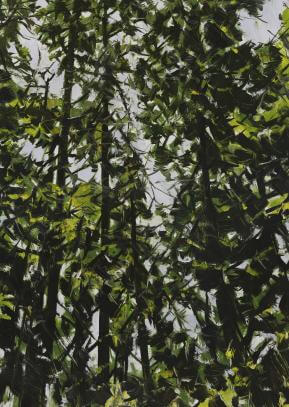
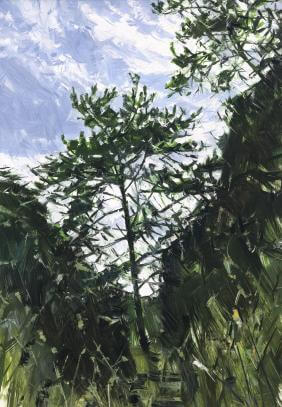
Towering Trees (Series of 18 Pictures)
Xu Jiang
Oil painting, 80cm×60cm
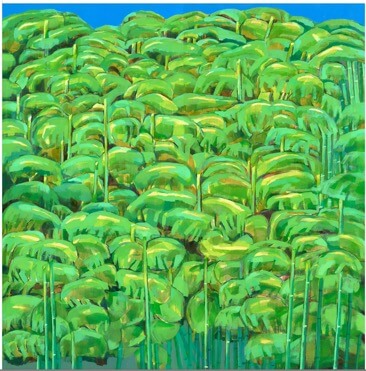
Tianmu Mountain - Green Bamboo
Chen Haiyan
Oil painting, 185cm×185cm
All of this invites reflection on the profound philosophical implications underlying it, embodying the ideal of "harmony between man and nature" in classical Chinese philosophy. Huang Binhong once posited, "When we look at a mountain, we must appreciate its inherent beauty." His depictions of the night mountains, woven through the "dark, dense, thick, and heavy" ink, transcend external form, reaching the inner breath and rhythm of the mountains and rivers. In Chen Jian's "Lake and Mountain Scenery," water vapor, light and shadow, mountains, and sky intertwine and blend into an indivisible whole. "Cleansing the mysteries, clearing the mind, savoring the images," the artist, with a tranquil heart, reflects the myriad forms, leading the viewer into a spiritual realm of self-forgetfulness.In the section “Ingenuity Guardian, Everlasting Greenery”, you will understand that “harmony between man and nature” is not an abstract philosophy, but the way Chinese people treat nature.It is integrated into the painter's ink and wash brushwork, and it is written in the phenological cycle of the 24 solar terms. The artist uses a blend of freehand and realist techniques, and writes from the heart to convey the ethical concepts of "respecting things" and "cherishing life" in Chinese ecological culture.
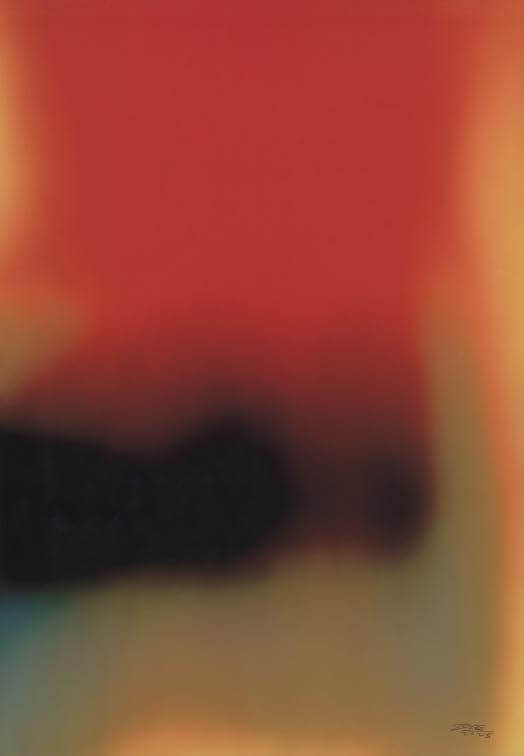
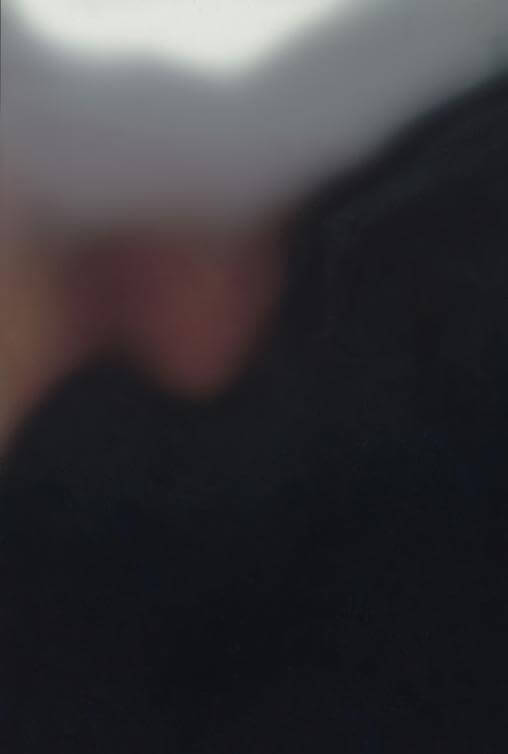
Lake and mountain scenery
Chen Jian
Watercolor on paper, 100cm×120cm×2 pieces
In the third section of the exhibition, “Guarding with Craftsmanship and Sustainable Harmony,” art is not only a vehicle for expressing emotions and using metaphors, but also an important means of recording, interpreting, and even participating in social ecological practices.Artists, conducting field research, delved into Zhejiang's countryside, mountains, and riverbanks, using their brushes to question: "How can lush waters and lush mountains truly become gold and silver mountains?" From the water ecological management of the Qianjiang River source, to the rural transformation brought about by the "Ten Million Project," to the planning vision of low-carbon cities... art uses micro-narratives to reflect macro-strategies, elevating the "Chinese Story" beyond slogans and making it tangible. Ye Luying's "Chronicles of the Earth Award - 'Ten Million Project'" avoids directly embracing policy jargon. Instead, it employs a "Classic of Mountains and Seas"-style imaginative forms and meticulously colored aesthetics to construct a utopian vision of "humanity and gods working together." In her work, rural revitalization is not a cold, impersonal project, but a modern myth imbued with Eastern spirituality and collective faith. Wang Xiaoyun's "Guarding the Mythical Bird" documents the rescue of the Chinese Crested Tern (known as the "Mythical Bird") with an almost diary-like sincerity and tranquility. She avoids overemphasizing the urgency of the action or the dangers of the environment, choosing instead to capture the moment of focus, compassion, and symbiosis. With the tenderness of his pen, Wang Xiaoyun responded to Ye Luying's grand narrative, and together they completed a double tribute to China's ecological practice: it can be both an epic reconstruction and a persistence in subtle details.
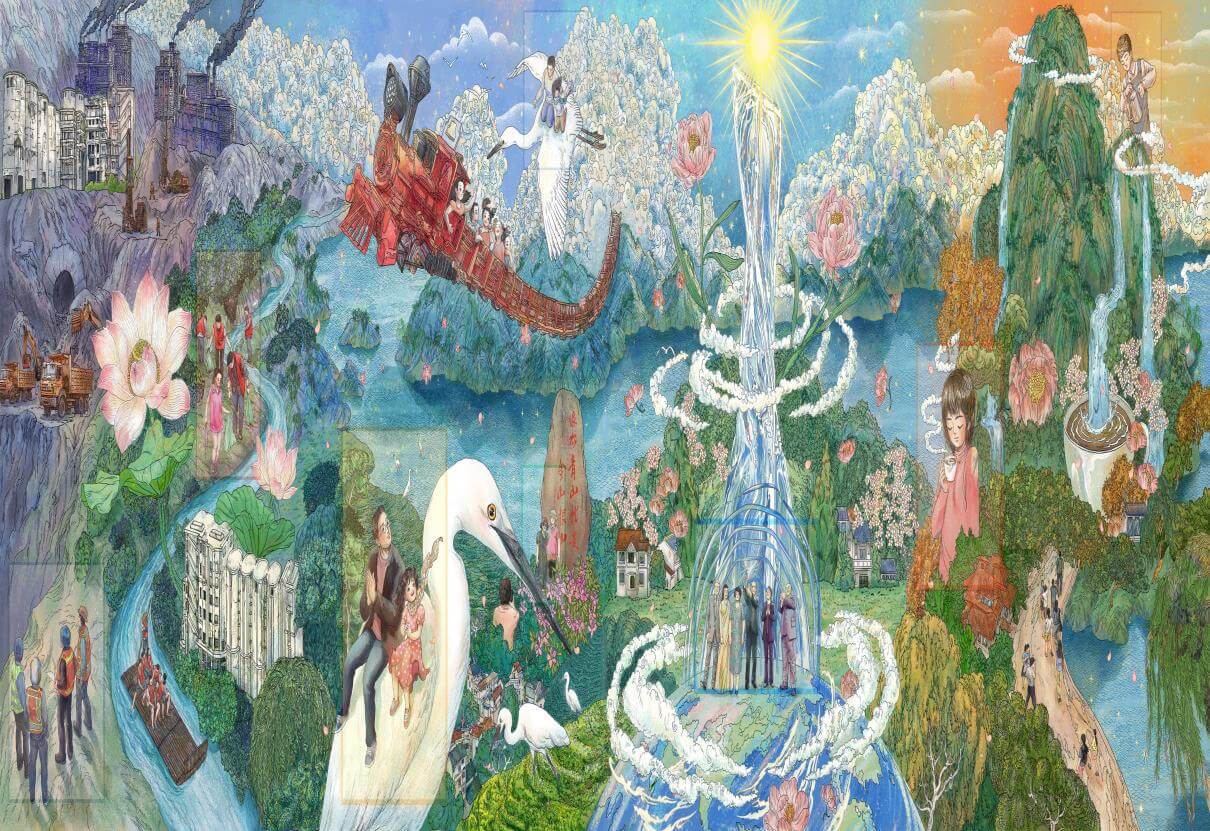
Earth Champion Award - "Ten Million Project"
Ye Luying
Digital painting, 80cm×240cm×4
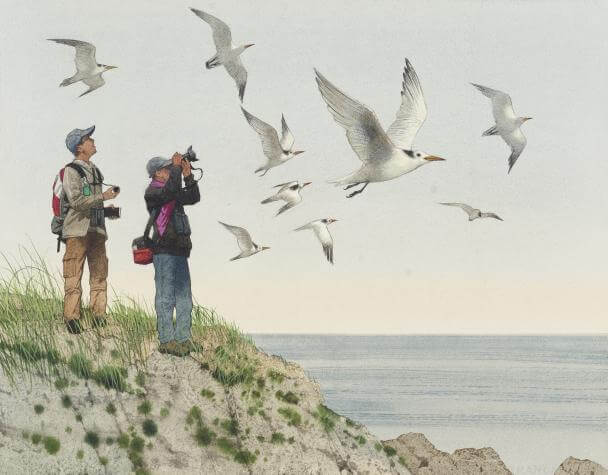
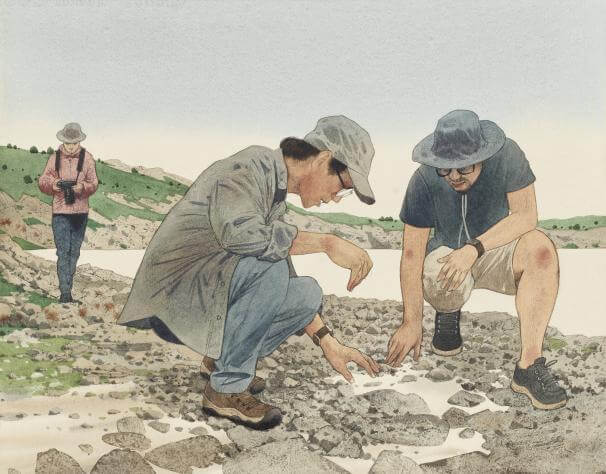
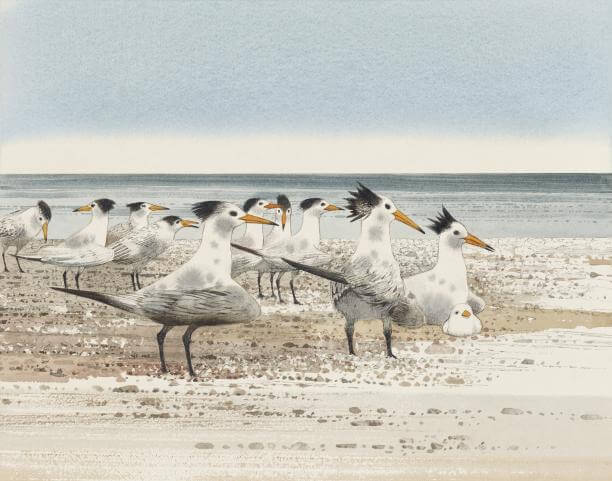
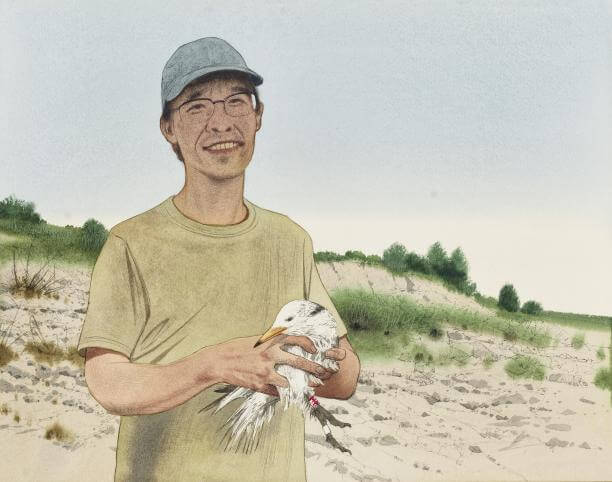
Guardian mythical bird
Wang Xiaoyun
Hand-painted watercolor, 55cm×36cm×4
From "observing things" to feel the spirit of nature, to "studying things" to explore the philosophy of ecology, and finally to "creating things" to achieve the symbiosis and prosperity of man and all things, the "Inhabiting the World" art exhibition has completed its curatorial narrative from aesthetic perception to ethical consciousness and then to practical action. It invites us to re-examine the definition of "natural beauty" and calls forA new "humanism": not to conquer nature with humans as the center, but to measure civilization with all things as the yardstick.Lucid waters and lush mountains are invaluable assets—a saying that embodies both the wisdom of survival and the foresight of civilization. This exhibition is the aesthetic expression of this philosophy.
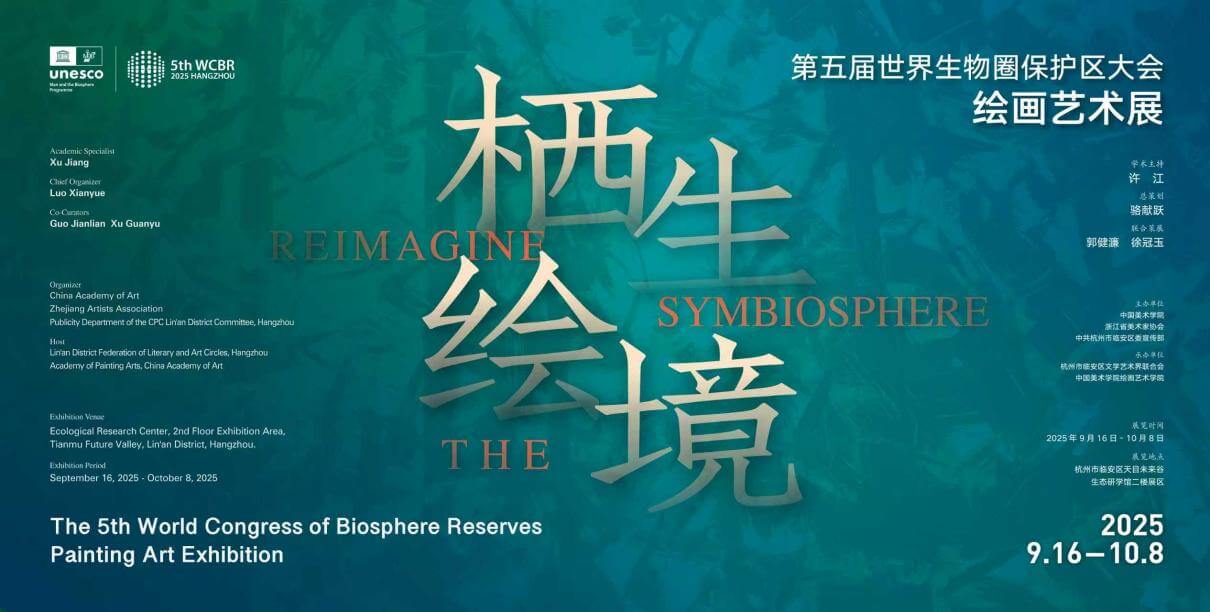
Exhibition Name: Habitat Painting - Painting Art Exhibition of the 5th World Conference on Biosphere Reserves
Exhibition time: September 16-October 8, 2025
Exhibition location: Exhibition area on the second floor of the Ecological Research Center, Tianmu Future Valley, Lin'an District, Hangzhou
Please continue to follow ArtPro for more latest developments in the global art market.