

[2025 Spring Auction] Bonhams Hong Kong | Allegory of Alienation between Man and Chair: Modern and Contemporary Art Presents Tetsuya Ishida’s “Manager’s Seat in a Vacant Building”
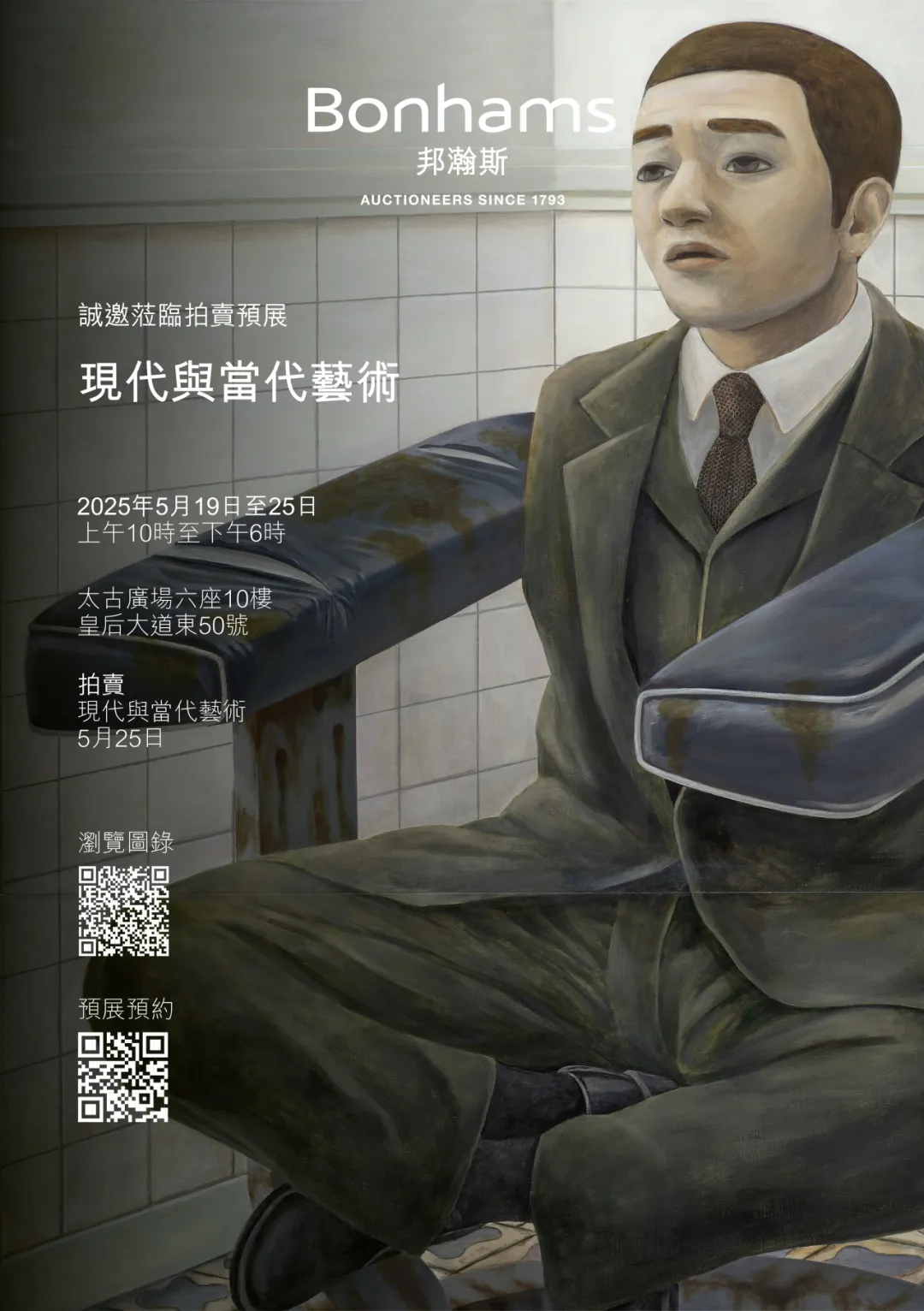
Bonhams Hong Kong 2024 Spring Fine Art Auction"Modern and Contemporary Art"The special session will be held at 4 pm on May 25! This special session will bring together the best works of contemporary artists such as Xiao Qin, Zhu Ming, Li Chen, Chang Yu, George Condo, etc., and will feature Japanese talented artistsTetsuya Ishidawork《Manager's Seat in a Vacant Building》We sincerely invite all collectors and enthusiasts to visit.
Bonhams Hong Kong 2025 Spring Auction
Modern and Contemporary Art
Auction Details
May 25, 4 p.m.
(10th Floor, Six Pacific Place, Hong Kong)
Preview Details
May 19 to 25 10am to 6pm
(10th Floor, Six Pacific Place, Hong Kong)
Art has always been a safe haven for human emotions and a mirror for the soul. It not only allows us to examine our own existence, but also reflects the struggles, loneliness and hope deep in our hearts, providing us with spiritual comfort and salvation.
In his short ten-year artistic career, Japanese contemporary artist Tetsuya Ishida used a surreal perspective to deeply reveal the loneliness and helplessness of individuals in modern society. Although he died in an accident in 2005 at the age of 31, the 217 works he left behind are still shocking.
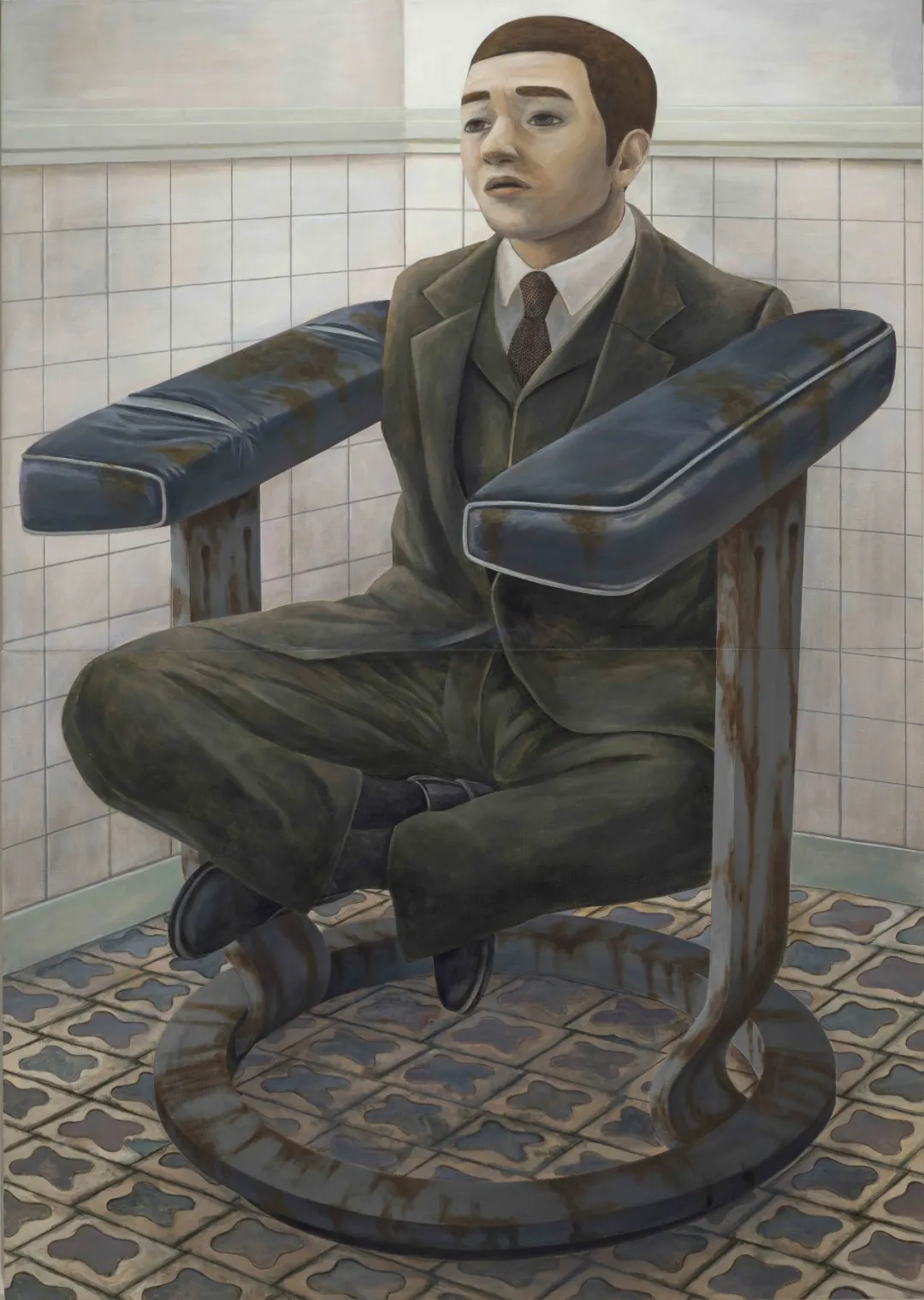
This spring, the Modern and Contemporary Art session is led by Tetsuya Ishida’s painting Manager’s Seat in an Empty Building (1996), which strikes directly into the viewer’s heart with its unique surreal style.
Tetsuya Ishida
《Manager's Seat in a Vacant Building》
Acrylic Wood Board
Painted in 1996
145.6 x 103 cm
Estimate: HK$5,000,000 – 8,000,000
The surreal imagery of "Manager's Seat in a Vacant Building"
In the picture, a "manager" in a three-piece suit sits cross-legged on an armchair. The chair is made of a metal frame and leather armrests, but it looks shabby. The leather on the armrests has peeled off, and the frame is covered with rust, giving off an air of decay. Even more disturbing is that the manager's body seems to be integrated with the chair, and his arms are tightly connected to the armrests of the chair, as if he is no longer an independent individual, but has become part of the chair. His expression is dull, his brows are furrowed, and his eyes are empty and lifeless. As a company manager, he should have authority and confidence, but this bizarre "man-chair integration" completely deprives him of his dignity and identity, making him look more like an object to be used than a flesh-and-blood person.This blurring of the boundaries between people and objects is one of the core themes of Tetsuya Ishida's work: how modern society alienates individuals into mechanized beings.
The plight of the lost decade
The background of the picture is set in an empty building, with white tiles on the walls and floral tiles on the floor revealing past glory. These details are reminiscent of the golden age of Japan's post-war economic recovery. However, since the bursting of Japan's bubble economy in the 1990s, all the prosperity has disappeared, and Japan has entered the so-called "lost decade", with soaring unemployment rates, workplace pressure and mechanized lifestyles making people feel deeply powerless and lonely.
Tetsuya Ishida's work is a portrayal of this collective mental state. Although the manager in the painting is in a high position, he is bound by a chair and becomes an immobile "object". Through this painting, Tetsuya Ishida closely combines personal loneliness with the sense of loss of the times, allowing the viewer to feel a deep resonance in this absurd scene, and even empathize with the emotions:People gradually lose themselves and become a screw in the social machine.
In the past, the manager may have been the oppressor, but now he has become the recipient of oppression. The armchair that once symbolized authority has become a suffocating torture device. This role change is like an endless cycle, which makes people powerless to resist and can only passively accept it. This helpless emotion is not only a portrayal of Japanese society, but also a common experience of countless individuals in the era of globalization.
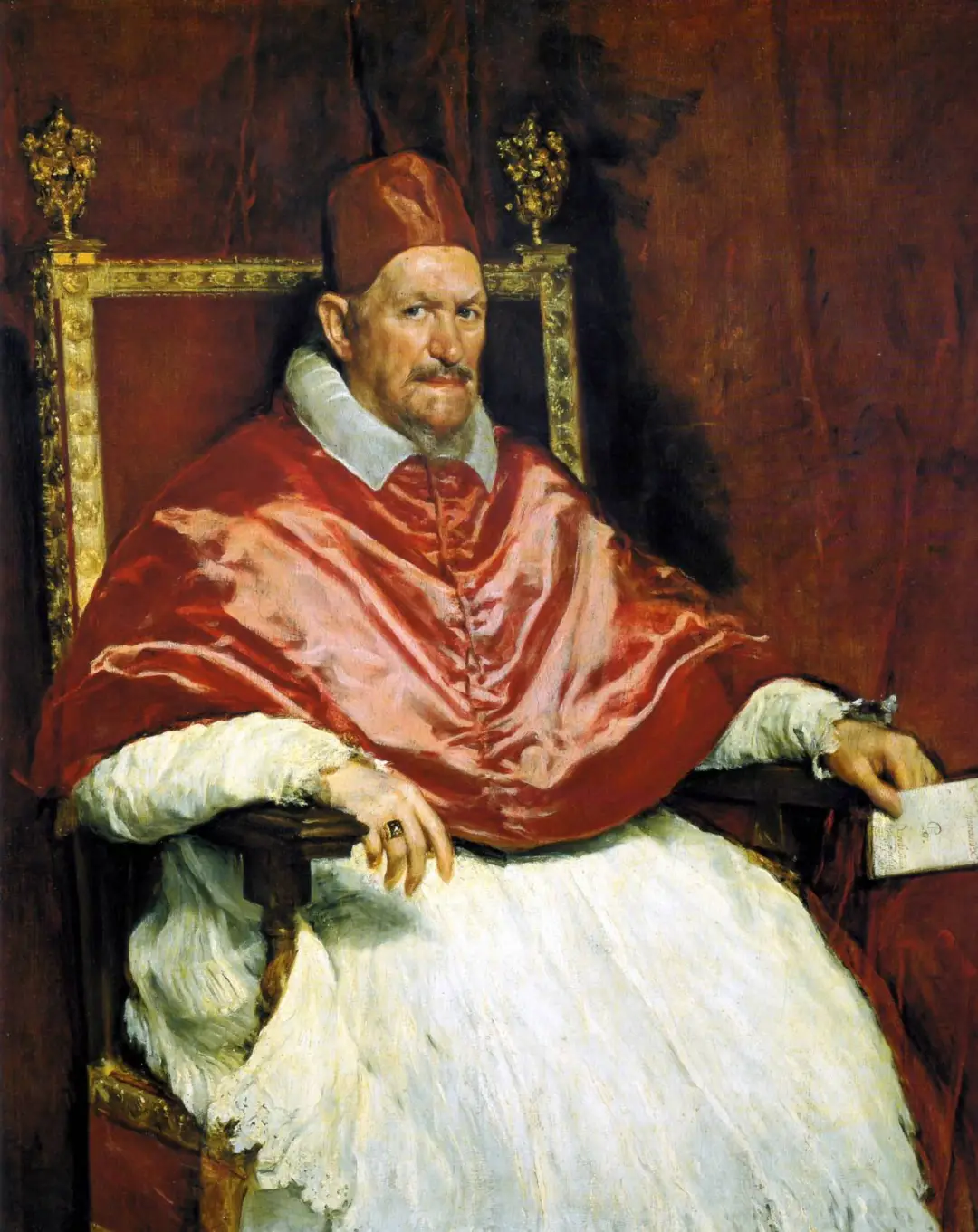
Portrait of Pope Innocent X, 1650
A chair is not just a piece of furniture, it represents identity, status and power.
The universal significance and international influence of Tetsuya Ishida's works
Tetsuya Ishida's works are not only a critique of Japanese society, but also have universal significance. His works transcend the limitations of time and borders and touch the hearts of countless people.
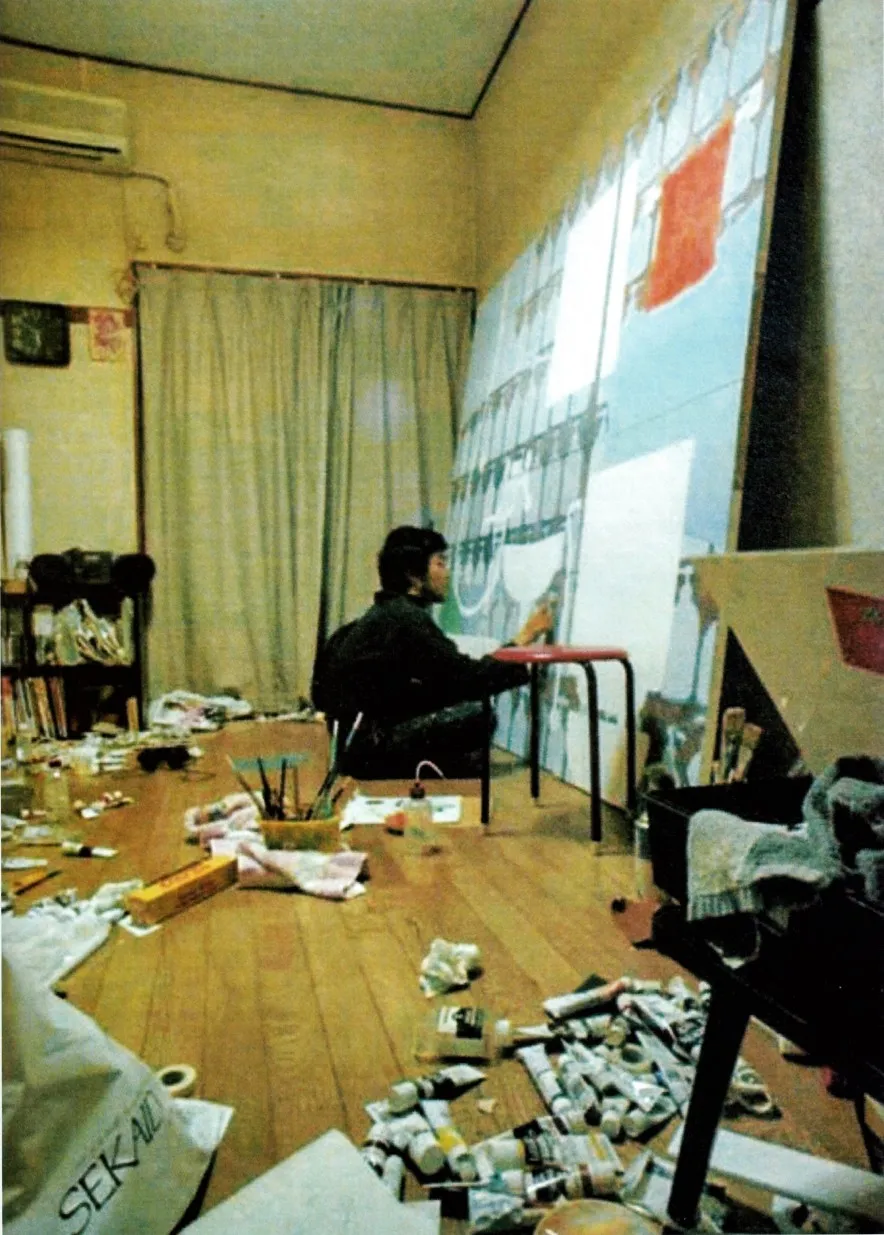
Tetsuya Ishida:
“I am deeply attracted to those saintly artists who truly believe that "every stroke of the brush is redeeming the world" or that they can "feel the pain of all mankind in the face of a sheep." This makes me realize my own mediocrity.”
In 2015, Tetsuya Ishida's works were selected for exhibition at the Venice Biennale. In 2019, the Reina Sofia National Museum in Madrid, Spain, held a grand retrospective for him. These international recognitions prove his artistic influence. In December 2024, Bonhams Hong Kong's "Modern and Contemporary Art" auction,Tetsuya Ishida's Man on a Conveyor Belt was sold for HK$10,013,000, which remains the highest auction record for the artist.To this day, his works, with their unique painting language, still communicate and reflect us who are still struggling in life. His paintings are not only a record of a specific era, but also a profound reflection on the human condition, allowing us to find meaning in absurdity and pain.
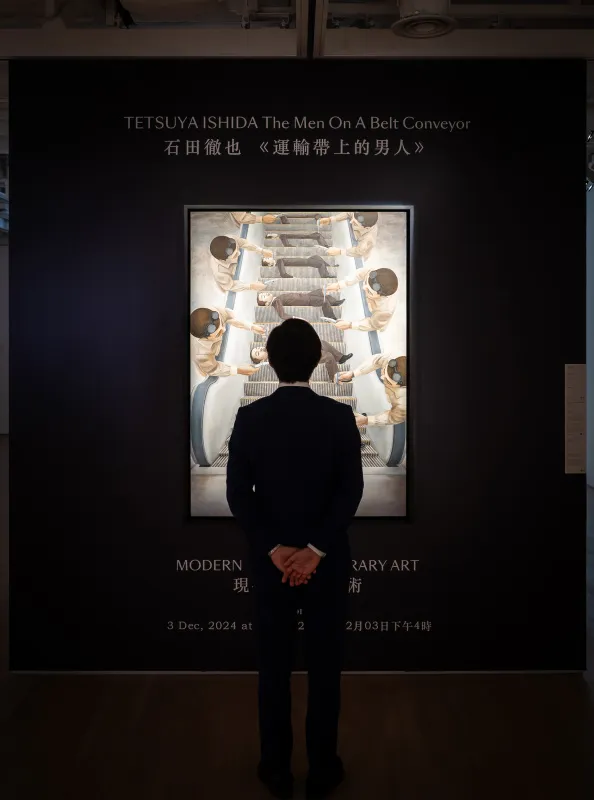
Man on the Conveyor Belt
Painted in 1996
145.7 x 103.2 cm
Sold: HK$10,013,000
*Sets auction record for the artist (December 2024)
Bonhams Hong Kong
Spring Sale
Modern and Contemporary Art
Auction Details
May 25, 4 p.m.
(10th Floor, Six Pacific Place, Hong Kong)
Preview Details
May 19 to 25 10am to 6pm
(10th Floor, Six Pacific Place, Hong Kong)
Please continue to follow ArtPro for more latest developments in the global art market.