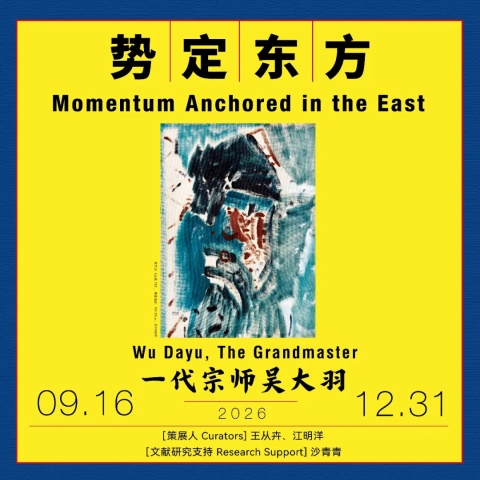

Exhibition | Wu Dayu Special Exhibition "The Rise of the East" Opens at Shanghai BAO ROOM, Telling the Story of a Grandmaster's Return to His Glory
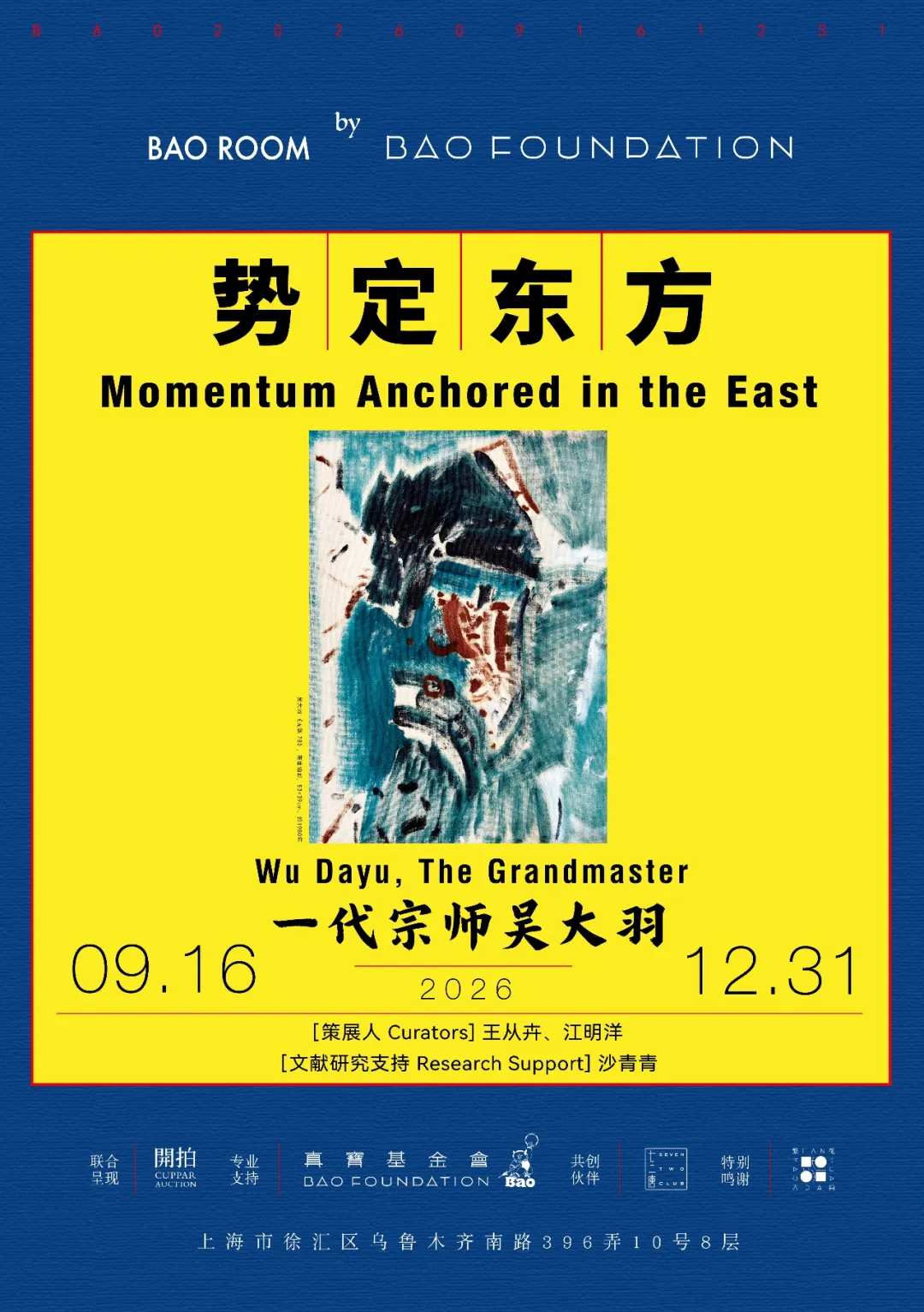
Poster artwork: Wu Dayu, "Untitled - 78"
Oil on canvas, 53 x 39 cm
Around the 1980s,
Private Collection
Image source: "Flying Feathers Sweeping Across the Sky - A Collection of Works by Wu Dayu"
■
On September 16, 2026, the annual exhibition "The Mighty East: Wu Dayu, a Master of His Generation" at BAO ROOM by BAO FOUNDATION will open and run until December 31, 2026.
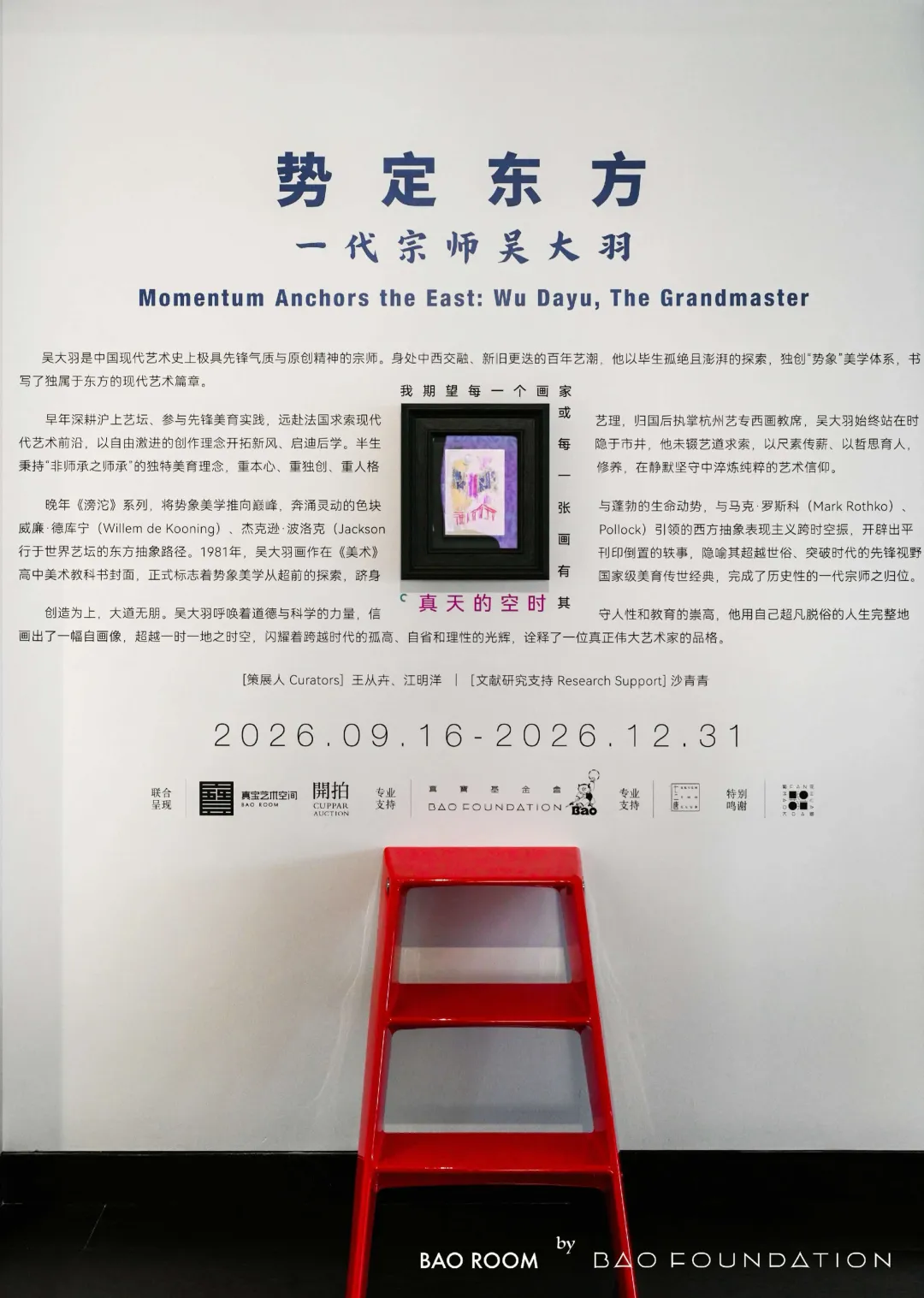
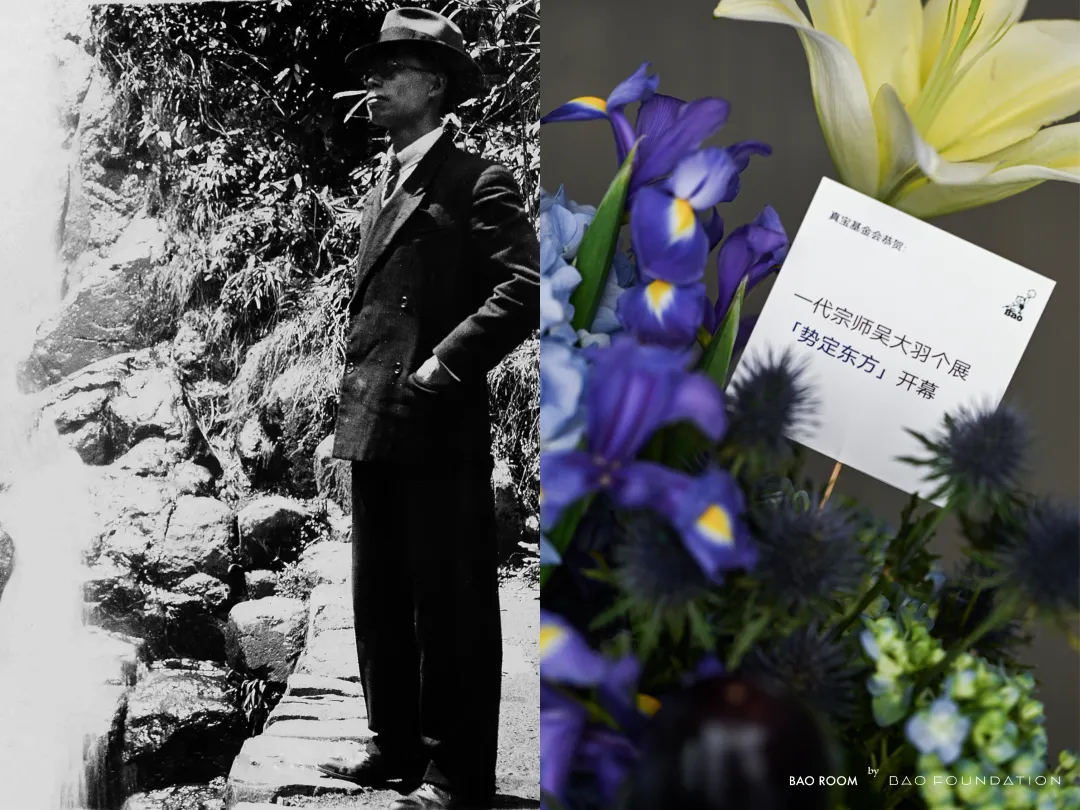
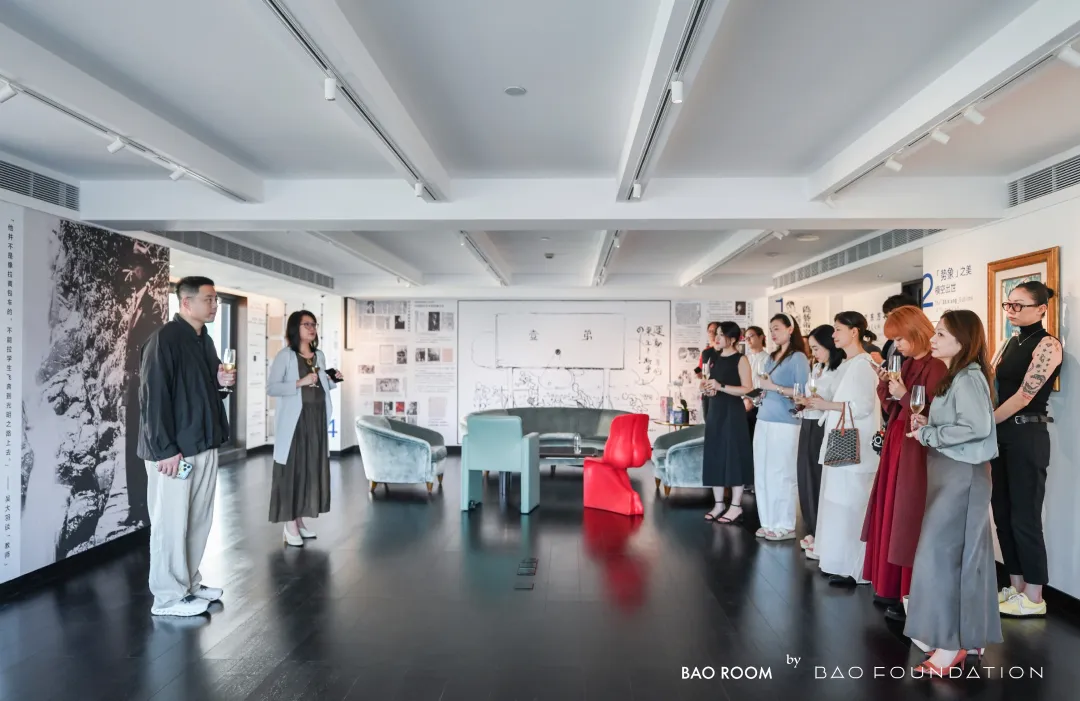
Exhibition opening ceremony
As one of the most noteworthy exhibitions of modern Chinese art this year, this exhibition is not only the most refined, systematically documented, and innovative solo exhibition of Wu Dayu's (1903-1988) works in recent years, but also an important milestone in re-establishing the historical status of this master of modern Chinese art on an international scale.
Presented jointly by BAO ROOM and Kaipai International, with professional support from BAO FOUNDATION, curated by Wang Conghui and Jiang Mingyang, and with documentary research support from Sha Qingqing, the exhibition brings together Wu Dayu's original oil paintings, wax paintings and rare manuscripts, correspondence between teachers and students, newspapers and periodicals from the Republican era, poetry texts and student works. For the first time, the exhibition systematically presents Wu Dayu's multiple identities and the full picture of his thought as an avant-garde artist, art theorist, master of modern art education, thinker, poet and independent intellectual through documents.
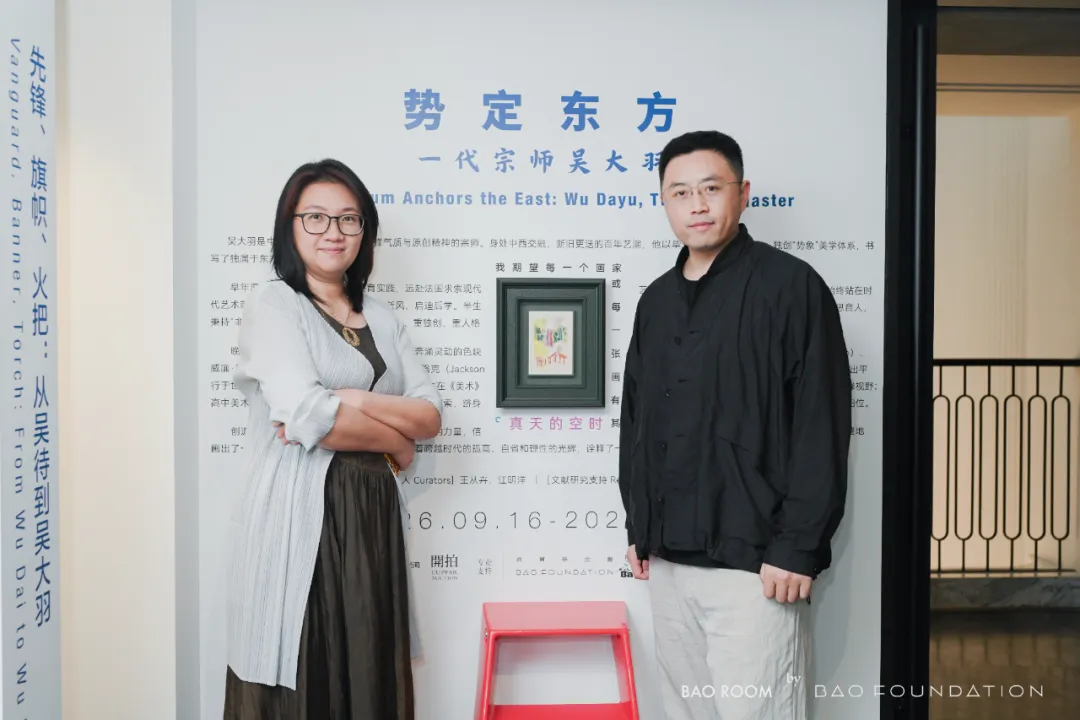
Group photo of curators at the exhibition opening ceremony
Left: Wang Conghui, Director of Zhenbao Foundation and Director of Zhi Art Museum
Right: Jiang Mingyang, co-founder, general manager, and director of academic research at Kaipai International.
This exhibition sheds the fixed label of "buried by the times" that scholars and the public have attached to Wu Dayu, focusing on the pioneering spirit, creativity, spiritual fervor, and intellectual reflection that runs through his artistic career. It also objectively juxtaposes Wu Dayu with three Western abstract masters, Mark Rothko, Willem de Kooning, and Jackson Pollock, aiming to establish his core position as a parallel pioneer of 20th-century Chinese and Western modern art and restore the image of a master who was rooted in Eastern cultural heritage and connected with the world of modern art.
The exhibition's narrative extends beyond the exhibition hall. The entrance hall of Wunan 396, the building housing BAO ROOM, has been transformed into "Wu Dayu's Attic"—an entire wall displays early photos of him and his wife, Shou Yilin, recreating the scene of him creating wax paintings with cigarette box paper in their cramped living space. From the moment visitors enter the building, they step into the spiritual realm of this master.
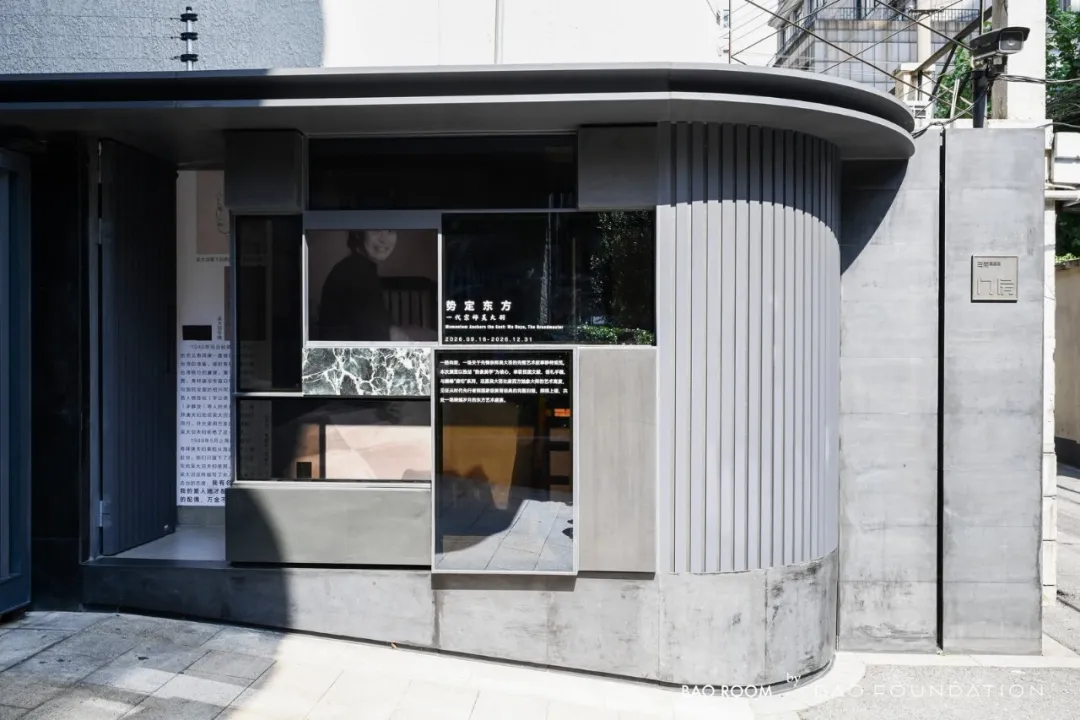
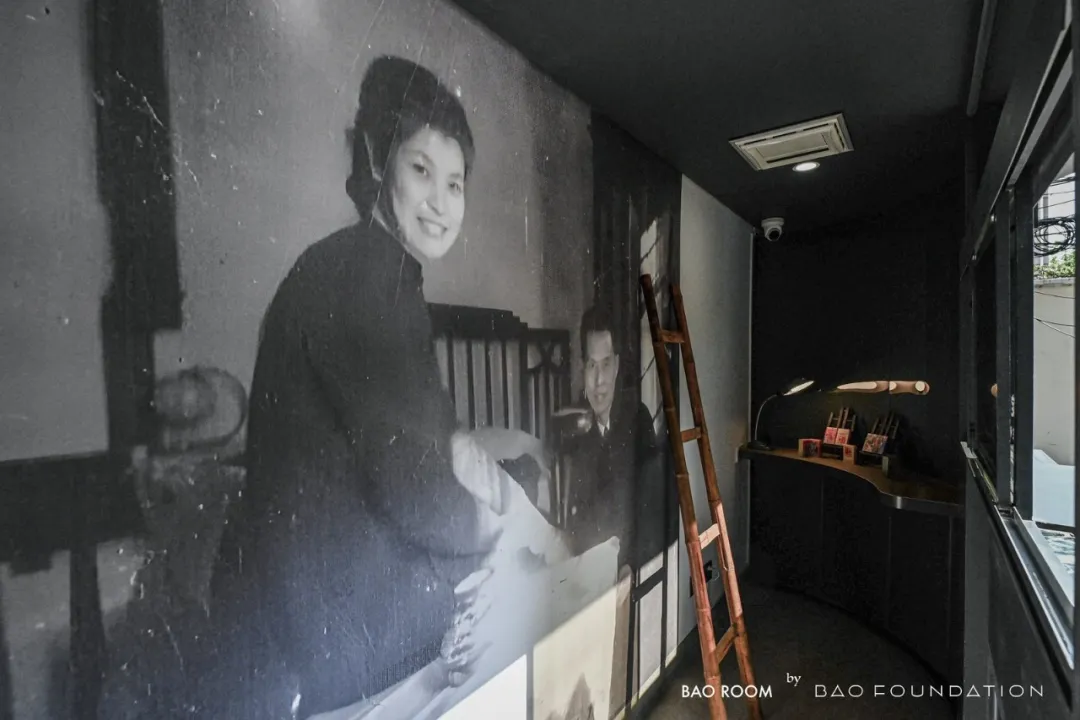
Wunan 396 Gatehouse, Exhibition Site
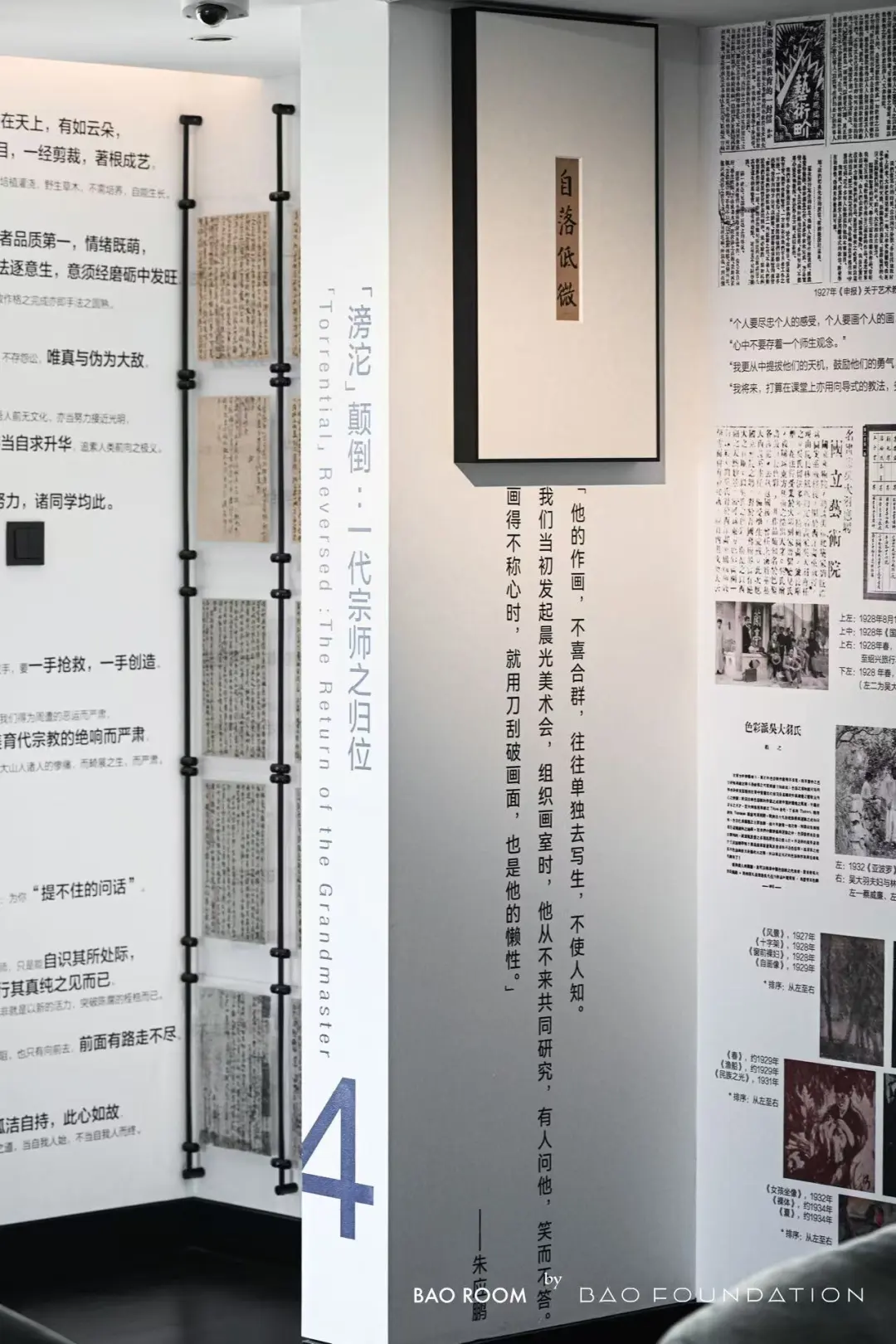
Inside the exhibition hall, a vast amount of documents are densely arranged in a "waterfall of thought" style. Manuscripts, correspondence, and newspapers corroborate each other, creating an immersive experience akin to a historical torrent. This exhibition does not pursue the isolated display of artifacts, but rather allows documents and works to complement each other, enabling viewers to piece together Wu Dayu's spiritual portrait from the details.
Exhibition site
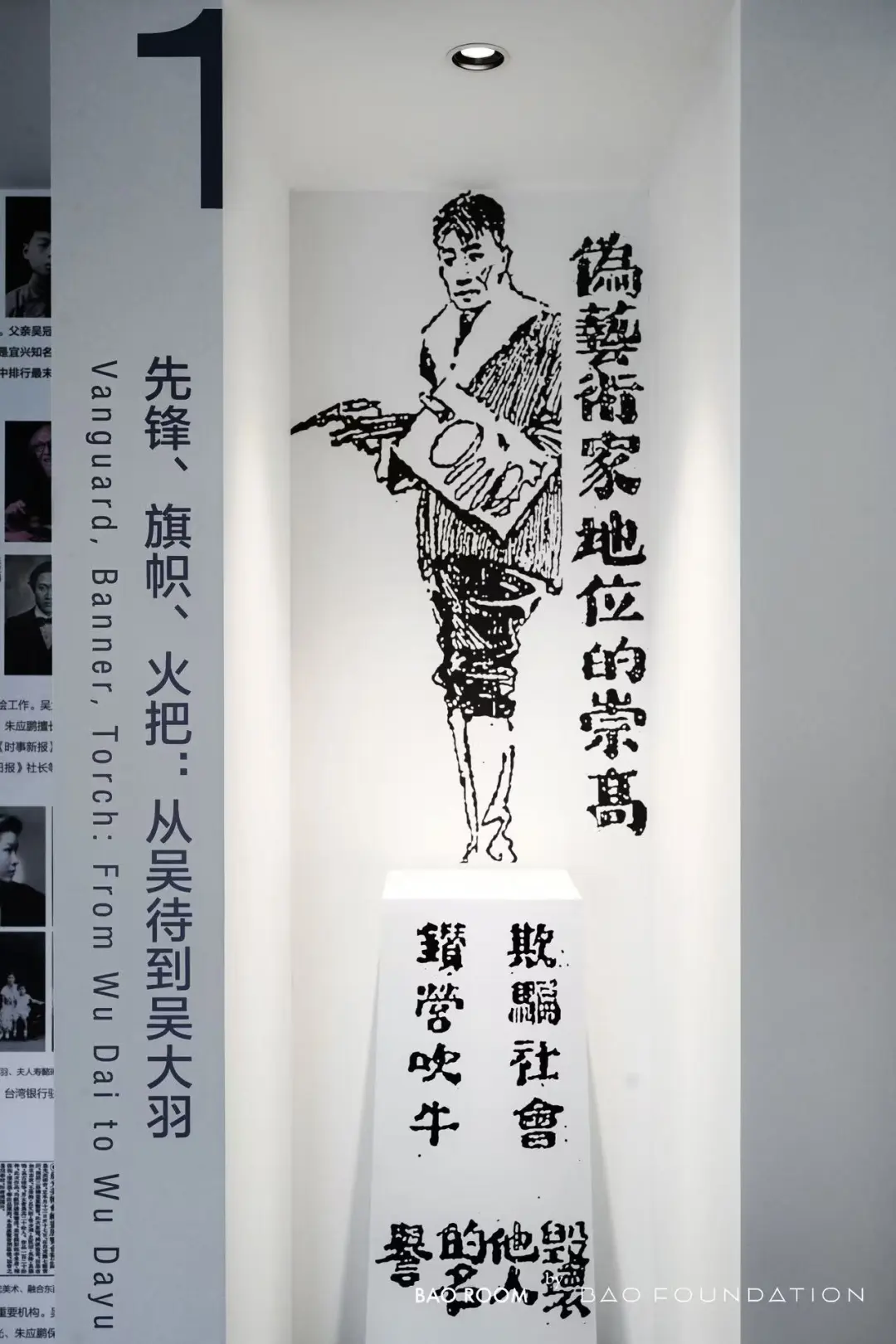
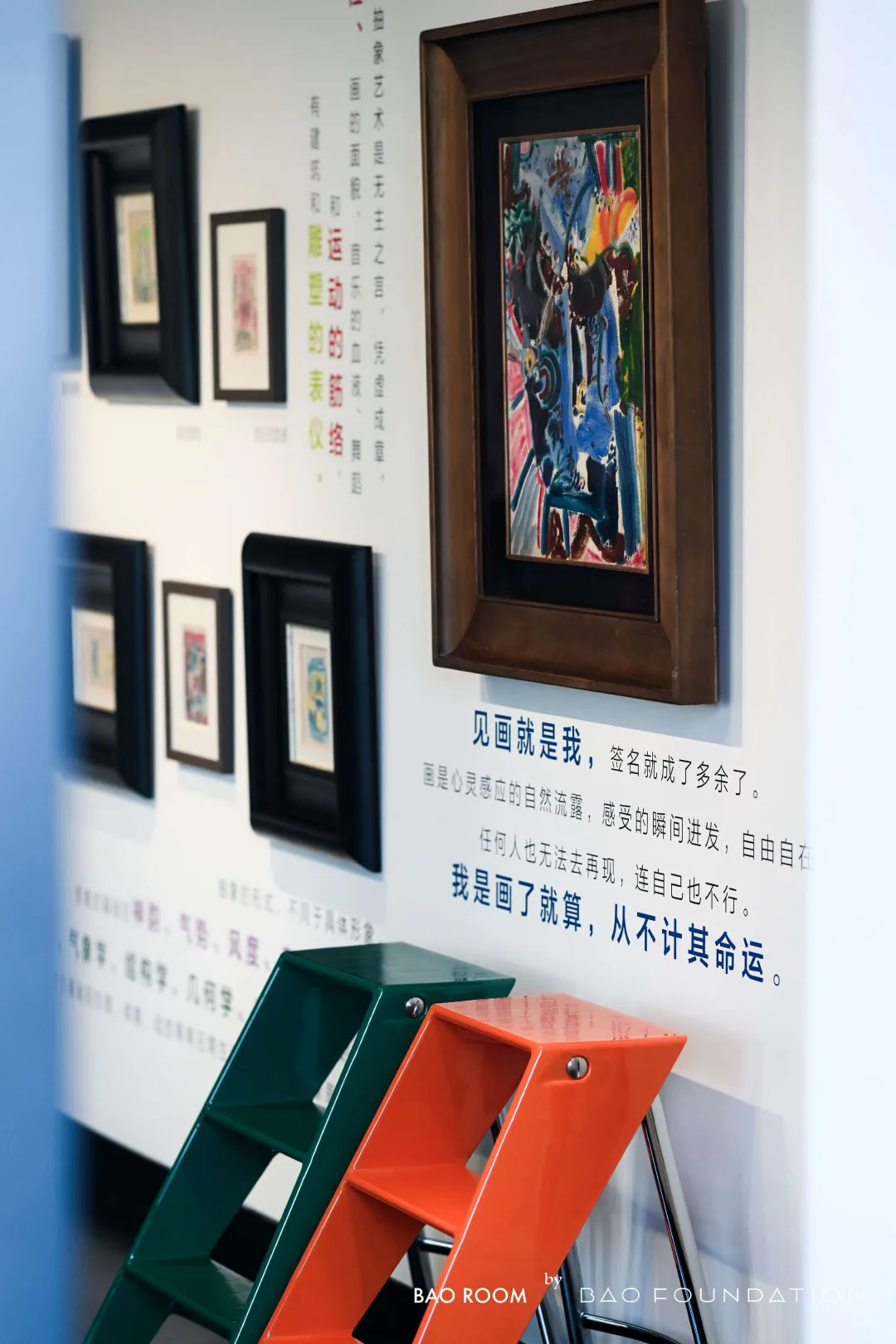
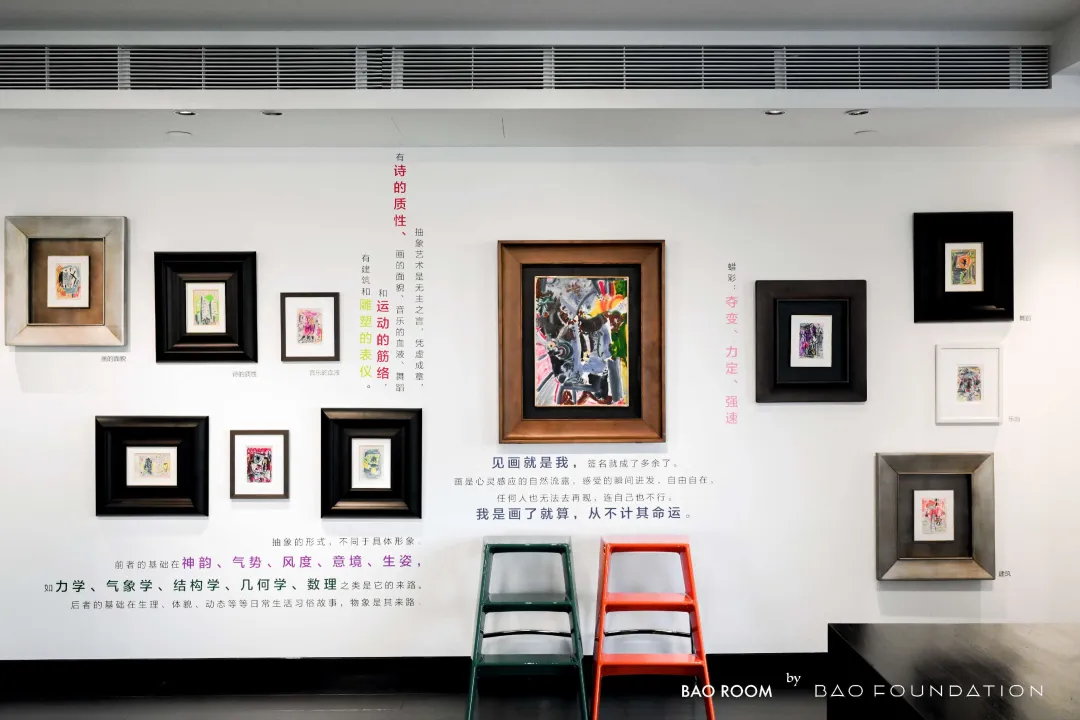
The overall exhibition uses the "momentum" aesthetics established by Wu Dayu as its methodology: Wu Dayu's early two-dimensional illustrations are reproduced as three-dimensional "sculptures", and the colorful staircases in his wax paintings are transformed into art installations, moving from two-dimensional to three-dimensional, and from images to space.
Exhibition site
A towering portrait of Wu Dayu stands in the space, and the irregular arrangement of the works and text wall breaks the sense of order of the conventional exhibition line, allowing the audience to feel the dynamism and tension contained in the "momentum" as they walk through it.
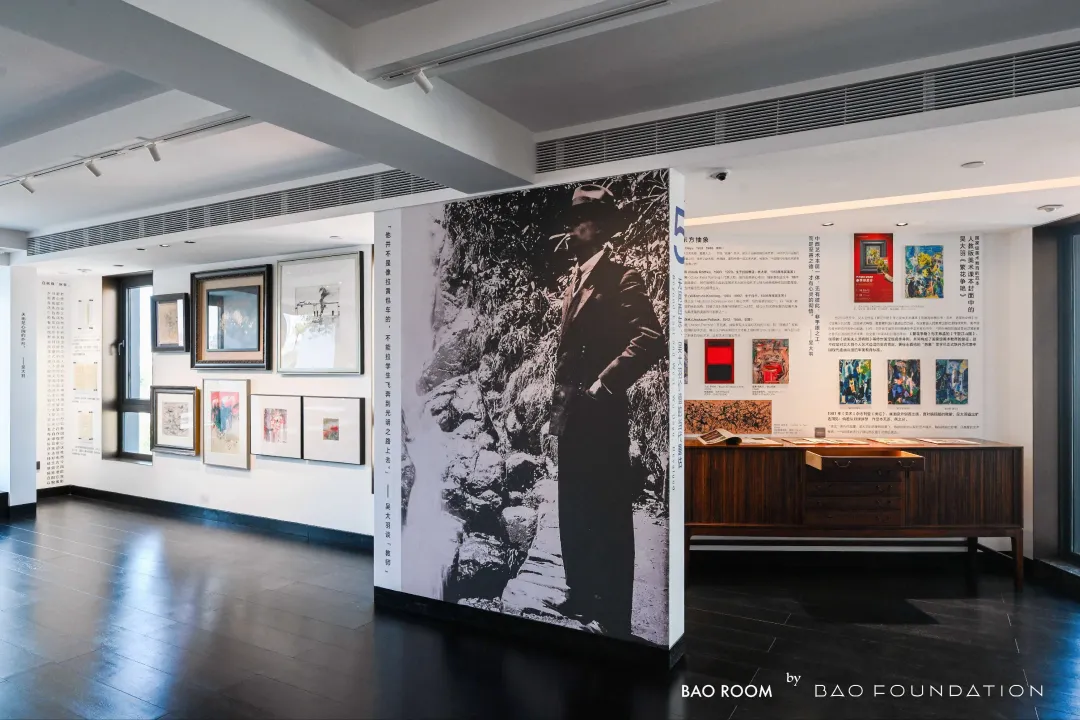
Exhibition site
Academic standing: alongside Rothko, de Kooning, and Pollock
The most academically ambitious move in this exhibition is to juxtapose Wu Dayu with Mark Rothko, Willem de Kooning, and Jackson Pollock. The curator is not satisfied with the general label of "Eastern pioneer of abstract art," but attempts to establish Wu Dayu's position as a parallel pioneer of 20th-century Chinese and Western modern art in terms of formal logic, spiritual temperament, and historical time.
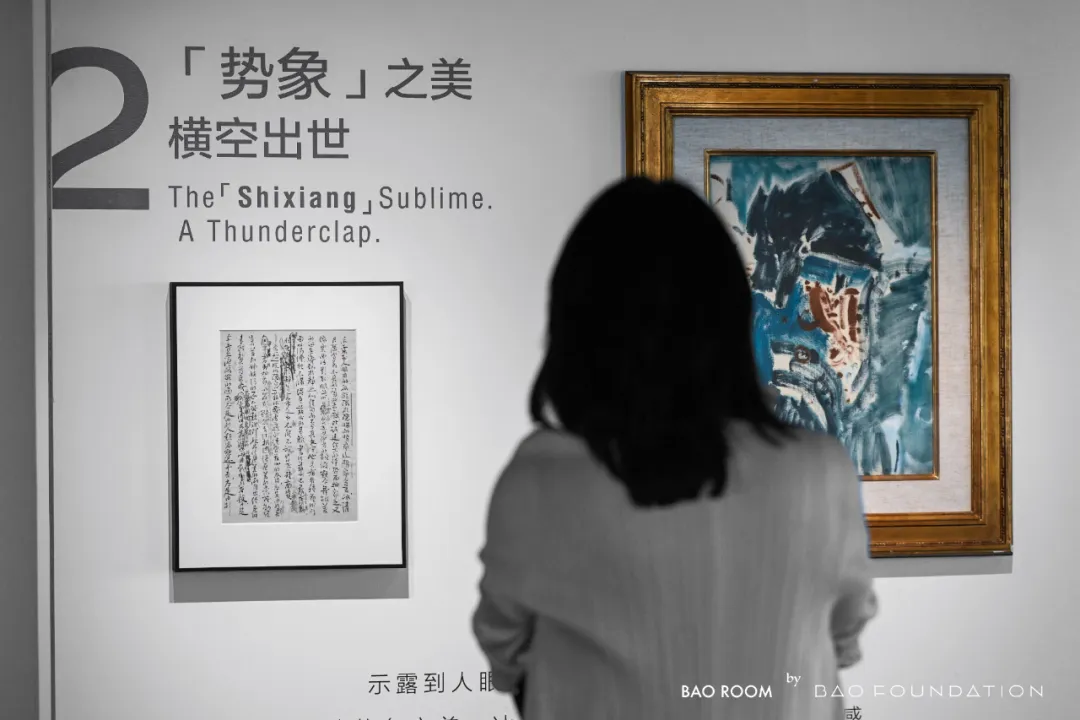
Wu Dayu's "Shengxiang" (势象) aesthetic system, completed in the 1940s, is the core basis of this judgment. In a letter to his students, he wrote: "What is revealed to the eye can only be the subtle 'Shengxiang'." He clearly distinguished "Shengxiang" from the material path upon which concrete images rely, placing the foundation of abstract art on spirit, momentum, style, artistic conception, and vitality. This theoretical construction marks a crucial turning point for modern Chinese art, from borrowing from the West to creating its own identity.
The fifth chapter of the exhibition, "No Questions Asked: A Contemporary Reassessment of Wu Dayu's Value," traces the academic and market trajectory over thirty years and compares his work with contemporary Western abstract masters. It highlights documents from the 2001 Taipei History Museum's "Wu Dayu Exhibition," the 2015 "Wu Dayu Collection," and the 2016 Beijing Academy of Painting's "Flying Feathers Soaring Through the Sky" exhibition. It also includes a comparative display of Wu Dayu's works with those of Rothko, de Kooning, and Pollock, thus providing double evidence of his global value.
Five chapters, one central theme
The exhibition unfolds in five chapters, but the chapters are not presented in a linear fashion. Instead, they progress step by step around the themes of "pioneering spirit, theoretical construction, adherence to aesthetic education, historical return, and contemporary reassessment."
1. Vanguard, Flag, Torch
This chapter traces his birth into a scholarly family in Yixing, Jiangsu, and his early career in the Shanghai art scene, from cartoonist for the *Shenbao* newspaper to the Chenguang Art Society, from the Hops Art Society in France to the head of the Western Painting Department at the Hangzhou Academy of Fine Arts. It highlights rare documents such as original *Shenbao* cartoons from the 1920s, the inaugural issue of *Chenguang*, his 1923 reporting trip to France, a group photo of the organizing committee for the 1924 Strasbourg Exposition, and Lin Wenzheng's 1932 article "Wu Dayu of the Color School" in *Apollo*, revealing a pioneer who actively embraced modernism and promoted art innovation.
In 1925, Wu changed his name to "Da Yu." According to his own account, "The Way is vast and has no friends. Grateful for your understanding, I removed two strokes from the character '朋' (friend), thus establishing the name Da Yu." The removal of those two strokes was not only a play on words but also a revelation of his inner thoughts: not relying on cliques, not conforming to trends, but facing the true essence of art with a solitary spirit. The character "Yu" (feather) thus became the starting point for his lifelong soaring spirit. In the years that followed, he used his life to paint a self-portrait of a spirit unafraid of time and space.
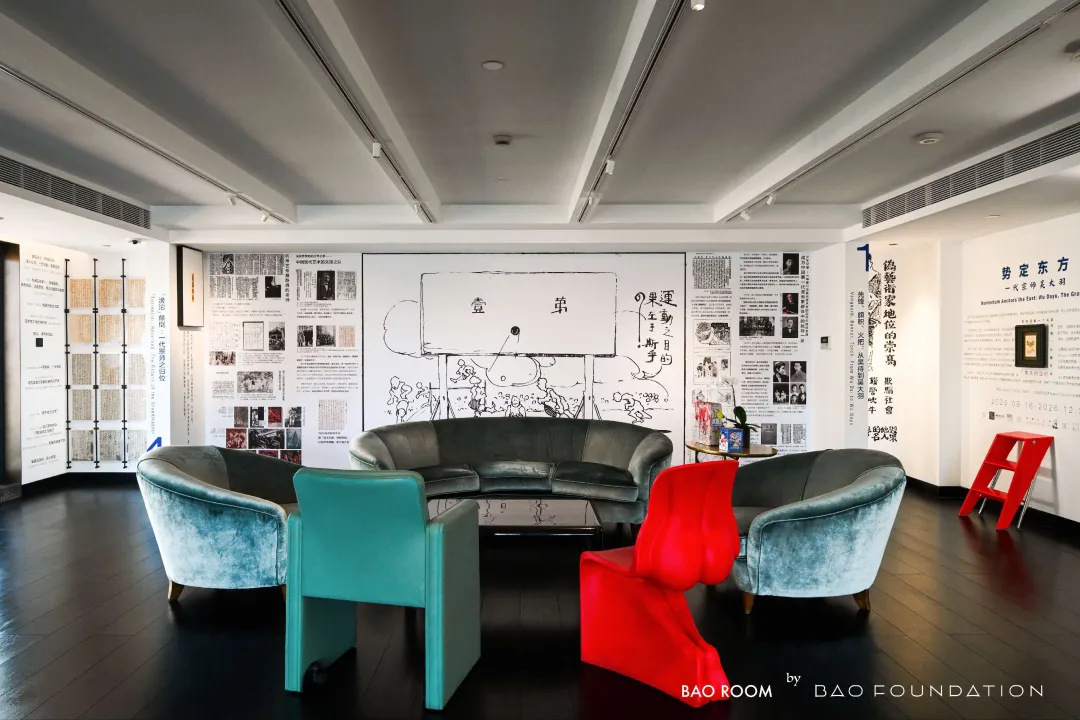
Exhibition site
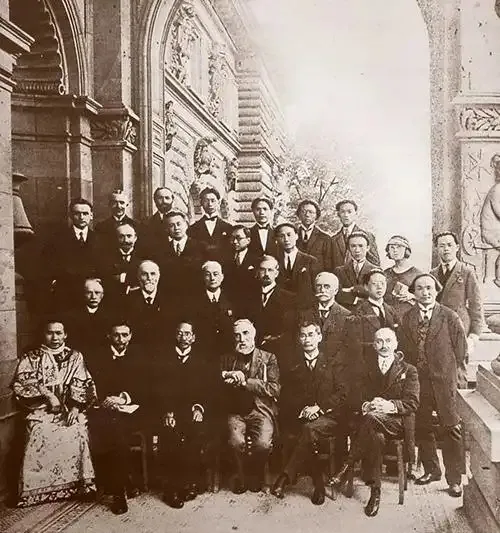
A group photo of the organizing committee members of the 1924 Strasbourg, France Exhibition of Ancient and Modern Chinese Art. Wu Dayu is fourth from the left in the back row. (Image source: Kaipai International)
2. The beauty of "momentum" emerges out of nowhere.
This chapter focuses on the complete construction of Wu Dayu's localized abstract theory in the 1940s. The core exhibits are original letters from Wu Dayu to Wu Guanzhong and Zhu Dequn, displayed in comparison with oil paintings and wax paintings such as "Rhyme Score-57" and "Color Rhyme-59". This dissects the core logic that distinguishes "momentum" from Western formal abstraction and witnesses the key breakthrough of Chinese modern art from learning from the West to creating its own identity.
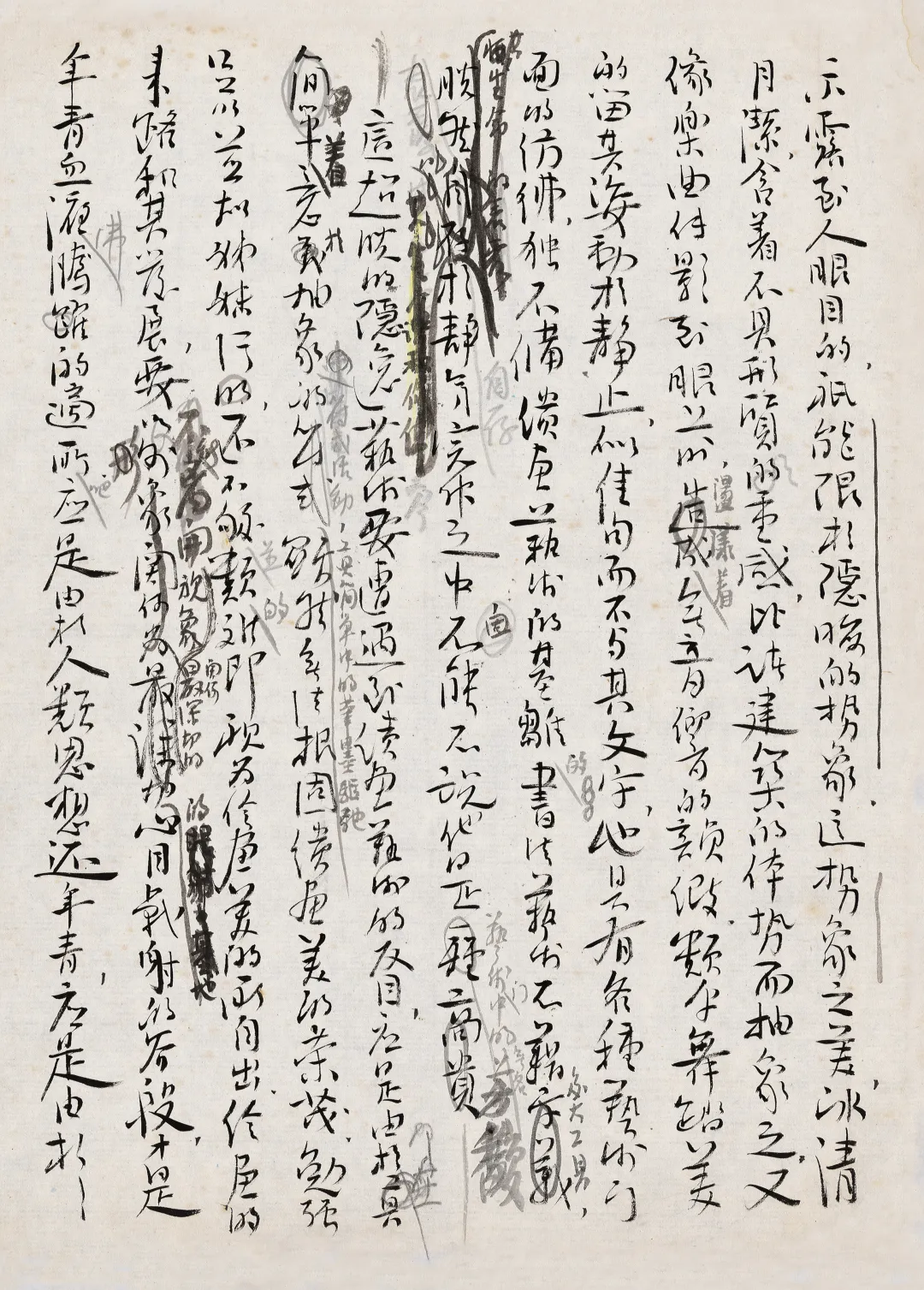
Wu Dayu wrote to Wu Guanzhong and Zhu Dequn in 1941.
29 × 21 cm, Image source: Kaipai International
Exhibition site
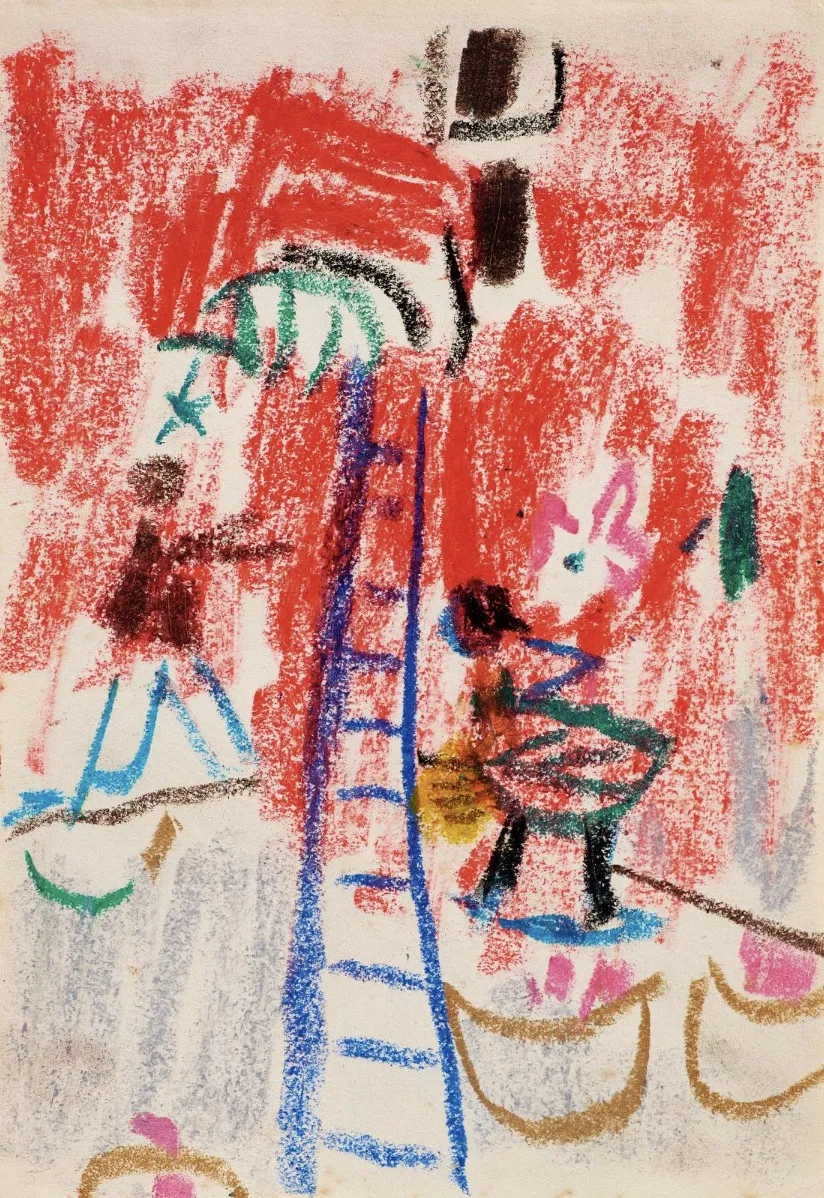
Exhibited work: Wu Dayu, Untitled 1-654, ink and wax on paper, 14.8 × 10.4 cm
1970s-1980s, BAO COLLECTION, image source: BAO COLLECTION
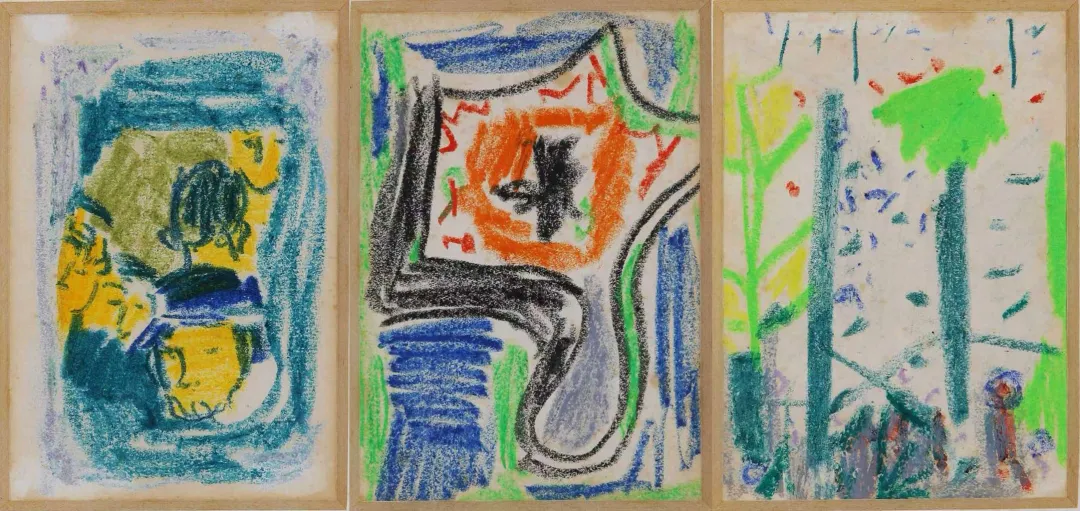
Exhibited works
Left: Wu Dayu, Untitled 1-234, ink and wax on paper, 14.8 × 10.4 cm
Chinese: Wu Dayu, Untitled 11-502, ink and wax on paper, 14.8 × 10.4 cm
Right: Wu Dayu, Untitled 1-447, ink and wax on paper, 14.8 × 10.4 cm
All works are from private collections; images sourced from Kaipai International.
3. Upholding Solitary Profoundness: A reclusive intellectual warrior, his teachings delivered from afar.
This chapter primarily features correspondence between teachers and students during the War of Resistance against Japan, showcasing Wu Dayu's unwavering commitment to aesthetic education and his unique concept of "teaching without formal apprenticeship." It highlights precious letters from 1941 to Wu Guanzhong, Zhu Dequn, Min Xiwen, and Zhuang Huayue, as well as postcards and letters from Zao Wou-Ki and Wu Guanzhong to Zhuang Huayue.
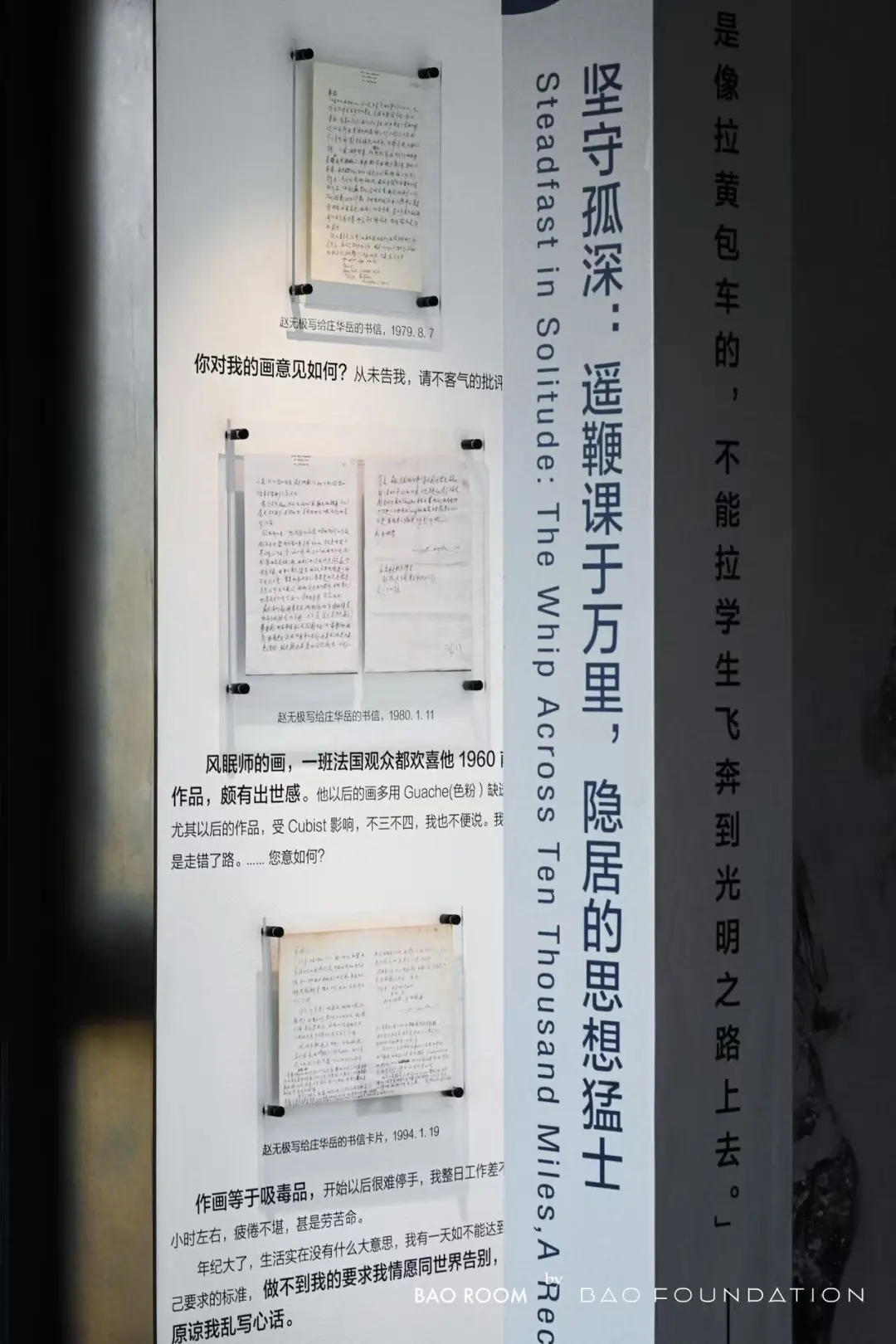
Exhibition site
Most importantly, this chapter features a special wall displaying the works of four students: Zao Wou-Ki, Chu Teh-Chun, Wu Guanzhong, and Zhuang Huayue—four distinctly different artistic trees growing under the same beam of thought. Each student, with their independent artistic style, exemplifies the true meaning of "inheritance without formal teacher-student relationship": the best teacher-student relationship is one that allows each person to become themselves.
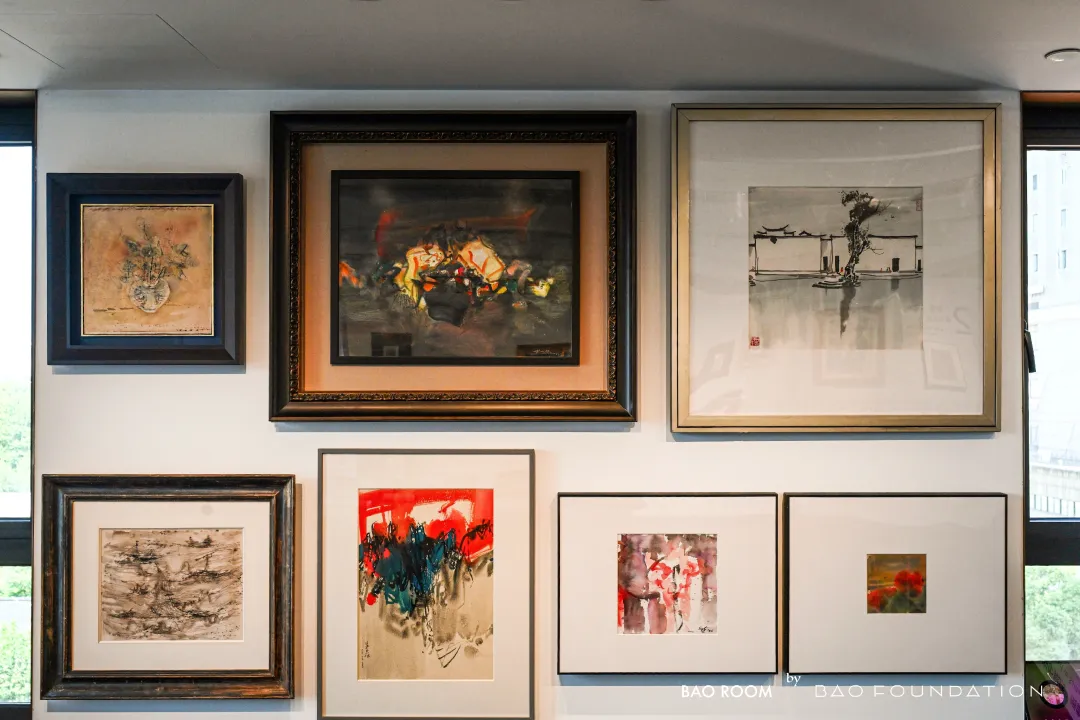
Exhibition site
4. The Reversal of "Torrential Rain": The Return of a Grandmaster
This chapter begins with the anecdote of the inverted publication of the painting *Pangtuo* in 1981, presenting the brief misalignment between the pioneers' and the era's perception, and the historical leap of "Shengxiang" aesthetics finally being incorporated into the national art education system. It highlights original publications from the 1981 *Fine Arts* magazine, Zhu Ying's 1982 article "Reading the Oil Painting *Pangtuo*", Wu Guanzhong's 1988 article "The Lonely Man", and other newspaper and magazine documents, as well as the *Pangtuo* series and *Blooming Flowers*. In 2019, *Blooming Flowers* was selected for the cover of the People's Education Press high school art textbook, alongside masterpieces such as *A Thousand Miles of Rivers and Mountains* and *Lady Guo's Spring Outing*, marking the formal inclusion of "Shengxiang" aesthetics into the national art education system.
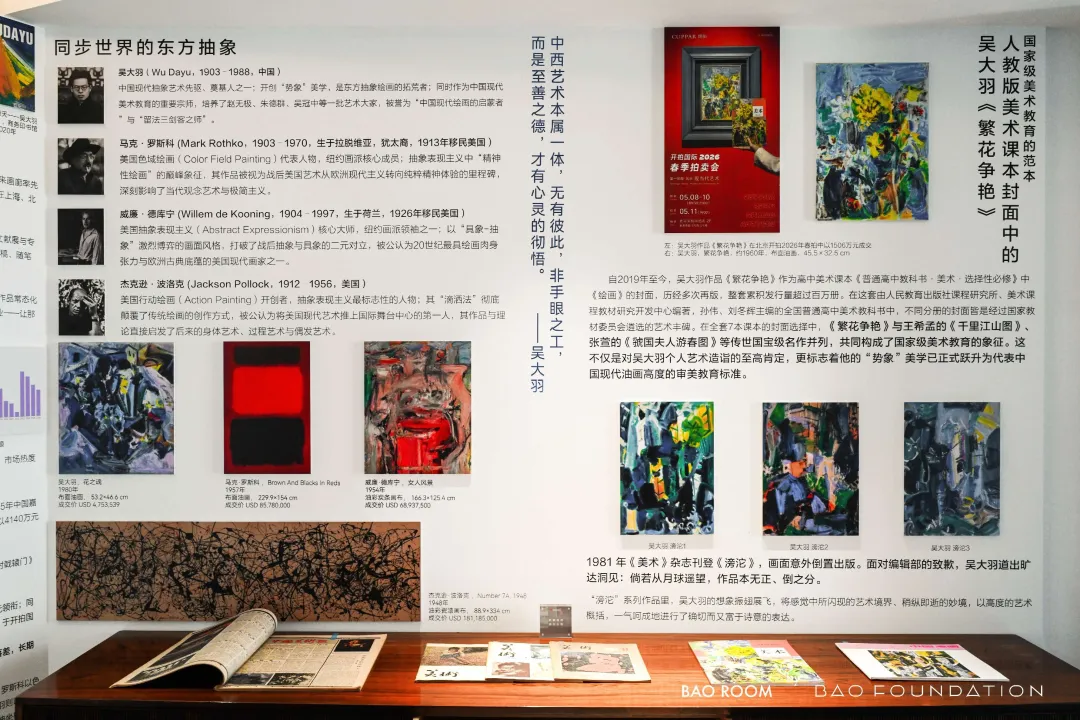
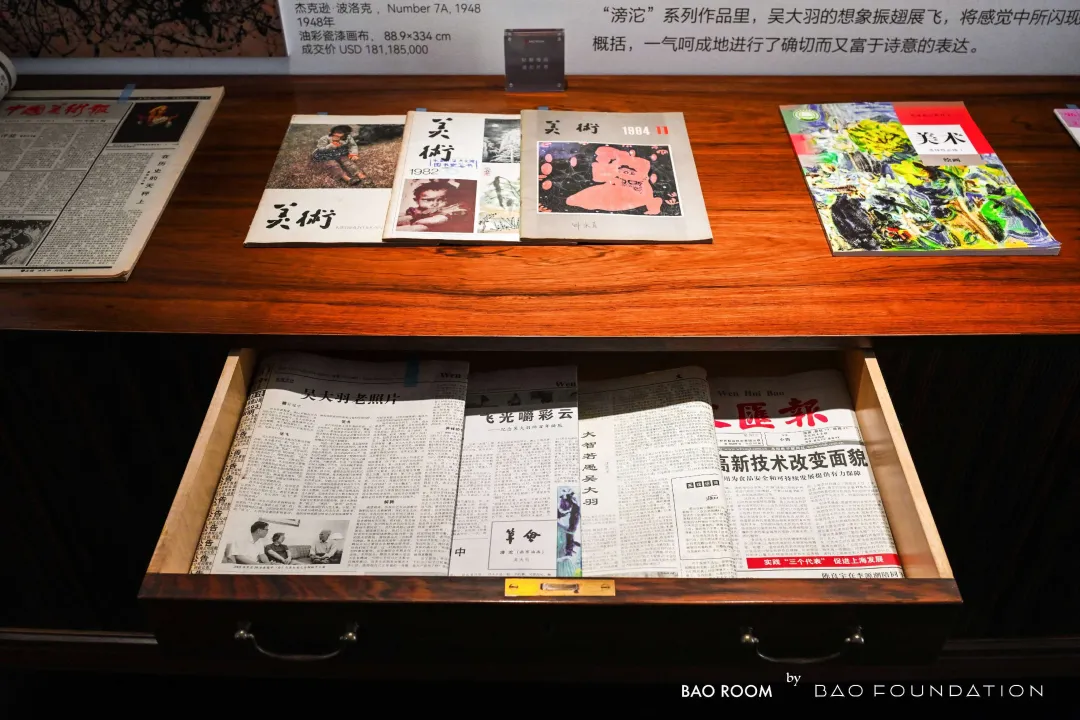
Exhibition site
5. No Questions Asked: A Contemporary Reassessment of Wu Dayu's Value
This chapter provides a longitudinal overview of the academic and market developments over the past thirty years, while also providing a horizontal comparison with contemporary Western abstract masters. It highlights documents from the 2001 Taipei History Museum's "Wu Dayu Painting Exhibition," the 2015 "Wu Dayu Works Collection," and the 2016 Beijing Academy of Painting's "Flying Feathers Soaring Through the Sky" exhibition. It also includes a comparative display of Wu Dayu's works with those of Rothko, de Kooning, and Pollock, thus providing dual evidence of his global value and establishing a new contemporary positioning.
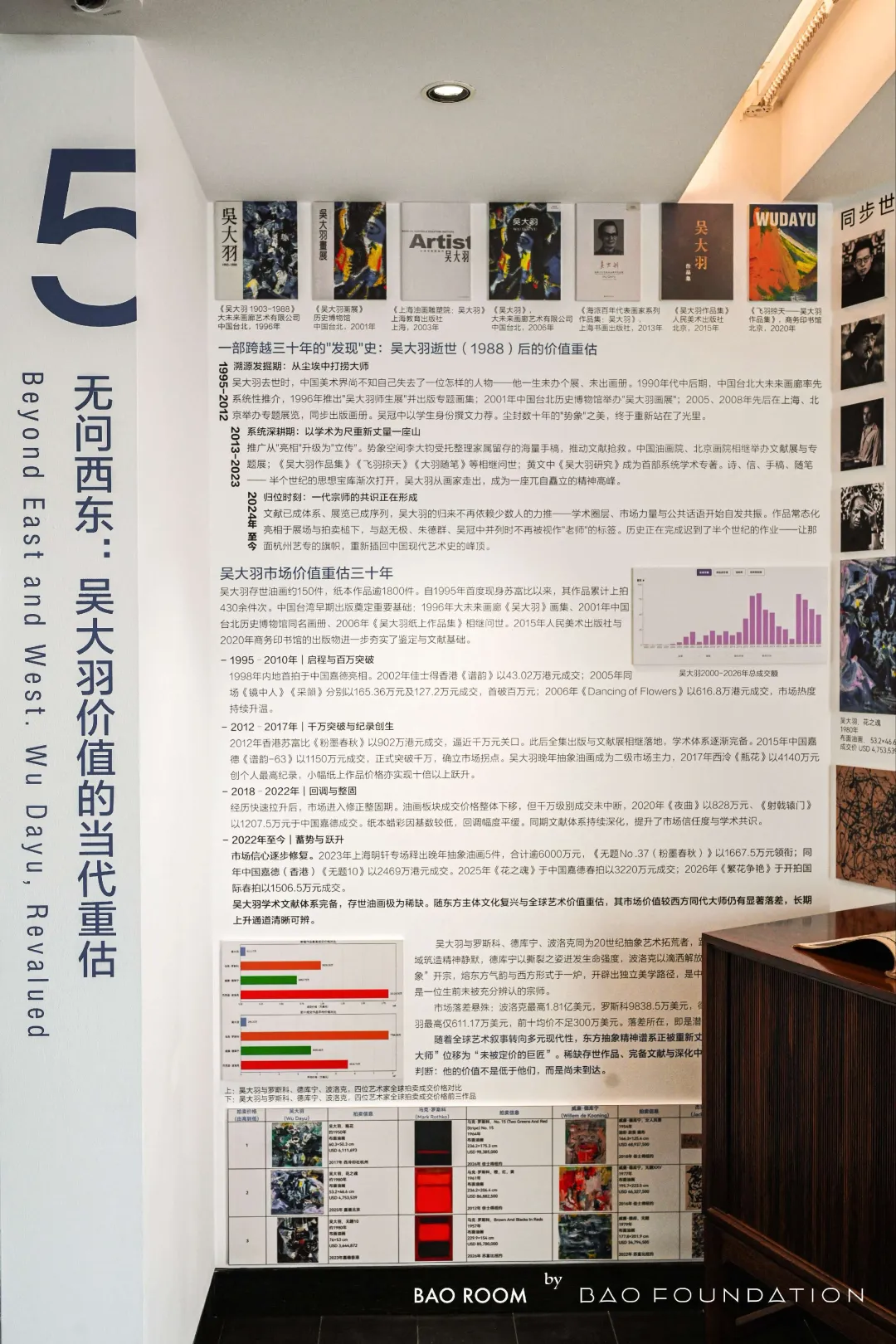
Exhibition site
"Wu Dayu is undoubtedly a master of Chinese modern art, possessing a pioneering spirit and originality. His lifelong, solitary yet passionate exploration, culminating in the creation of the unique 'Signature' aesthetic system, has written a chapter of modern art distinctly Eastern. This exhibition juxtaposes him with Rothko, de Kooning, and Pollock, establishing his central position as a parallel pioneer of 20th-century Chinese and Western modern art." — Curator Wang Conghui
Using Documents as Keys: The Legend of Aesthetic Education in Teacher-Student Correspondence
One of the most unique highlights of this exhibition is that it uses a large number of rare manuscripts and correspondence between teachers and students as clues to vividly present Wu Dayu's dedication to aesthetic education during the War of Resistance Against Japan.
"Beauty is in the sky, like clouds, falling into people's eyes. Once it is cut and trimmed, it takes root and becomes art. The use of art education is like cultivation and watering. Wild plants do not need to be cultivated, they can grow on their own."
"At the turn of the old and the new, there should be no grudges or disputes; only truth and falsehood are the greatest enemies." —Wu Dayu's letter to Wu Guanzhong and Zhu Dequn, 1941
"Man is born with two hands; one must be used to save, and the other to create." —Wu Dayu to Min Xiwen, 1941
"I remain steadfast in my purity and integrity, my heart unchanged, believing that the path of painting should begin with oneself, not end with oneself." —Wu Dayu to Zhuang Huayue
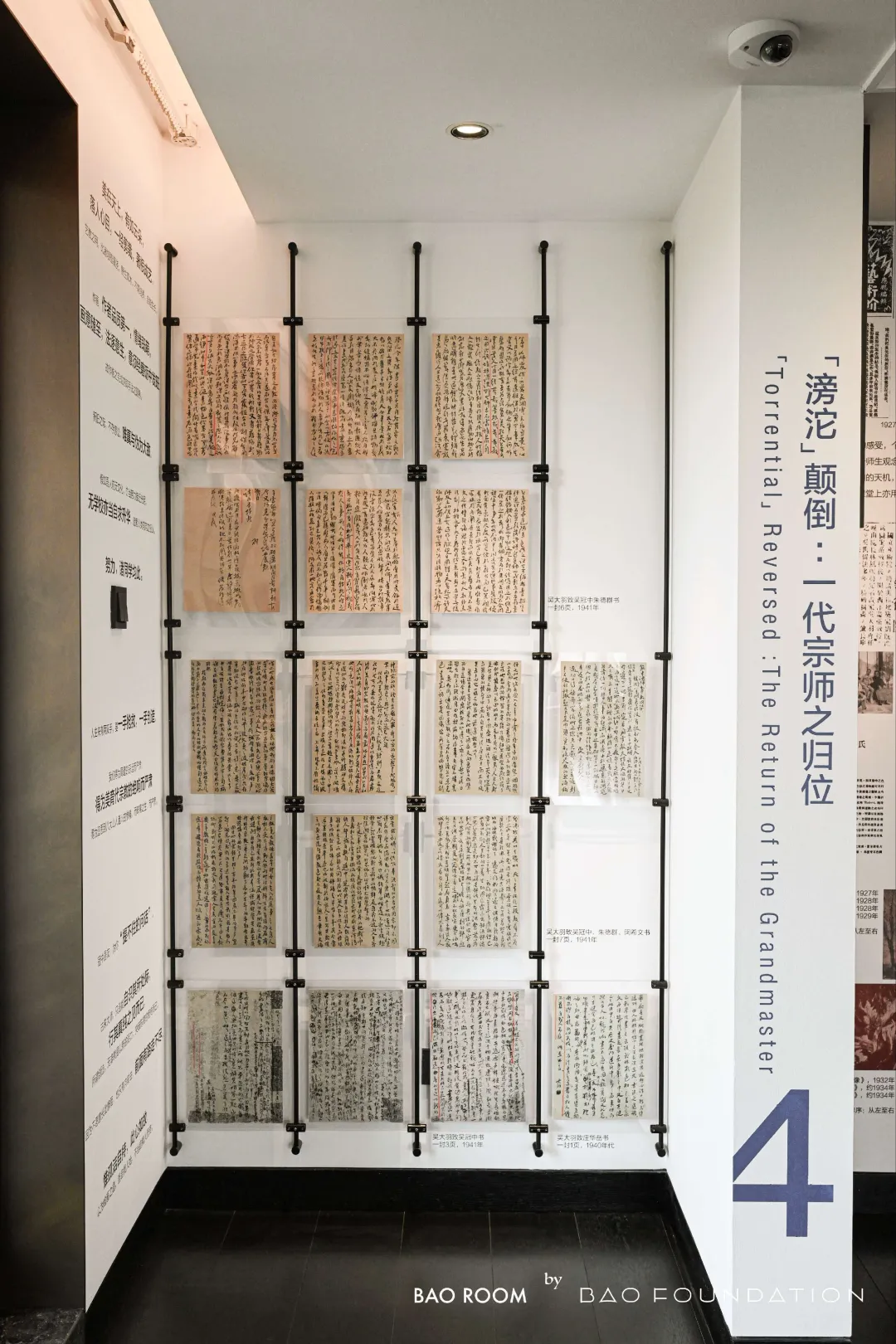
Exhibition site
At the same time, the exhibition features works by several of Wu Dayu's students—Zhao Wuji, Zhu Dequn, Wu Guanzhong, and Zhuang Huayue—each of whom has forged a distinct artistic path under the influence of Wu Dayu's ideas.
The juxtaposition of communications and artworks not only recreates vivid dialogues between teachers and students, but also allows viewers to directly experience how "non-traditional mentorship" can produce distinctly different artistic results in each individual.
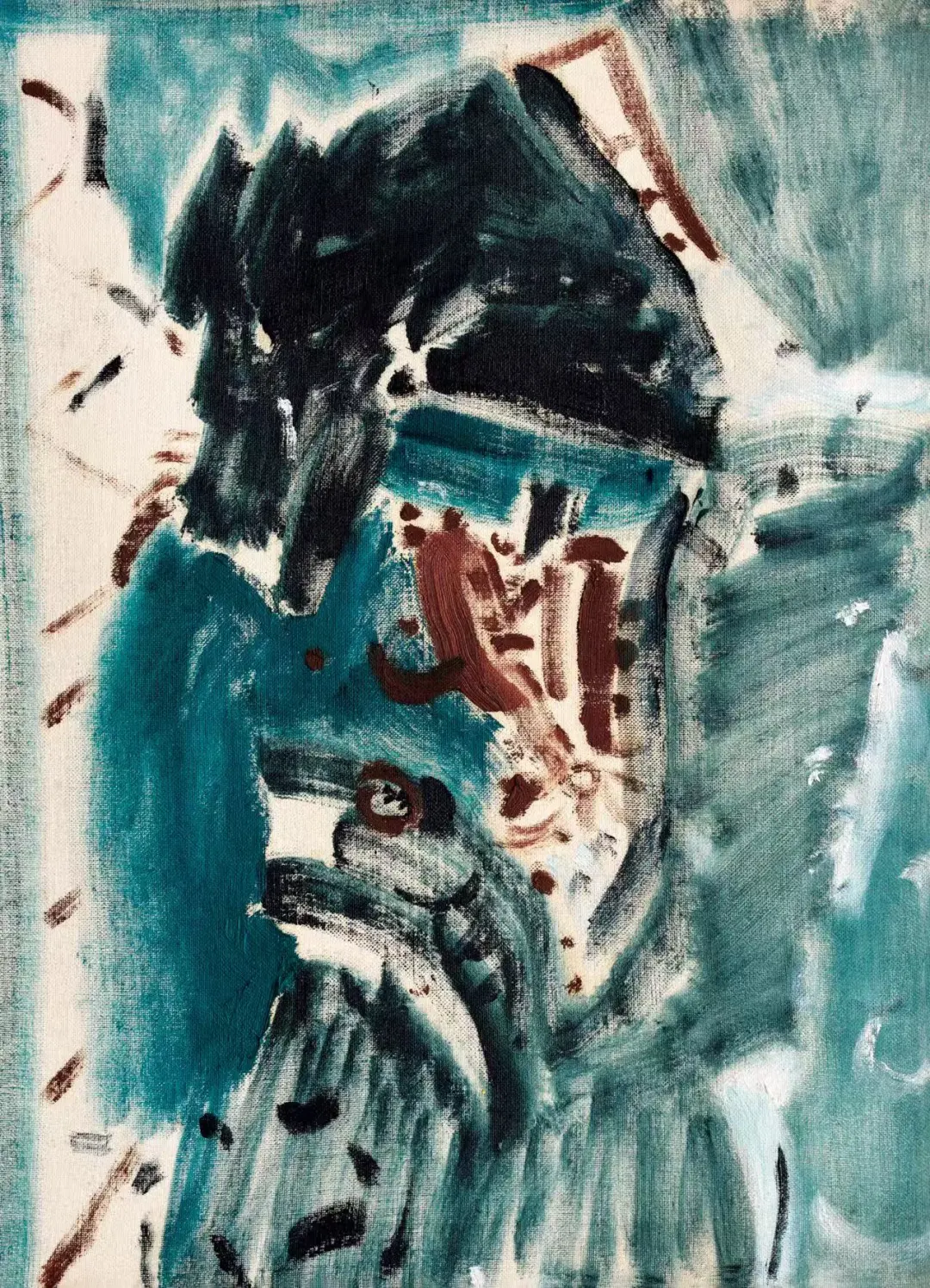
Exhibited work: Wu Dayu, Untitled-78, oil on canvas
53 x 39 cm, circa 1980s, private collection
Image source: "Flying Feathers Sweeping Across the Sky - A Collection of Works by Wu Dayu"
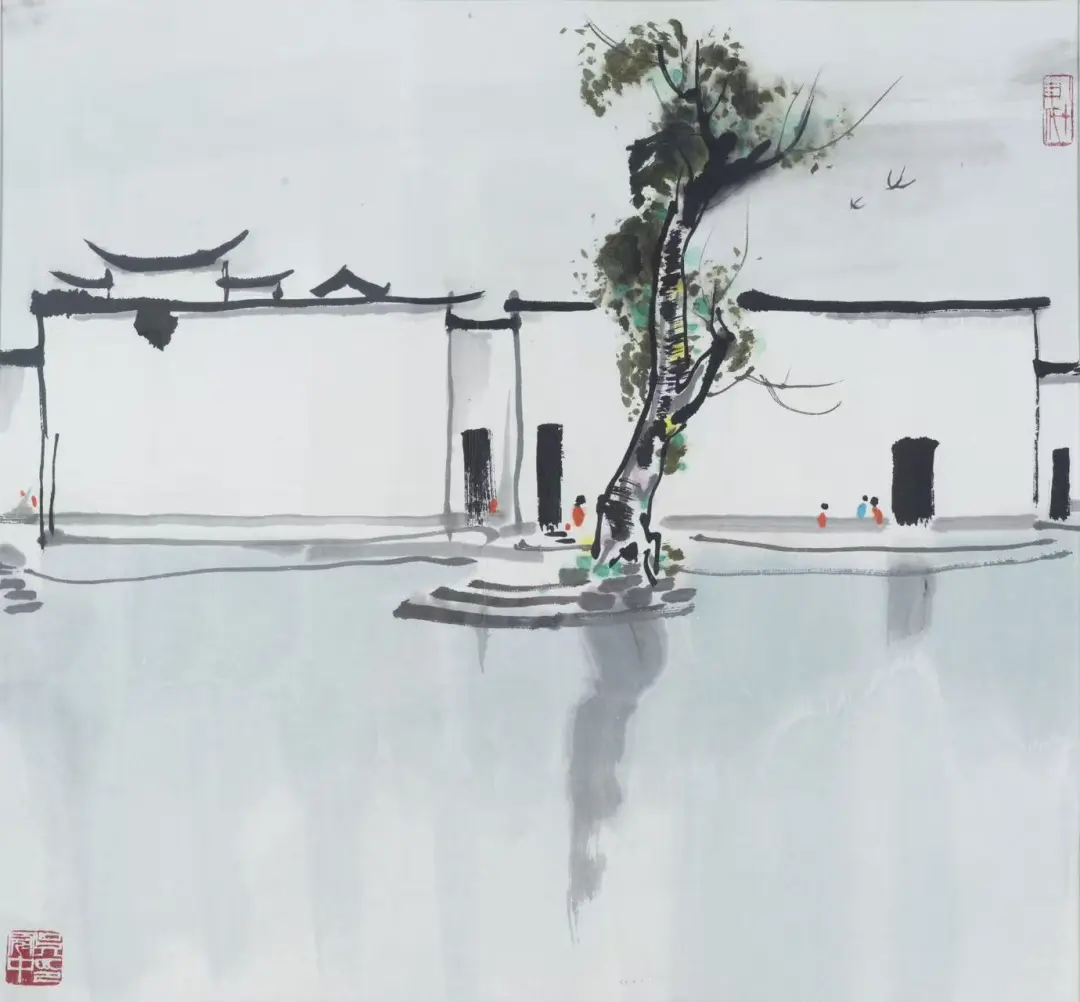
Exhibited work: Wu Guanzhong, "Little Swallows", ink and color on paper
47.5 × 44.5 cm, 1980s, private collection, image source: Kaipai International.
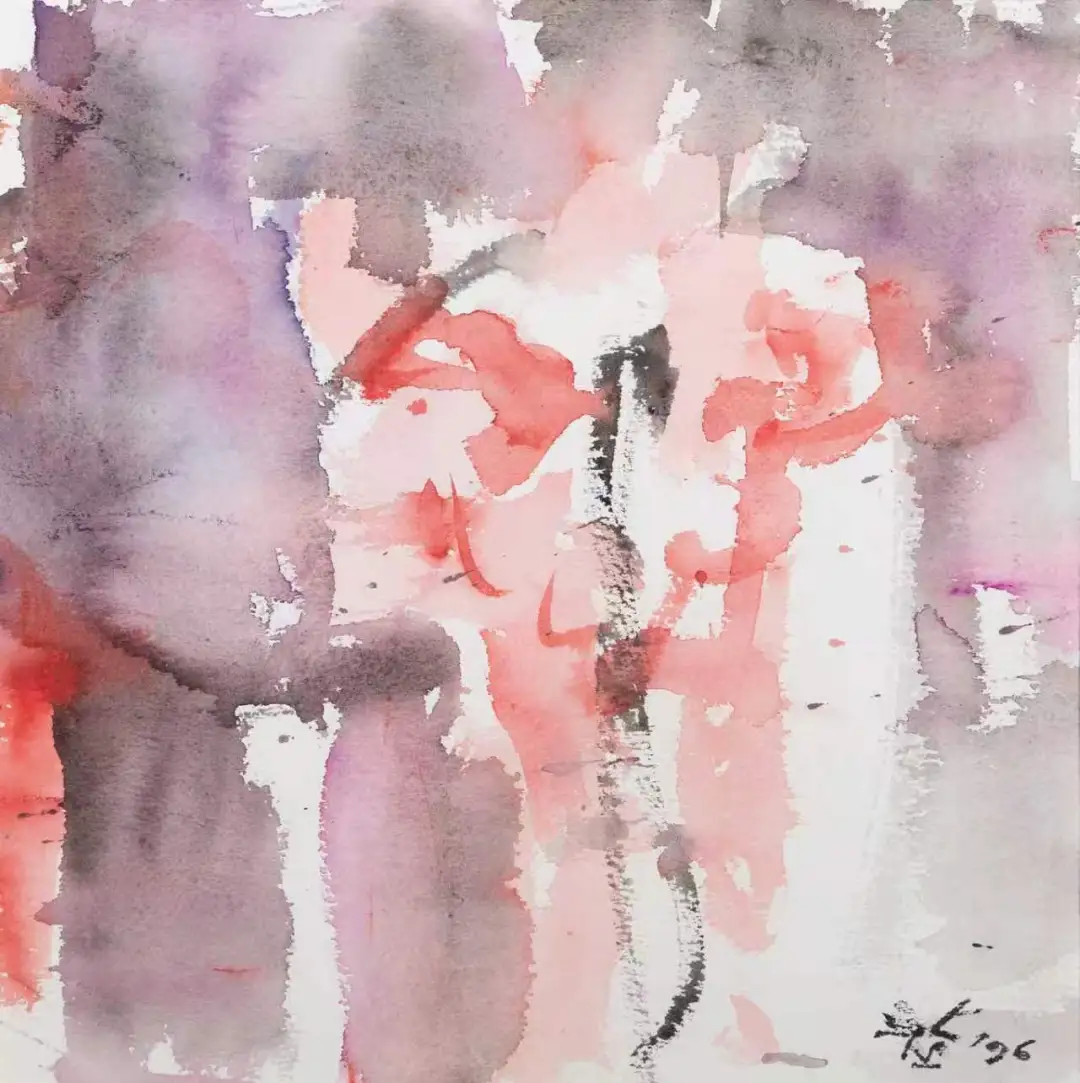
Exhibited work: Zhuang Huayue, "No. 48", watercolor on paper (board)
27.7 × 27.7 cm, 1996, private collection, image source: Kaipai International.
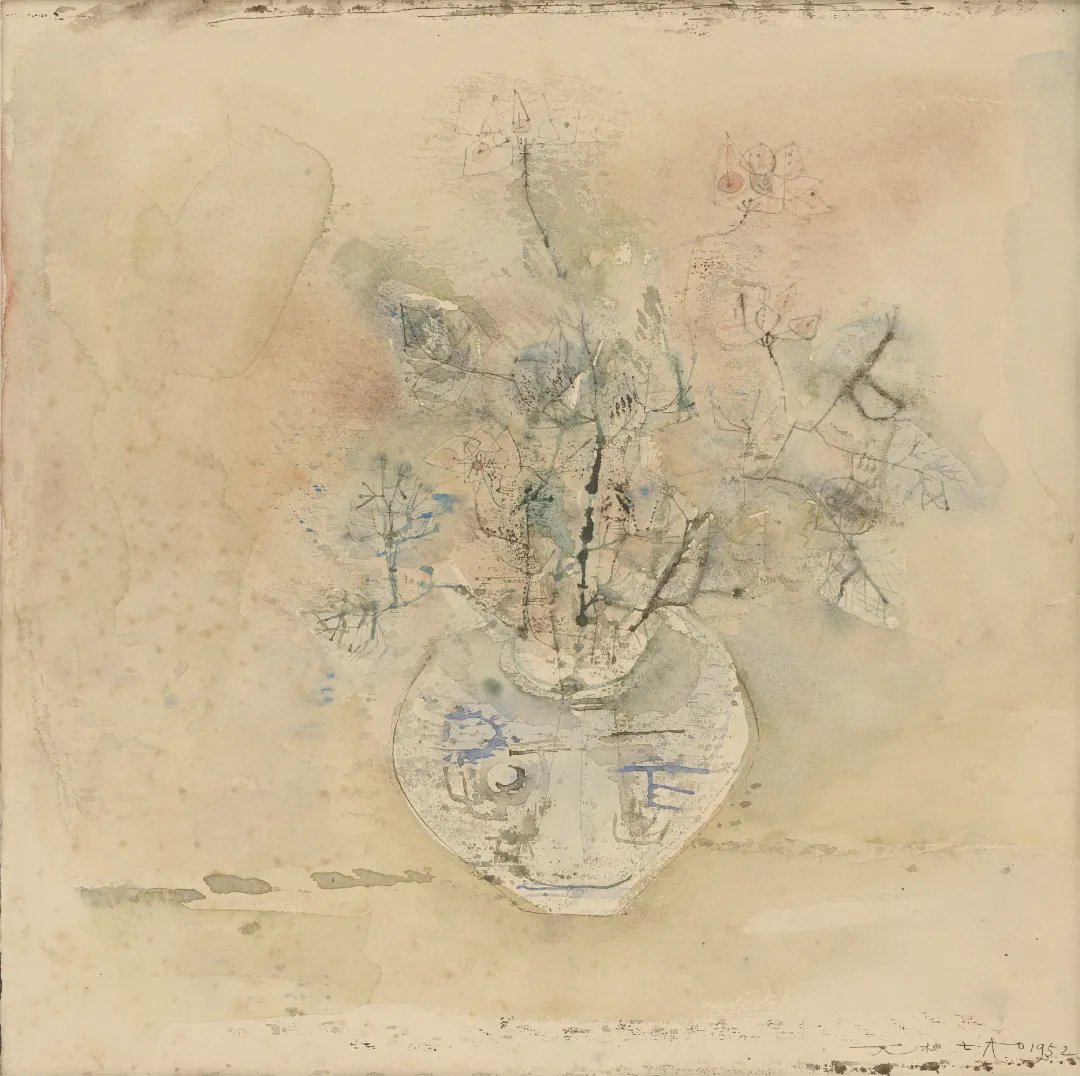
Exhibited work: Zao Wou-Ki, "Flowers in a Vase", watercolor on paper
34 × 34 cm, 1952, BAO COLLECTION, image source: BAO COLLECTION
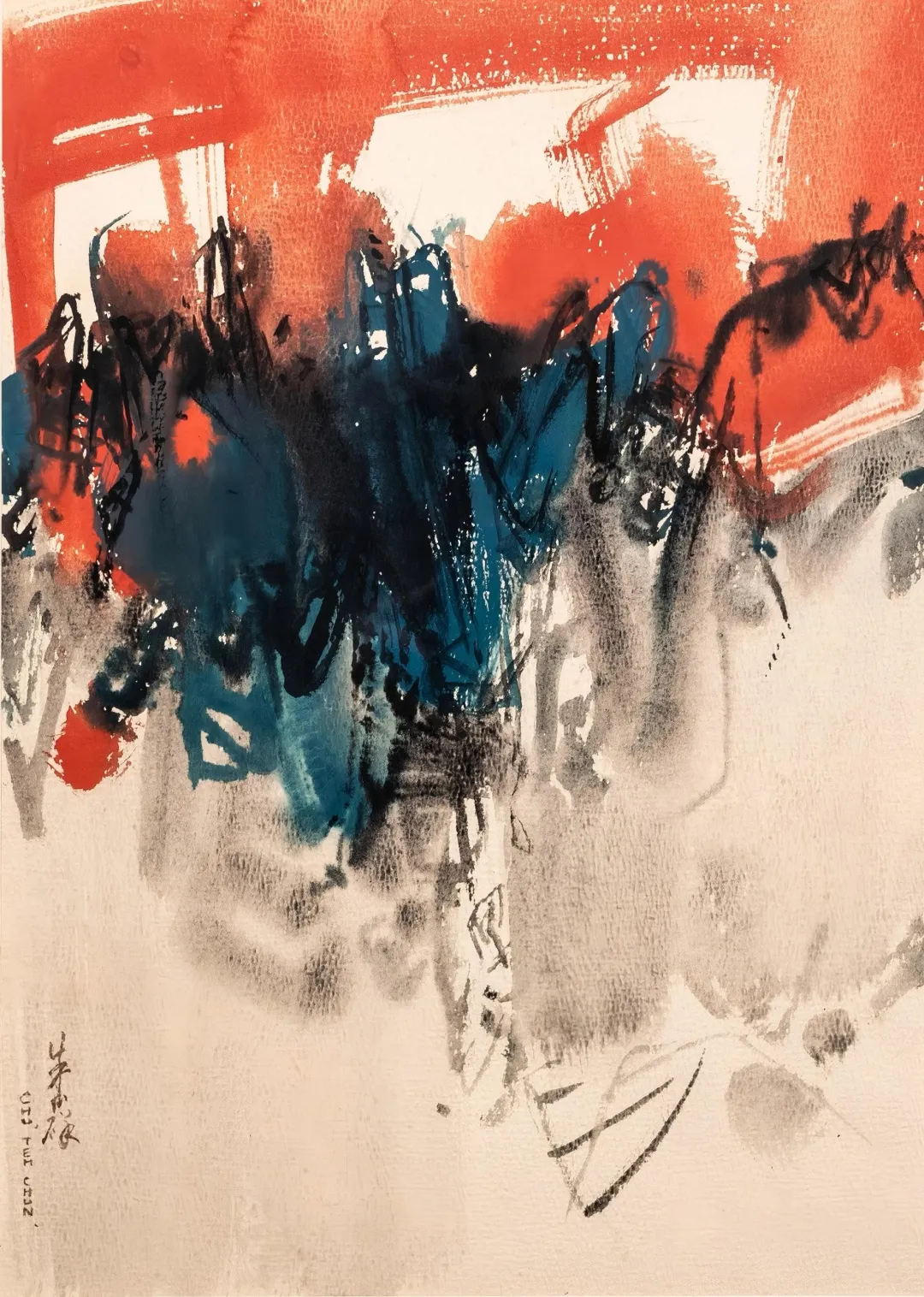
Exhibited work: Chu Teh-Chun, "No. 163", gouache on paper
53 × 37.7 cm, 1963, private collection, image source: Kaipai International.
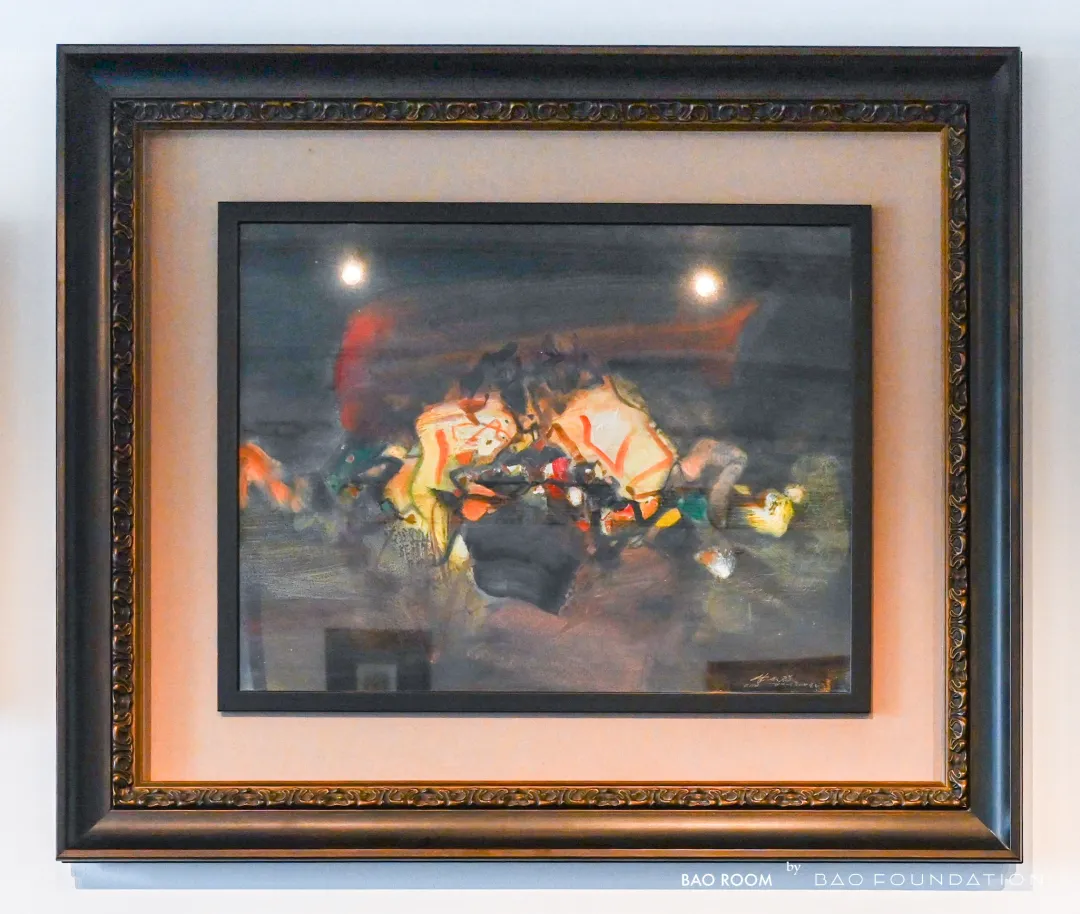
Untitled by Chu Teh-Chun, acrylic on paper
50 × 65 cm, 1982, private collection
Exhibition site photos
Market Reassessment: A Thirty-Year History of "Discovery"
This exhibition outlines the complete trajectory of Wu Dayu's value reassessment after his death from two dimensions: academic promotion and secondary market performance.
In terms of academic promotion, the period from 1995 to 2012 was a period of tracing and exploring the origins of Wu Dayu's art. Taipei's Grand Future Gallery took the lead in systematically promoting him, and in 2001, the Taipei History Museum held the "Wu Dayu Painting Exhibition," with Wu Guanzhong writing an article strongly recommending him. From 2013 to 2023, the period was a period of systematic in-depth cultivation. Shixiang Space was entrusted with organizing the family's manuscripts, and the China National Academy of Painting and the Beijing Academy of Painting successively held special exhibitions. Academic achievements such as "Wu Dayu's Works Collection," "Flying Feathers Soaring Through the Sky," "Dayu's Essays," and Huang Wenzhong's "Research on Wu Dayu" were published one after another. From 2024 to the present, the documents have become systematic, the exhibitions have become a series, and the academic circle, market forces, and public discourse have begun to resonate spontaneously, forming a consensus on this master of his generation.
In the secondary market, since its first appearance at auction in 1995, approximately 150 of his oil paintings and over 1,800 works on paper have been auctioned, with a total of over 430 lots offered. In 2015, "Rhythm of the Melody-63" sold for 11.5 million yuan, breaking the 10 million yuan mark; in 2017, "Flowers in a Vase" set a personal record at 41.4 million yuan; in 2025, "Soul of Flowers" sold for 32.2 million yuan; and in 2026, "A Riot of Flowers" sold for 15.065 million yuan. With the revival of Eastern mainstream culture and the revaluation of global art, his market value still lags significantly behind that of his Western contemporaries, indicating a clear long-term upward trend.
This exhibition uses documents as a guide, incorporating the process of this value reassessment itself into the exhibition narrative, inviting viewers to witness how a master transcends time and ultimately gains historical recognition.
A master is not something that is "discovered".
Curator Jiang Mingyang, co-founder of Kaipai International, said: "What touches me most about Wu Dayu is not the aspect of him that was delayed by the times, but that he was never truly delayed by the times. Even in the loneliest years, he still passed on his knowledge through letters and educated people with philosophical thoughts, and upheld aesthetic education as a faith. The audience will see that a master is not 'discovered' by later generations; he has always been there, it's just that the times have finally come to a point where he can be understood."
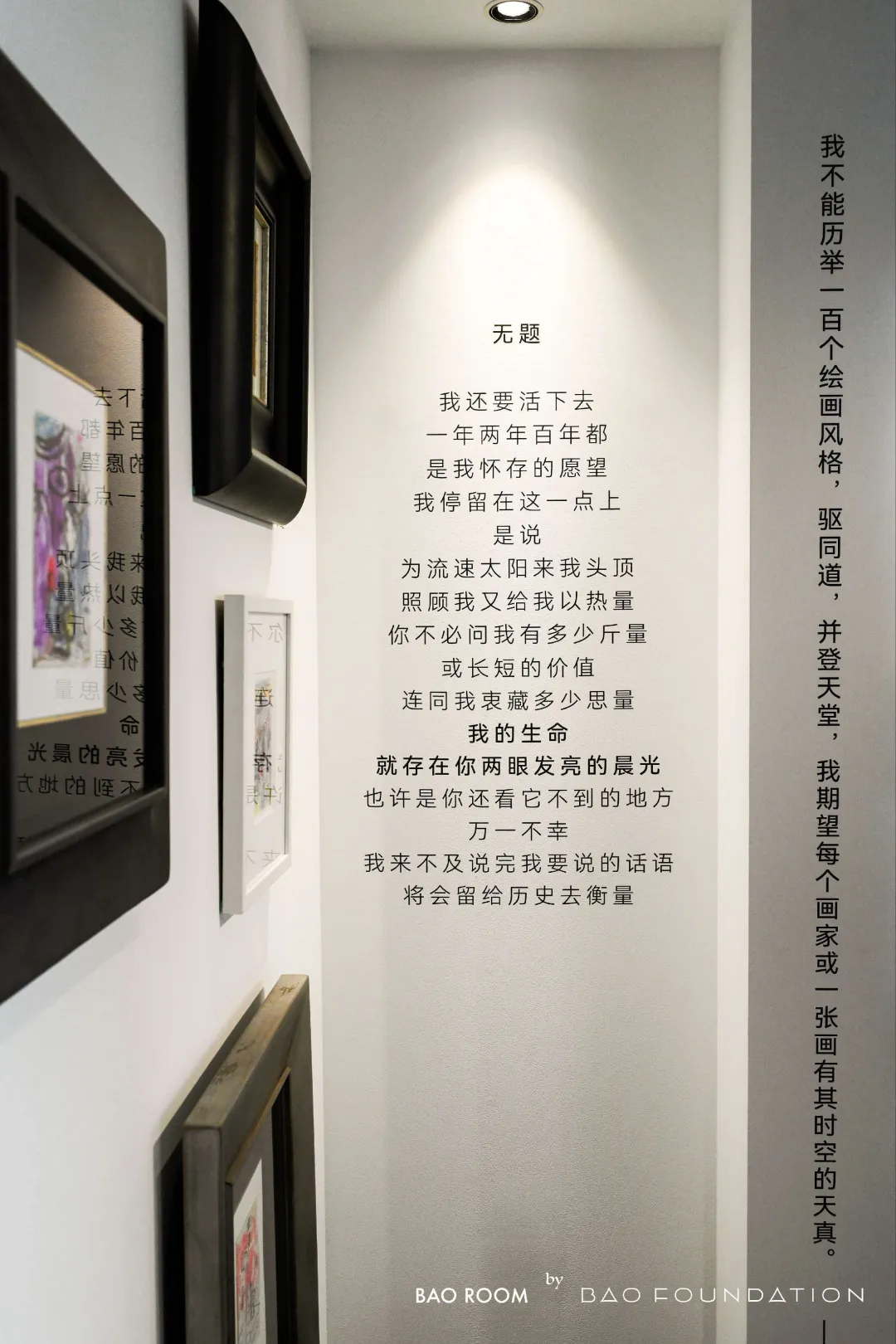
Exhibition site
The BAO Foundation stated that the exhibition will be expanded and exhibited at the Zhi Art Museum at the end of 2026.
After a century of isolation, a powerful trend has finally emerged. The future of the East is set today.
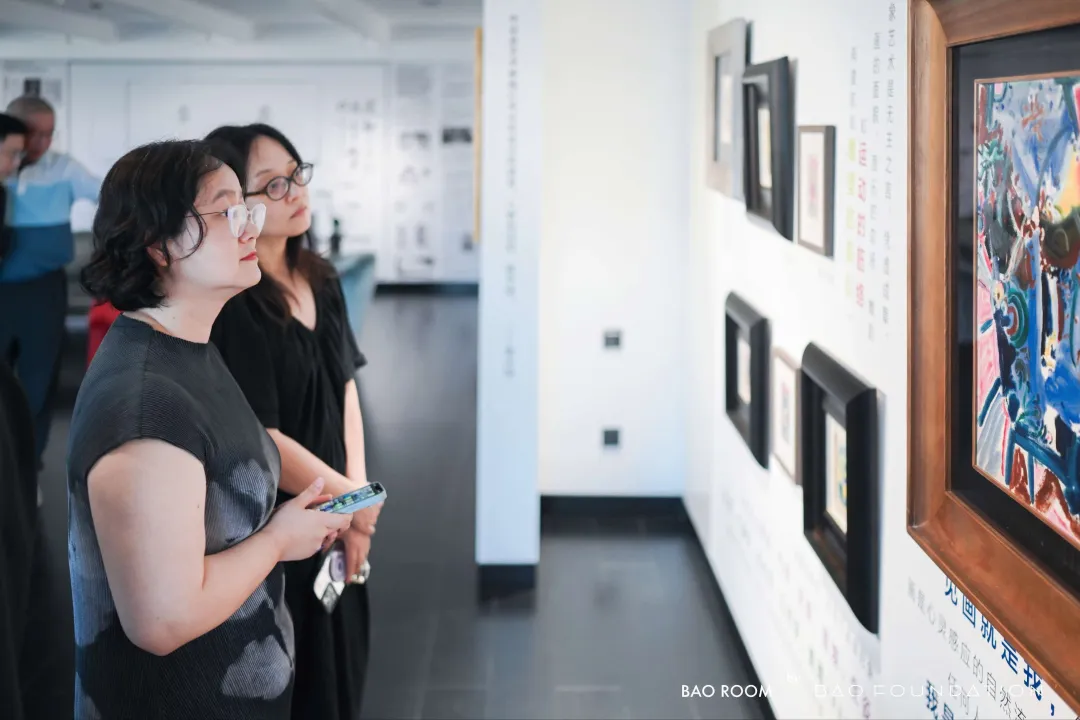
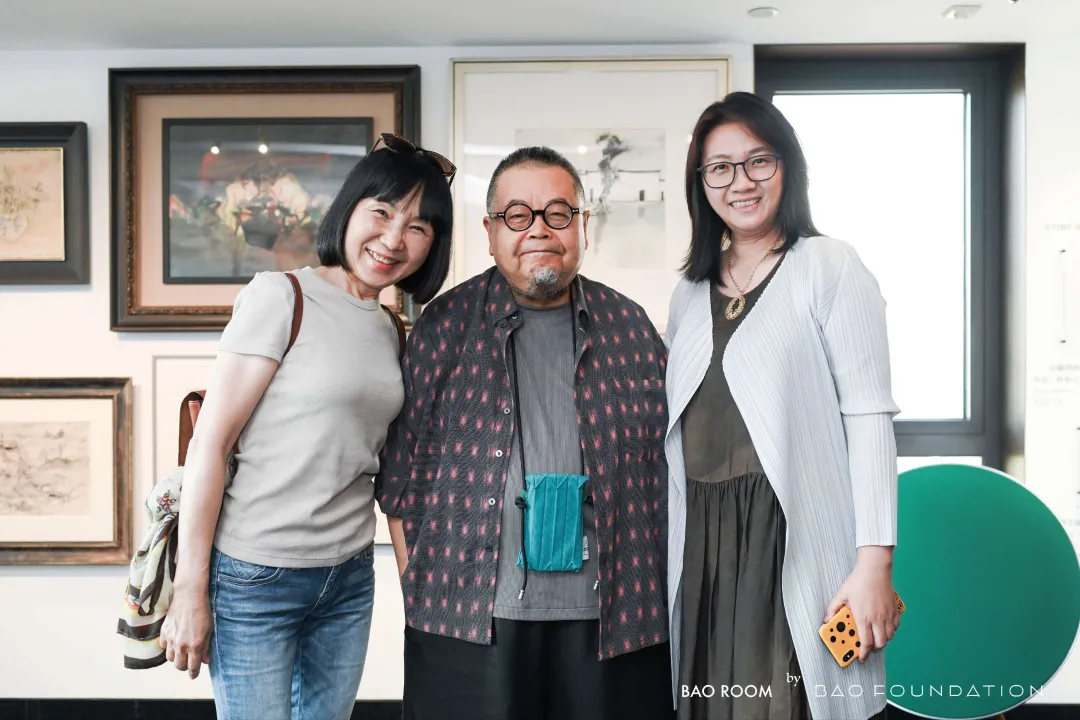
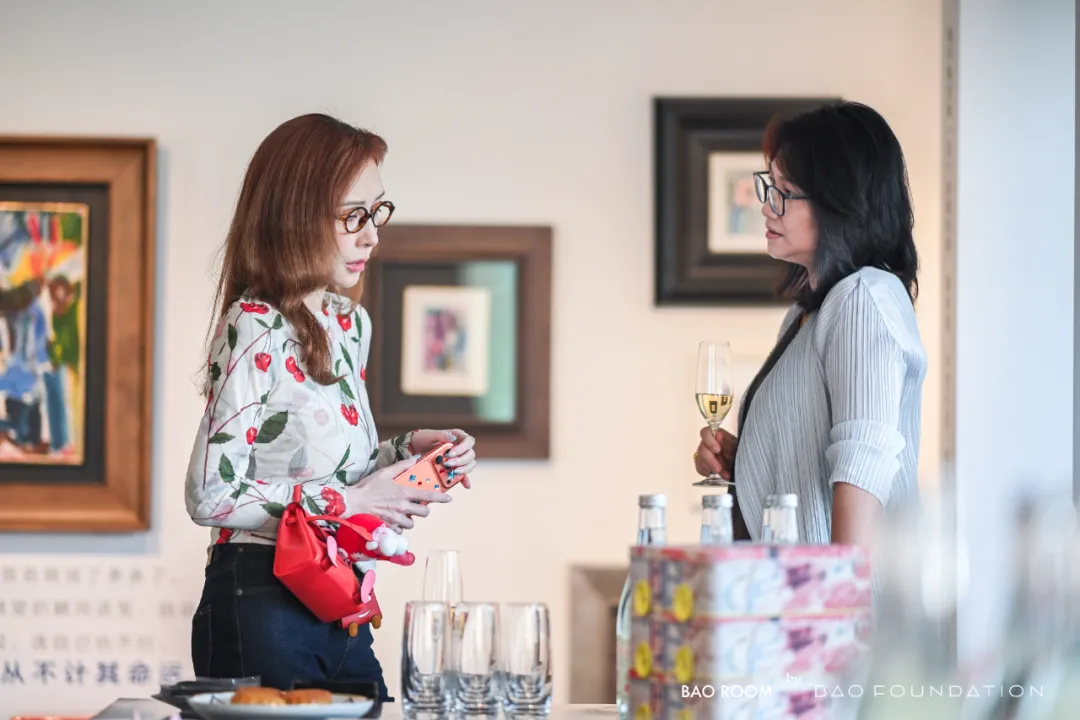
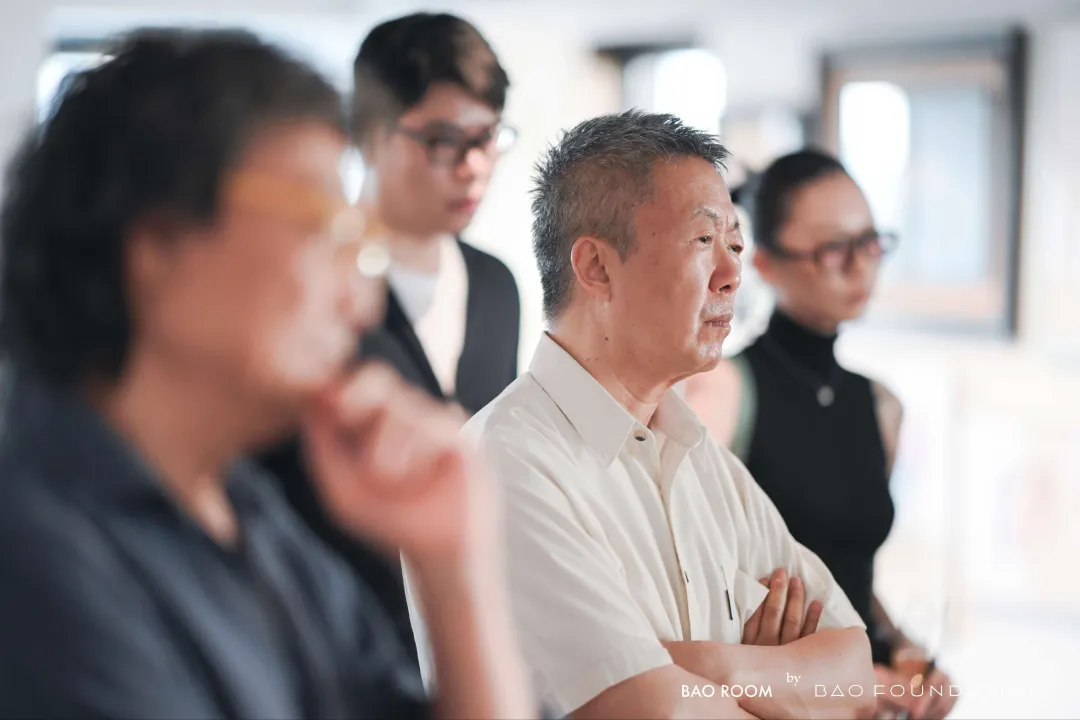
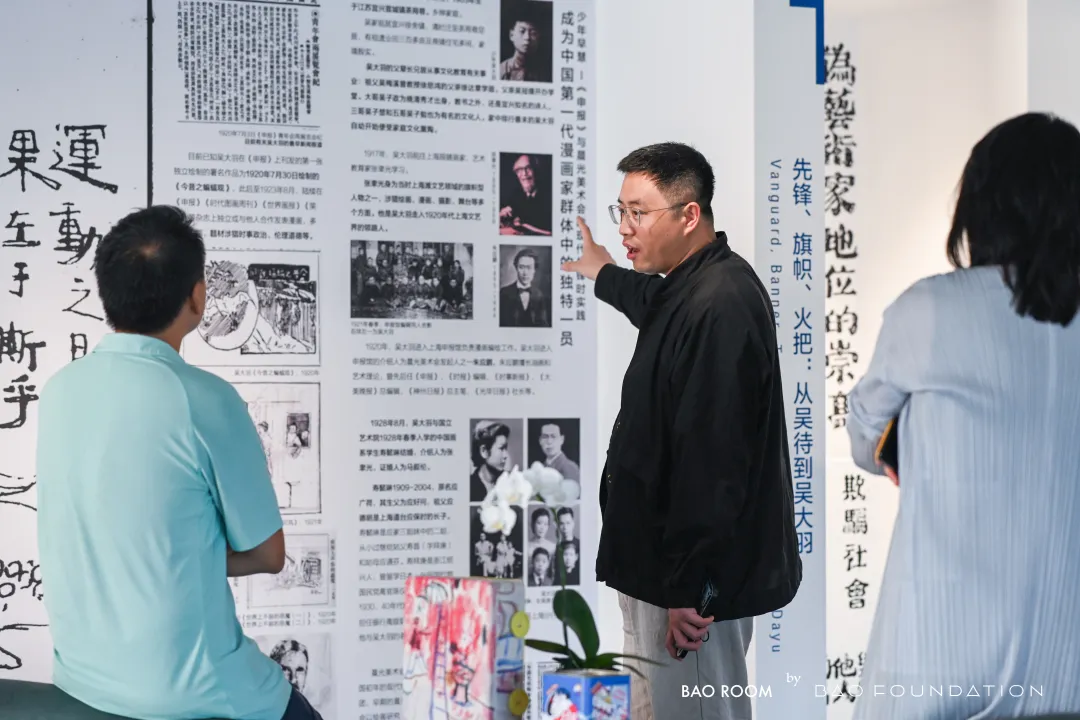
Exhibition opening ceremony
■
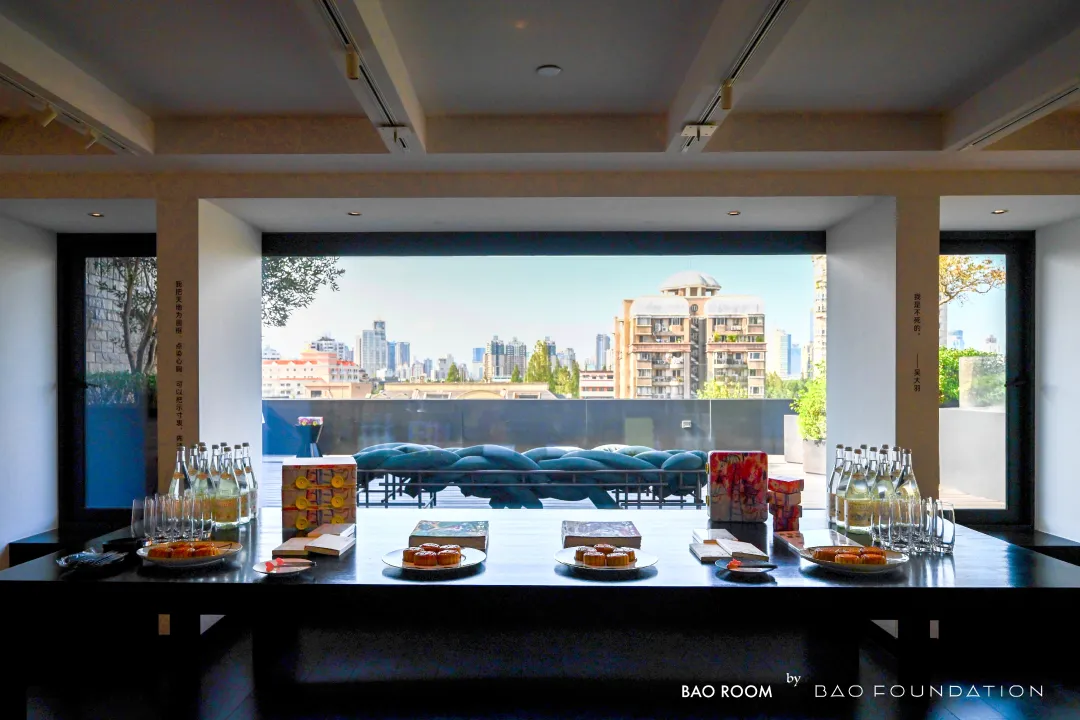
BAO ROOM by BAO FOUNDATION is located on the top floor of Wunan 396. Facing outwards, it overlooks the tree-lined streets of the Hengfu Historical and Cultural District; inwards, it, together with 72 Tang Private Banquet, "The Host Is Not Here," the Wunan 396 terrace, and the rooftop garden, forms a multi-functional space that can host exhibitions, discussions, banquets, and brand collaborations.
Wunan 396 was once the office building of the Liberation Daily and Shanghai Joint Publishing Co., Ltd., leaving behind clues to knowledge production. Today, BAO ROOM transforms these clues into exhibitions, public projects, and cross-sector collaborations. It is not just an elegant exhibition hall, but a space that brings together artworks, urban memories, lifestyles, and commercial brands for an experiential journey. As the Zhenbao Foundation's art space in Shanghai, BAO ROOM continues its direction of "reshaping the imagination of the East," focusing on case studies of cross-generational artists from home and abroad, thematic group exhibitions, and collection exhibitions. Through ongoing public projects and cross-brand co-creation, it establishes a contemporary cultural scene within the historical context of Shanghai.
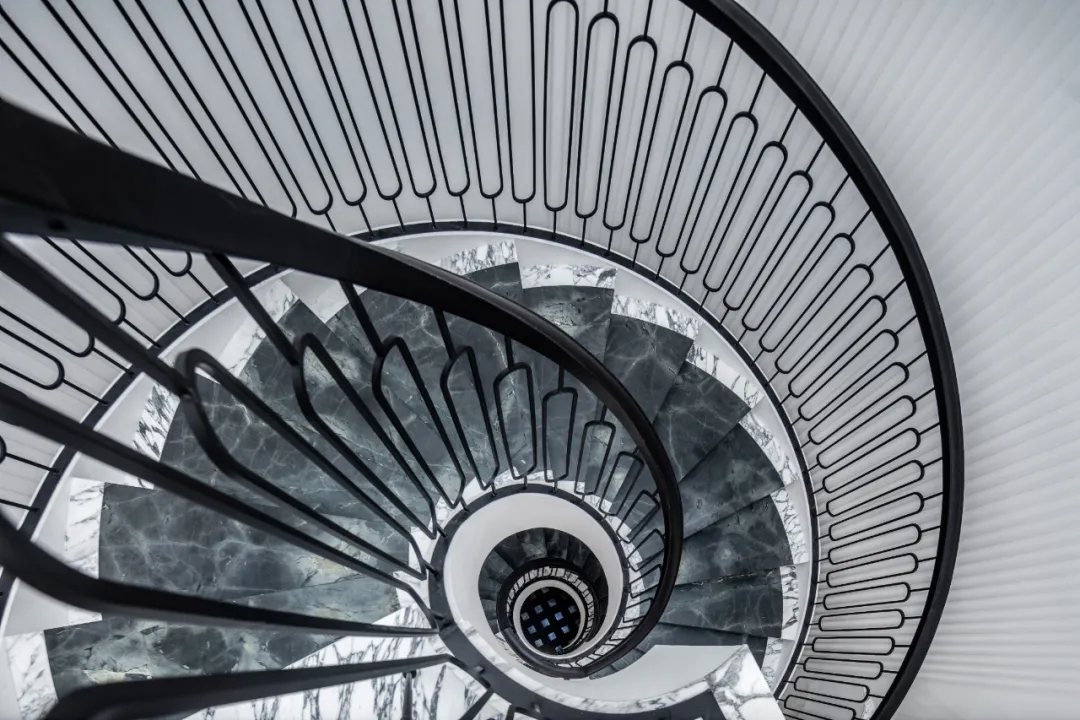
BAO ROOM, the art space located in Wunan 396, is an indoor space.
Image source: BAO ROOM Art Space
■
Exhibition Information
The trend is set in the East
Grandmaster Wu Dayu
curator
Wang Conghui, Jiang Mingyang
Literature research support
Sha Qingqing
Exhibition period
September 16, 2026 - December 31, 2026
Place
BAO ROOM Art Space
8th Floor, No. 10, Lane 396, South Urumqi Road, Xuhui District, Shanghai
■
Artist (About the Artist)
Wu Dayu (1903-1988) was an outstanding Chinese modernist art master, the founder of Chinese abstract painting, an oil painter, art educator, and poet.
Born on December 5, 1903, in Yixing, Jiangsu Province. In 1917, he went to Shanghai and studied painting under Zhang Yuguang. In 1920, he became the art editor of the Shanghai newspaper *Shen Bao*, drawing cartoons. In 1923, he went to France to study, enrolling in the École Nationale Supérieure des Beaux-Arts in Paris. In January 1924, he, along with Lin Fengmian, Li Jinfang, and others, organized the Hops Society in Paris, later renamed the "Overseas Art Movement Society." He returned to China in 1927 and became a professor at the Shanghai Xinhua Art College. In March 1928, he participated in the founding of the National Academy of Art, serving as the head of the Western Painting Department. In August, he, along with Lin Fengmian, Lin Wenzheng, and others, initiated the "Art Movement Society." In September, the Chinese Painting Department and the Western Painting Department merged, and Wu Dayu became the head of the Painting Department. He left his teaching position in 1938. In 1947, he returned to the National Hangzhou Academy of Art as a professor and head of the Western Painting Group. In 1950, he was dismissed by the school and lived at home painting. He began teaching in the Oil Painting Department of the Shanghai Academy of Fine Arts in 1960. In 1965, he joined the Shanghai Oil Painting and Sculpture Studio (Institute). He passed away on New Year's Day, 1988. He served as an art advisor to Shanghai Jiaotong University, an advisor to the China Artists Association, vice president of the Shanghai Academy of Painting, and a director of the Shanghai branch of the China Artists Association. As an art educator, he mentored students such as Ding Tianque, Zhu Danian, Wu Guanzhong, Zhu Dequn, Zao Wou-Ki, Zhuang Huayue, Min Xiwen, and Zhao Chunxiang.
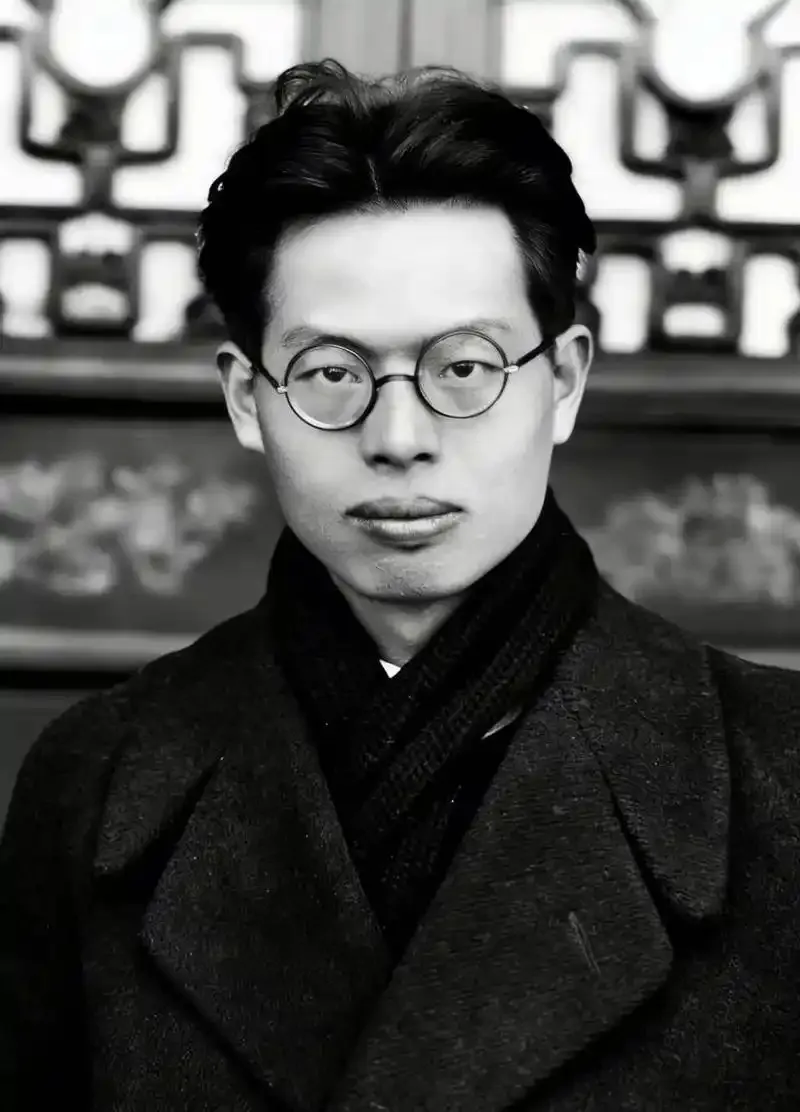
Wu Dayu (1903-1988)
■
Curators
Wang Conghui is the Director of the Zhenbao Foundation and the Director of the Zhi Art Museum. She focuses on the global curatorial practice and collection construction of Eastern aesthetics and Asian art. She holds a Master of Arts degree in Aesthetics from the Department of Philosophy at Peking University and an MBA from Cheung Kong Graduate School of Business. She previously worked as a senior reporter for CCTV International News, a contemporary art expert at Sotheby's and Christie's, and served as the founding director of the Zhi Art Museum, exploring the global influence of Asian art through case studies, retrospectives, and other curatorial methods. She has curated important exhibitions such as "Illusion: Chen Fushan Retrospective" (2018), "Wei Ligang: All Things" (2019), "The Art of Escape: Gao Yu" (2023), "Play & Tools: He Muqun Centennial Retrospective" (2025), "Si Tianjian" Tai Xiangzhou Solo Exhibition (2025), and "Towards Abstraction" Wu Dayu, Yu Youhan, and Zhang Wei Solo Exhibition (2026). She also initiated the "Open Orient" Asian Art Museum Directors Forum (2019, 2026), promoting the re-narration of Asian art in an international context.
Jiang Mingyang is the co-founder, general manager, and director of the academic research department of Kaipai International. He graduated from the Department of Art History at the Central Academy of Fine Arts. In August 2020, he participated in the founding of Kaipai International. He possesses extensive client resources and transaction experience in the contemporary art sector. He is dedicated to the research and promotion of Chinese contemporary art. He has participated in curating exhibitions such as "The Pioneer's Path: French-educated Artists and Modern Chinese Art 1911-1949" (Central Academy of Fine Arts Museum, Long Museum, Shijiazhuang Art Museum), "Genius Painter: Sha Qi Art Exhibition" (Furen Shuyuan Art Museum), "Elegant Gentleman: Chang Yu Art Exhibition" (Xiamen Baolong Art Center), "The Sound of the Sun: Liu Ziming and Susan Varadon's Works Exhibition" (Zhenbao Art Foundation), "Potential and Echoes: Wu Dayu's 120th Anniversary Art Exhibition" (Beijing Valley Space), "The Form of Perception" (Suzhou Hong Art Museum), "Echoes of Mountains and Rivers: Phoenix Mountain Artists Group Special Exhibition" (Beijing Kaipai Space), and "The Transformation of Viewing: Baolong Art Museum's 8th Anniversary Modern Art Special Exhibition" (Shanghai Baolong Art Museum).
■
Research Support: Support for Literature Research
Sha Qingqing is a historian and columnist. Her academic works have appeared in journals such as *Chinese Social Sciences*, *Historical Research*, *Studies in Modern History*, and *Studies in the History of the Communist Party of China*. Her monographs include *Impossible Allies*, *The Sino-Japanese War of 1894-1895: A Swinging War*, *Enemy and Friend Are Hard to Distinguish: A Chronicle of Cold War Espionage*, and *Rampaging Militarism: War Memories of Modern Japan*, as well as several translations. She is also a host and regular guest on well-known podcasts such as *East Asia Observation Bureau*, *Side Talk*, and *Left and Right*.
■
True Treasure Foundation
The True Treasure Foundation's core mission is "Reshaping the Oriental Imagination": to explore curiosity and imagination, to develop an ecosystem of cultural and institutional innovation, to unite creators, thinkers, and cultural institutions around the world, to explore the diverse and open "Oriental" context, and to jointly build an "Oriental" narrative and imagination system with continuous self-generation capabilities.
The foundation's concept originated from long-term, systematic reflection on how "Eastern" culture influences the world within the global landscape. Its establishment is built upon the founders' profound historical awareness and their commitment to civilizational construction based on Eastern beliefs, and it continues their long-term practice in art collection, cultural patronage, and institutional operation over the past two decades.
The True Treasure Foundation's artistic roots originate from its founder's art collection. In 2012, it established the Zhi Art Museum (Chengdu), and in 2014, it held its inaugural exhibition. In 2020, it expanded to include the True Treasure Art Space (Shanghai). In 2025, the True Treasure Foundation will be officially established in Hong Kong, forming a three-in-one, complementary institutional network with the Zhi Art Museum and the True Treasure Art Space.
Stay tuned to ArtPro for the latest updates on the global art market.