
Exhibition | Hsiao Chin's "The Greater Self in the Infinity" presents his artistic career spanning over seventy years, from the 1950s to the present.
In the art world, few themes can reach the core of life experience as delicately and profoundly as the relationship between "self" and "infinity." The theme of this exhibition, "The Greater Self in Infinity," is a spiritual inquiry into the iconic vocabulary of Hsiao Chin's works—especially the concept of "Punto" (meaning "point") derived from Italian—gazing at how the artist uses the point as the origin, starting from the individual, to engage in dialogue with the boundless universe.
The exhibition meticulously organizes Xiao Qin's important creative periods across seven decades.Starting with his time studying in Spain in the 1950s, the book traces the origins of his artistic life and embarks on a spiritual journey that spans time and space.
Spanish period
In 1956, at the age of twenty-one, Hsiao Chin received a scholarship to travel to Madrid, thus embarking on a lifelong artistic journey. He immersed himself in the Western art world, absorbing abundant inspiration and experiences. Although the cultural shock was intense, it did not diminish his identification with his roots and identity. On the contrary, he firmly believed that he must be rooted in Eastern culture and integrate it into the wave of Western modernization. This belief became the cornerstone of his later fusion of East and West, creating a unique artistic path.
The works from this period, "Heart Imprint-2" (1957) and "Painting-BA" (1959), particularly highlight Hsiao Chin's originality. The former reconstructs the character "勤" (Qin) in his name using ink on paper, drawing inspiration from traditional Eastern calligraphy; the latter uses oil painting techniques to interpret pictographic imagery. Together, these two works reflect the unique perspective of an Eastern creator as he first entered the Western world.
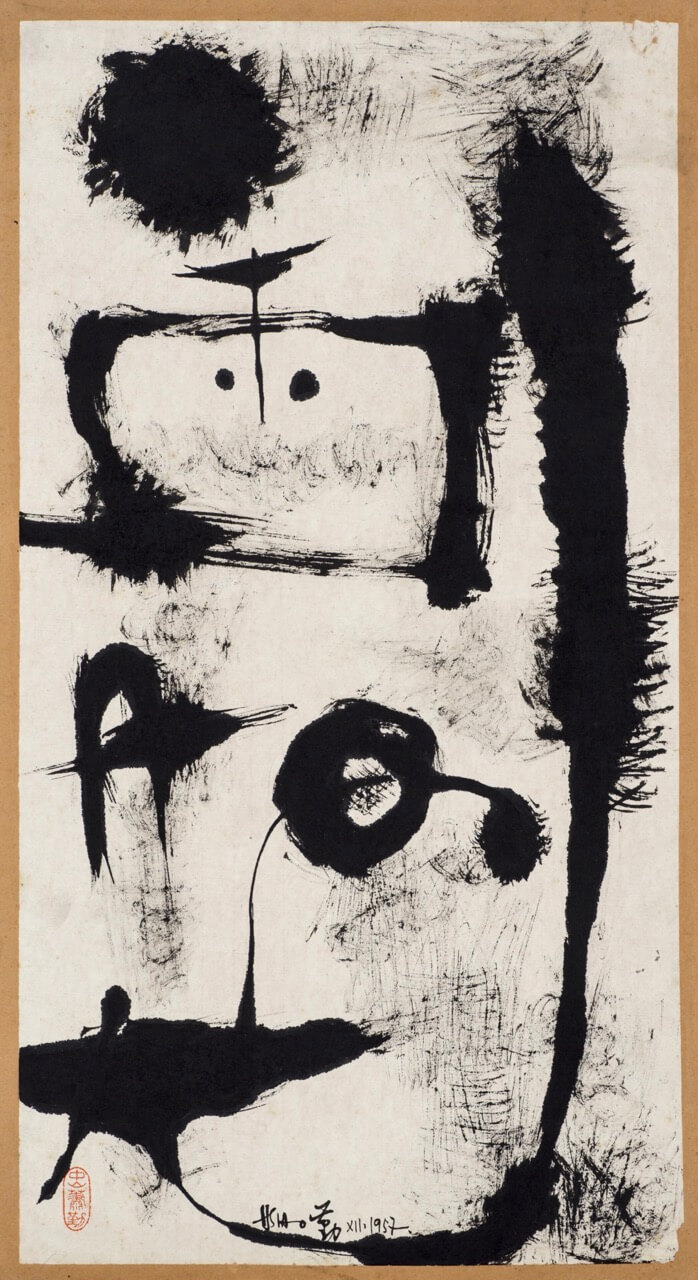
Hsiao Chin
Heart Seal - 2, 1957
Ink on paper
62 x 33cm
Frame size: 83.4 x 55 x 7cm
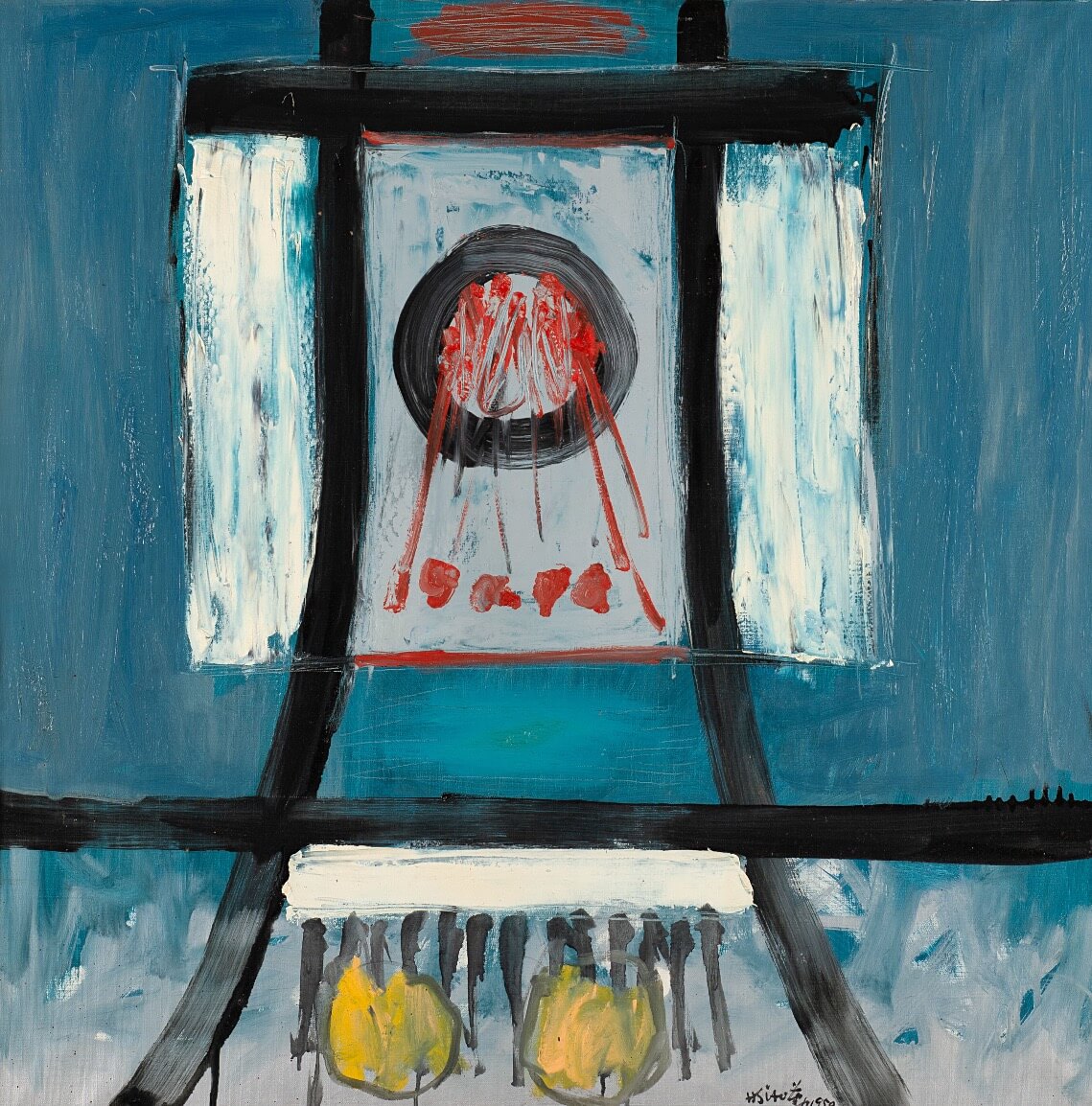
Hsiao Chin
Painting - BA "Painting - BA", 1959
Oil on canvas
90 x 89cm
Frame size: 106.5 x 105.5 x 7cm
What is the meaning?
In the early 1960s, Hsiao Chin settled in Milan, ushering in a crucial transformation in his creative journey. Moving from his Spanish period to the beginning of the Pangtu movement, he delved into Taoist and Zen Buddhist thought, exploring the essence of existence and using this to reshape his artistic expression. This artistic exploration condensed into an aesthetic imbued with Eastern charm—sometimes as dynamic as wild cursive script, sometimes as ethereal as a flowing painting. Within this framework, Hsiao Chin's series of works from 1961, particularly "Hidden" and "Hidden," clearly reflect the nascent form of his "Pangtu" concept.
The earthy tones and vermilion accents in the paintings, layered to create a texture reminiscent of nature, echo the inspiration of Spanish masters such as Antoni Tàpies, while also incorporating the rustic charm of calligraphic lines and the profound meaning of blank space in ink painting. This fusion foreshadows his later "Tao" and "Qi" series, marking a crucial aesthetic transformation at the beginning of the Pangtu Movement. It also makes these works exceptionally rare in Hsiao Chin's artistic career, placing them at the heart of this exhibition.
In 1961, Hsiao Chin initiated and co-founded the "Ponto International Art Movement" in Milan, exploring the essence of humanity, cognition, and existence. "Ponto" is not only a visual symbol, but also a representation of the intersection of personal consciousness and the spirit of the universe—each point contains a potential universe.
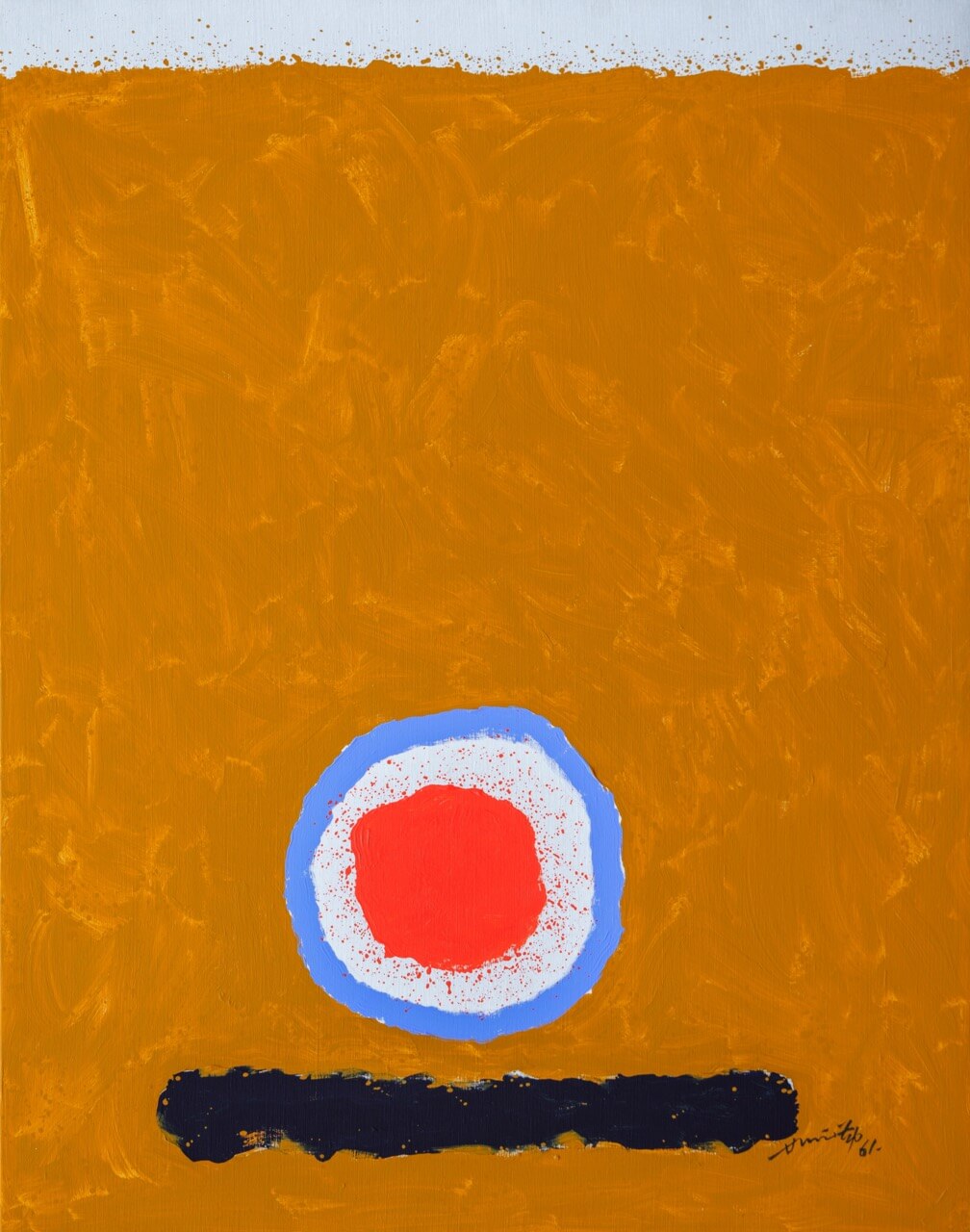
Hsiao Chin
Dive, 1961
Acrylic on canvas
140 x 110cm
Frame size: 161.2 x 132 x 7cm
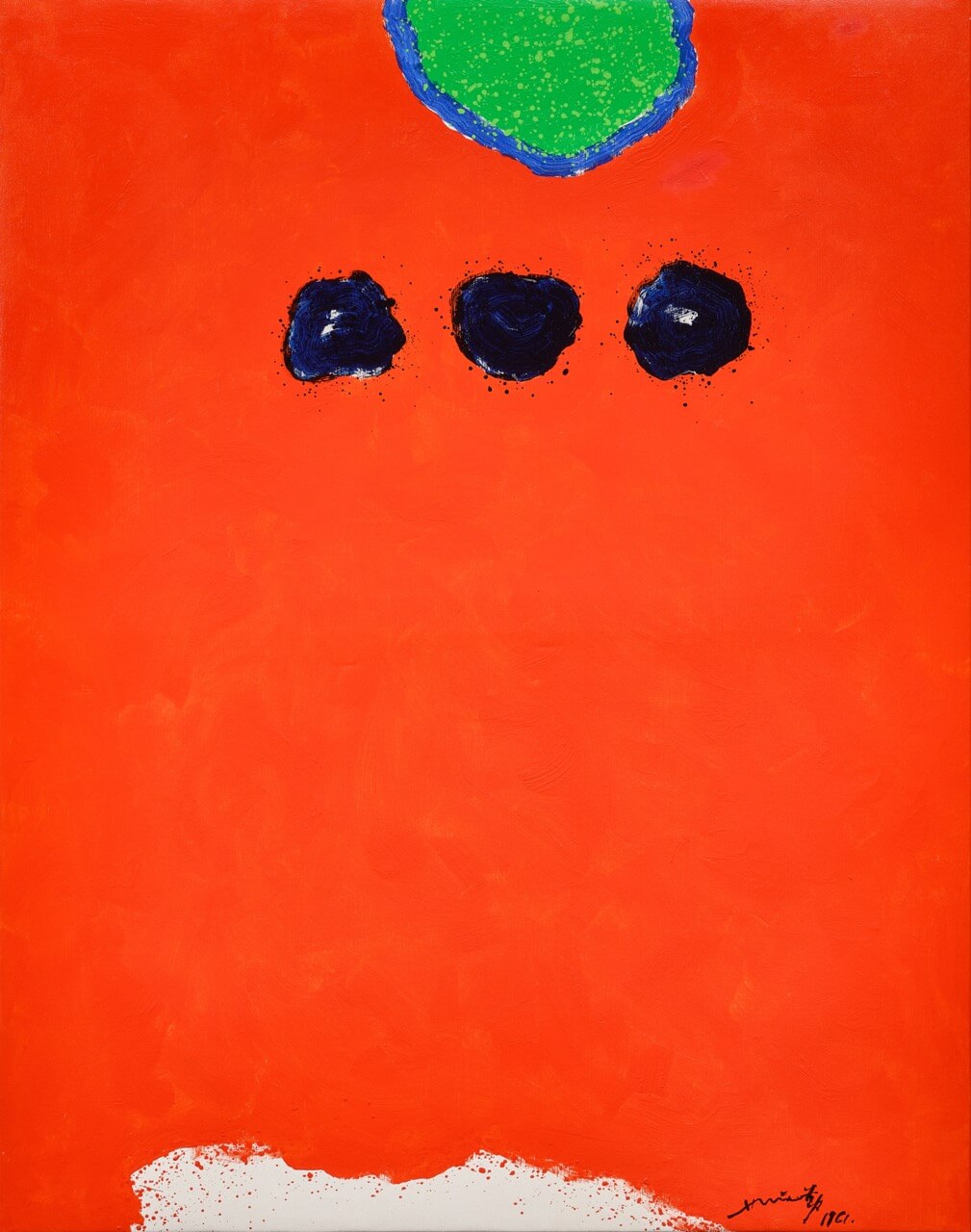
Hsiao Chin
Crouch, 1961
Acrylic and ink on canvas
140 x 110cm
The significance of the "Light Leap" series
Between 1963 and 1964, Hsiao Chin held several important exhibitions in Barcelona and Abisola, which contributed to the development of the "Mysterious Heart-2" (1963) and "The Leap of Light" (La danza di luce) series. These works mark a pivotal moment in Hsiao Chin's creative journey, encapsulating the essence of his artistic spirit in the 1960s. This series is renowned for its vibrant expressiveness and rhythmic composition, reflecting the artist's profound exploration of light, color, and form, while infusing Eastern philosophical thought into the context of postwar European abstract art.
In *Mystical Mind-2* (1963), Hsiao Chin effortlessly explores the tension between straight lines and curves, black and white contrasts, and the interplay of reality and illusion. The artist's exploration of light reaches a crucial juncture here—calligraphic brushstrokes intertwine and reflect, a red heart emerges in the center of the canvas, guiding the viewer to introspectively gaze upon their own light and embrace the vast compassion of the universe. Through the diligent practice of intention, meditation, and wisdom, the work reflects Buddhist concepts such as "mystical mind" and "light," attaining purity and freedom.
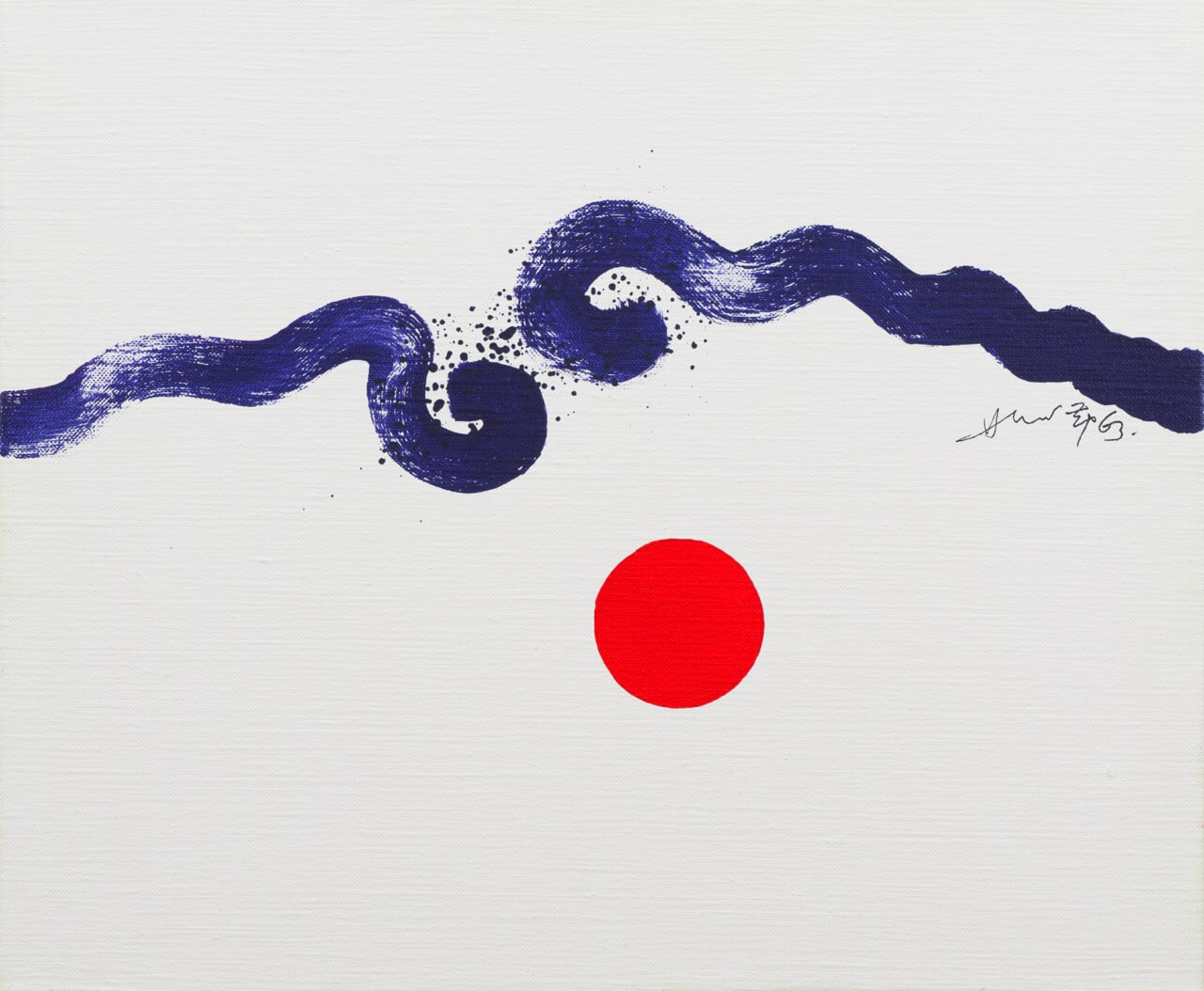
Hsiao Chin
Illuminated Heart-2 (Cuore Illuminato-2)《 wonderful heart-2》, 1963
Acrylic on canvas
50 x 60cm
Frame size: 83 x 8 x 75cm
The "Light in Motion" series finds harmony between spontaneity and precision. Flowing calligraphic lines intertwine with regular geometric shapes, showcasing a reciprocal dialogue between "qi" (vital energy) and "stillness." The artist captures the fleeting changes of light with vibrant hues, drawing the viewer into tranquility. Layering techniques create depth in the images, while the interplay and resonance of colors respond to Hsiao Chin's inquiry into the connection between cosmic energy and all things.
"The Leap of Light - 14" (1963) embodies a dualistic thinking that blends Eastern and Western aesthetics. Crimson dots and flowing lines together construct an image of heaven and earth, infusing the painting with layers and meaning. This work toured international cities such as Venice and Zurich, establishing its status as a landmark work of the Ponto movement. In a 2017 interview, Hsiao Chin recalled: "'The Leap of Light' is the strongest expression of my spiritual energy in the 1960s, a convergence of my experiences and life philosophies."
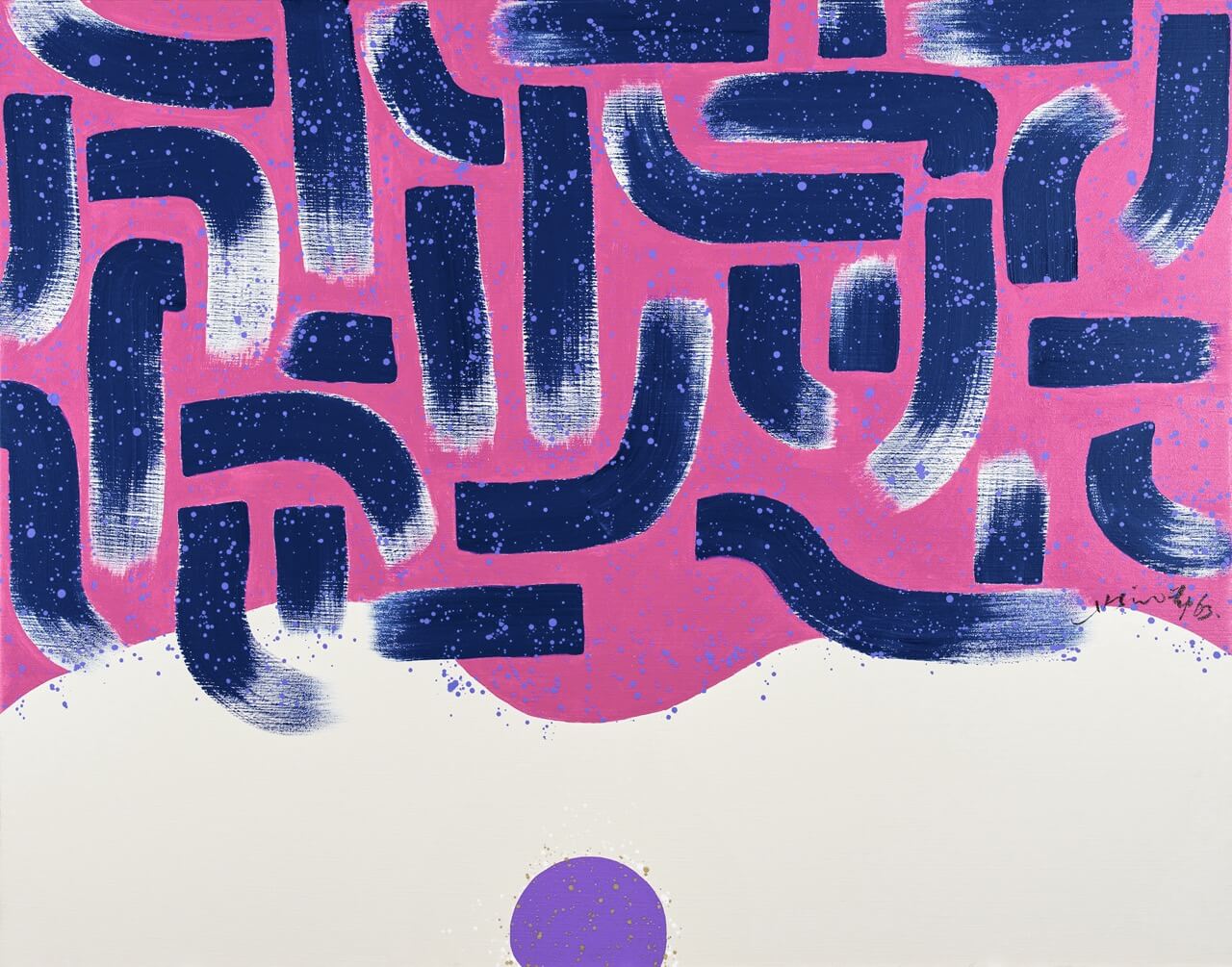
Hsiao Chin
Dancing Light-14, 1963
Acrylic on canvas
110 x 140cm
This series not only showcases Hsiao Chin's mature personal style but also reflects the mutual influence of Eastern and Western cultures in his work. Both the Guggenheim Museum Abu Dhabi and the MGM Macau hold pieces from this series, demonstrating its significant artistic value. "Leap of Light," with its enduring rarity and artistic worth, continues to solidify its crucial position within Hsiao Chin's creative trajectory.
Exploring the eternal questions: "Cosmic Energy" and "Contemplation"
Between 1963 and 1965, at the height of the Panto movement, Hsiao Chin integrated the philosophical depth of Zen Buddhism with the forms of postwar avant-garde art—especially elements of hard-edged and Op Art. In an era marked by Gagarin and the Apollo missions' exploration of space, Hsiao Chin was deeply moved by the vastness of the universe and, with boundless curiosity, embarked on a series of works centered on energy, including "The Sun," "Cosmic Energy," and "Light," as a tribute to the infinite energy of the universe.
In works such as the *Solar Illusion* series (1965), *The Power of Light* (1965), and *Inner Light* (1966) (not included in this exhibition), concentric circles appear repeatedly, an image deeply rooted in Eastern symbolic traditions. The mandala in Tibetan Thangka paintings, with its concentric circle structure, represents spiritual practice converging towards the center. Hsiao Chin borrows this motif, transforming this ancient spiritual symbol into abstract painting, suggesting that individuals can connect with infinite wisdom through quiet contemplation.
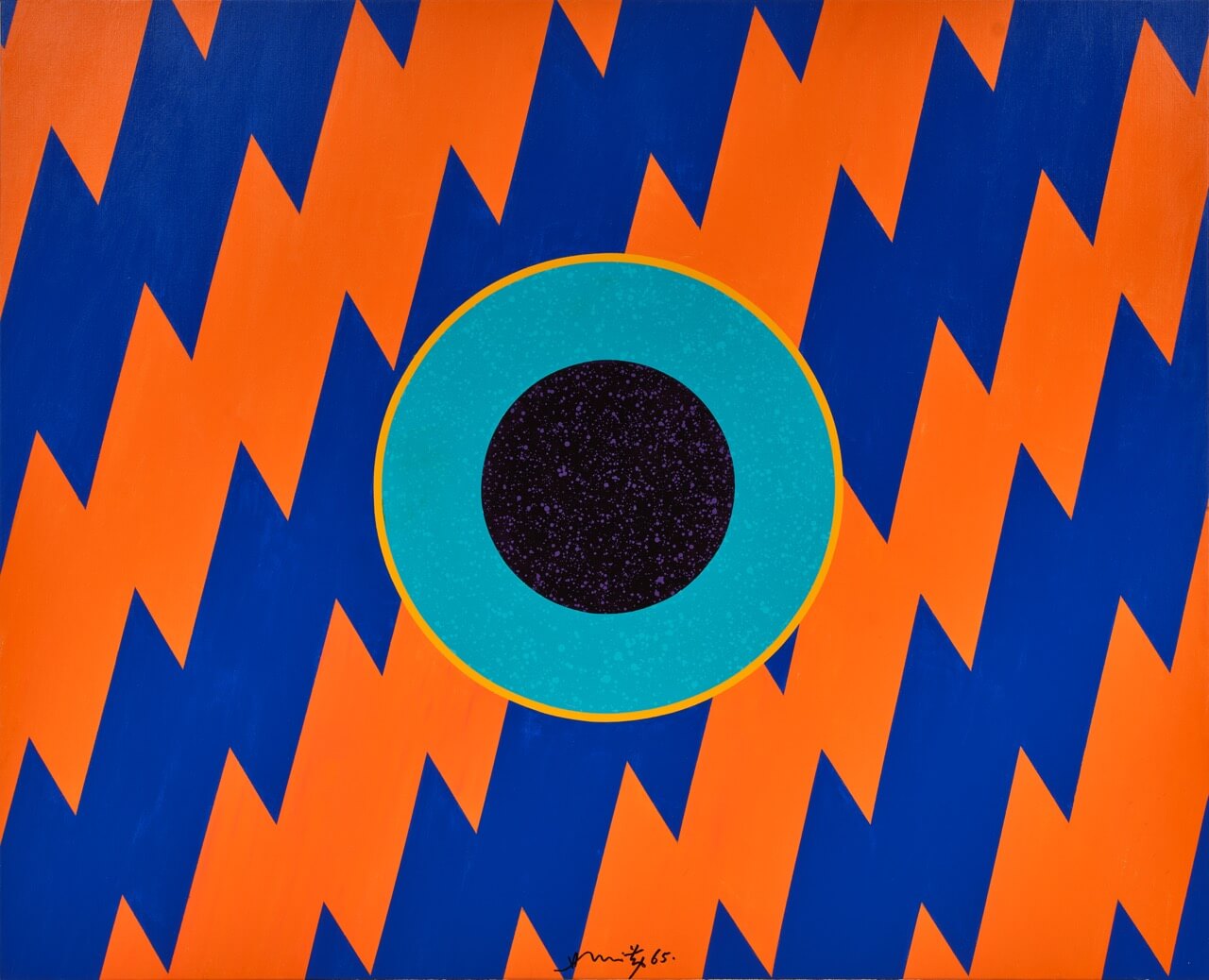
Hsiao Chin
The Illusion of Sun-1, 1965
Acrylic on canvas
130 x 160cm
Frame size: 146 x 8 x 177cm
The core work of this exploration is undoubtedly "The Power of Light." The painting, with its minimalist geometric forms, presents a near-primordial state of being and the possibility of connection to the vast energy of the universe. Its aesthetic language resonates with that of contemporary American painters—especially Kenneth Nolan—possessing both the bright and vibrant geometric style of the Washington School of Color and the subtle hard-edged structures of Frank Stella's early abstractions.
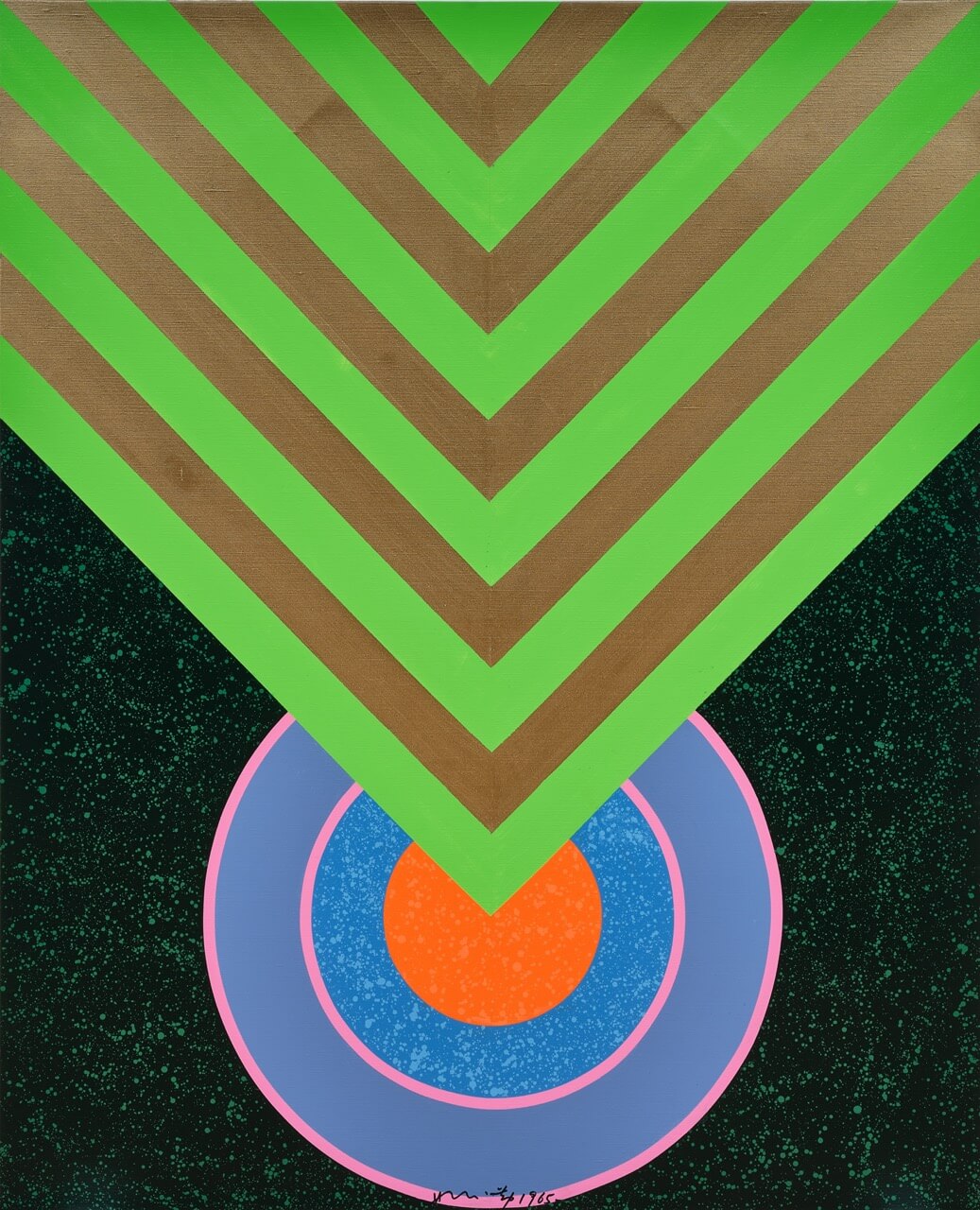
Hsiao Chin
Power of the Light, 1965
Signed & Dated on recto
Acrylic on canvas
160 x 130cm
Frame size: 187 x 19 x 169cm
"The Power of Light" served as the main visual element for Hsiao Chin's landmark solo exhibition at the Pierce Rothko Museum in Daugava in 2020, appearing on the poster and catalogue cover. Curated by Philip Dodd, the exhibition, featuring representative works from the Ponto period, not only garnered academic acclaim from top museums but also, through its pure visual language, encapsulated the artist's eternal pursuit of cosmic energy and inner meditation. They silently bear witness that—through simple forms—one can reach infinite realms.
A shift in style
In 1967, Hsiao Chin moved to New York, beginning the American period of his artistic career (1967-1972).At that time, he was deeply immersed in the vibrant contemporary art scene in New York and actively experimented with the emerging hard-edge style—an abstract language characterized by sharp, clear lines and saturated color blocks.
However, Hsiao Chin's hard-edged works are not merely an exploration of form and structure; he infuses them with Eastern philosophical thought, allowing his works to flow with spirit and spirituality beneath their rigorous and calm form. This transformation marks his departure from the expressive brushstrokes of abstract expressionism, turning to a more restrained and pure vocabulary, and refining his own cultural roots.
"The Great Self Within the Infinity" is not only the theme of this exhibition, but also a representative work that is of great significance in Hsiao Chin's creative journey.Completed in 1967, this painting marks a pivotal moment in his career, coinciding with the end of his glorious Milanese Pontu movement and his transition to American art. At the center of the painting stands a vermilion "Pontu" against a backdrop of blazing red sky—a symbol of awakening and a metaphor for spiritual enlightenment, reflecting the Buddhist philosophical concept of the individual merging into the greater whole, the ego becoming part of the collective. Hsiao Chin, with his minimalist form, conveys boundless meaning, finding the purest resonance between abstract language and Eastern philosophy.
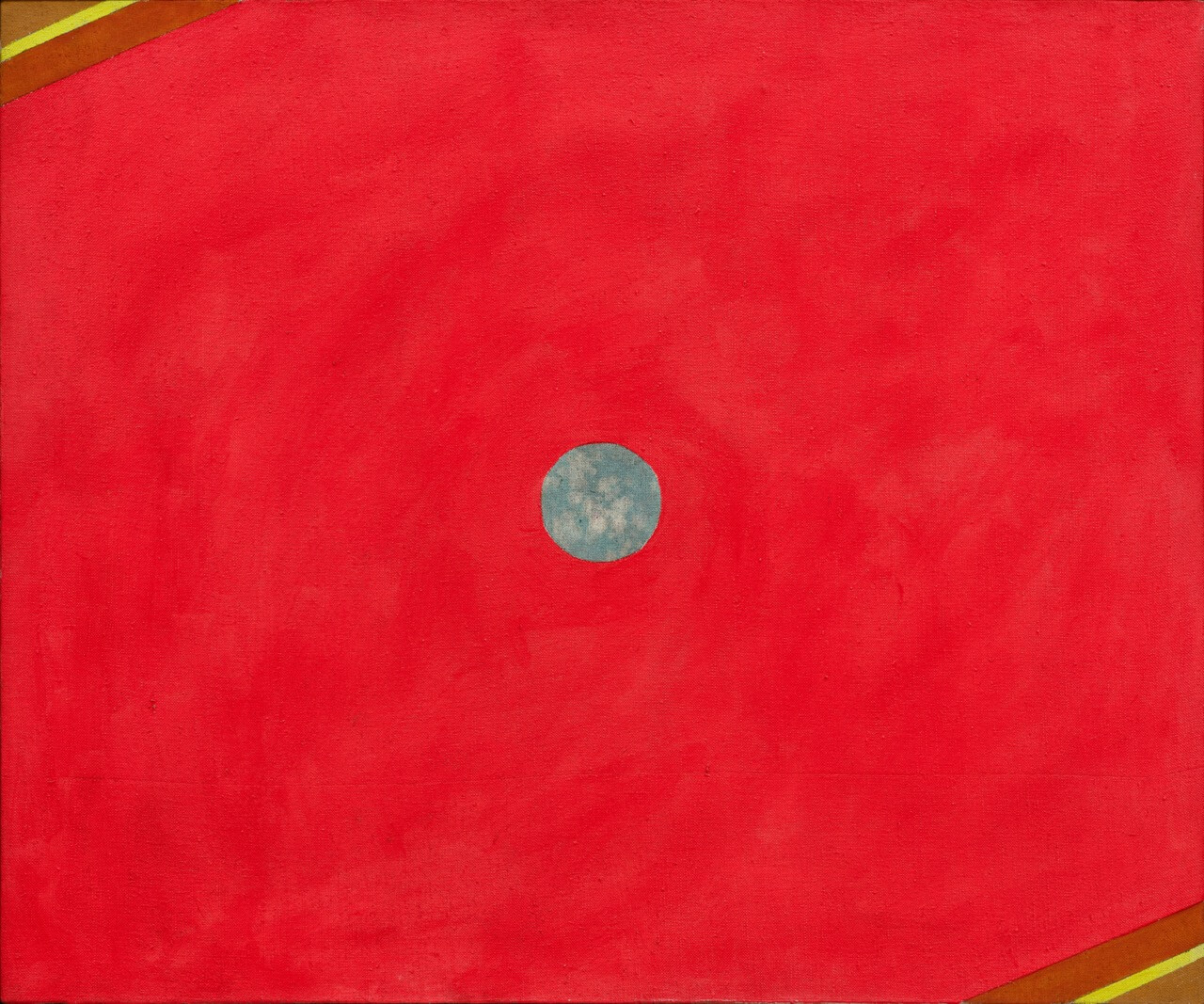
Hsiao Chin
Great Ego in Infinity, 1967
Acrylic on canvas
75 x 90cm
"The Great Self in the Infinity" not only continues the spiritual code of the Pontu movement, but also foreshadows the beginning of his hard-edge style. It is the artist's profound inquiry into the connection between himself, existence and the universe, and also a bridge spanning the roots of Eastern culture and the trends of Western modern and contemporary art.
Passing through discreteness, reaching infinity
In this exhibition, viewers will encounter representative works from Hsiao Chin's transitional period in the 1990s. The creation of these works is closely linked to the immense grief of losing his beloved daughter, Samantha, at the young age of eighteen. In profound sorrow, Hsiao Chin found solace in Buddhist views of reincarnation and life, thus initiating the "Eternal Garden" series—*Beyond Eternity Garden-6* (1993), *Meditation on Crossing the Limit-4* (1997), and *In the Eternal Garden-7* (1998)—all testifying to this profound sentiment.
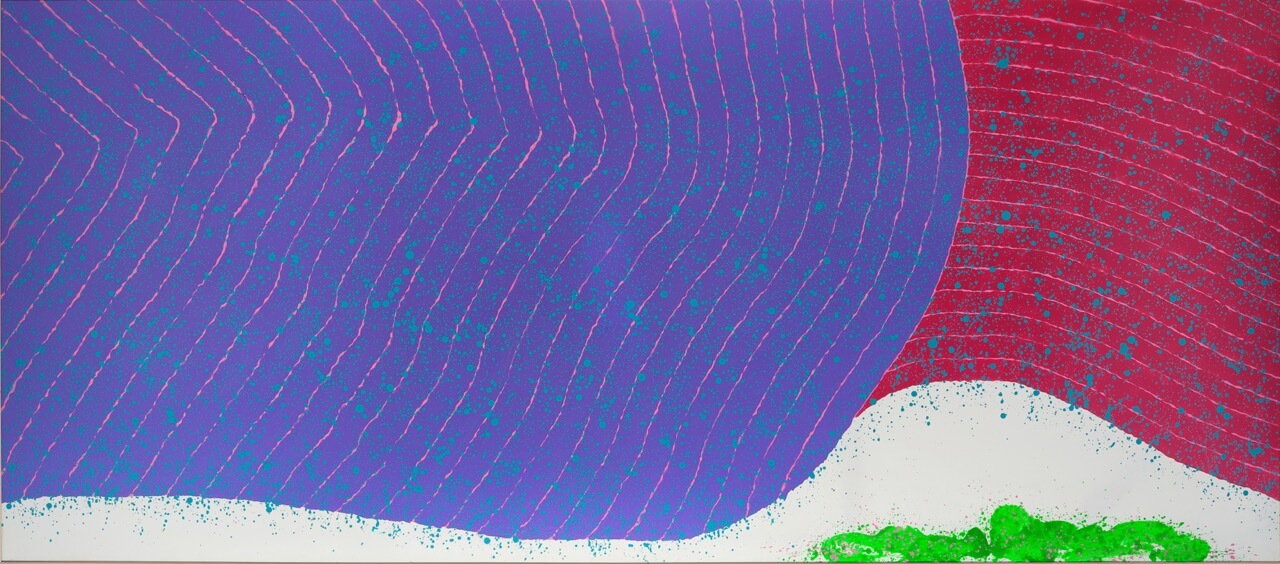
Hsiao Chin
Transcending the Eternal Garden-6, 1993
Acrylic on canvas
110 x 250cm
This profound questioning of the meaning of existence in the 1990s prompted Hsiao Chin to return to the topic of cosmic energy, and the "Pontu" element also reappeared on the canvas at this time. Works such as "The Manifestation of the Mind-51" (2000) and "The Manifestation of the Mind-52" (2000) are a reflection of his contemplation in the ethereal space - in his eyes, it is a realm that transcends time, space and matter.
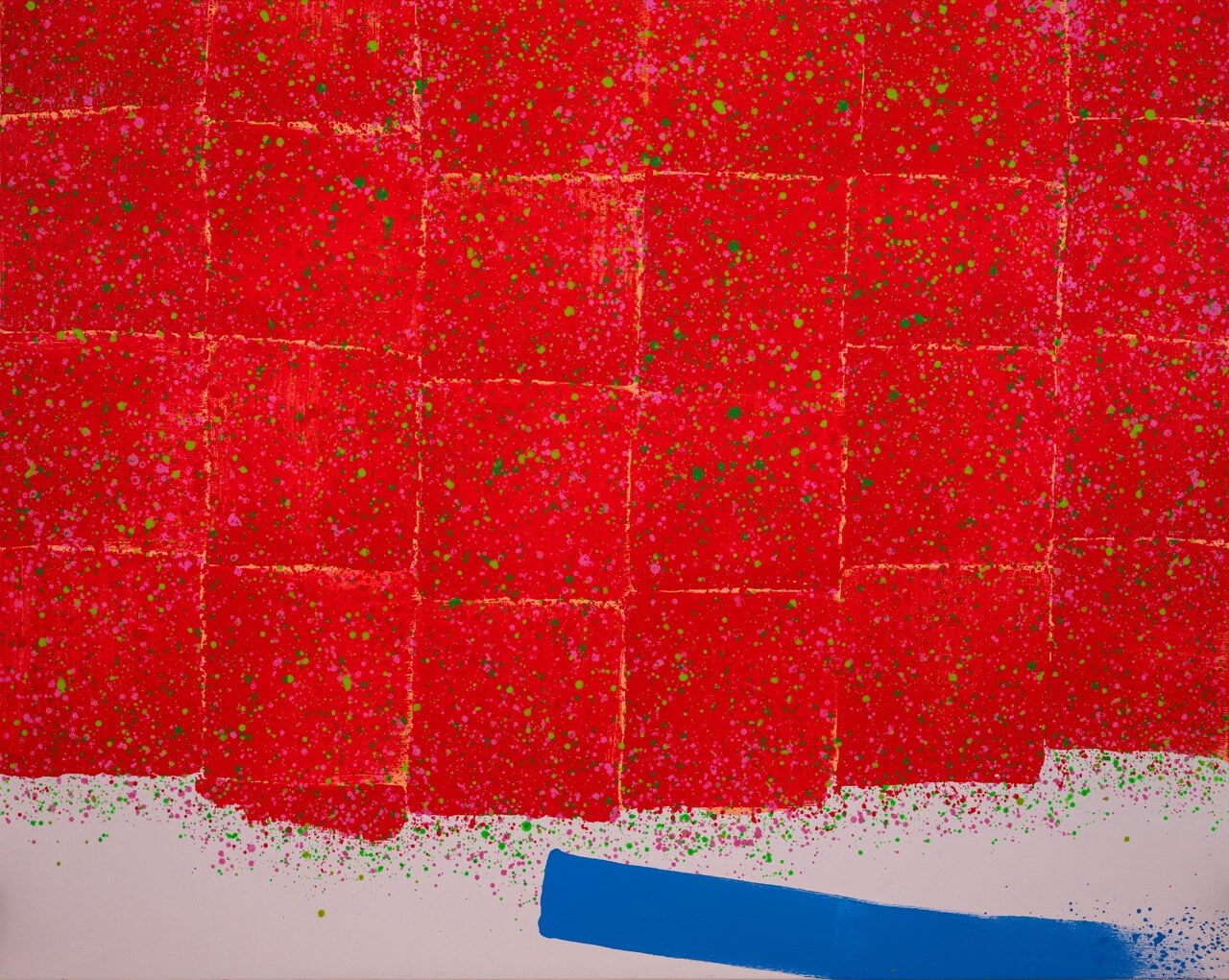
Hsiao Chin (萧勤)
Proiezione Spirituale-51 (The Manifestation of the Mind-51), 2000
Acrylic on canvas
110x140cm
In Hsiao Chin's works from around the millennium, the faint traces at the edges of the canvas are the embodiment of Samantha; the vibrant colors represent her freedom and warmth on the other side. The transformation of artistic language resonates with his pursuit of spiritual transcendence—just as he said: "There is no departure, only absence."
In *In the Everlasting Garden-7*, pink light wafts across the canvas, sublimating "death" into "eternity." A closer look at the scattered colored dots reveals vocabulary from 1960s action painting—a technique consistently employed from *Power of Light* to *The Passionate Universe* (2010). These dots represent particles of eternal collision in the universe, the origin of all life, echoing the Taoist concept of "three giving birth to all things."
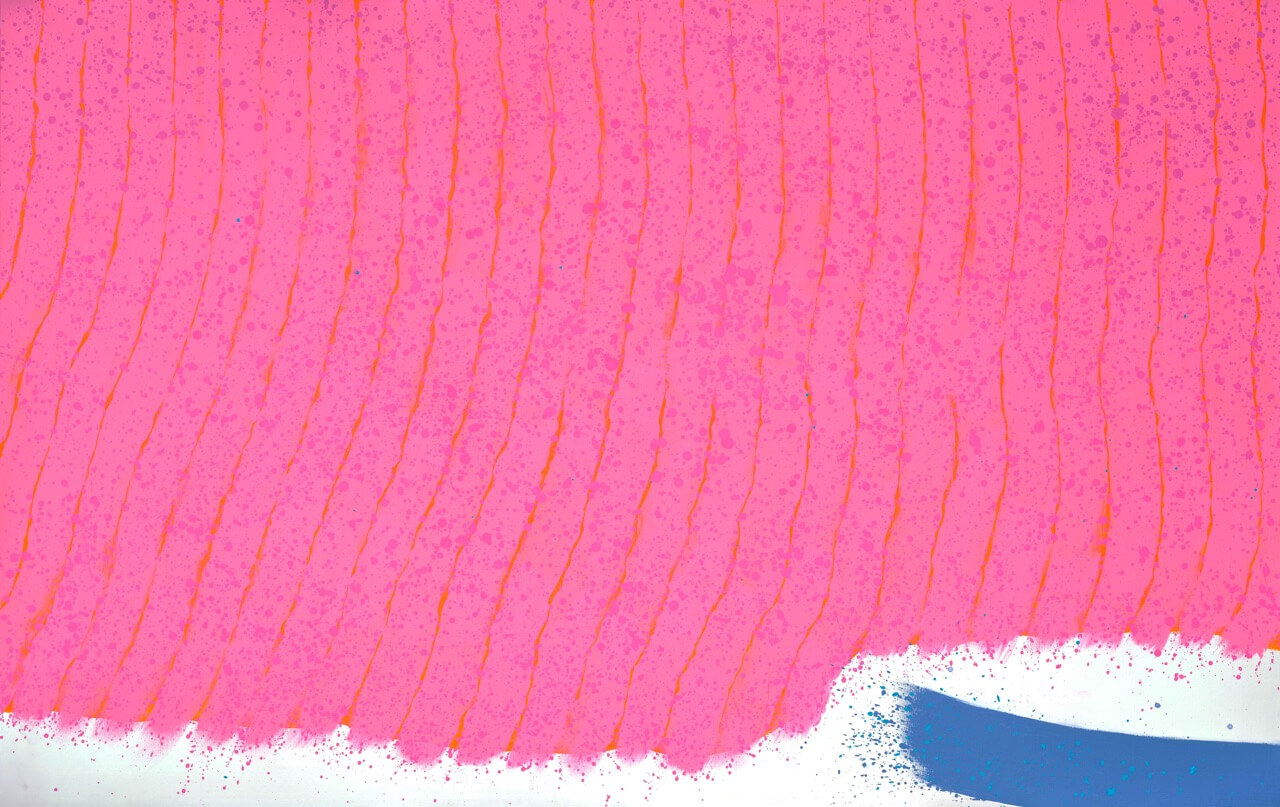
Hsiao Chin
On the Eternal Garden-7
1998
acrylic on canvas
120 x 190 cm
This exhibition connects Hsiao Chin's path of spiritual enlightenment—from his youthful exploration of philosophy, religion, and the universe, to his profound understanding of loss and rebirth, ultimately giving birth to his piety towards the vastness of the universe and his complete embrace of its energy—starting with the "Qi" series in the 1960s and extending to his works around the turn of the millennium.
In this later period of his work,With a series of moving works such as "The Passionate Universe," "Inner Joy" (2014), and "Purple Heart" (2016), Hsiao Chin conveys his beliefs, hope, and love to the world. The paintings are filled with warm and bright colors, interspersed with vibrant dots, full of energy and vitality, writing a new chapter for the theme of "cosmic energy."
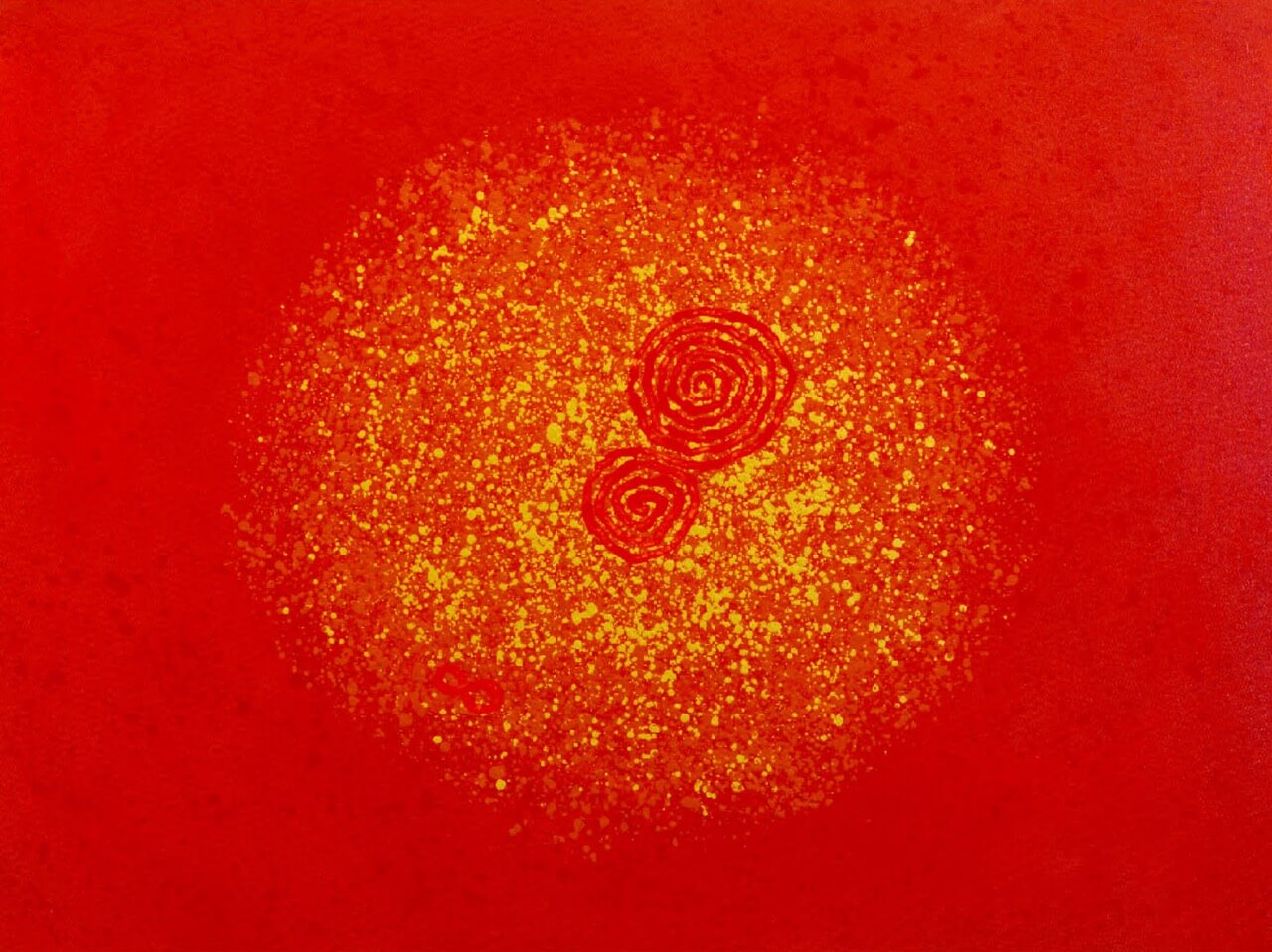
Hsiao Chin
L’Unieuro di passione (The Universe of Passion), 2010
Acrylic on canvas
90 x 120cm
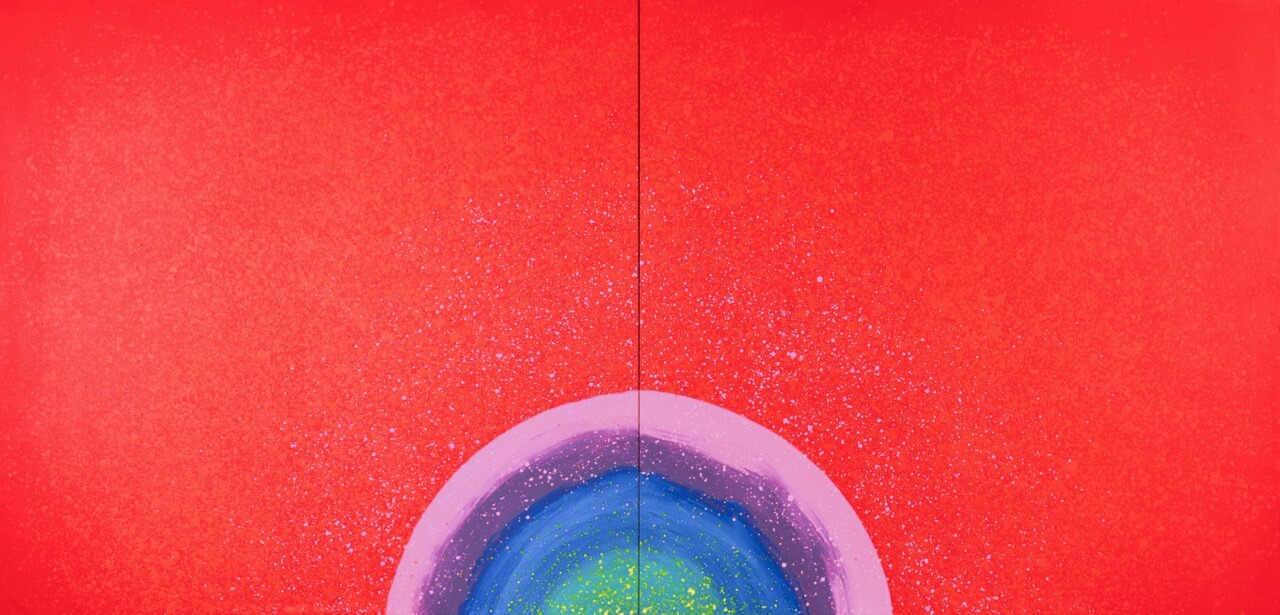
Hsiao Chin
Inner Joy, 2014
Acrylic on canvas
143 x 290cm
Frame size: 157 x 8 x 308cm
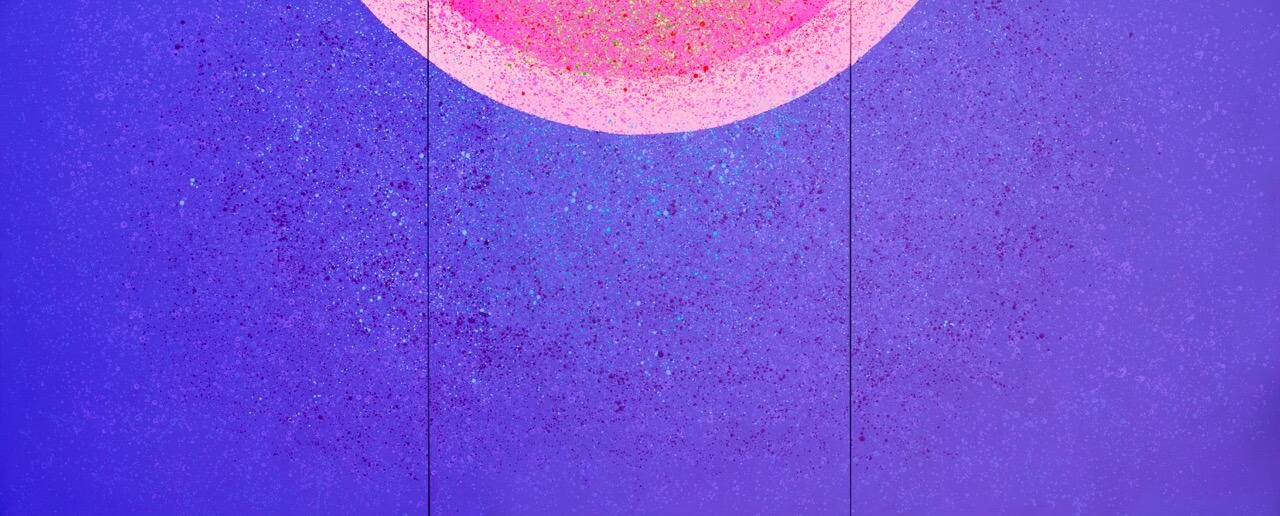
Hsiao Chin
Purple Heart, 2016
Acrylic on canvas
160 x 390cm
The "Pangtu" symbol reappears here in countless forms—it represents sunrise, sunset, and concentric circles flowing like rainbows. These deeply poetic themes reflect Hsiao Chin's clear and pure state of mind in his later years. The spiritual meaning of the mandala subtly seeps into his artistic exploration—leading the viewer towards inner contemplation and tranquility. The minimalist composition in Hsiao Chin's paintings, inherited from the spirit of the Pangtu of the 1960s, leads this spiritual journey into a deeper serenity.
Hsiao Chin often referred to himself as a visitor to Sirius, which shows his spiritual connection with the cosmic field.Between 2014 and 2016, he composed the important "Cosmic Suite" series.- The rare work "Mindscape-2" (2016) presented in this exhibition comes from this line of thought. In this series of paintings, Hsiao Chin depicts a mysterious and profound cosmic landscape - radiant colors, vibrant energy points, and overlapping halos, where the "Pangtu" (a type of cosmic landscape) evolves profoundly.
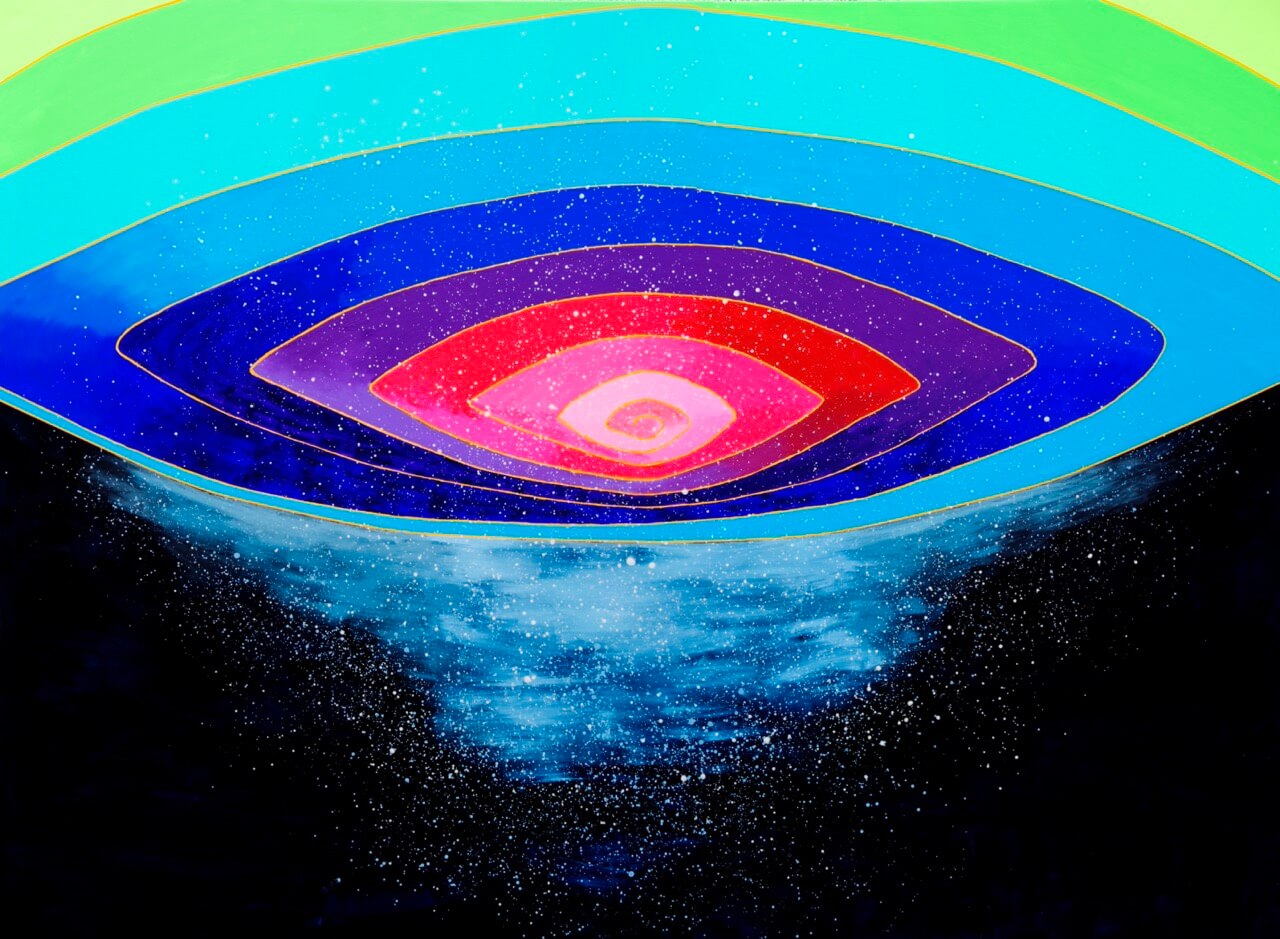
Hsiao Chin
The Inner Landscape-2 Mood-2
2016
acrylic on canvas
200 x 270 cm
Through the fusion of these elements, Hsiao Chin guides viewers to perceive not only the boundless energy and eternal love of the universe, but also the inner spiritual journey of each individual. His creations are a practice of quiet contemplation, forging a subtle yet steadfast connection between the self and the universe—ultimately, the fulfillment of his spiritual journey.
Hsiao Chin's exploration of these grand and powerful themes has never ceased. In 2021, when the COVID-19 pandemic swept the globe, he completed "Hope-1"—a work deeply marked by the times, a testament to his optimism after experiencing vicissitudes, and a moving final chapter in his life's work.Hsiao Chin passed away on June 30, 2023, but the light he ignited with his artistic talent continues to shine in the world.
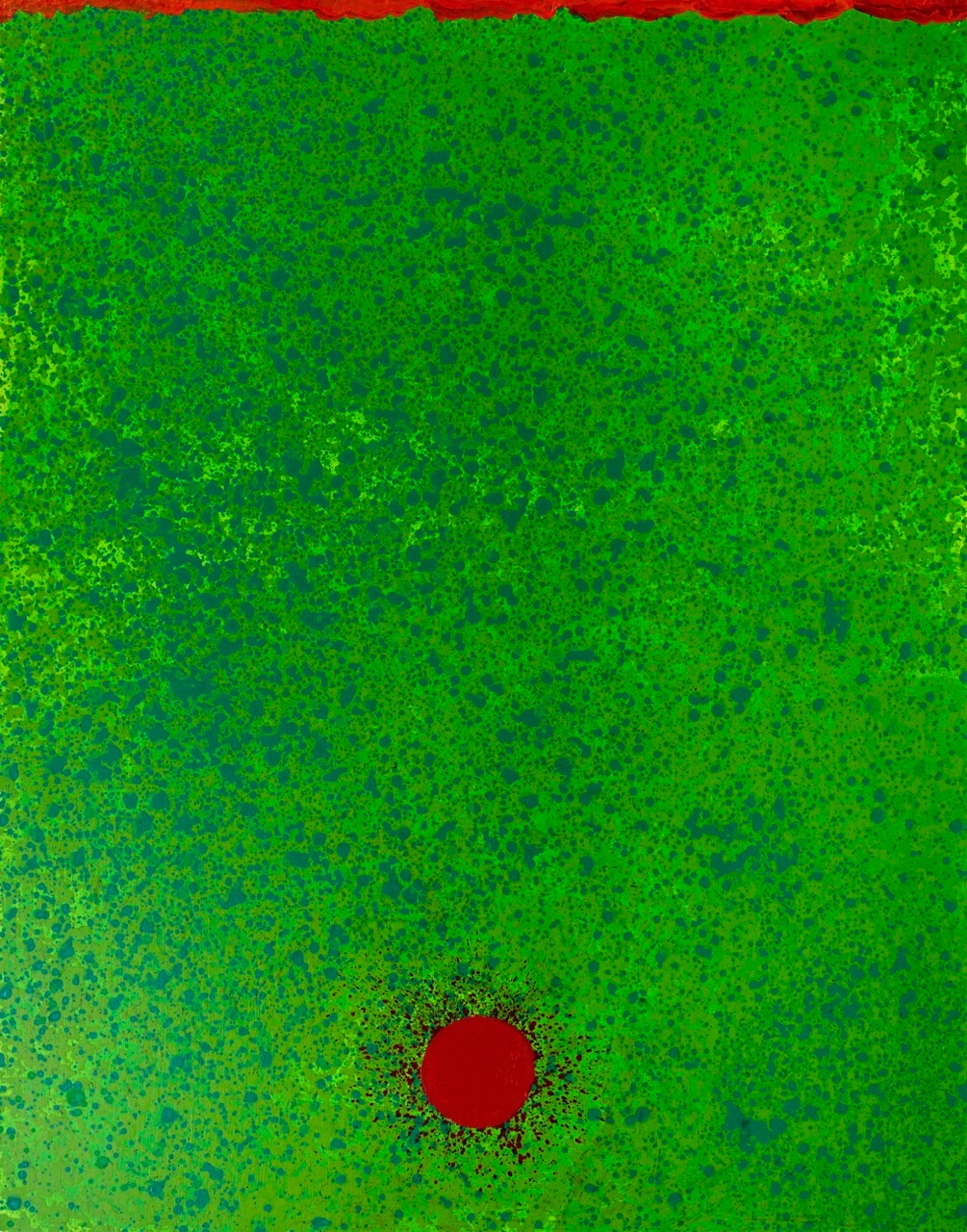
Hsiao Chin
Hope - 1, 2021
Acrylic on canvas
140 x 110cm
Hsiao Chin's work is a unique and deeply inspiring fusion of Eastern philosophy and postwar abstract art. Between vibrant colors, rhythmic composition, and serene forms, he finds a serene harmony. "The Greater Self Within Infinity"—this is an eternal question posed to us all: Within infinity, in what form will your greater self manifest?
What Hsiao Chin left behind was not just a style, but a visual path that transcends culture and time.—This still points to the most fundamental questions about art.
Let Hsiao Chin's art accompany you on this journey of self-discovery.
Exhibition Information
Hsiao Chin: The Great Self Within Limitlessness (Exhibition and Sales Event)
Location: Bonhams, Hong Kong (Block 6, Pacific Place, 50 Queen's Road East, Wan Chai)
Exhibition: March 18 to April 9, 2026