
Shuitianzhong: The most regrettable Sanyu
In the Centennial Art Exhibition opened to commemorate the 50th anniversary of the founding of the National Art Museum of China, important artists from the past century made a collective appearance. Artists such as Zhang Xian, Guan Zilan, and Sha Qi who were once neglected and forgotten have finally entered the ranks of Chinese art history, which makes people who pay attention to modern Chinese art deeply gratified. However, despite being gratified, there are still some shortcomings. One of the shortcomings is that some artists who live overseas but maintain their Chinese identity have still not been able to "return" to their homeland.The most regrettable among them is the painter Sanyu.
Sanyu was born on November 14, 1900, in Shunqing, Sichuan (now Shunqing District, Nanchong City) into a wealthy family engaged in the silk industry. He studied calligraphy and ink painting at home when he was young, and gained considerable experience in copying the calligraphy of the local sage Zhao Xi. At the age of 18, he went to Japan with his brother to observe Japanese art and participate in his brother's business activities.He returned to China in 1919. The following year, he was introduced by Cai Yuanpei and received support from the French Work-Study Society to study in France.
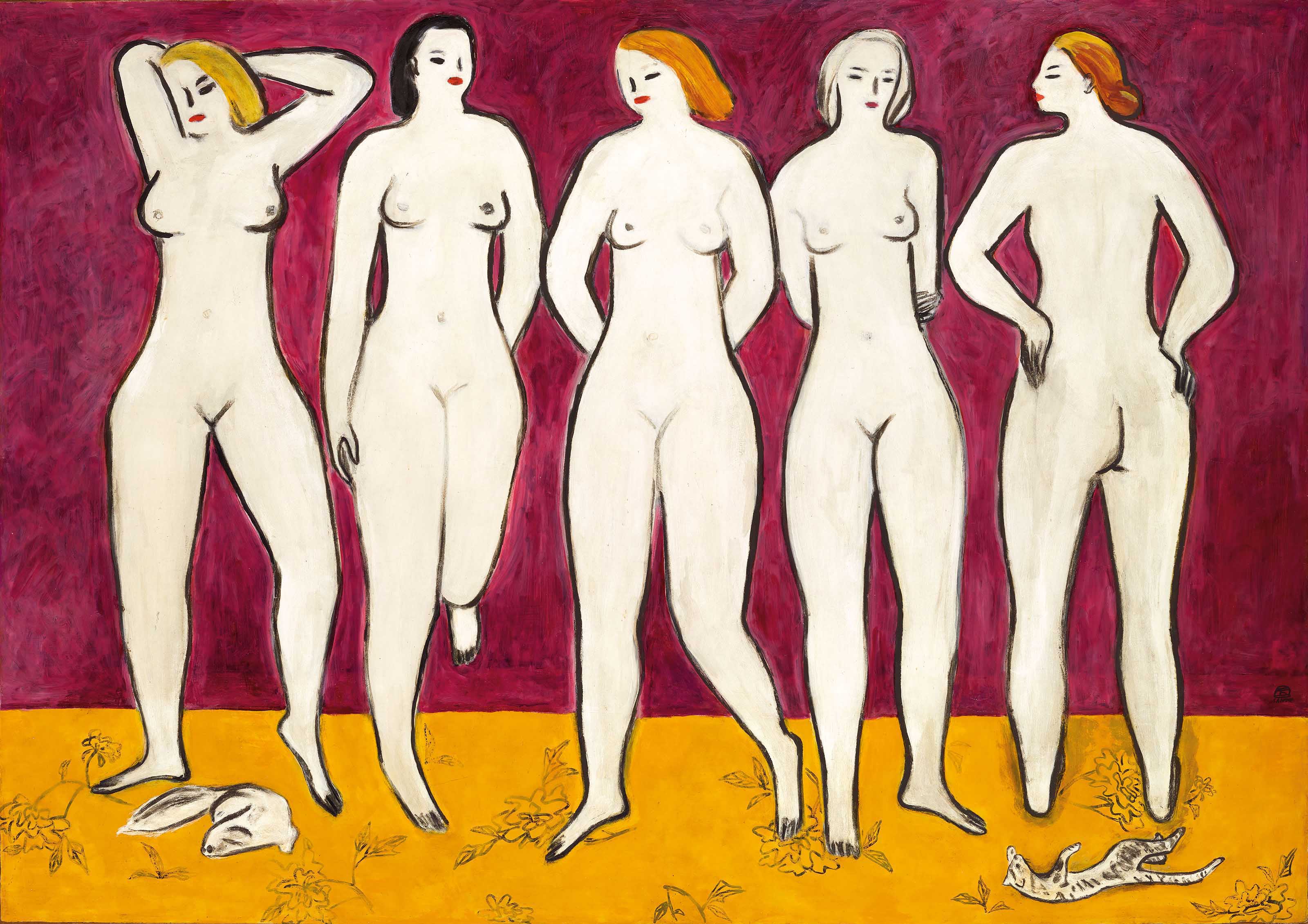

Unlike those Chinese students studying abroad who scrimped on food and clothing and studied hard, Sanyu was unwilling to wrong himself.Among Chinese students studying abroad, he belongs to the category of well-off people.I don’t know whether it’s because I’m afraid of being restricted or because I hate academic habits.He did not enter a formal art school, but studied painting at the "Big Thatch Studio".In the accounts of Chinese students studying abroad, the "Grand Thatch Studio" has various names, such as the "Grand Thatch Institute", the "Grand Chemiol Institute", etc. Some even call it the "Grand Thatch Academy" . But in fact it is a studio open to everyone. You can enter and sketch at any time by paying for a ticket. Its advantage is freedom and openness. There are some experienced models there, and there are many famous figures who go there to paint. Everyone can communicate with each other and learn from each other. Sanyu left the studio and entered the cafe. He sat in the cafe, looked around and drew a few sketches leisurely. This is in sharp contrast to Xu Beihong who endured hunger and cold and worked hard to practice the basic skills of realism.
Wang Jigang recalled Sanyu, saying that he appeared among the students studying in Paris as a "handsome young man"."He is handsome and well-dressed. He plays the violin, plays tennis, and is even better at touching balls." But he doesn't smoke, drink, or dance...Moreover, "Keeping a distance from friends and wives is not the intention of Zhang Daofan." "Wives to friends" and so on refers to the relationship between San Yu and Jiang Biwei.After Sanyu arrived in France, he had the most contact with Xu Beihong and his wife, and often traveled with Jiang Biwei.In others' impressions, he and Jiang Biwei seemed to maintain a pure friendship, but Jiang Biwei's memoirs detailed an embarrassing incident in which they dated at Sanyu's home, which aroused Xu Beihong's suspicion and jealousy. According to Jiang Biwei's account, she first arrived at Sanyu's residence, and then went out to buy groceries with Sanyu. Xu Beihong's suspicion was because he knew that Jiang Biwei went to San Yu's residence first, but he knocked on the door for a long time but no one opened the door... After San Yu's death, people found many photos of Jiang Biwei and him taken together in his photo album.
On August 9, 1921, Sanyu formed the "Tengu Society" with a group of Chinese students studying art in Paris, including Xie Shoukang, Jiang Xiaoyu, and Sun Peicang.He also invited Xu Beihong and Jiang Biwei, who were studying abroad at official expense and temporarily living in Berlin, to join the association. In 1923, Zhang Daofan, Shao Xunmei, and Guo Youshou were also invited to join."Tengu Kai" is not a real art club, but a nickname for a social gathering.As the name suggests, it has a cynical meaning. In the notice of initiation, it was stated that the members had "dog nature", so they called each other "President Dog" and "Mr. Dog". The origin of the "Tiangu Club" was when French students heard that Liu Haisu and others had organized a society called the "Tiangu Club" in Shanghai. In the minds of those arrogant overseas students at that time, Liu Haisu was a type of person who was ignorant and unskilled. It was nothing more than a mean joke for them to establish the "Tengu Club" from afar. After the "Tengu Society" was established, Sanyu, Xie Shoukang and Sun Peicang went to Germany and met Xu Beihong and Jiang Biwei. They ate and lived together, traveled around and had a happy time. Jiang Biwei was quite critical of Sanyu in her memories. She remembered that everyone was cooking and washing dishes at that time. “Only Sanyu stood by and stood by, doing nothing. He only came in after eleven o’clock every day, chatting and laughing while waiting for dinner. After eating, pat your belly and leave.”2.
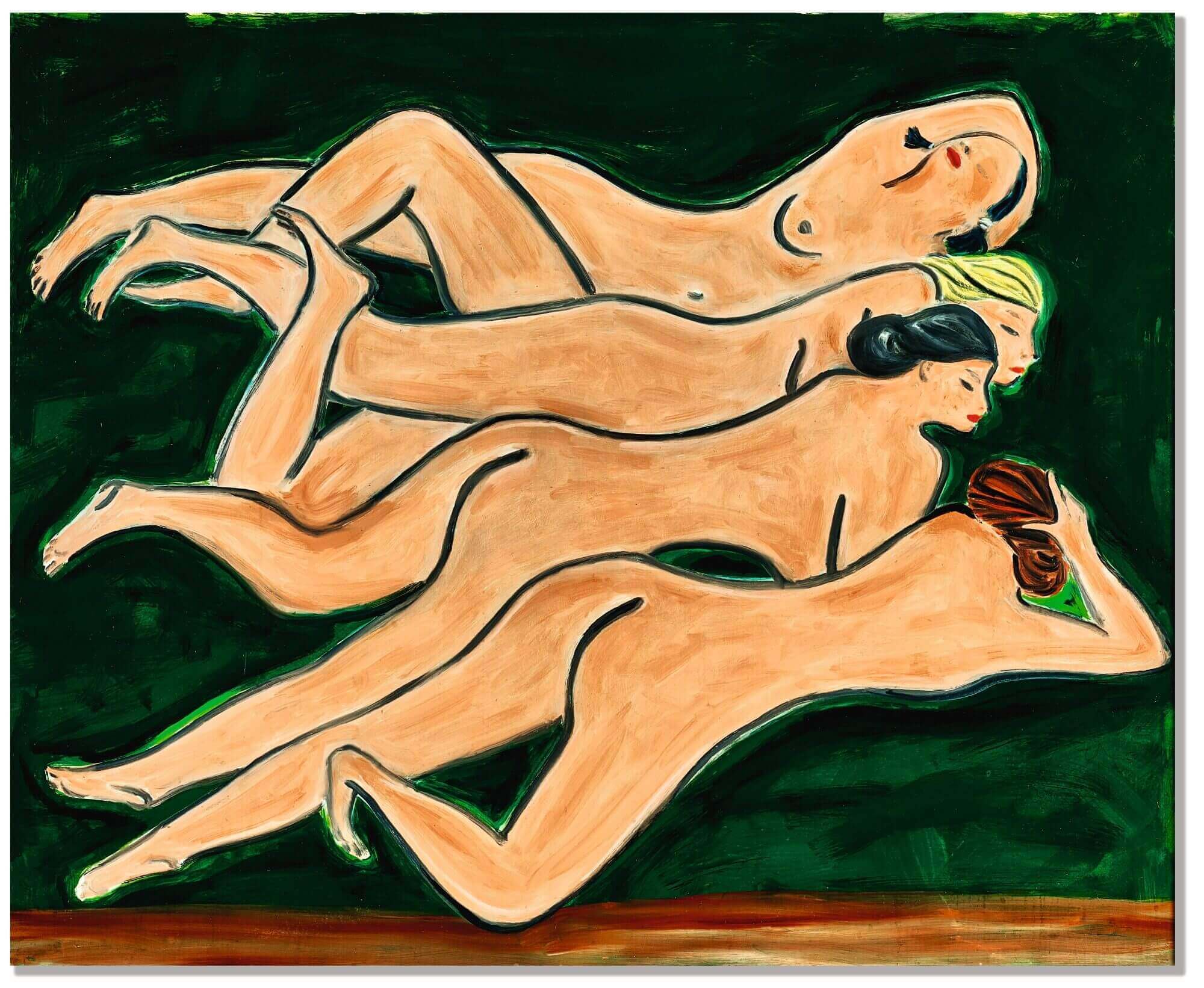
Wu Guanzhong recalled that he rarely saw Sanyu socializing with Chinese artists or international students in Paris. Pang Xunqin, who also studied painting at the Big Thatched House Studio, recalled,In the big thatched cottage studio, there were always many painters gathered around to watch Sanyu paint. He sketched with a brush. “The most interesting thing is that he painted all the people around him, whether they were men or women, young or middle-aged.” adult female nude, no one protested, on the contrary, it was greatly welcomed." Pang Xunqin said that many people in the French art world are Sanyu's friends, and the one who had the closest relationship with Sanyu was Giacometti. Picasso also had a relationship with him, and had worked for Chang Yu. Jade once painted a portrait. But the portrait has disappeared.
In 1926, Pang Xunqin visited Sanyu's studio in the suburbs of Paris and found that his studio was much better than that of ordinary young painters. "The environment is quiet, the studio is tall and large, and the light is good... There is an attic in the studio, and Sanyu Just sleep in this attic." But what surprised Pang Xunqin was that there was no painting in the spacious studio. He told Pang Xunqin: "I can't even buy cooking oil, how can I have money to buy oil painting materials?" "I just painted on a few canvases. Painted and painted, painted and painted.”It's not that he couldn't sell paintings. He was often surrounded by art dealers. He never refused various banquets, but often refused to sell paintings. Pang Xunqin recalled: "When someone asked him to paint a portrait, he made three rules: first, pay the money first; secondly, don't look at it while painting; thirdly, take it and leave without any comments. If you agree to these three conditions, you can paint, but you can't do this. Three conditions and it fell through.”
In the late 1920s, students studying in France such as Xu Beihong, Jiang Biwei, and Pan Yuliang returned to China one after another, but Sanyu continued to stay in Paris. He met Ms. Harmonnier, who was born in an aristocratic family, in the studio of the Grand Thatch, and they soon became lovers. People who met the lady said that she was "quiet and dignified". In 1929, Sanyu married her. But their marriage didn't last long, and they divorced in the early 1930s. According to Chinese people in Paris, Sanyu had several female partners, but they did not live together for long. He squandered a lot of time and money on women.
Qin Xuanfu, who came to Paris in 1930, recalled: "Sanyu lived a bohemian life at that time, reading "A Dream of Red Mansions" in a cafe during the day and painting glass paintings at night."3Although Sanyu lived a carefree life in Paris, his artistic talent still attracted people's attention. In 1925, Sanyu's works were selected for the French Salon d'Automne; in 1932, his work was included in the "Dictionary of Contemporary Artists 1910 - 1930"; in 1933, a solo exhibition was held in Amsterdam; in 1931, a publisher invited Sanyu to translate the French version of Liang Zongdai "Tao Qian's Collected Poems" was to be used as copperplate illustrations. After Sanyu accepted the invitation, he put off painting for a long time, saying that he had no money to buy copperplate materials. Later, the publisher sent a copper plate, and Sanyu found a Chinese pedicure knife and carved four illustrations. The publisher liked these illustrations carved with a pedicure knife and published an exquisite separate volume.
In 1938, his brother who was in charge of the family property passed away in Sichuan. Sanyu returned home for the funeral in the summer of that year. After dividing the family property with his brothers, he returned to France.4This period of time was the most relaxed and enjoyable time for him. He inherited a considerable inheritance and lived a wealthy life. He dated beautiful women one after another, but in his career he was willful and did not want to work hard. Disgusted by the restrictions and pressure imposed on him by galleries, art dealers who once wanted to cooperate with him gave up their plans to cooperate with him.
The wealthy life must come to an end. The Nazi troops entered Paris, and the French people were struggling on the line of life and death. Sanyu was in a state of despair, but luckily a friend came to help him and saved him from embarrassment. In the early 1940s, Sanyu stayed in France. He tried various ways to make money, made and sold plaster and pottery crafts, and carved patterns on lacquer furniture... Although it was not without some small supplements, the profit was very small.
After the end of World War II, Paris finally returned to its former peace. But she lost her original status as an international art center. Artists went to the United States one after another, and Sanyu also dressed up.Went to New York in 1948. Wu Guanzhong, who was studying at the Paris School of Fine Arts at the time, met Zao Wou-Ki at his home, the Sichuan artist who was about to go to the United States: “Sanyu is a free and undisciplined person, and a little eccentric.He is middle-aged, has a strong body, doesn't talk much, but seems very casual and unrestrained. He was wearing a red shirt, bright clothes that were rare among Parisian artists at the time..."
Sanyu's main purpose in coming to the United States was not to paint or to find new patrons for his paintings, but to promote his invention of "ping pong tennis" - using table tennis balls or smaller rackets in a slightly smaller place similar to a tennis court. instead of tennis5. As early as before the war, Sanyu had spent a lot of energy on this. He liked playing tennis and designed "ping pong tennis" in an attempt to spread the aristocratic tennis sport to civilians who did not have the financial strength to play tennis. During the 1936 Berlin Olympics, Sanyu traveled to Berlin to visit the games and promote his invention. It is said to have been praised by a famous tennis player. While in the United States, Sanyu was called "the inventor of table tennis" by the press. Sanyu valued this title far more than "artist" or "painter". However, his efforts to promote "table tennis" resulted in nothing, and his hope of making a fortune was completely shattered.
For a long period after the war, Sanyu almost gave up painting. In the early 1950s, he wanted to return to China and start a new business. The fact is that he can no longer bear the poverty life. However, a large-scale political movement in mainland China was proceeding vigorously, and the news he heard overseas made Sanyu completely give up the idea of returning to China.According to Huang Yongyu's recollection, a Chinese art delegation visited Paris at that time. After visiting Picasso, they found Sanyu. An artist in the delegation invited Sanyu to return to China and "can become a professor at Zhejiang Academy of Fine Arts." Sanyu's answer was that he couldn't go back because of "morning exercises" - "I couldn't get up in the morning."He heard on the radio that teachers and students in domestic schools had to do morning exercises. In fact, morning exercises were just a trivial matter. What made him afraid to return to China was the all-encompassing political atmosphere at that time. But he had to make a living, so he went to an antique furniture factory in Paris to make carved lacquer patterns on Chinese-style furniture. Traces of this craft pattern have appeared in many of his paintings. Later, he worked in a Vietnamese restaurant.
In 1962, he fell while climbing a ladder on a table to repair a glass roof, which left him deaf. In 1963, Sanyu accepted an invitation from the Taiwan Education Department and planned to teach in the Art Department of National Taiwan Normal University. Before leaving France, I exchanged a passport for the People's Republic of China to travel to Egypt, because Egypt had established diplomatic relations with the People's Republic of China at that time. When he went to Egypt, China and France established diplomatic relations, but because he held a passport of the People's Republic of China, he was refused entry to Taiwan. He wanted to take back the works that had arrived in Taiwan, but was unable to do so. This batch of works was transferred to the Taiwan Museum of History in 1968 and is the most complete part of his legacy.
In 1965, an entrepreneur who collected Sanyu's works held a painting exhibition for Sanyu in his villa. On the opening day of the exhibition, guests and friends gathered. Chu Teh-chun, Pan Yuliang, Xi Dejin and others came to congratulate him. Pan Yuliang once praised him that "the older he gets, the better he paints."
Among the Chinese students who went to Europe to study art in the early 20th century, Sanyu was quite unique.He is different from Xu Beihong, Lin Fengmian and later Lu Sibai, Chang Shuhong and others in terms of artistic orientation, lifestyle and attitude towards life. In his youth, Sanyu was deeply influenced by traditional literati paintings, and his character and temperament were incompatible with the academic tradition of being strict and reserved and respecting laws. Unlike his friend Xu Beihong, who was obsessed with academic art, Sanyu not only isolated himself from academic art and academic life, but also warned his Chinese friends not to enter the gate of the Academy of Fine Arts. It was under his warning that Pang Xunqin gave up his plan to apply to the Paris School of Fine Arts. This is in sharp contrast to Xu Beihongzhi's repeated warnings to young international students not to deviate from the traditions of the academy.If it can be said that Xu Beihong's sincere teachings influenced the artistic paths of Lu Sibai and Wu Zuoren, then Sanyu's artistic choices and warnings influenced Zhang Xian, who died young, and Pang Xunqin in his early years.
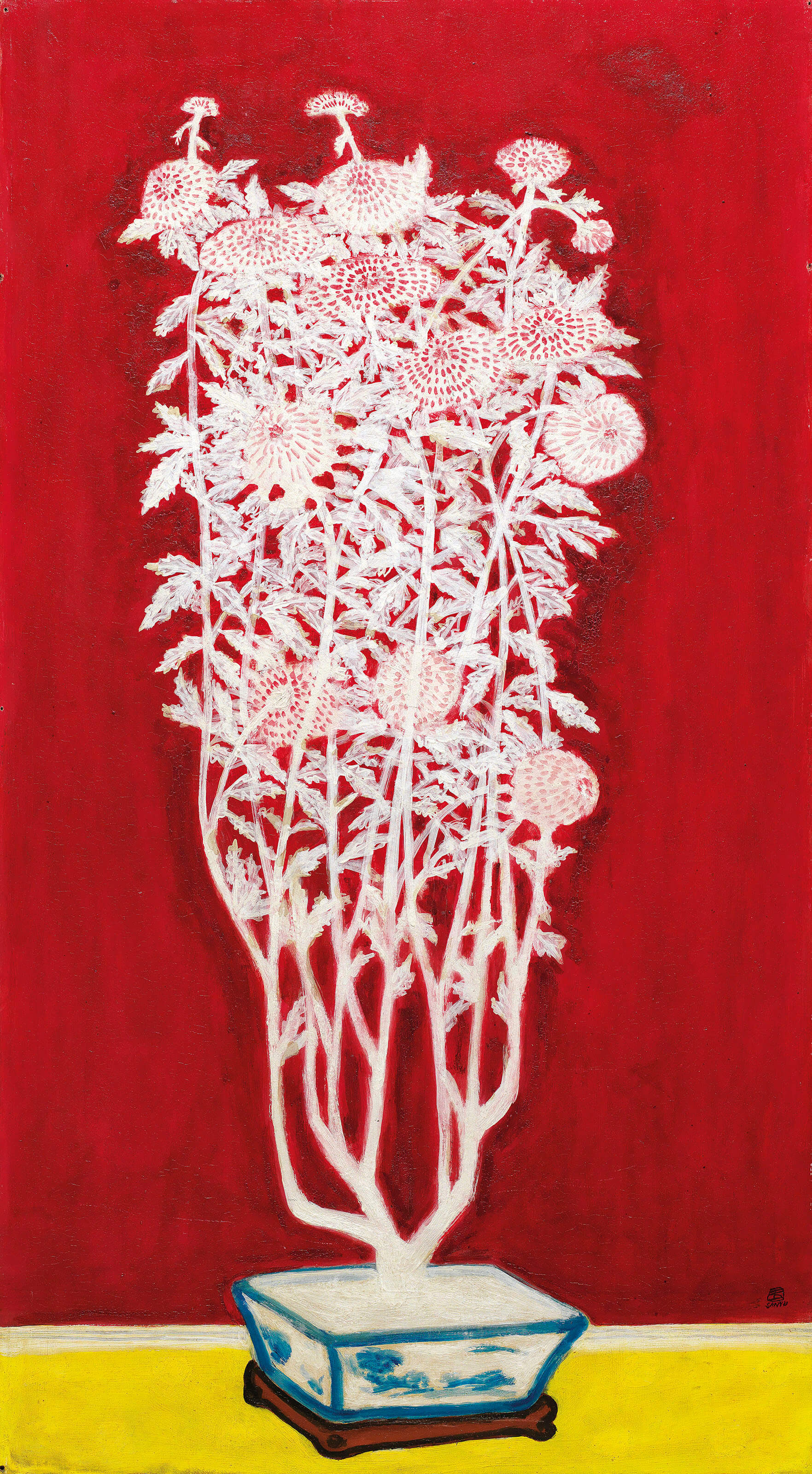
Sanyu was not a culturally quintessent person;His paintings combine the expressiveness of traditional Chinese literati and Fauvist painters. In his heart, the influence of Chinese culture is very profound. He often carefully and evenly depicts many ancient Chinese symbols of fortune, wealth and longevity on his paintings.In some still life paintings, he repeatedly inscribed Cheng Hao's famous saying "Everything is contented when watching quietly, and the joy of the four seasons is the same as that of others."His early works were often stamped with the zodiac seal "Blessed by Heavenly Official", which was a gadget he bought at a stall in China. The layout and taste of his paintings have obvious traces of Chinese folk handicrafts.
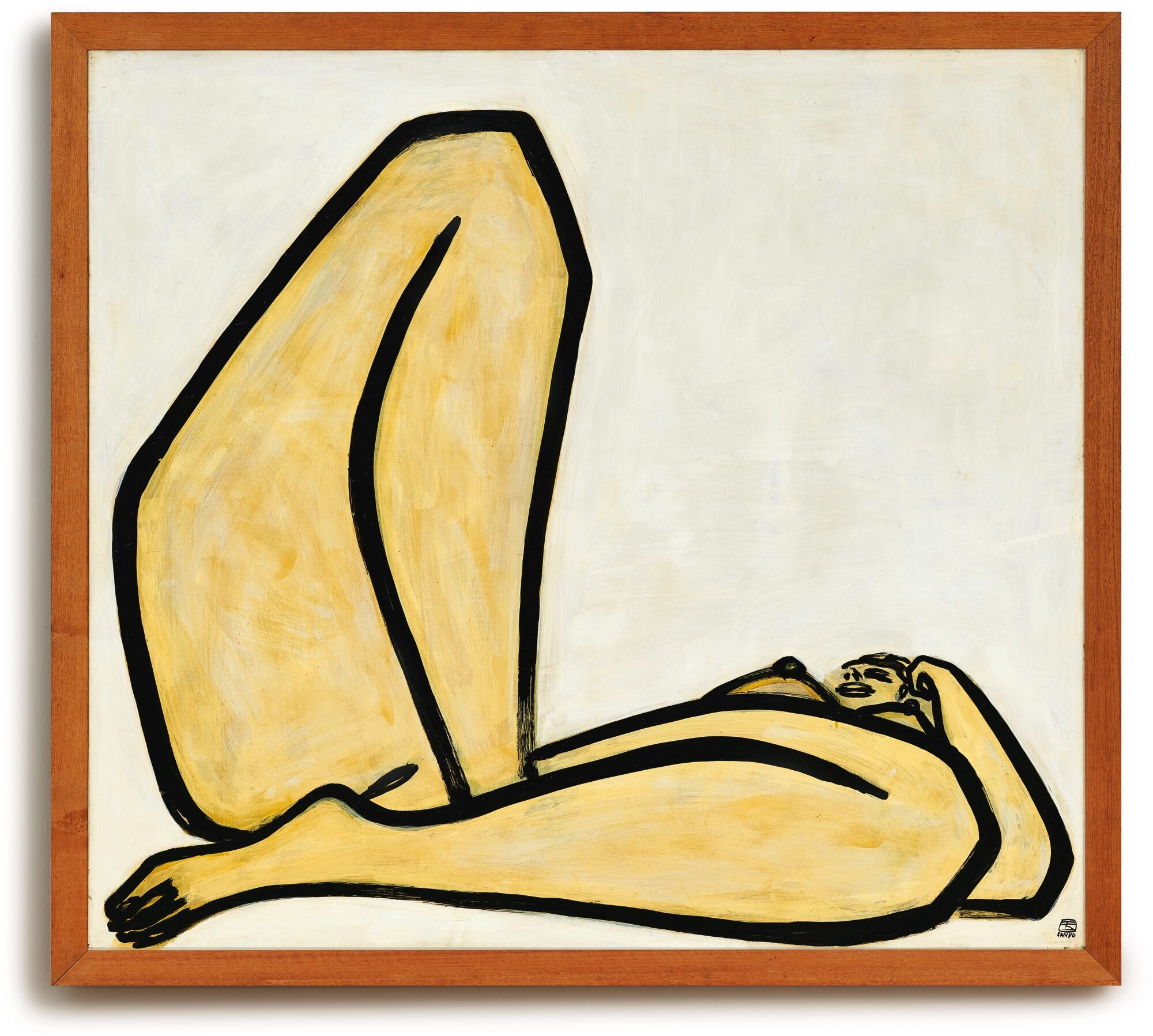
In terms of artistic concepts and style, Sanyu moved in step with the mainstream artists in the French painting circle in the early 20th century.He pursued similar things at a similar time to Matisse, Picasso and others, and the closeness in style between him and Matisse is particularly eye-catching. In this regard, he followed a similar path to Japan's Tsuguharu Fujita, but was "later overwhelmed by Tsuguharu Fujita."Since the 1920s, Sanyu has been exploring the simplification of painting forms. The colors of his oil paintings are subtle, soft and very simple. He not only sketches with a brush, but also often draws expressive lines in oil paintings, sometimes depicting simple and thin lines on thick layers of oil color.His brushwork is different from that of another Chinese artist Zhao Chunxiang. Zhao Chunxiang's lines have a crisp, thin and "handsome" style, while Sanyu's lines are thick and restrained, preventing the lines from becoming a factor that breaks away from the overall color and shape. When you see the line drawings on his paintings, you will be reminded of his honest look.
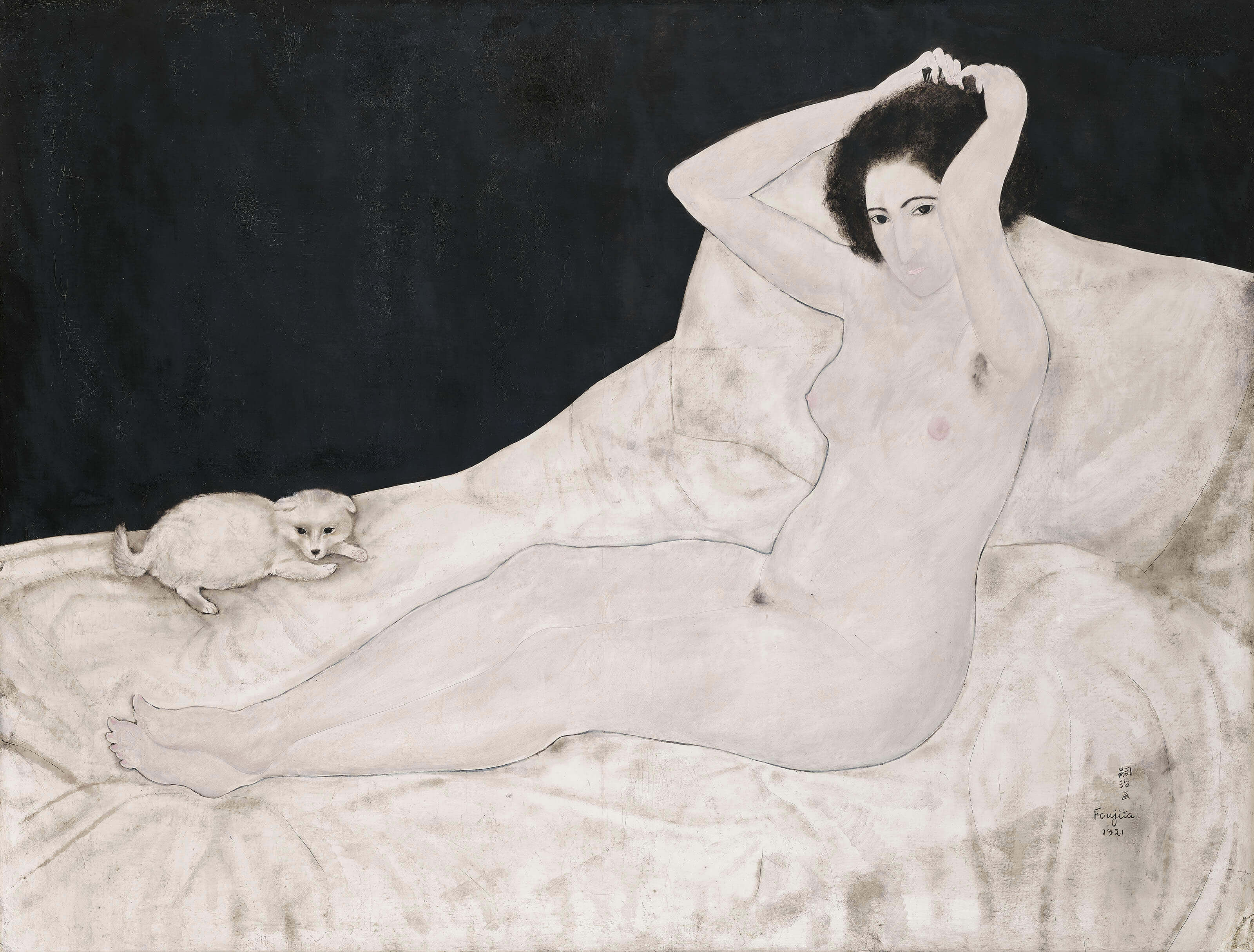
He had an interesting explanation of his artistic style:"European paintings are like a hearty meal, which includes a lot of grilling, frying and various meats. My works are like vegetables, fruits and salads, which can help people transform and change their taste in appreciating the art of painting. Contemporary Painter They always paint in a variety of colors with some deception. I don't deceive, so I am not classified as one of these accepted painters."These words make people feel the wit and humor in his honesty.
What most often appears in his works are plump and strong sexy naked women, with pink bodies, plump and huge legs, small heads and small feet. Xu Zhimo once described the women in Sanyu's paintings as "cosmic thighs" with joking praise. This kind of strong, beautiful, leisurely and sexy woman is obviously the female image that the painter longs for in his heart, and has almost become the mark of his works. There are also such "cosmic thighs" in Pang Xunqin's early works. The exaggerated female bodies in his paintings during his study in France were most likely influenced by Matisse and Sanyu.
According to Xi Dejin's recollection, Sanyu made a painted screen in his later years. The screen painted scenes from "The Plum in the Golden Vase" and also inscribed his "erotic poems" on it. This screen was later purchased by Pan Yuliang's boyfriend and placed in the restaurant he ran. Later, the restaurant closed and the screen disappeared.
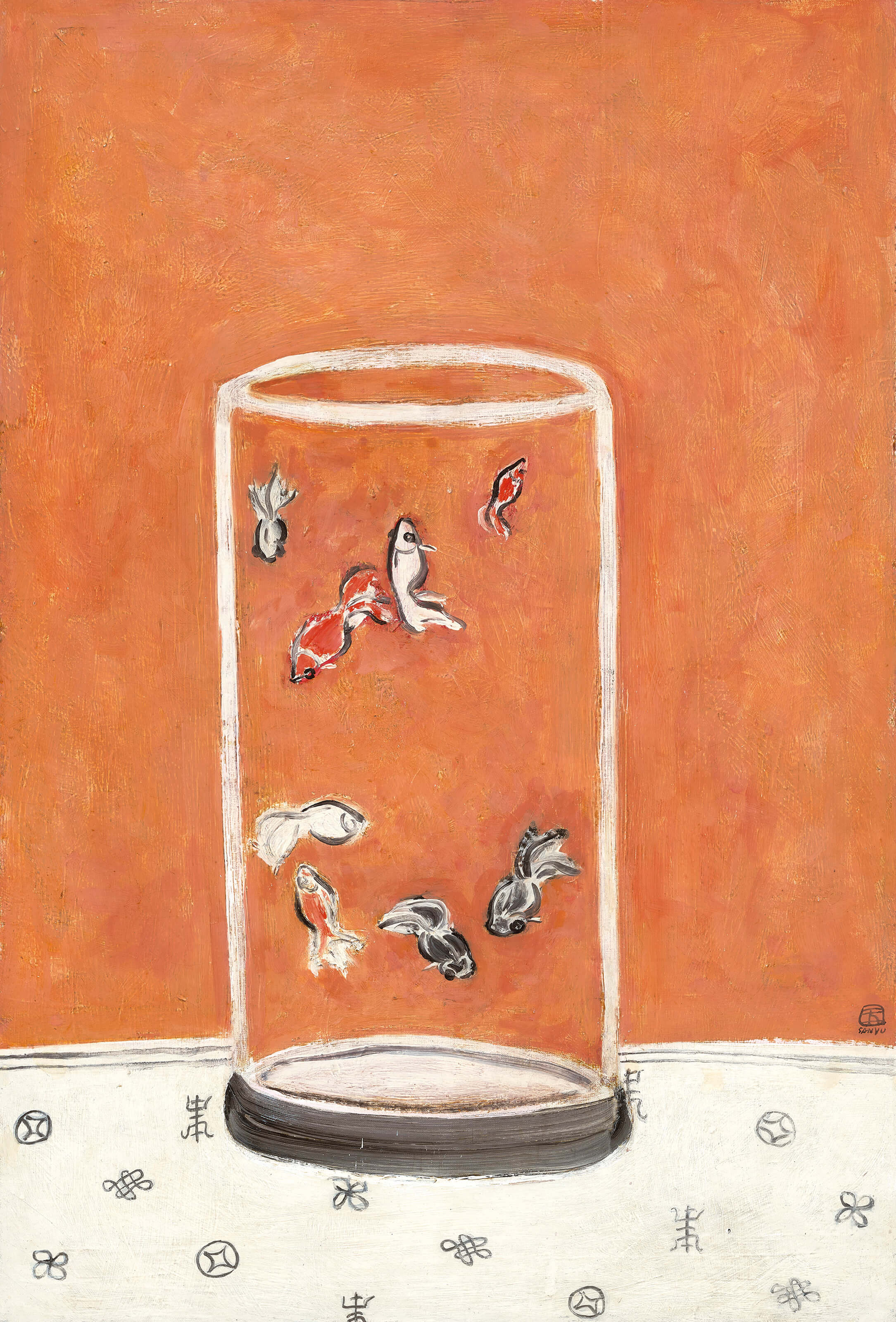
Sanyu also likes to paint flowers and beasts. Those ordinary flowers are not gorgeous, but they are very tough.Especially the branches of flowers, like the strokes in Chinese Qin and Han Dynasty inscriptions, contain special persistence. Wu Guanzhong said that those lines are "the pain of a whip and a mark".In contrast to these flowers and plants in small flowerpots, the animals in his paintings, whether they are wild elephants and leopards, or domesticated horses and cats, all appear leisurely and small.What Sanyu saw in these animals was not their strength and might, but their ease and freedom.
Although Sanyu obviously showed apathy towards painting, his talent lay in painting after all. In 1955, his work was exhibited at the Salon des Indépendants in Paris, and he finally realized that people's interest in his paintings went far beyond their interest in his "ping pong tennis balls." In the last ten years of his life, he turned his attention to art,He wrote to Frank: "After a lifetime of painting, I finally know how to paint."
Whether they are women, flowers, plants, goldfish or beasts, they are all like Sanyu, detached and leisurely.Sanyu once said that the beasts in his paintings are himself - they wander alone in the boundless world.The painter describes himself this way - in 20th century China, leisurely and contented overseas students like Sanyu who did not seek to be educated or educated were almost as rare as a rare bird. In the summer of 1966, Sanyu painted a picture of a baby elephant running in the vast wilderness.He told his friend on the phone: "Loneliness... I drew a picture..." The picture is of a lonely baby elephant who can neither find a place to stay nor see the end of his life. Sanyu told his friend: "That's me." This was the last painting at the end of the artist's life.
In August 1966, Sanyu died suddenly in his Paris apartment due to gas poisoning. It was a time when the French were on vacation, and the death of the Chinese painter was discovered by the police two days later. The police could not find any relatives of the deceased and found the Vietnamese restaurant where Sanyu worked. The police station asked the restaurant owner to pay for the burial of Sanyu. 6 In China, it was the time when the "Great Proletarian Cultural Revolution" was shaking things up. No one in the domestic art circle knew how the Chinese artist living in Paris lived, let alone how he died. But even if someone knew, so what?
2003 Bailu second draft
(When writing this article, I quoted materials from the following writings. Mr. Wu Guanzhong answered the author’s questions about Sanyu’s impression. I would like to express my thanks here.)
references:
1. Pang Xun. This is how I got here. Life·Reading·New Knowledge Sanlian Bookstore, 1988
2. Jiang Biwei. Memoirs of Jiang Biwei. Jiangsu Literature and Art Publishing House, 1995
3. Chen Yanfeng. Sanyu. Taipei Artists Publishing House, 1995
4. Sotheby's. Sanyu by Robert Frank. Taipei Sotheby's Co., Ltd., 1997
5. Great Future Gallery. Pioneer of Western art in the early Republic of China. Taipei Great Future Art Co., Ltd., 1996
6. Liu Changhan. A Century of Chinese Art Images. Taipei Artists Publishing House, 2000
Note:
1. There are two records of Sanyu's birth year - 1900 and 1901, both of which come from relevant French documents. Sanyu himself has no objection to either. Most official records list Sanyu as born in 1900, but the marriage certificate kept by his ex-wife records that Sanyu was born in 1901.
2. It is possible that this is not because Sanyu does not know how to cook or is too lazy to cook, but because the cooking methods of his Jiangnan friends are too different from that of a Sichuan native. Someone recalled that Sanyu had a lot of experience in cooking.
3. Qin Xuanfu’s conversation with the author at his residence at Nanjing Normal University on November 2, 1986.
4. According to Xie Jinglan, Sanyu received two million silver dollars from his hometown in Sichuan. This was considered a huge sum of money at the time.
5. Pang Xun mentioned in his memories that some people said that Sanyu was the inventor of badminton. Badminton has been played in Italy as early as the 18th century. In 1877, the British published
Formal badminton game rules; American EP Bill began to promote tennis played with wooden boards on small venues in 1921. In addition, at that time, physical education teachers in China
The division also invented "badminton". These are not far from the time of Sanyu's activities, and his focus is similar to Sanyu's, so it is possible that they coincide with each other.
6. The restaurant owner paid for Sanyu to be buried in a cemetery in the suburbs of Paris. The cemetery has a 30-year lease, which can be extended for two years. After the expiration in 1998, the lease was renewed by Sanyu Friends for 30 years. It is expected to expire in 2028, and it will have to be moved and buried when it expires. I hope that at that time, enthusiastic people will come forward to make arrangements so that this talented Chinese painter will not die without a burial place.
The original article was published in the Art Time and Space section of Art Wizard magazine, and the illustrations were edited by ArtPro