
A Bronze Vessel Sold for US$8.6m at Christie’s New York, Gunning for the Top Lot Position of Spring Asia Week 2021
Following Sotheby’s lead with a late Shang bronze vessel that fetched US$5.4m yesterday, the third day of Christie’s New York Asia Week sale was just as palpable.
A total of five Chinese archaic ritual bronzes from the Daniel Shapiro collection went under the hammer earlier today, with the Luboshez Gong being the star lot of the day and realized US$8.6m with fees. The same buyer went on a little shopping spree and took home a total of three lots.
The sale raked in US$10,139,000 after premium, almost doubled its presale low estimate total of US$5,080,000, with the sell-through rate being 80% by lot.

Auctioneer Rahul Kadakia opened the lot at US$2,400,000 and the bids came cautiously in at first. Clients represented by Christie’s specialists from New York and Hong Kong remained active throughout the 12-minute proceedings.
The price went up steadily at US$200,000 bid increments. After some 23 bids, it was Tina Zonars, Christie's Co-Chairman of the Asian Art Department, who put an end to the cross-continent bidding war. Her client, paddle number 1308 eventually snatched up the prized lot, bringing an end to the sale with a round of applause from the saleroom. Together with lot 501 and 503 below, the same buyer spent over US$9m in this sale alone.
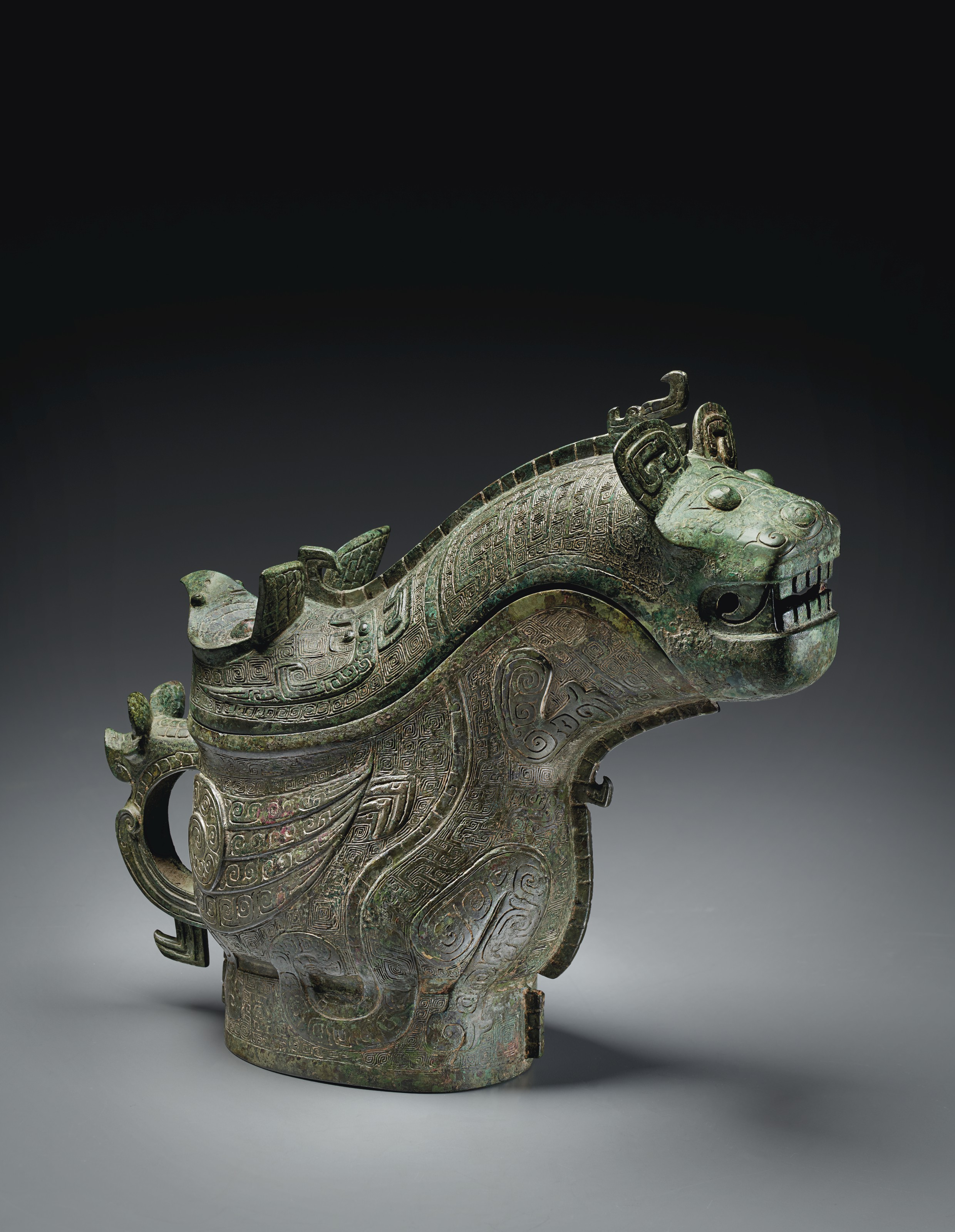
The Luboshez gong, which carried a presale estimate of US$4m to US$6m, certainly delivered. The front of the Luboshez gong has been cast as a feisty tiger, with its ferocious face seen on one end of the lid. The vessel is believed to be used to serve hot wine, so the steam would have poured out between the tiger’s fangs. In ancient China, tiger was seen as the king of all beasts, bearing the symbolisms of bravery and power.
The other end of the gong takes form as an owl with a rounded chest. The nocturnal bird was believed to be a vital connection between the deceased and the living in ancient Chinese culture.
A closer examination reveals the third animal of ram. Kneeling is seen as a respectful gesture in Chinese culture. The way a young ram kneel down to be fed by its mother suggests gratitude, hence the revered animal is often seen in ritual objects.
The gong also bears an inscription at the vessel floor. The four footprints around a sanctuary has later been interpreted as the ancestor of the modern Chinese character wei (衛), meaning to guard or defend. Wei is also a family name in China, pointing to the possibility that the inscription could be a clan sign.
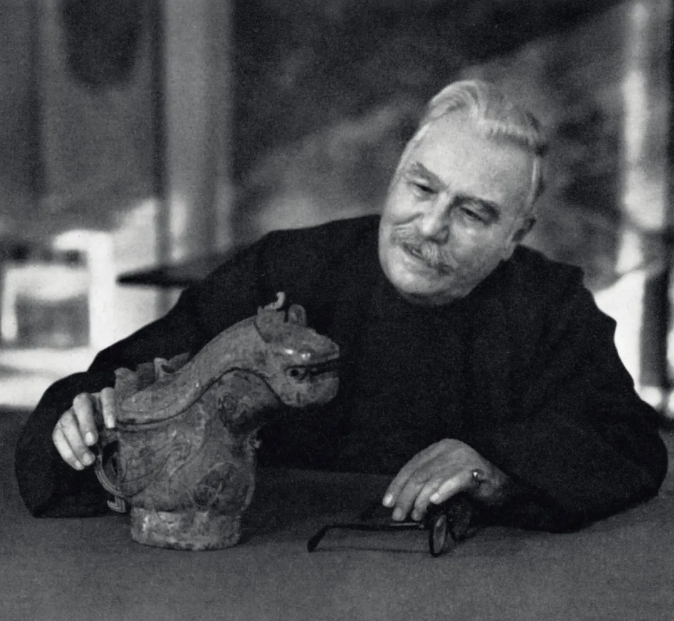
The Luboshez Gong had been a part of the collection curated by Captain S.N. Ferris Luboshez (1896-1984). Raised in England by American parents, Luboshez was trained as a scientist and later, a barrister. He joined the US Navy at the outset of World War II, and was stationed in Shanghai. It was during the period of 1945 to 1949, when Luboshez acquired a substantial part of his Chinese antique collection.