

[2026 Spring Auction] Huayi Contemporary Art Private Sale: From Kiefer and Baselitz to New Generation Painting
Only the nightingale knows
—From Kiefer and Baselitz to the New Generation of Painting
Under the Bodhi tree,
On the edge of the wilderness,
That used to be our bed.
......
This secret is unknown to anyone.
Besides him and me,
And a little bird.
— Walter von der Vogelweid, *Under the Linden Tree*
Around the beginning of the 13th century, the German troubadour Walter wrote "Under the Linden Tree." In the poem, a young girl recalls a love affair unknown to anyone: flowers were broken and grasses were bent, her body rested on the ground, and only the nightingale witnessed that secret moment. Here, nature is not a backdrop, but a place that preserves memories—after time has passed, the traces still echo there.
More than seven hundred years later, Anselm Kiefer strolled through the parched fields of Baljac, France. The vegetation was sun-dried to a pale yellow, and the withered thistles and stems displayed layers of ochre and gold. "The beauty in decay reminds me of death, love and death," he described the impact of that moment. Those withered grasses, along with Walter's verses, were embedded in the canvas, and thus, "Only the nightingale knows" acquired a new metaphor: it was no longer merely a secret echo left from a maiden's rendezvous, but became a response of painting to time—about decay and rebirth, about memory and forgetting, and those experiences that cannot be replaced by other languages.
Huayi 2026 Spring Auction Private Sale – Themed "Only the Nightingale Knows", presentingAnselm Kiefer,George Baselitz,Daniel RichterandMatthias FranzThe works of four German artists. These four artists span different historical periods from postwar Germany to the contemporary era. They do not share a single style, but rather a lasting belief in the medium of painting.
In an age of ever-expanding images, media, and artificially generated representations, painting retains an experience that cannot be fully translated. It exists in the weight of the material, the traces of the brushstrokes, and the time of viewing. Just as the song of the nightingale cannot be explained, but only heard, so too does painting; it preserves those places that words cannot reach—known only to the nightingale.

Anselm KieferAnselm Kiefer
Kiefer and Baselitz are both core representatives of German Neo-Expressionism. In 1980, they represented Germany for the first time at the Venice Biennale, bringing postwar German painting back into the international art scene. Faced with the complex historical experience of postwar Germany, they chose to find a way to respond within painting itself: Kiefer traced the deep structure of memory through materials, mythology, and language; Baselitz, on the other hand, revealed the formal power of painting again by inverting images and dismantling viewing habits. These two different paths together expanded the expressive boundaries of postwar German painting.
In Walter's poem "Under the Linden Tree," the broken and crushed flowers and grasses are the hidden traces of love; while on Kiefer's canvas, they are transformed into a visual language about time, memory, and vanishing. Oil paint, acrylic, and shellac are layered on the canvas, and the materials are no longer merely carriers of images, but become sediments of time.
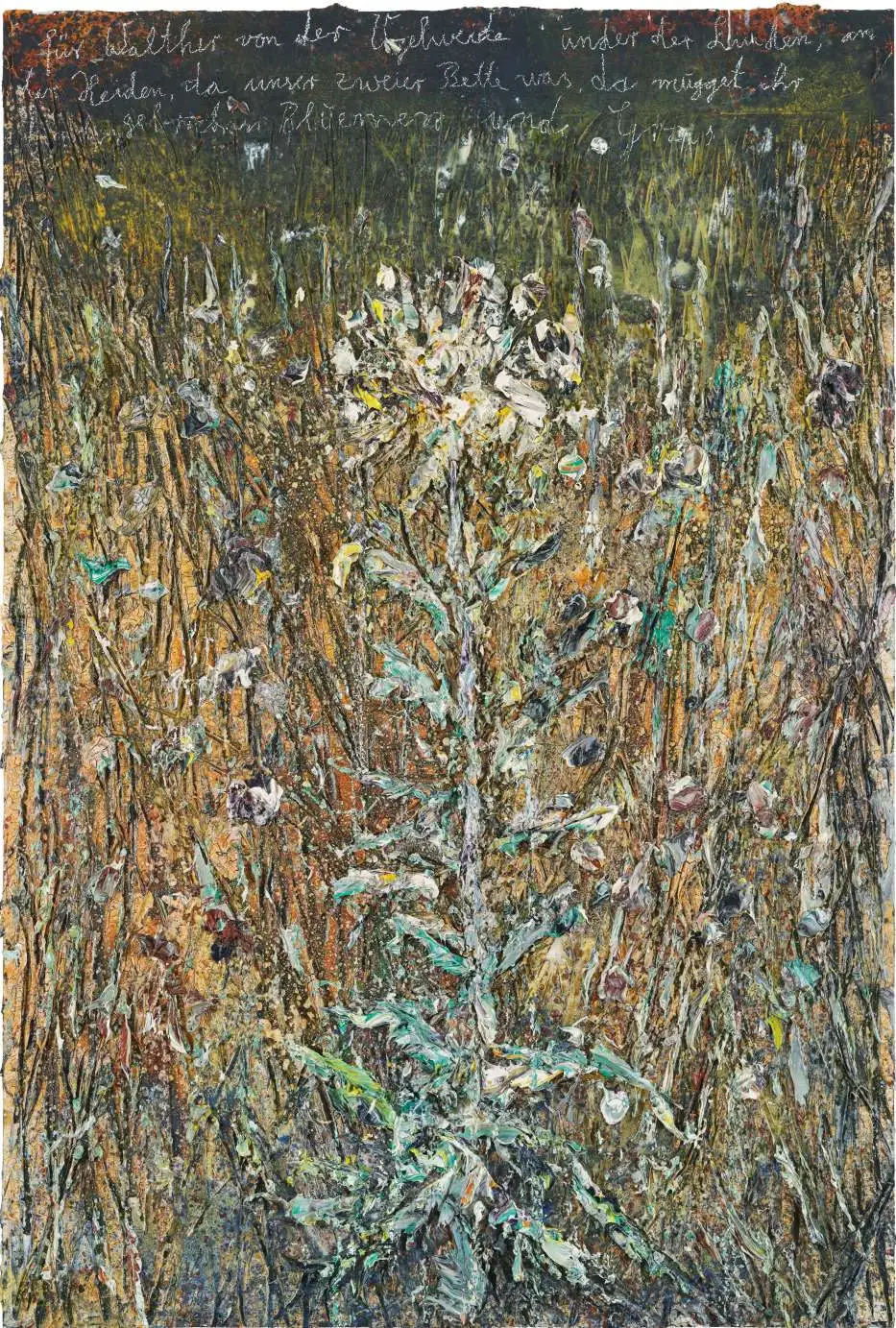
Anselm Kiefer
To Walther von der Vogelweide
2019-2020
Latex, oil paint, acrylic, shellac, and chalk are applied to the canvas.
280×190cm
For Kiefer, poetry is not merely a quoted text, but a path to the history of language and collective memory. "Poetry is like a buoy in the sea…without it there is no direction, and one becomes lost." He juxtaposes the floral imagery of Walter's poems with the real withered grass and stems of the Baljac wasteland, creating a tense juxtaposition of blooming and decay, love and death, on the heavy surface of the material. As art historian Andréa Lauterwein describes, Kiefer's work connects "the echo of hearing" with "the retinal remnant of the image"—the nightingale's melodious song and the traces of material echo each other in the viewer.
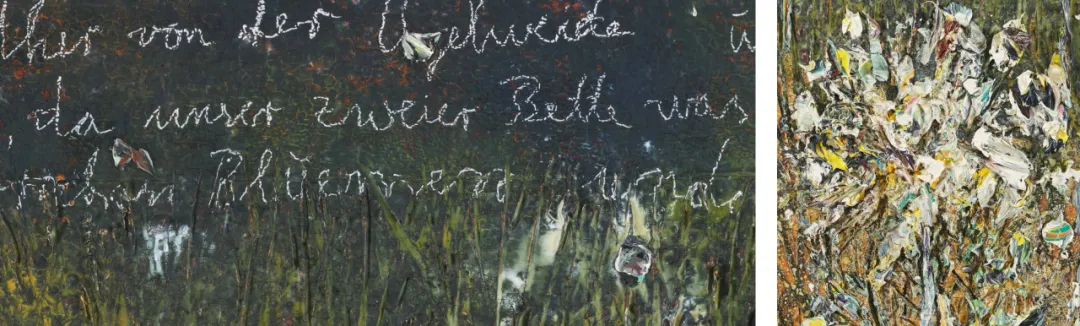
Partial view of the work
BaselizeGeorg Baselitz
Baselitz, on the other hand, starts from the viewing mechanism itself. Since 1969, he has begun to invert figures, stripping the images from established narrative and symbolic relationships, and returning them to the structure and rhythm of painting itself. Inversion is not a formal game, but a viewing experiment: when figures lose their usual orientation, viewers can no longer rely on experience to recognize the image, but must confront the painting itself anew.
Created in 2001, *Teaching a Friend – Wladimir Petrov* continues this exploration. Baselitz places two figures within a circular canvas and reorganizes the relationships between body, space, and viewer in an inverted manner. The circular structure weakens the traditional concepts of up and down, center, and direction in painting, making viewing a dynamic process unfolding around the image. The figures in the work do not serve a narrative but become experimental objects of the painting language itself. Therefore, *Teaching a Friend* is not about a specific story but points to a long-standing concern of Baselitz: how the artist, image, and viewer interact within the painting.
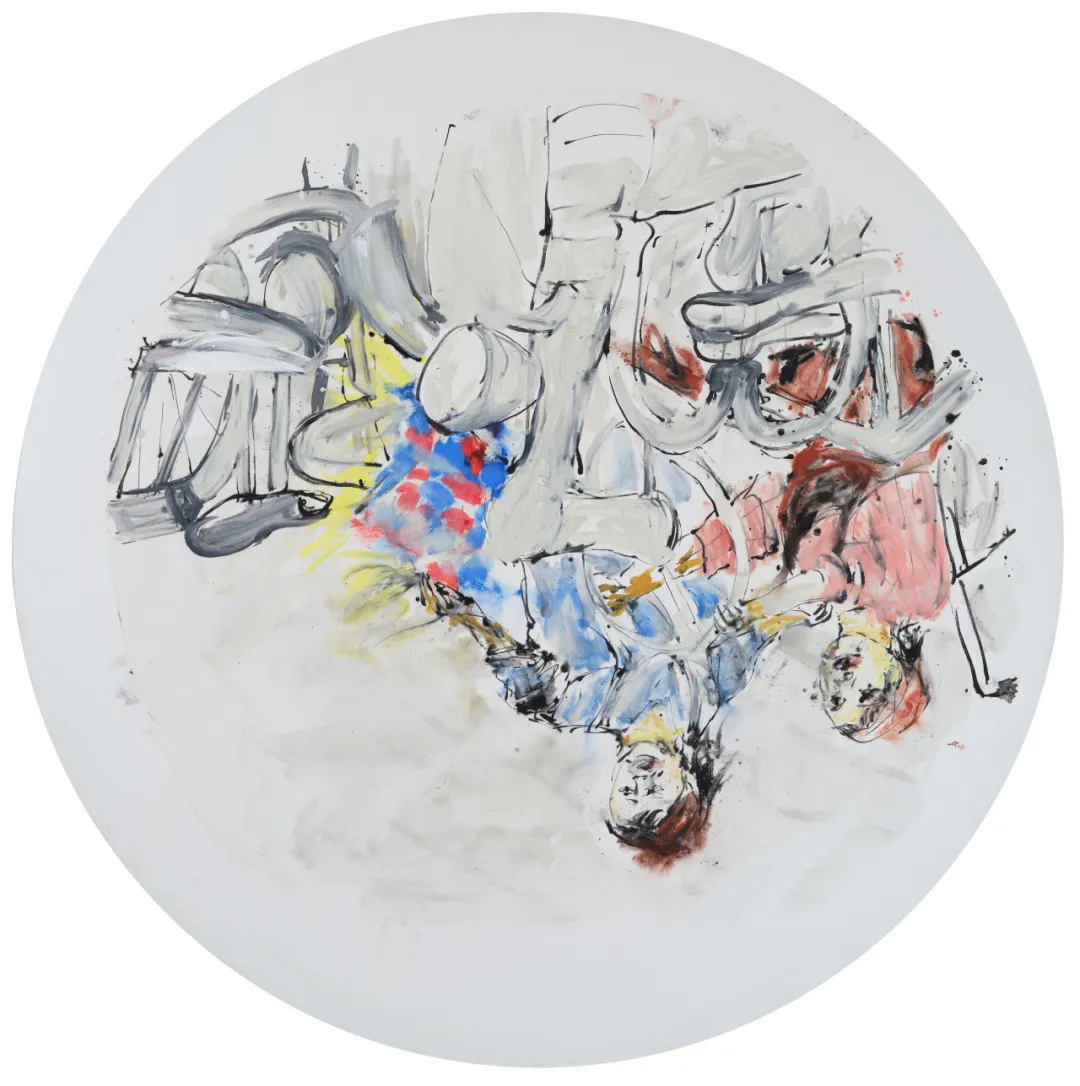
George Baselitz Georg Baselitz
Teaching a Friend – Vladimir Petrov
2001
Oil on canvas
D: 200cm
In the early 1980s, Baselitz continued to work on the theme of "Orangenesser," transforming an everyday action into a study of the body, perception, and painterliness. The mundane act of eating was transformed into a highly autonomous visual form through inverted figures, intense colors, and rough brushstrokes. In 2005, he began the "Remix" series, re-examining his earlier works. The iconic theme of "Orangenesser" was the first to be recalled. In "Orangenesser (Remix)," the once intense and weighty imagery was transformed into a freer, more transparent painterly language. The figures are inverted, the composition simplified, and the images become unfamiliar. The emphasis on the form of painting itself weakens the object's dominance over the viewer, shifting the viewer's focus from "what to see" to "how to see."
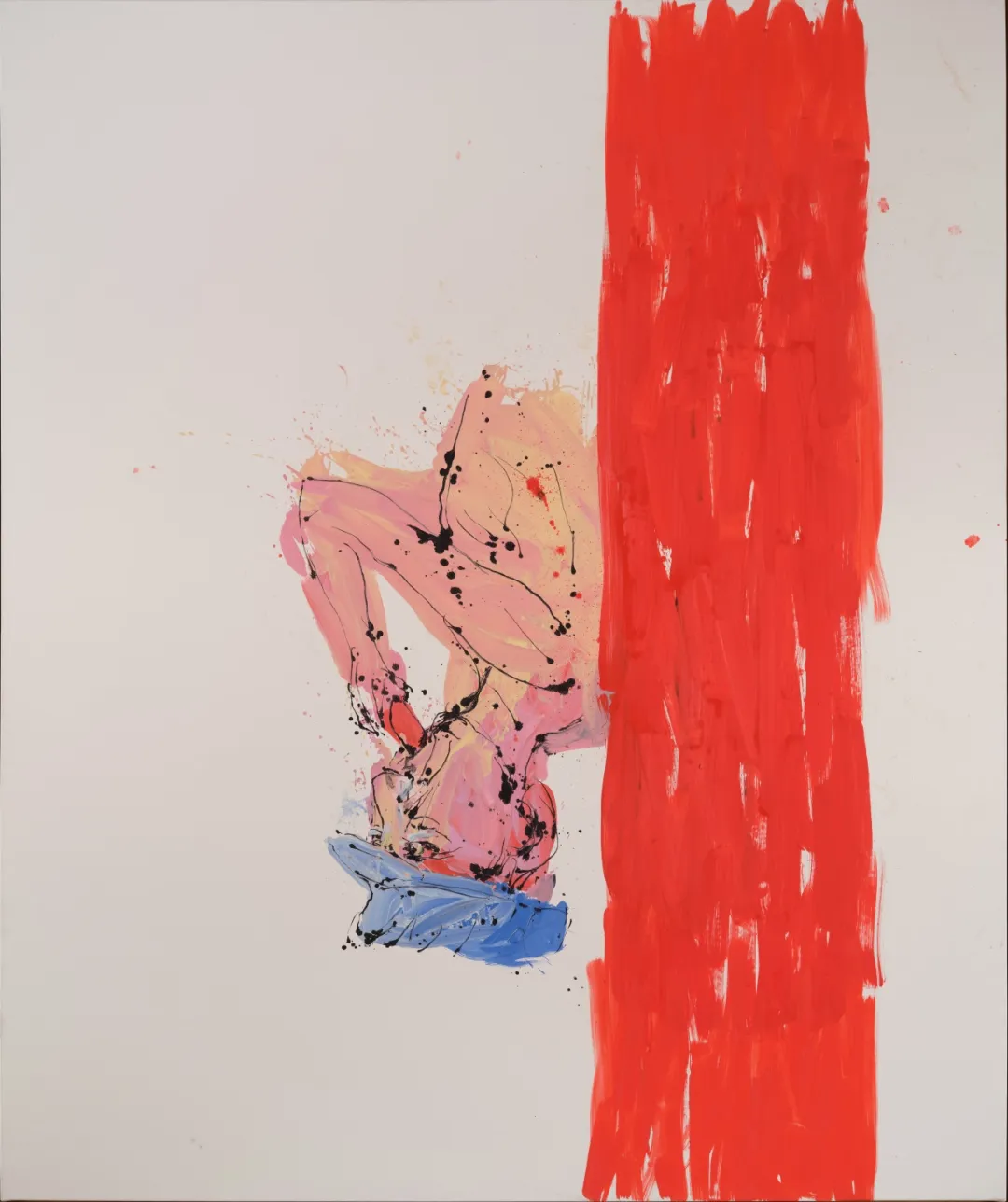
George Baselitz Georg Baselitz
The Man Who Eats Oranges (Remix)
Orangenesser (Remix)
2005
Oil on canvas
300×250cm
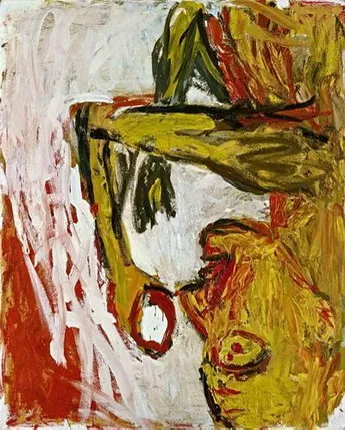
Orangenesser
Oil on canvas, 164.5×130.5cm, 1982
Note: This artwork is not part of this private sale.
Daniel RichterDaniel Richter
Born in 1962, Richter did not enter the art world through traditional painting training. In the early 1990s, he was active in Hamburg's underground music culture, designing posters and album covers for bands. The rapid dissemination of images, the juxtaposition of symbols, and the visual experience of popular culture formed an important background for his early artistic practice. The painting language that developed from this has always retained a sense of speed and uncertainty derived from urban culture.
The intense colors and psychedelic structures of early abstract painting gradually evolved into the figurative figures of the 21st century—figures that exist between figuration and abstraction, yet refuse to be fully identified. "SIREN," created in 2019, continues this exploration. The Sirens are both sea monsters in Greek mythology who lure sailors with their songs and alarm bells in the modern world. In Richter's paintings, attraction and danger, sensual pleasure and underlying unease coexist. Figures are decomposed and covered by vibrant colors, bodies and space constantly intertwined, forming a near-stream-of-consciousness visual state.
Richter did not attempt to reproduce a stable reality, but rather to capture the perceptual experiences of contemporary people through the interplay of color, form, and line. As he said, the vitality of painting comes from the "collision and confrontation" between elements. In an era where images constantly emerge and quickly disappear, he made painting a field that could still accommodate complex experiences.
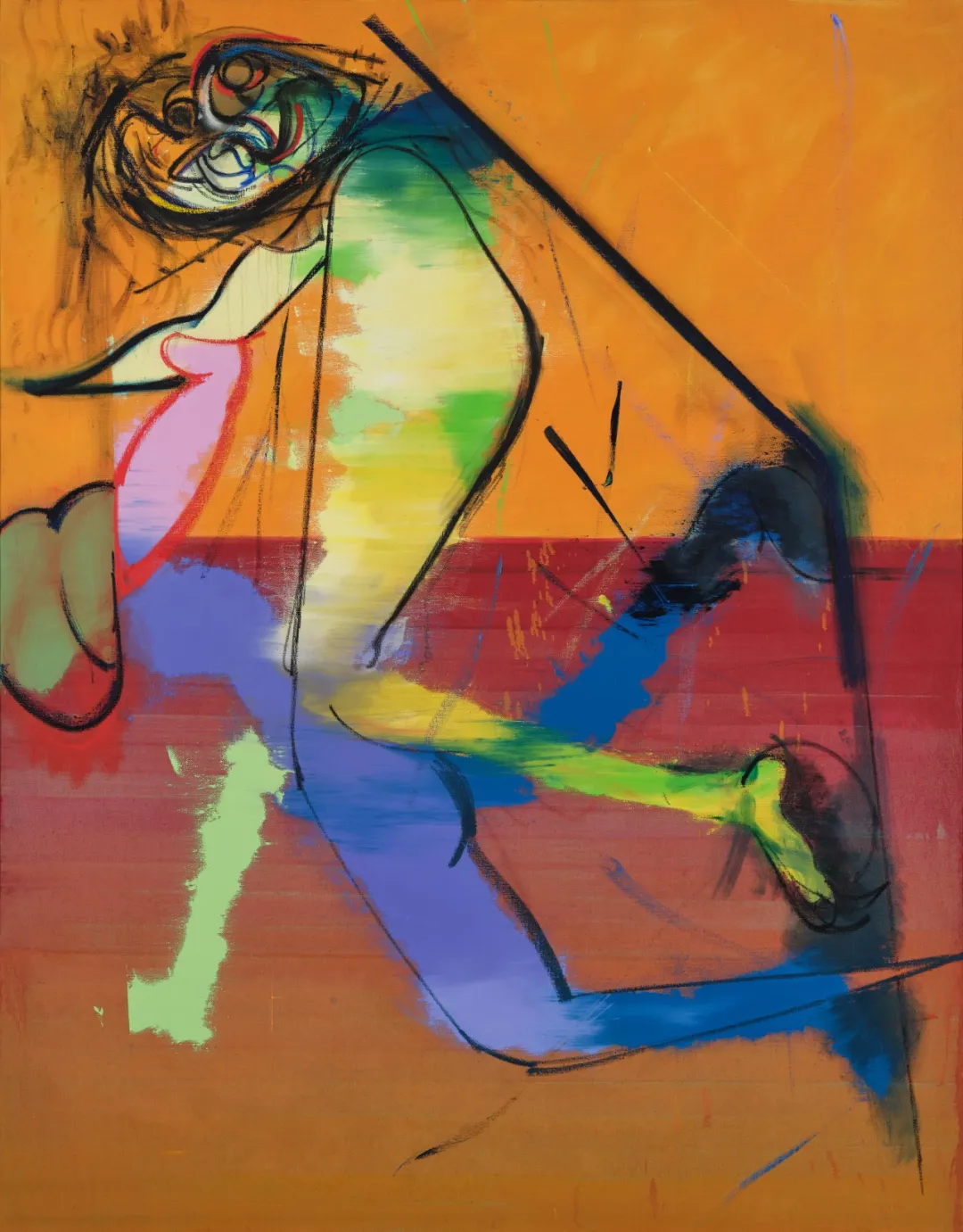
Daniel Richter
Siren
2019
Oil on canvas
233×183cm
Matthias FranzMatthias Franz
As a student of Richter, Franz turned his attention away from the external world and towards the vague, unnameable areas of individual consciousness. His works *The Gray Zone* and *Gentlemen*, created in 2022, demonstrate Franz's ongoing exploration of "uncertain spaces" in painting. The titles themselves suggest a state between two extremes: neither clear reality nor pure fantasy, but a gray area that lingers between the visible and the invisible, close and distant.
Franz's paintings do not attempt to present a world that can be quickly recognized. Through a blurred perspective, soft earthy tones, and unbalanced spatial proportions, he maintains a sense of detachment in his paintings. Figures seem to exist, yet remain distant from the viewer; spaces appear open, yet conceal inaccessible boundaries. This aligns with his description of his creative process—an attempt to capture the depth and secrets inherent in things themselves.
In "Grey Zone," shadowy forms float amidst low-saturation colors, gradually blurring the boundaries between figures and their environment. The imagery lacks dramatic conflict, yet it contains a slowly building unease: we feel as if we are in a familiar yet uncertain scene, watching what is happening, but unable to truly enter.
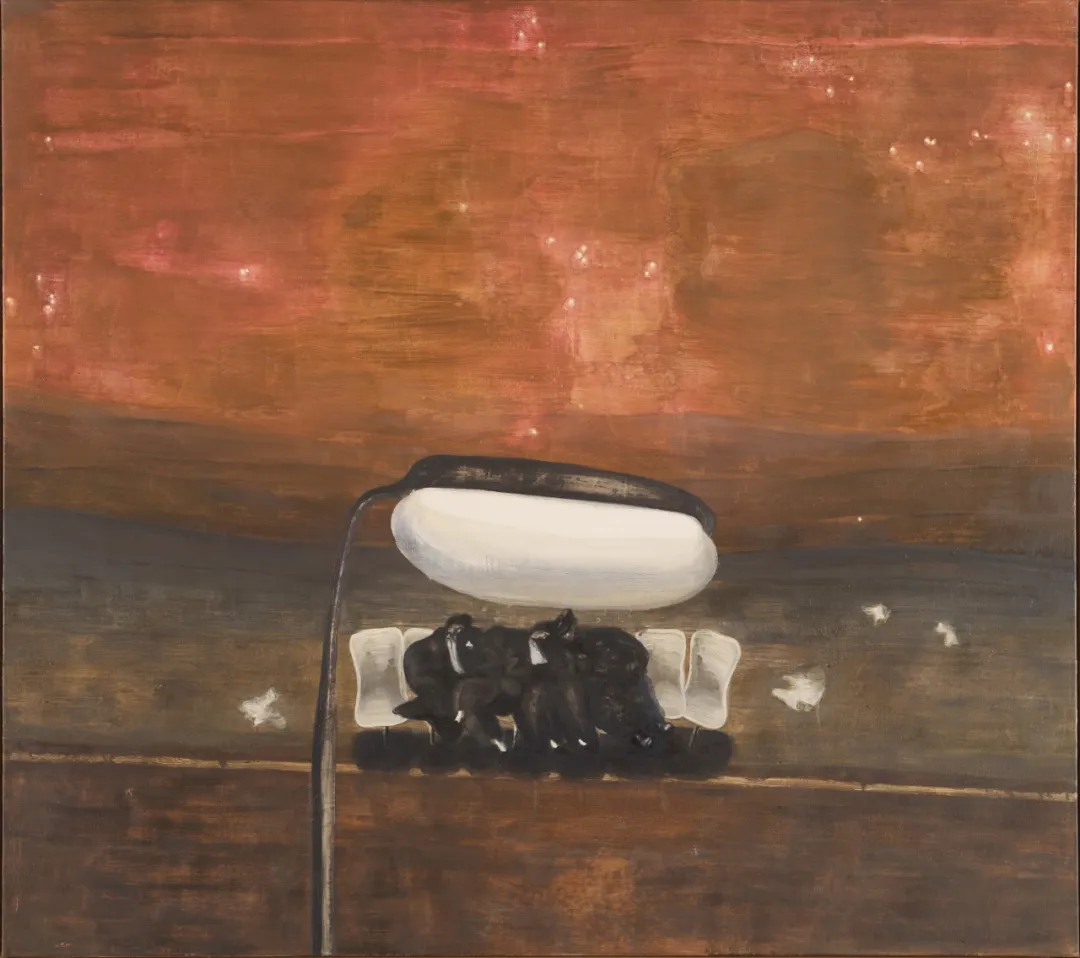
Matthias Franz
The Gray Zone
2022
Oil on canvas
164×184cm
"The Gentlemen" further reinforces this psychological distance. The figures in the painting are not portraits in the traditional sense, but rather resemble detached entities. They retain human form, but have lost a clear identity. Through the misalignment of proportions, the compression of space, and subtle color relationships, Franz creates a dreamlike visual experience—containing both the alienation in social relationships and the loneliness of individuals facing their own existence.
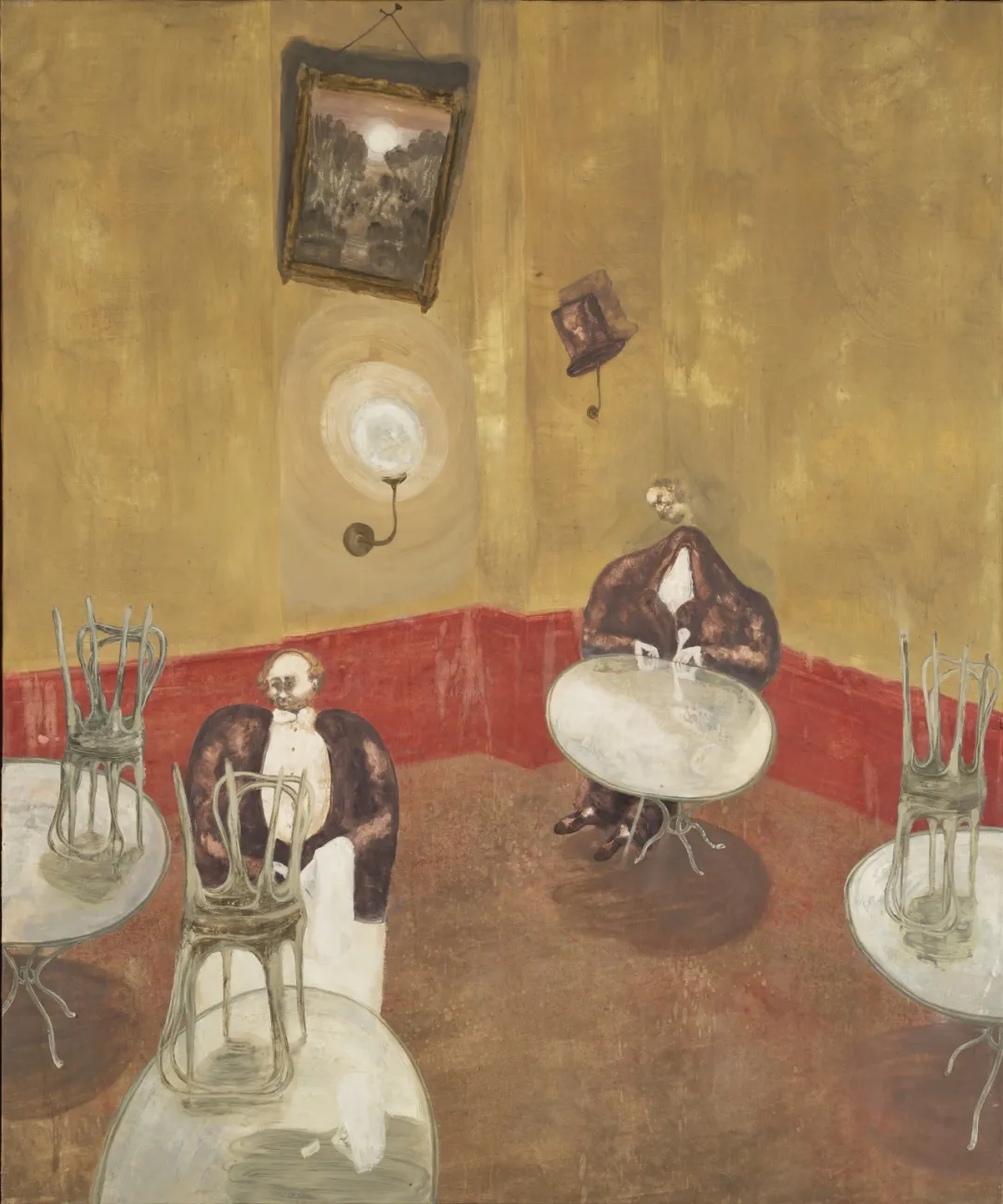
Matthias Franz
Gentlemen
2022
Oil on canvas
180×150cm
Stay tuned to ArtPro for the latest updates on the global art market.