
Reassessing Zhou Sicong's Place in Chinese Contemporary Art – Recommended Works by Zhou Sicong and Lu Chen for the 2026 China Guardian Spring Auction
In Liaoyuan, Jilin Province, in 1980, in a guesthouse in the mining area, a young female painter invited an elderly miner dressed in coarse cloth to sit on the kang (a heated brick bed). The old man was covered in coal dust, his hands cracked, but she didn't mind the dirt and meticulously painted his portrait. That was Zhou Sicong. A few months later, she collaborated with Lu Chen on "Compatriots, Traitors, and Dogs—Miners' Portrait No. 5," her brushstrokes imbued with the chill of the Liaoyuan mines and the miners' tears. Six years later, the same hands painted "Hiroshima Landscape," a painting devoid of figures, depicting only the ruins after the atomic bomb, flames, and torn paper. In the autumn of 2025, this painting sold for 15.525 million yuan at China Guardian.
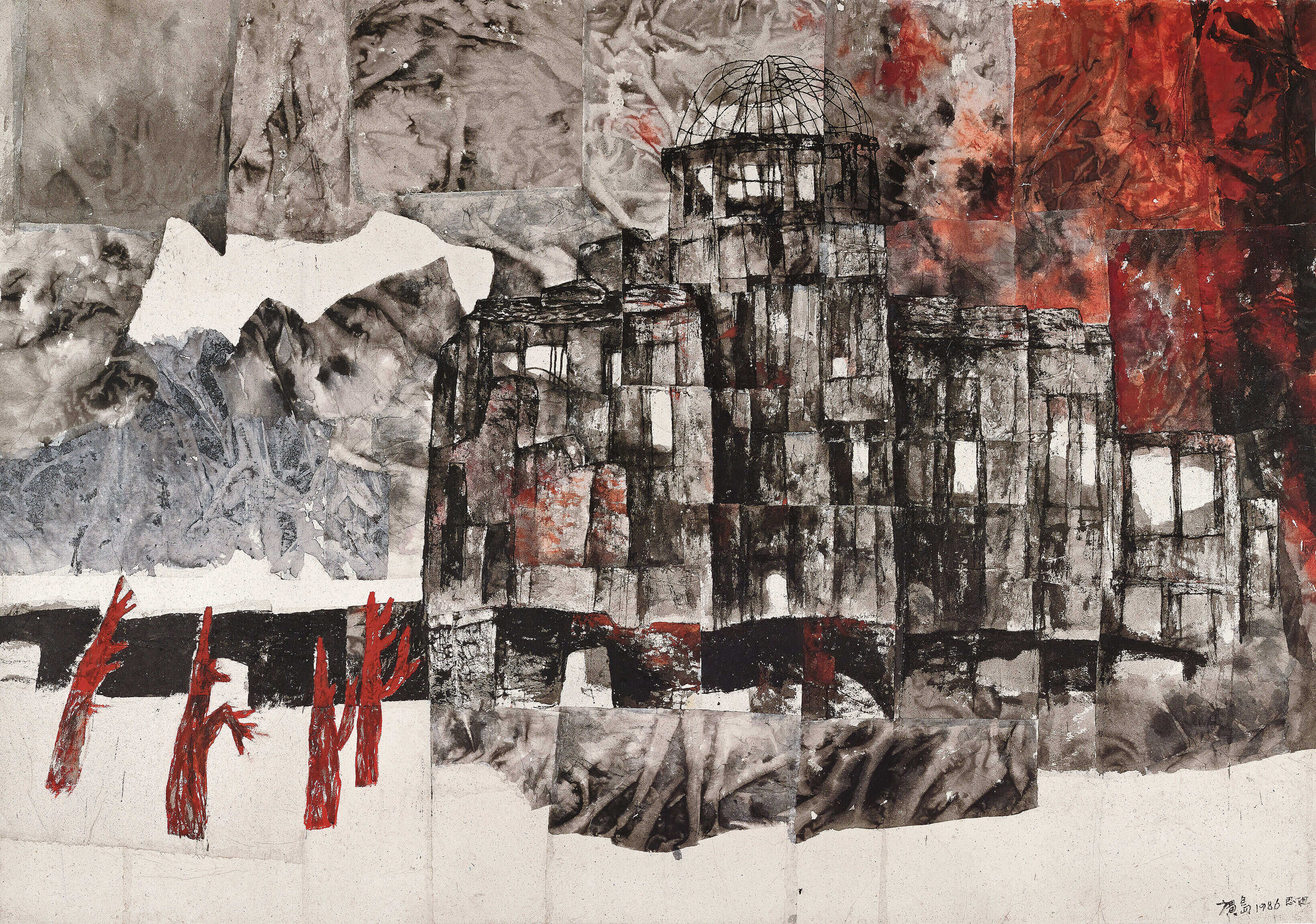

From the Liaoyuan mining area to the ruins of Hiroshima, from the miners' paintings to the Yi women series, Zhou Sicong and Lu Chen's 1980s represent an irreversible spiritual curve. The connotation and scope of influence of this curve are far deeper and farther than we are used to recognizing.
Reassessing Zhou Sicong's Position in Chinese Contemporary Art
As market attention returns to artists like Zhou Sicong, art historical research on her is also deepening, and her transformations in the 1980s are sparking wider discussion. Zhou Sicong's work should be understood within the framework of global postwar art.
Placed within the global context of postwar art
In the global contemporary art world, postwar art has become a central focus of art history and the art market. This attention stems from its direct confrontation with the core experiences of the 20th century—war, violence, displacement, physical trauma, and spiritual reconstruction. Bacon's distorted bodies, Kiefer's ashes and ruins, Giacometti's solitary figures, and Guernica's fragmented spaces—these names and works have become pillars of postwar art because they address the fundamental question of "human existence in extreme circumstances." The core concern of postwar art has never been formal experimentation itself, but rather: how can the human form rise again after everything has been shattered? How can memory be preserved? How can pain be transformed into a perceptible form?
Within this framework, the significance of Zhou Sicong's *Miners' Portraits* (1980-1983) becomes clear. This series of works is not a folk record, nor a social sketch, but a continuous inquiry into war, violence, and the bodies of the victims. The bent backs, the compressed spaces, and the suffocating black and gray tones make the miners the very image of suffering itself. In terms of its problem consciousness, this, along with the distorted and exaggerated flesh in Bacon's works and the gaunt and isolated human sculptures of Giacometti, belongs to the core proposition of postwar art: how can the human image continue to exist after disaster?
In his 1986 painting "Hiroshima Landscape," no longer figures are depicted, only the ruins, flames, and torn paper after the atomic bomb—the brushstrokes, splashes, and collages reflect on war from the perspective of a shared human community. Kiefer used lead, ash, and scorched earth to construct the ruins of postwar Germany's memory; Zhou Sicong used the tearing and burning of ink to construct a traumatic memory from an Eastern perspective. Their modes of expression differ, yet both reach a similar spiritual height.
Zhou Sicong's complete line of thought, from "Miners' Picture" to the Yi Women series and then to the lotus flowers in his later years, shifts from grand suffering to the dignity of daily life, and then to the internalization of physical pain and spiritual loneliness. This precisely responds to another hidden thread in postwar art: trauma is not a one-time event, but an inner state that runs through one's entire life.
Placing Zhou Sicong within the global context of postwar art is not about labeling her with "international recognition," but rather because the issues her work addresses—historical violence, physical trauma, everyday dignity, and spiritual reconstruction—are precisely the core concerns of postwar art.
Her existence means that the narrative of postwar art is no longer solely written by New York, Paris, London, and Berlin. China's 20th-century war memories, revolutionary narratives, the experiences of the working class, and the modernization of ink painting are equally indispensable parts of understanding global postwar art. This reassessment is two-way: it elevates Zhou Sicong's own art historical perspective and corrects the long-standing narrative of postwar art dominated solely by European and American stylistic histories.
Returning to the scene of change in China in the 1980s
From a global perspective, another question needs to be asked: How did Zhou Sicong accomplish these changes within his own context? The answer lies in the specific context of China in the 1980s.
In September 2025, Guardian Art Center presented the exhibition "New Enlightenment and Avant-garde: A Glimpse into Ink Painting Practice in the 1980s," showcasing twelve works by eleven artists, including Zhou Sicong, Lu Chen, Zhou Shaohua, Yuan Yunsheng, Gu Wenda, Li Laoshi, and Tian Liming. As market attention returns to artists like Zhou Sicong, we can see that art historical research is also deepening, especially regarding their transformations in the 1980s, which have sparked wider discussion. The exhibition explicitly states that the ink painting revolution of the 1980s had two main threads: "formal exploration" and "conceptual renewal," and that "without a strong demand and desire for conceptual change, there can be no formal advancement." Zhou Sicong and Lu Chen precisely straddle these two threads—Zhou Sicong's transformation was driven by inner motivation, a profound change at the "conceptual" level; Lu Chen's compositional lessons directly touched upon the systematic reconstruction of "formal" language.
The impact of the '85 New Wave was the historical context of this transformation. At that time, a large amount of Western modern art resources flooded in, and the choices faced by ink painters were far more acute than those in the oil painting field: to embrace the Western paradigm or to find contemporaneity within the essence of ink painting? Zhou Sicong chose the latter, but her "adherence to the essence of ink painting" was by no means conservative—the conceptual breakthrough she achieved within ink painting was no less thorough than that of any pioneer who embraced the Western paradigm.
She simply chose a quieter path. Lu Chen also chose the latter, but he paved this path into a teachable and deductive methodology in a theoretical way—the course on ink painting composition is his answer: ink painting can not only carry contemporary concepts, but also establish its own formal grammar for this purpose.
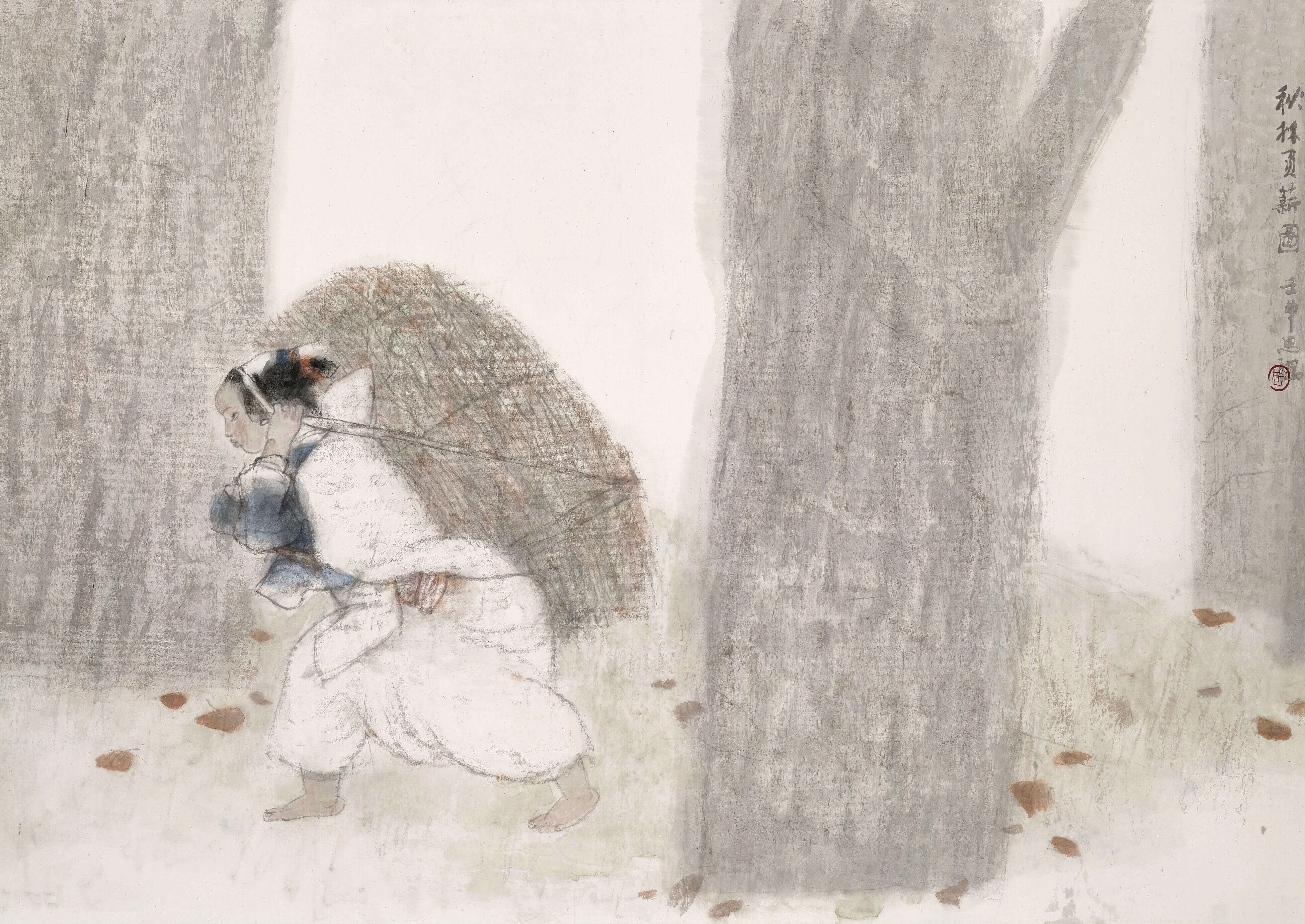
She chose a quieter path. While studying at the Central Academy of Fine Arts, Zhou Sicong was mentored by renowned masters such as Li Keran, Jiang Zhaohe, Ye Qianyu, and Liu Lingcang. She "always considered herself Li Keran's student." One of Li Keran's most fundamental contributions to Chinese landscape painting was introducing light into the canvas—he incorporated Rembrandt's light and shadow effects into landscape painting, pioneering a new landscape language centered on backlighting and layered ink. Zhou Sicong's works from the 1970s and 80s are a creative extension of this lineage: she "absorbed the volumetric structure and chiaroscuro of oil painting and drawing, and boldly used large areas of ink wash, applying Li Keran's layering techniques from landscape painting to figure painting, creating a new look for Chinese painting." Starting from Li Keran, she forged a completely different path—Li Keran's light was accumulated, heavy and raw; Zhou Sicong's light seeped from the gaps in the ink, warm and flowing. Lot 4236, "Autumn Forest with Firewood," is an excellent example of this transformation.
Li Laoshi, who appeared in the same exhibition, was known for his withered lotus paintings and called himself "Master of the Broken Lotus Hall." His lotus paintings "expressed a deep-seated melancholy for autumn," echoing the spiritual dimension of Zhou Sicong's later lotus paintings. Both painted withered lotuses and both passed away in 1996, but their temperaments were vastly different: Li Laoshi's withered lotuses were dry and intense, while Zhou Sicong's lotuses were ethereal and translucent. Zhou Sicong's lotuses were a profound extension of the changes of the 1980s—from grand narratives to existential gaze and then to a return to individual spirit.
In the late 1980s, her rheumatoid arthritis worsened, and her limbs became severely deformed. She gradually shifted her focus from painting figures to painting lotus flowers. This was not a retreat, but a deeper return. The lotus flower series comprises more than one hundred paintings, becoming increasingly simple and dominated by ink, with each painting becoming more ethereal. In the final stage of her life, she could only barely hold a brush with her fingers wrapped in bandages. In reality, she was painting entirely with her heart.
Wang Mingming said, "She removed many techniques, subtracting them time and time again, until what remained was increasingly close to the spirit and temperament of art, returning to the core of the origins of Chinese painting." She once described her state: "I was extremely lonely, with two medicine bottles hanging above my head, and a broken rainbow swaying slightly." From the miner's painting to the Yi woman to the lotus flower, the core of this spiritual trajectory has never changed; it is not about giving up, but about focusing on something more inner. From resisting fate, to enduring helplessness, and finally to liberation, the lotus flower is the natural crystallization of her personal spiritual reflection reaching its deepest point.
Zhou Sicong himself once said something very significant: "The 'Miners' painting should give people a suffocating feeling, so the original techniques were insufficient to express it. We had to find other techniques to express an emotion. Without focusing on this, we often end up in a dead end of pure form. There must be feeling; without feeling, form is difficult to emerge." This statement reveals the core self-awareness of this group of artists in the 1980s: formal breakthroughs were not the goal; conceptual breakthroughs were. Form must serve feeling. Light is introduced into the painting not to show off technique, but because those autumn forests and those Yi women need light to carry the painter's feelings about the world. This self-awareness of starting from feeling and having form serve feeling is the most precious legacy of ink painting practice in the 1980s.
She deserves more attention.
Lang Shaojun called her "the most influential female painter" in the history of 20th-century Chinese art, while Wang Mingming called her "the greatest female artist in China since Li Qingzhao." Her transformation from realism to conceptual art, completed in the 1980s, was as thorough as that of any contemporary avant-garde. She creatively introduced Li Keran's concept of light and shadow into figure painting, choosing to complete a contemporary transformation within the essence of ink painting amidst the impact of the '85 New Wave. Furthermore, she established a quiet and profound mode of expression through a conscious female perspective. These achievements, if placed upon any male artist, would likely have garnered far greater market recognition.
Many artists belonging to the same transformative trajectory of the 20th century have already seen their market prices stabilize in the millions to tens of millions; however, Zhou Sicong's numerous paintings of Yi women, landscapes, and figures still fetch tens to hundreds of thousands, creating a significant gap between her artistic and historical significance and the market's insufficient attention to this great female artist. Lu Chen's situation is similar. His ink painting composition course shook the art world in the 1980s, and his seven-dimensional theory is still used in teaching today, yet his market record is extremely rare; when he does appear at auction, the prices are mostly around one hundred thousand. An artist who has methodologically driven the reform of Chinese painting education has a market price far from matching his academic influence.
In the 2025 autumn auction, "Hiroshima Scenery" sold for 15.525 million yuan. In the same year, the China Guardian "Echoes of the Century" special sale achieved a total of 2.87 million yuan, with "Crowd of People," a collaboration between Lu Chen and Zhou Sicong, leading the way at 1.4375 million yuan. In the 2024 China Guardian autumn auction, three of Zhou Sicong's works without reserve prices sold for 414,000 yuan, 414,000 yuan, and 368,000 yuan respectively, and the fierce bidding at the auction indicated that market demand for her works was gradually increasing.
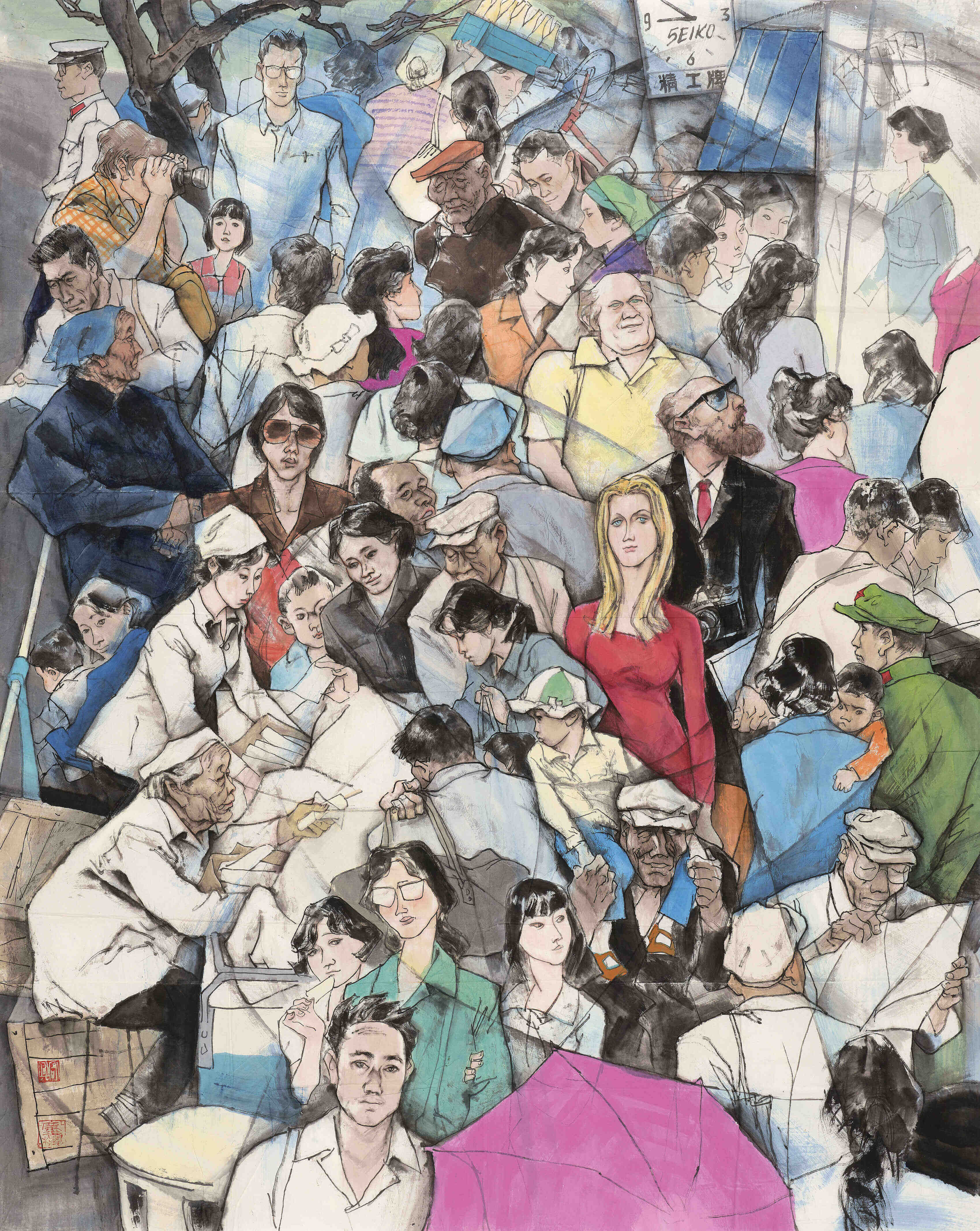
Since 2019, China Guardian has been continuously operating the "Echoes of the Century" brand, and in 2025, it will launch the "New Enlightenment and Avant-garde" exhibition. All these actions are aimed at one thing: re-examining Zhou Sicong and Lu Chen within the global context of contemporary art.
Highly noteworthy items this season
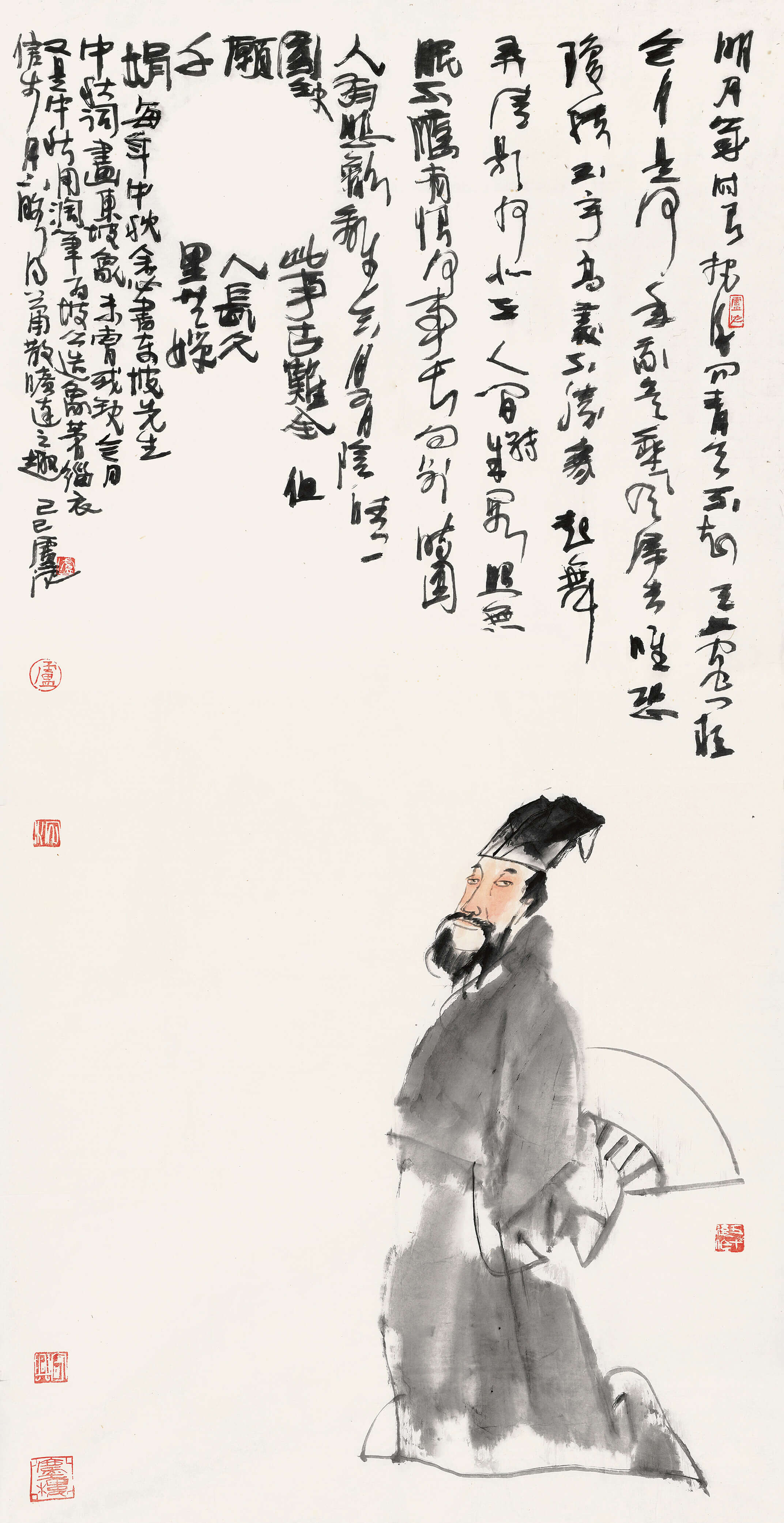
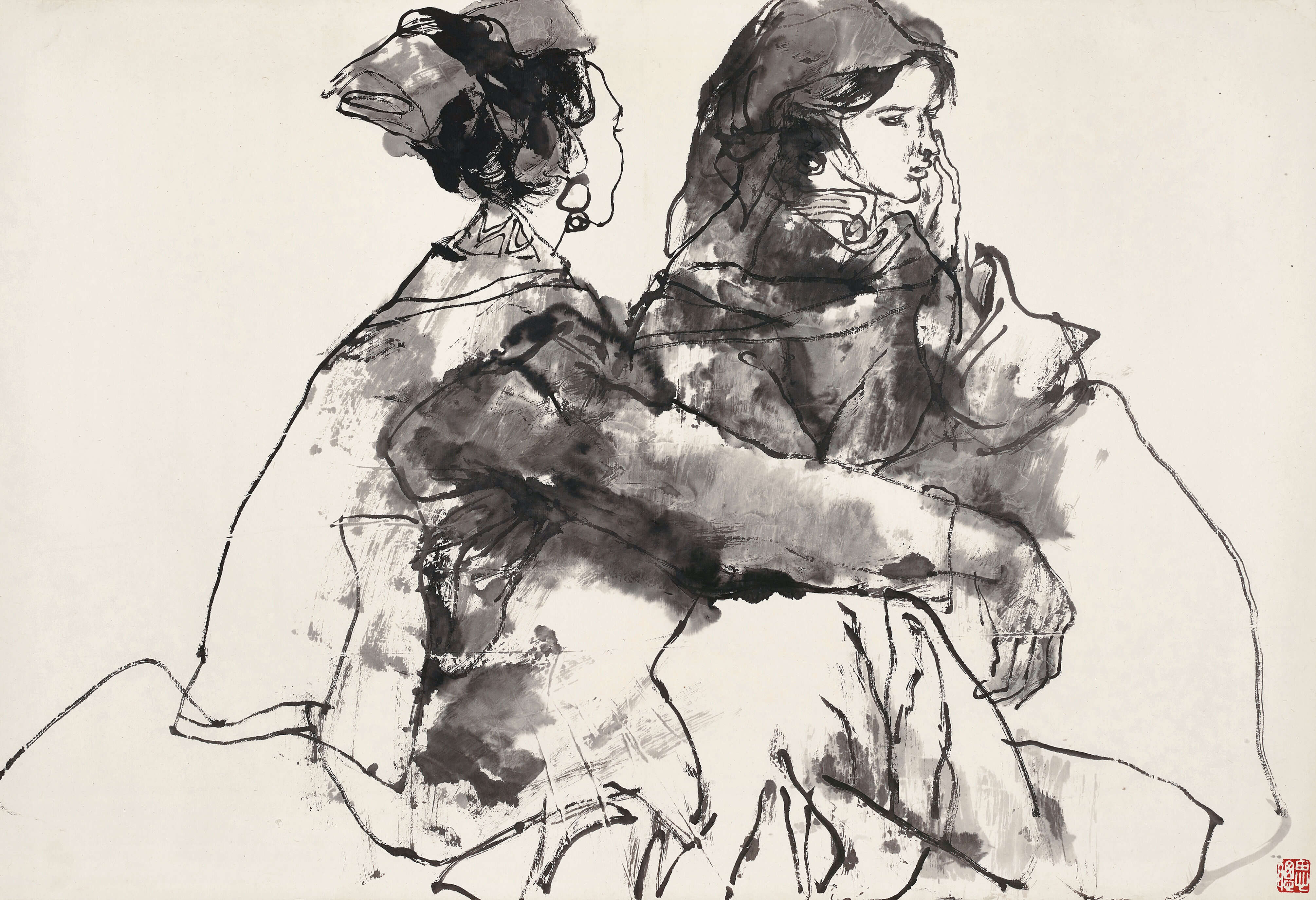
The 2026 China Guardian Spring Auction's "Echoes of the Century" special section will present fourteen works by the two artists, with estimates ranging from no reserve to RMB 80,000. Most of these works originate from family collections and include publication records. The following pieces deserve special attention.
The largest work in this collection, and also a key to understanding Zhou Sicong's work from the 1980s and 1990s. "Carrying Firewood," depicting Yi women carrying firewood, is the core motif of the Yi Women series—the painting depicts dense autumn forests, with Yi women moving through them, the ink clear and transparent, alternating between dry brushstrokes and washes. Published in the "Contemplative Imagery" exhibition catalogue at the Poly Art Museum in 2011, its provenance is well-documented. With its size of 10.2 square feet and clear publication history, the work has received considerable positive attention.
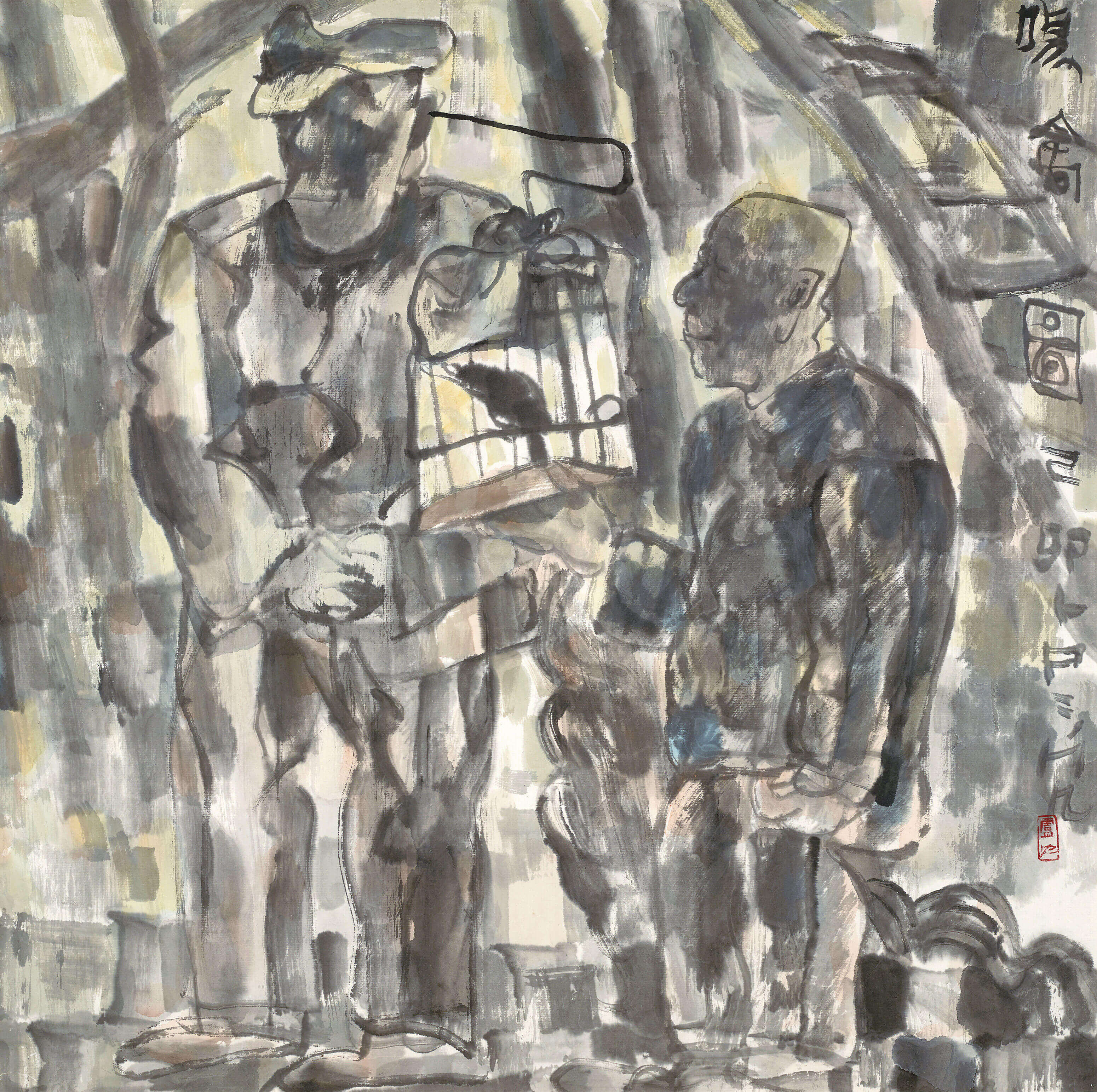
The most compositionally conscious work in Lu Chen's collection features a songbird perched on a branch. The direction of the branches and the bird's posture form the skeleton of the painting. The colors are primarily light ochre and indigo, with the use of blank space being far more sophisticated than the application of ink. The relationship between the songbird and the branches is not an ecological one in nature, but rather a compositional one within the painting. The bird is the "point," the branch is the "line," and the blank space is the "plane." The balance, contrast, and rhythm among these three elements represent the visual practice of Lu Chen's seven-dimensional theory of ink painting composition. No reserve, 4.2 square feet, includes publication record from the 2022 edition of "Echoes of the Century" published by Guardian Art Collection.
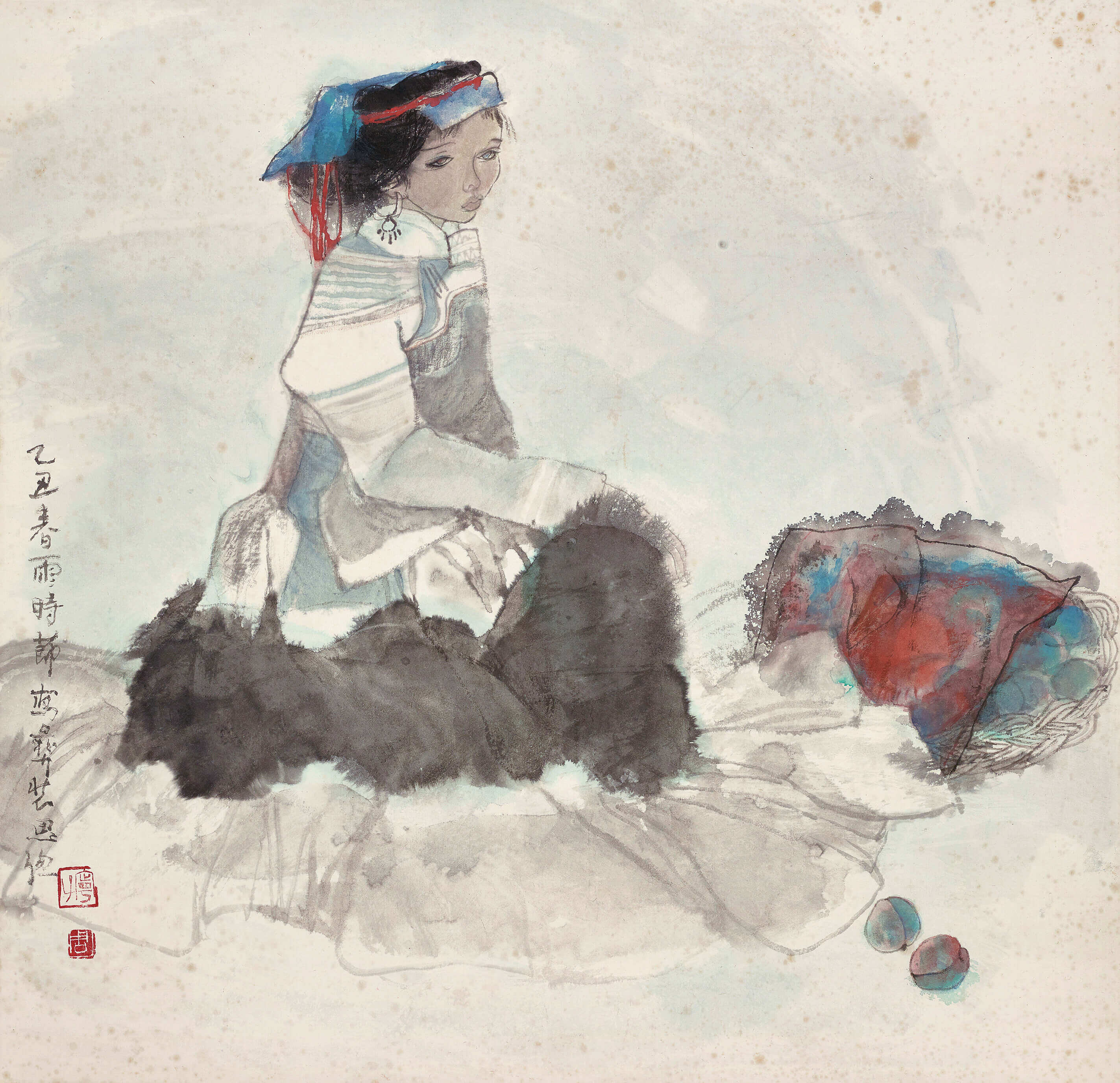
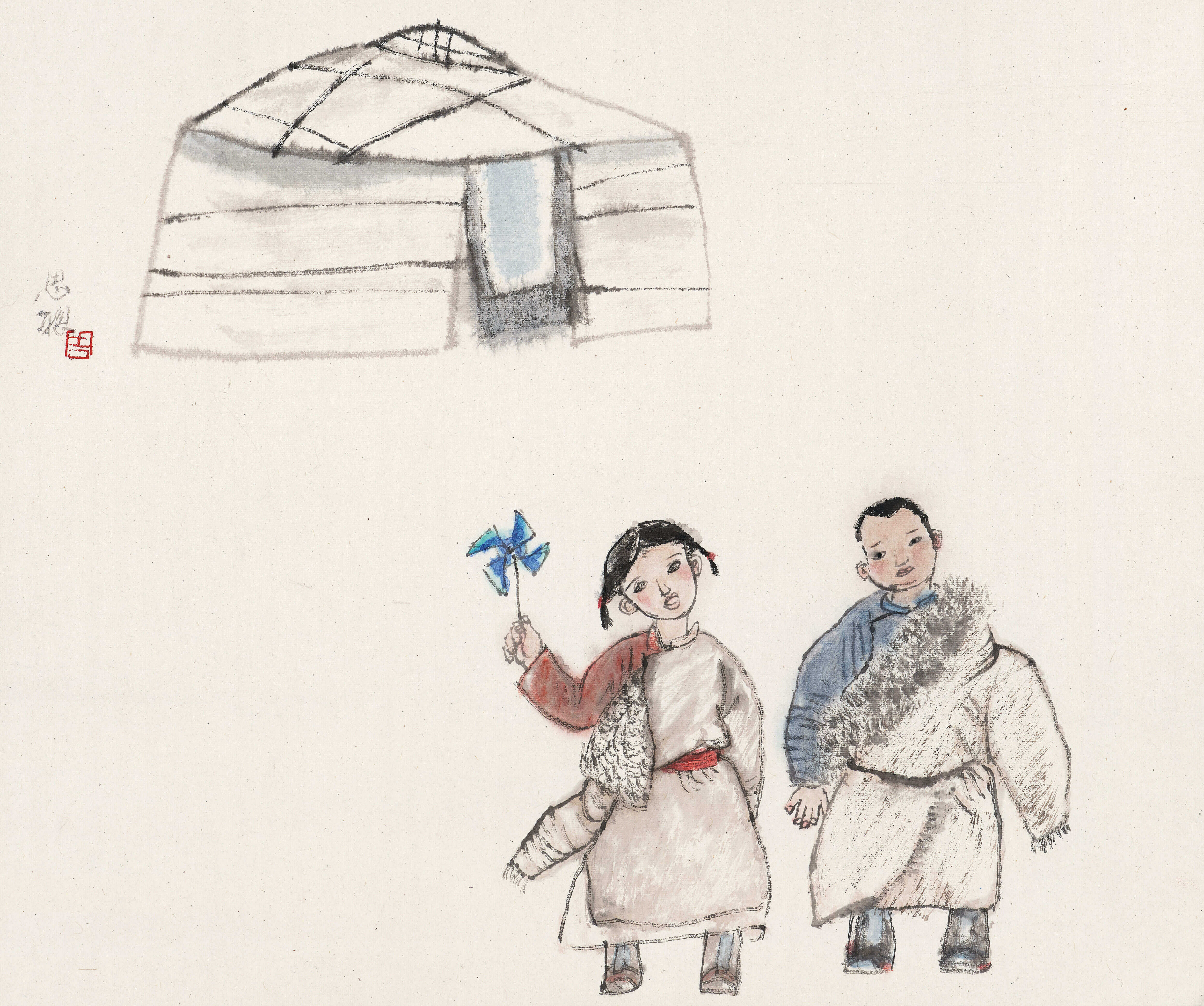
Despite its small size, this piece embodies the most authentic starting point from Zhou Sicong's artistic self-description: "When I was a child, I loved going to the countryside with friends. We'd carry a small sketchbook, wade across the stream... and draw an autumn grove; we'd gather dry branches, build a bonfire, and roast steamed buns to eat." The windmills of his childhood memories are in line with the simplicity of Yi women and landscapes in the 1980s. No reserve price, 1.8 square feet, published by Guardian Literature, it has a low barrier to entry but a very high emotional intensity.
Zhou Sicong's name has always been present in any history of 20th-century Chinese art, and her market presence has been constant in any major auction. However, "presence" and "sufficient attention" are two different things—her historical significance deserves a higher market weight, and the modest estimates for these fourteen works provide collectors with a window to engage. Their era in the 1980s already placed them at the forefront of contemporary art. It's just that this forefront still needs more attention to reach it.
Stay tuned to ArtPro for the latest updates on the global art market.