
In-depth | Boundaries are Moving Lines: Boundless Sino-German Contemporary Art Exhibition
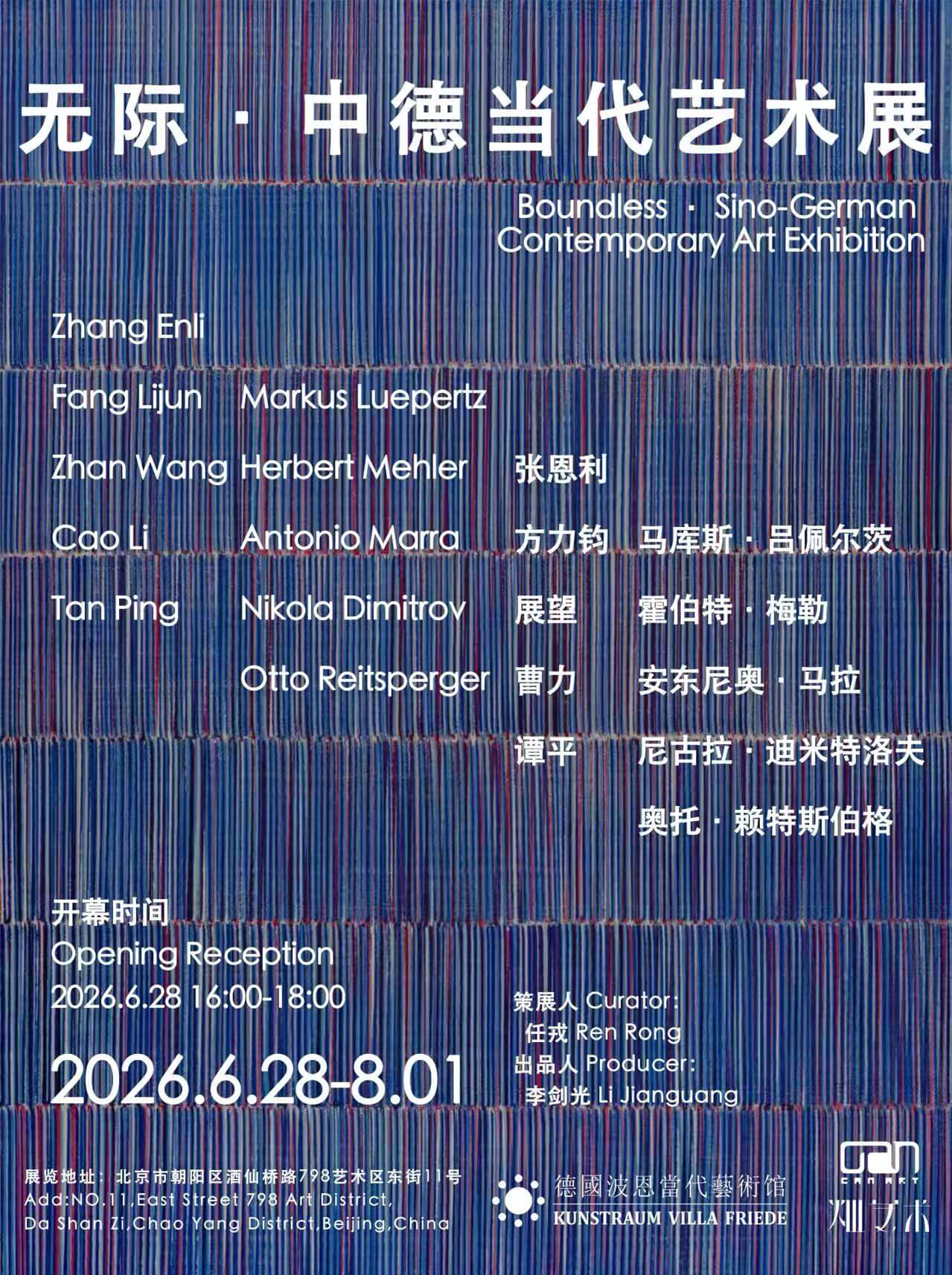
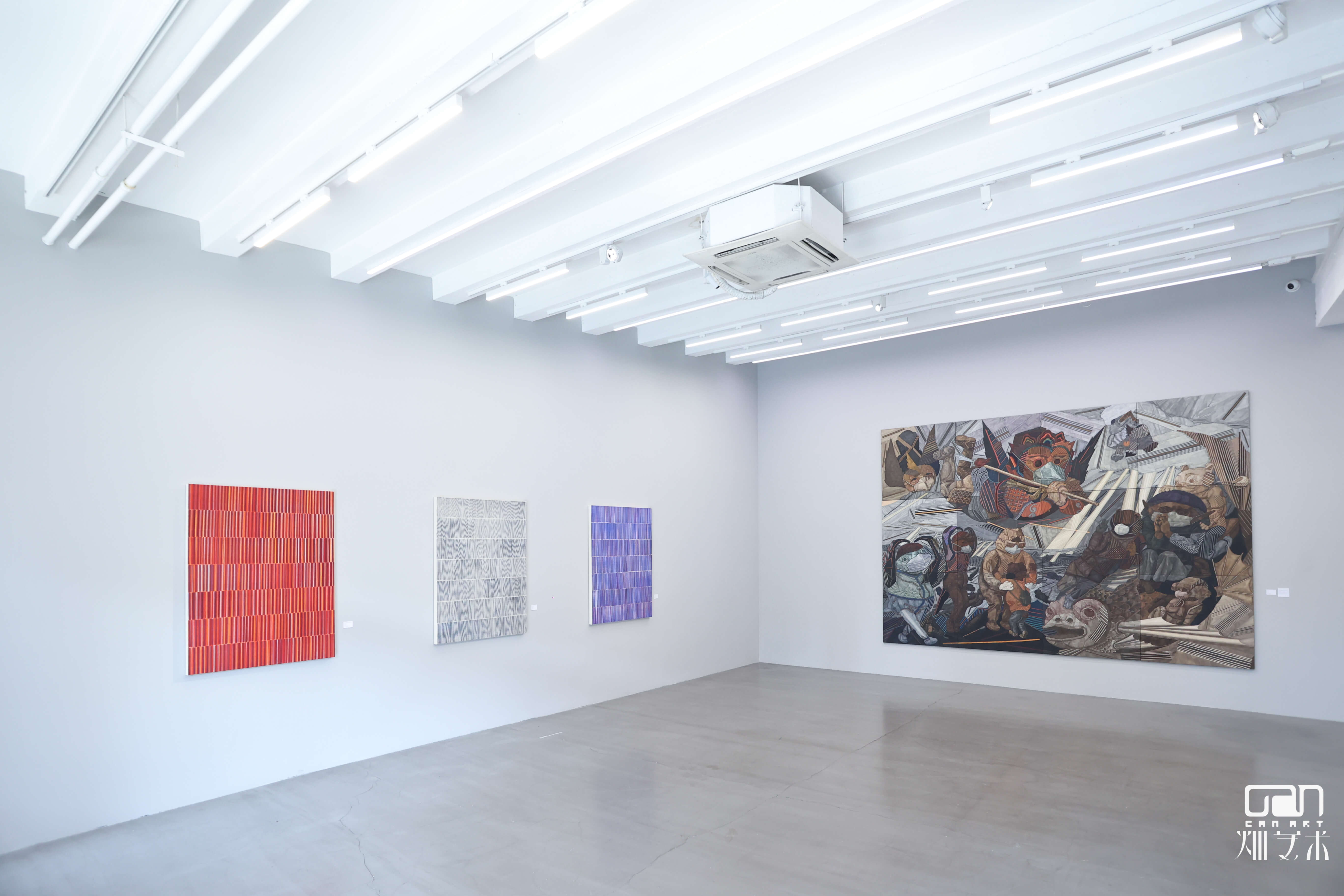
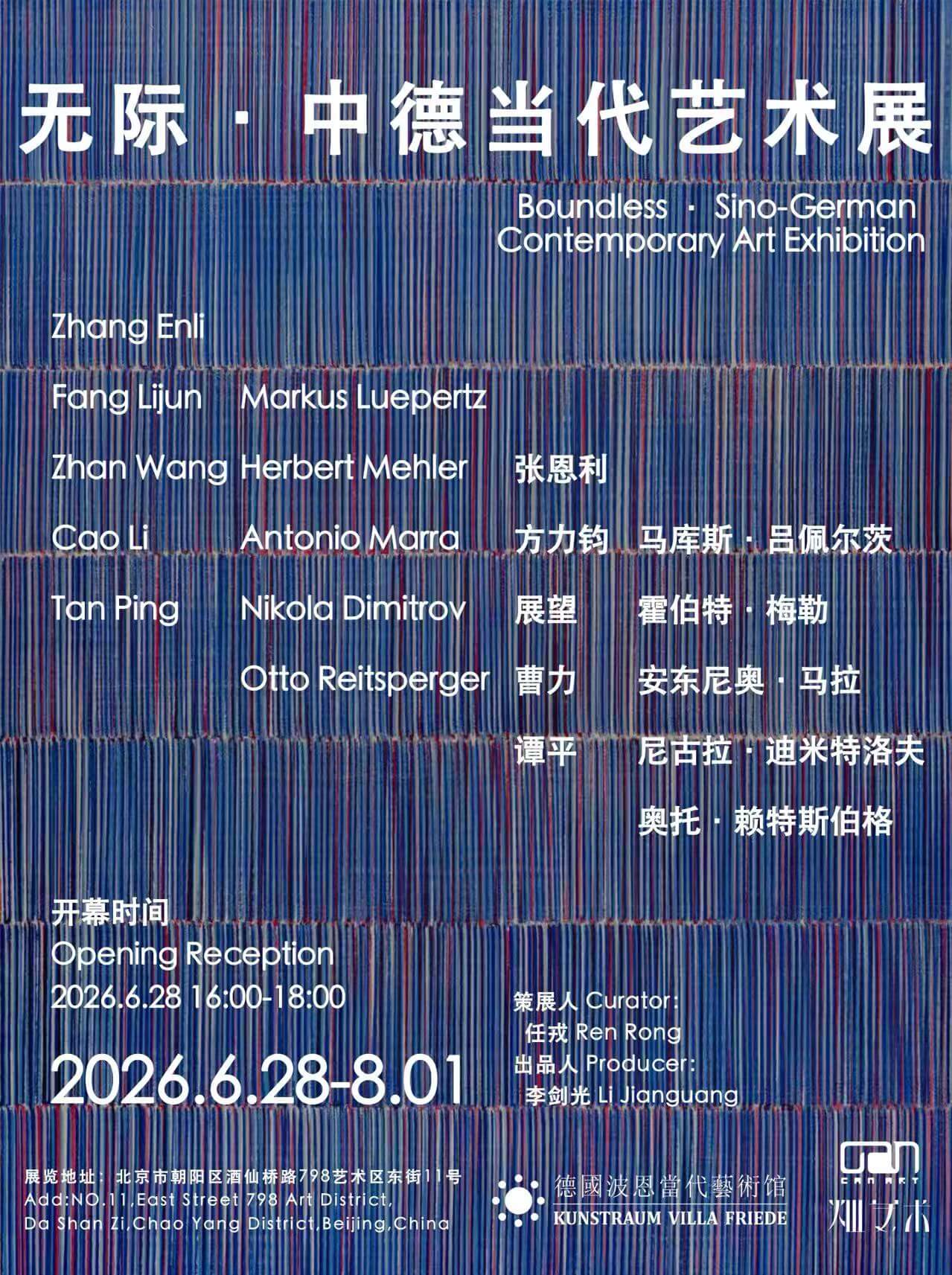
On June 28, 2026, the Can Art Center in Beijing's 798 Art District will present "Boundless: Contemporary Art from China and Germany" (Ohne Grenzen: Zeitgenössische Kunst aus China und Deutschland), produced by Li Jianguang and curated by Ren Rong. The exhibition is a joint effort between the Can Art Center and the Bonn Museum of Contemporary Art, showcasing works by ten Chinese and German artists: Zhan Wang, Zhang Enli, Cao Li, Tan Ping, Fang Lijun, as well as Herbert Mehler, Antonio Marra, Nikola Dimitrov, Otto Reitsperger, and Markus Lüpertz. The exhibition will run until August 1.
What is “boundless”? It is not merely about transcending national borders, schools of thought, or conceptual boundaries, but also signifies a broader way of seeing. The ten artists in the exhibition were born between the 1940s and 1960s, and they have been deeply engaged in long-term practice rooted in their respective clear art historical coordinates: some adhere to the essence of painting, some move from everyday objects to the boundaries of abstraction, some constantly reshape the relationship between sculpture and space, and others construct new visual order in color, line, and field.
When we temporarily set aside various labels, what truly forms between the works is not a simple dialogue, but a diverse visual experience generated by different historical backgrounds. This is precisely the most important meaning of "boundless".
Part One: A Surreal Mental Dialogue
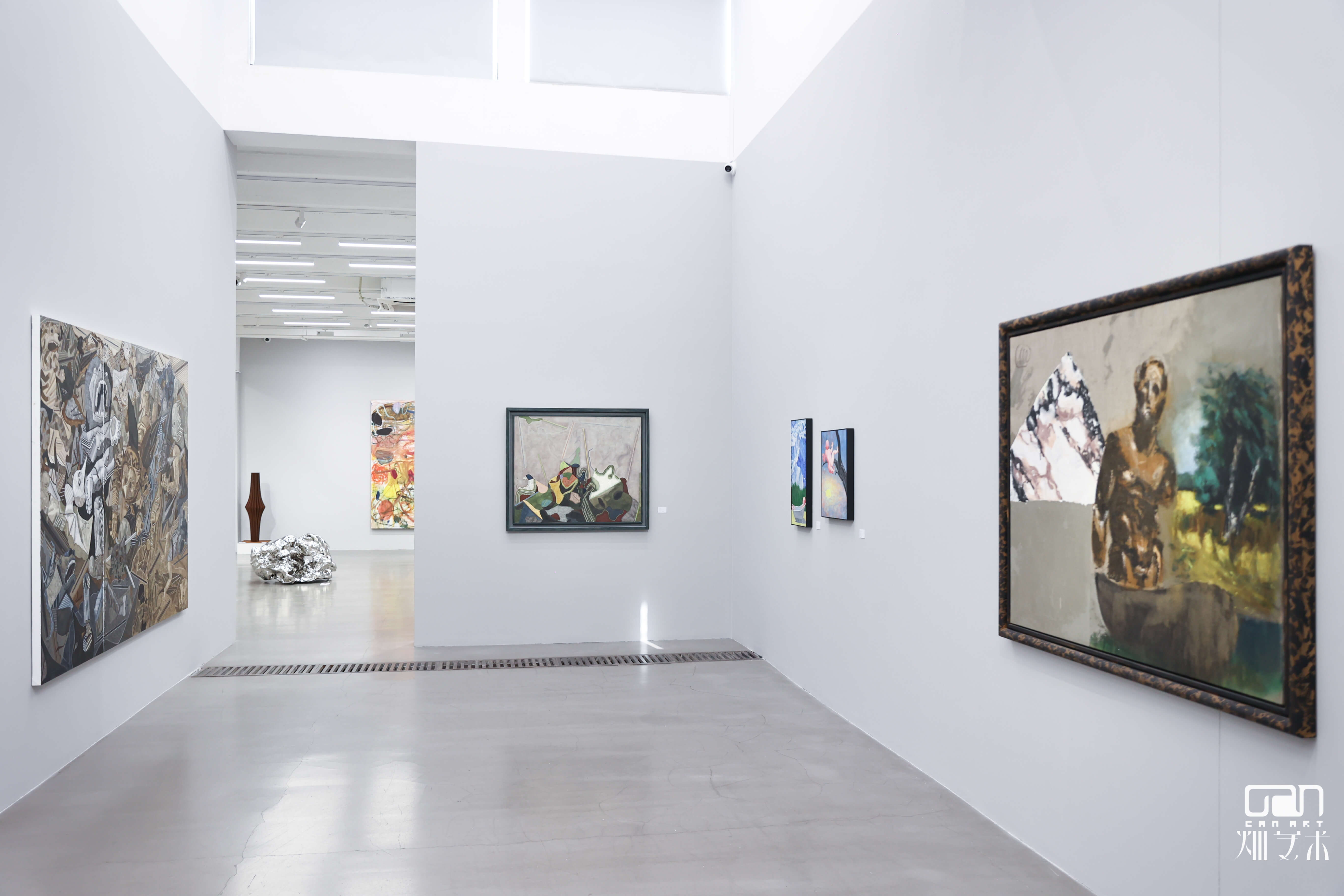
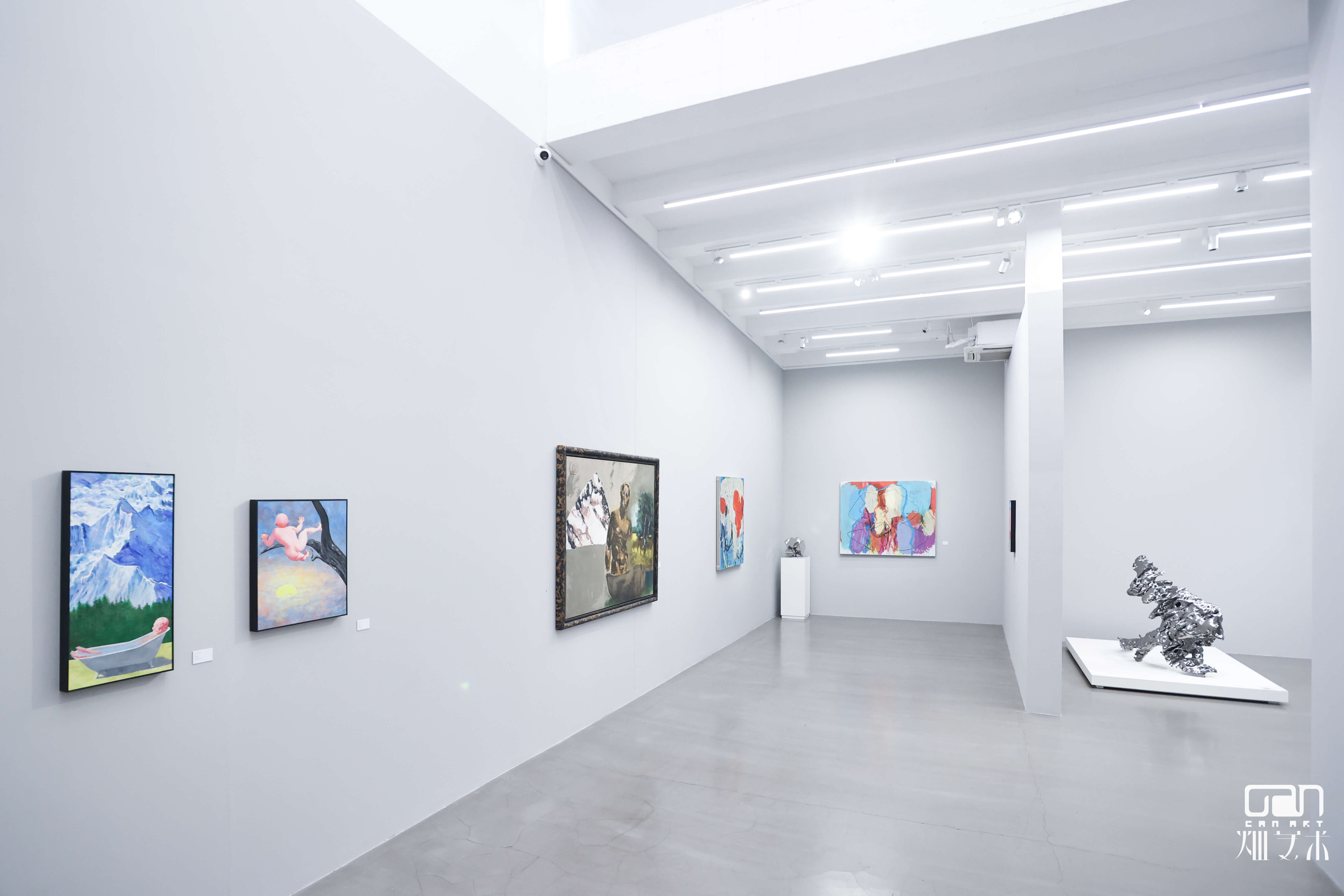
Markus Lüpertz's "Ulysses" and Fang Lijun's "2025" form a highly tense correspondence in the exhibition. The two artists are twenty-two years apart and come from two completely different historical contexts, yet they both coincidentally push figurative images to a surreal spiritual dimension.
Marcus LüpertzHe is one of the most iconic figures of German Neo-Expressionism, and served as the director of the Düsseldorf Academy of Fine Arts for over twenty years. His paintings, sculptures, and prints are widely collected by major institutions worldwide, including the Museum of Modern Art (MoMA) in New York and the Tate Modern in London. His work consistently unfolds between classical archetypes and contemporary experiences, characterized by rich colors and rough brushstrokes.
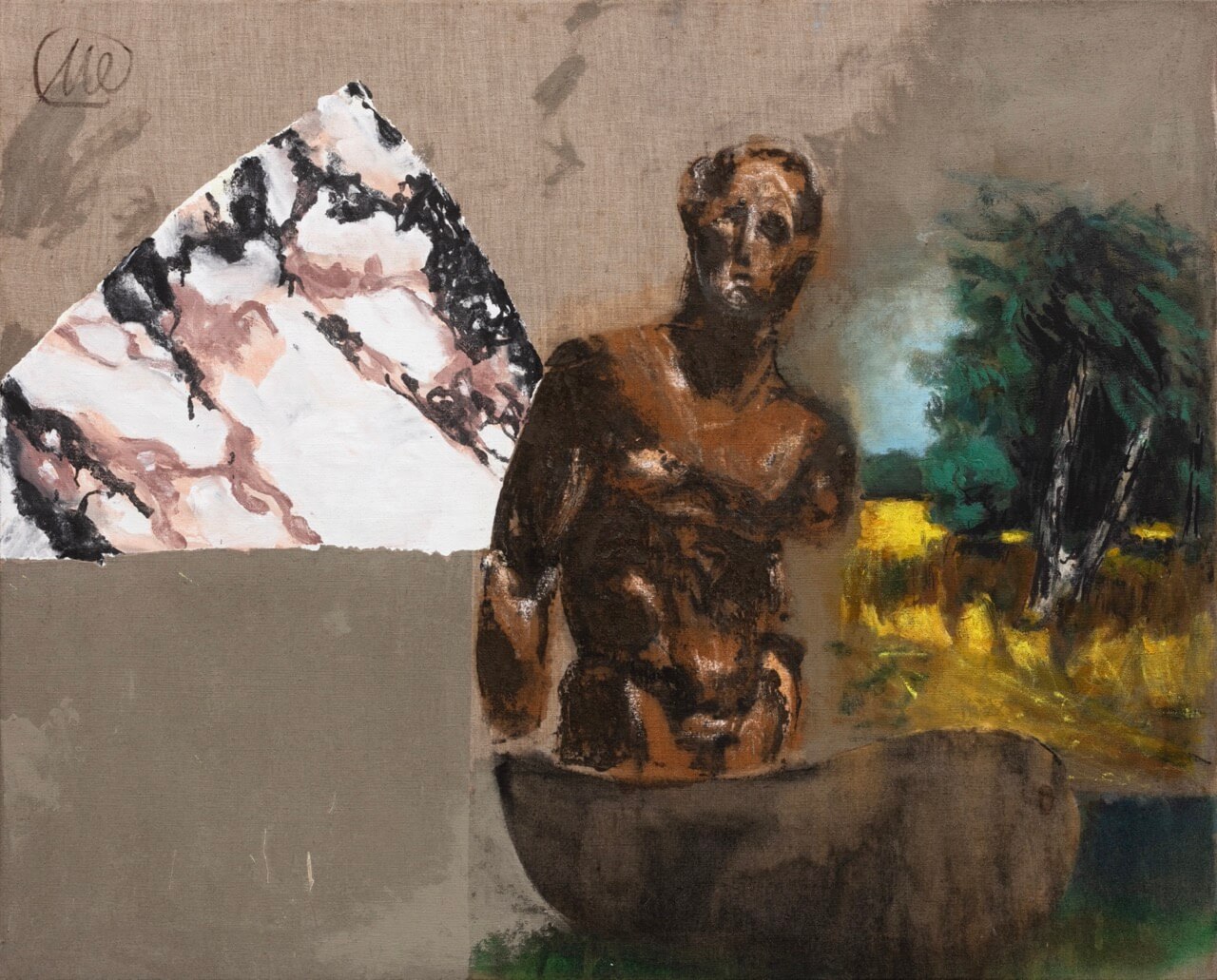

In "Ulysses," a bronze classical statue sits serenely in the center of a wooden boat. To the left, triangular shapes intertwine with black, white, and pale pink blocks, while to the right lies a landscape of dark green trees and yellowish-green meadows. The figure, the boat, the geometric shapes, and the natural scenery are juxtaposed in the same scene, all pointing to the ancient epic motif of "wandering and homecoming." Created when he was seventy, Lüpertz uses multiple layers of mixed media to build a rich texture, transforming the enduring themes of memory, wandering, and homecoming from classical literary narratives into a contemporary visual structure.
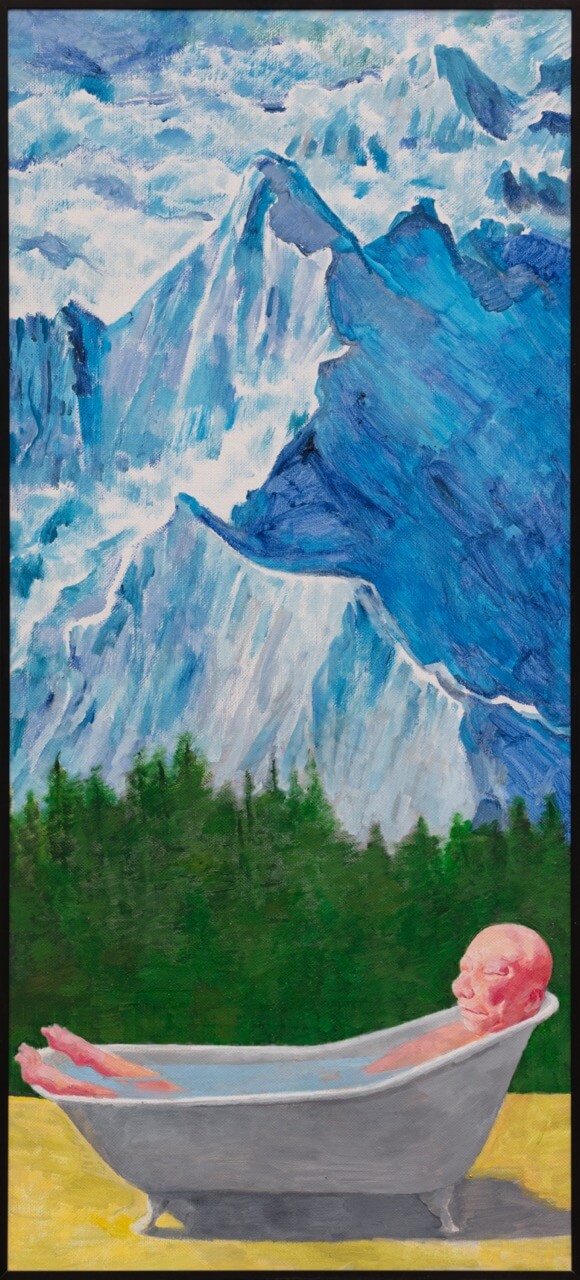
Fang LijunHe is an important contemporary Chinese artist, and the bald image that appears repeatedly in his works has become one of the most recognizable visual symbols in contemporary Chinese art. "2025" adopts a narrow format: a bald figure with closed eyes lies relaxed in a gray bathtub, with a green forest in the background and a cold blue and white snow mountain in the distance.
Bathtubs, forests, and snow-capped mountains are placed in the same frame, creating an illogical yet serene scene. The figures seem to simply remain quietly within it, existing in an almost detached manner. The work continues Fang Lijun's consistent sense of absurdity: individuals face reality and coexist with it through silence, relaxation, and self-preservation.
Part Two: Cross-Cultural Dialogue in Metal Sculpture
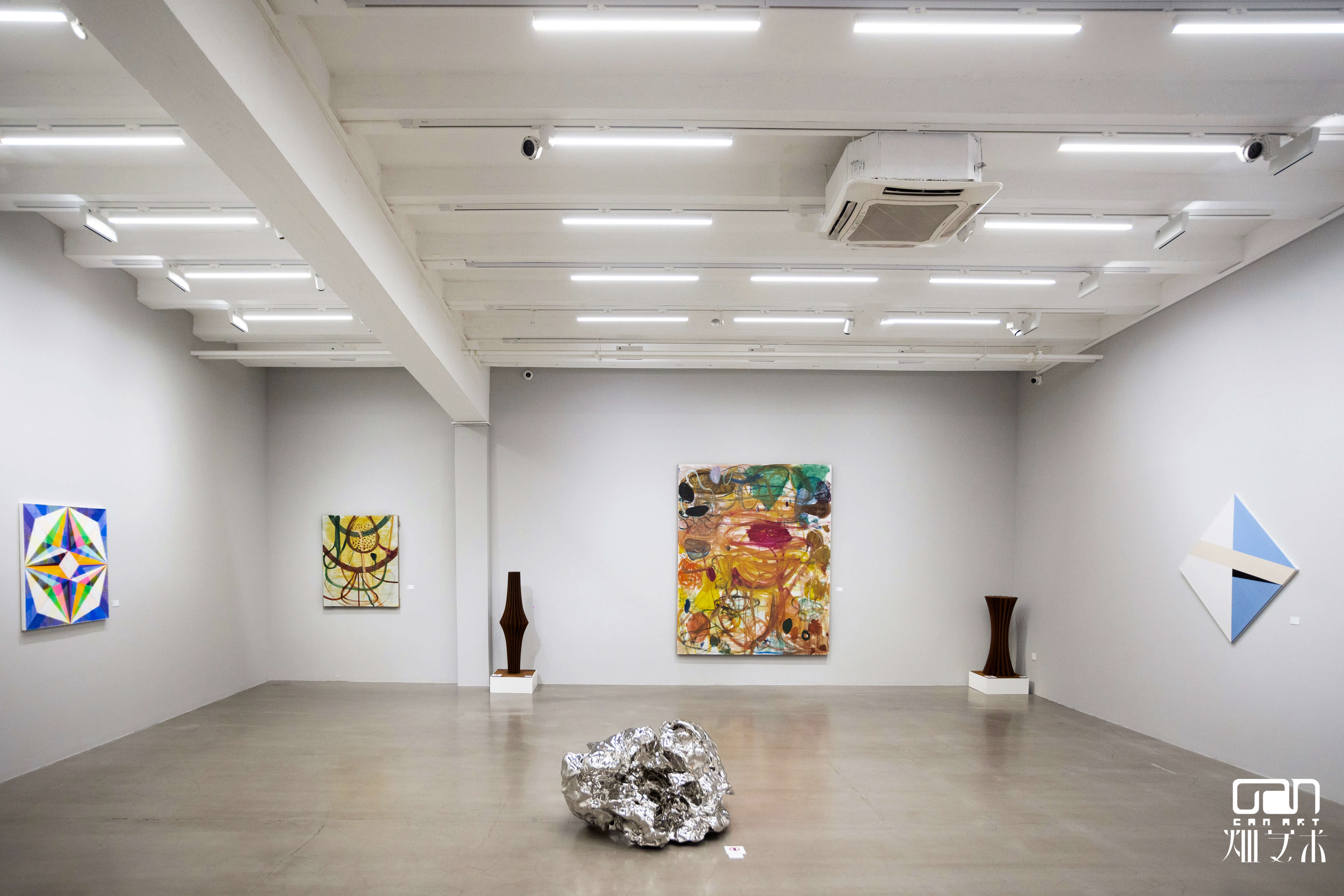
The exhibition features two metal sculptures, Zhan Wang’s “Artificial Rock 162#” and Hobert Mailer’s “SPOLA”, which together form a cross-cultural dialogue about “how objects take shape”.
OutlookHe is one of the most important representatives of contemporary Chinese sculpture. His "Artificial Rocks" series, created over nearly thirty years, uses stainless steel to replicate the form of Taihu stones, constructing a unique path from traditional literati aesthetics to a globalized contemporary vision. He has held solo exhibitions at the Asian Art Museum of San Francisco and the Tate Modern in Liverpool, and his works are permanently collected by the Metropolitan Museum of Art in New York and the Tate Modern in London, among others.
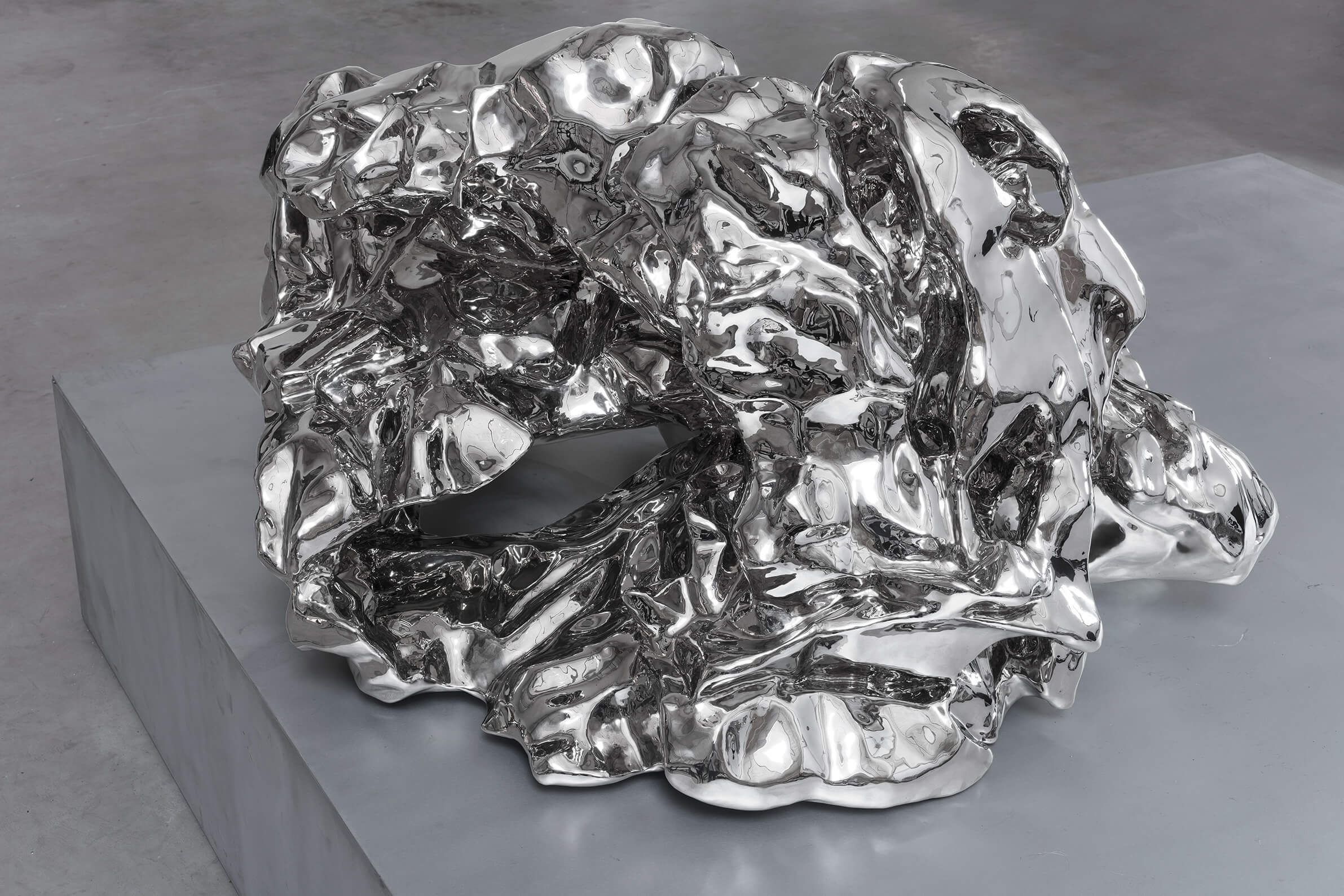
"Artificial Rock 162#" recreates the form of a natural Taihu rock using mirrored stainless steel. The traditional appreciation of stones, emphasizing "wrinkles, holes, leanness, and transparency," is transformed into a smooth, hard, and reflective metallic surface. The wrinkles, holes, and undulations of the original stone are meticulously preserved, and the material has shifted from rough stone to bright stainless steel, thus creating a strong visual effect.
The "Artificial Rocks" series is Zhan Wang's reinterpretation of this classical literati image using contemporary materials. Taihu stones originally belonged to gardens and studies, embodying the imagination of nature, landscapes, and spiritual dwelling in traditional Chinese aesthetics. Artist Zhan Wang brings them into contemporary exhibition halls, urban spaces, and the global art context, transforming "artificial rocks" from merely a traditional cultural symbol into a contemporary sculptural medium for discussing the relationship between nature and artifice, and between the classical and the modern. This work, created in 2016, also represents a mature aspect of the series in terms of form and material language.
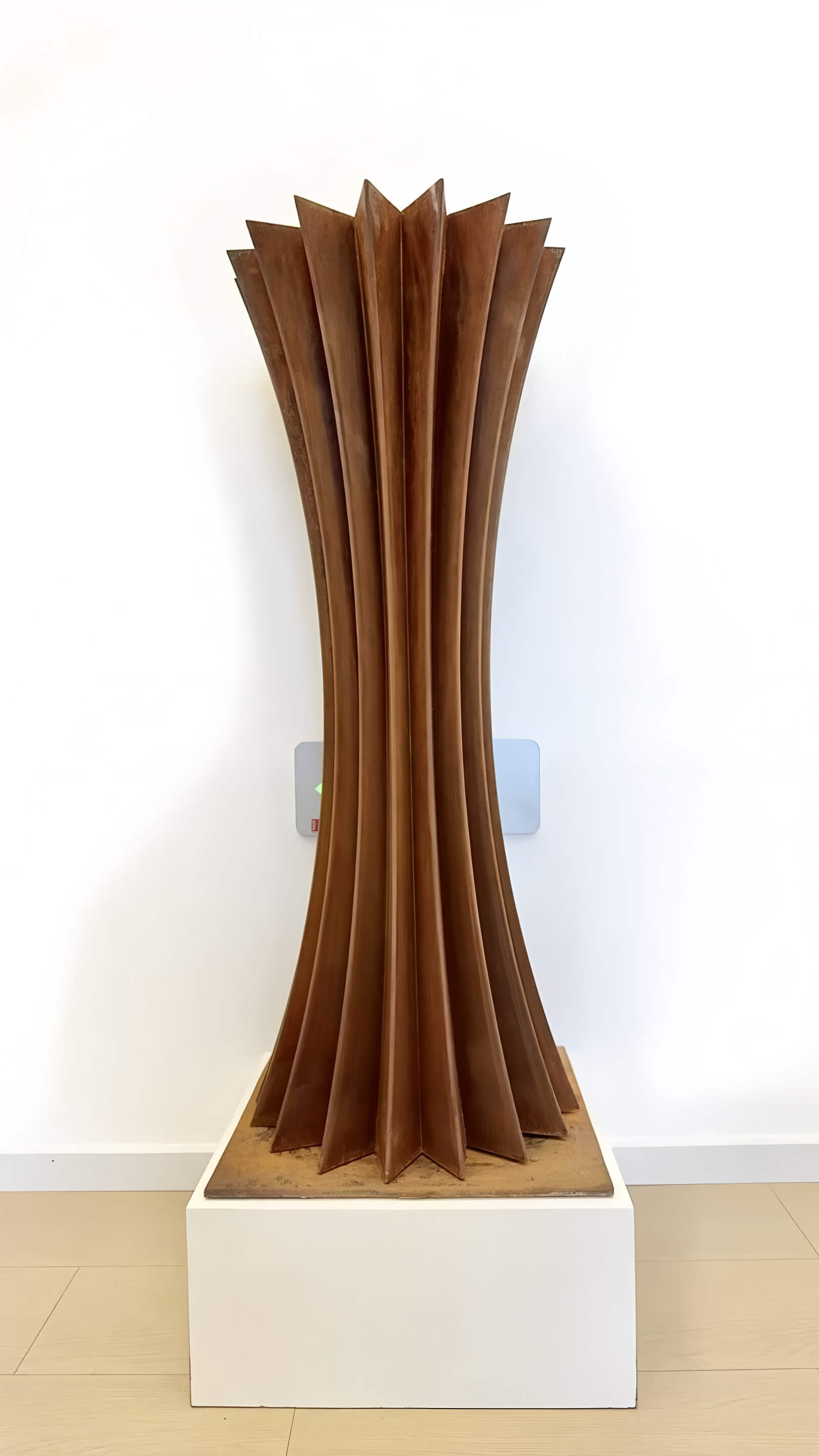
Hobert MailerHe is a highly individualistic artist in contemporary German sculpture, often using weathering steel as his medium. His works are collected by the Bonn Museum of Contemporary Art, numerous public art institutions in Germany, and important private collectors. He transforms steel plates through industrial processes such as cutting, bending, and welding, creating organic life forms within the cold industrial material.
"SPOLA" is composed of multiple curved steel plates, unfolding outwards from the center like petals. The middle section of the work is tight, while the two ends are relaxed, resembling a metal flower in bloom. The warm brown oxide layer on the weathering steel surface brings out a warm texture similar to terracotta and bronze as the light changes, making this sculpture always in a dynamic "growth" state in practice.
Part Three: Abstract Paths
The exhibition presents a rich dialogue between abstract and conceptual paintings. They represent different paths of abstraction: there are radiating structures with optical geometry, architectural constructions with hard-edged color fields, linear textures with synesthetic density, and poetic abstractions that originate from biological forms.
Zhang EnliHe is an important contemporary Chinese painter. After 2000, he often used everyday objects such as buckets, cardboard boxes, empty rooms, and pipes in his paintings, developing a calm and delicate painting language that bridges the figurative and the abstract. He has participated in the Venice Biennale's main exhibition, and his works are collected by institutions such as MoMA and Tate Modern.
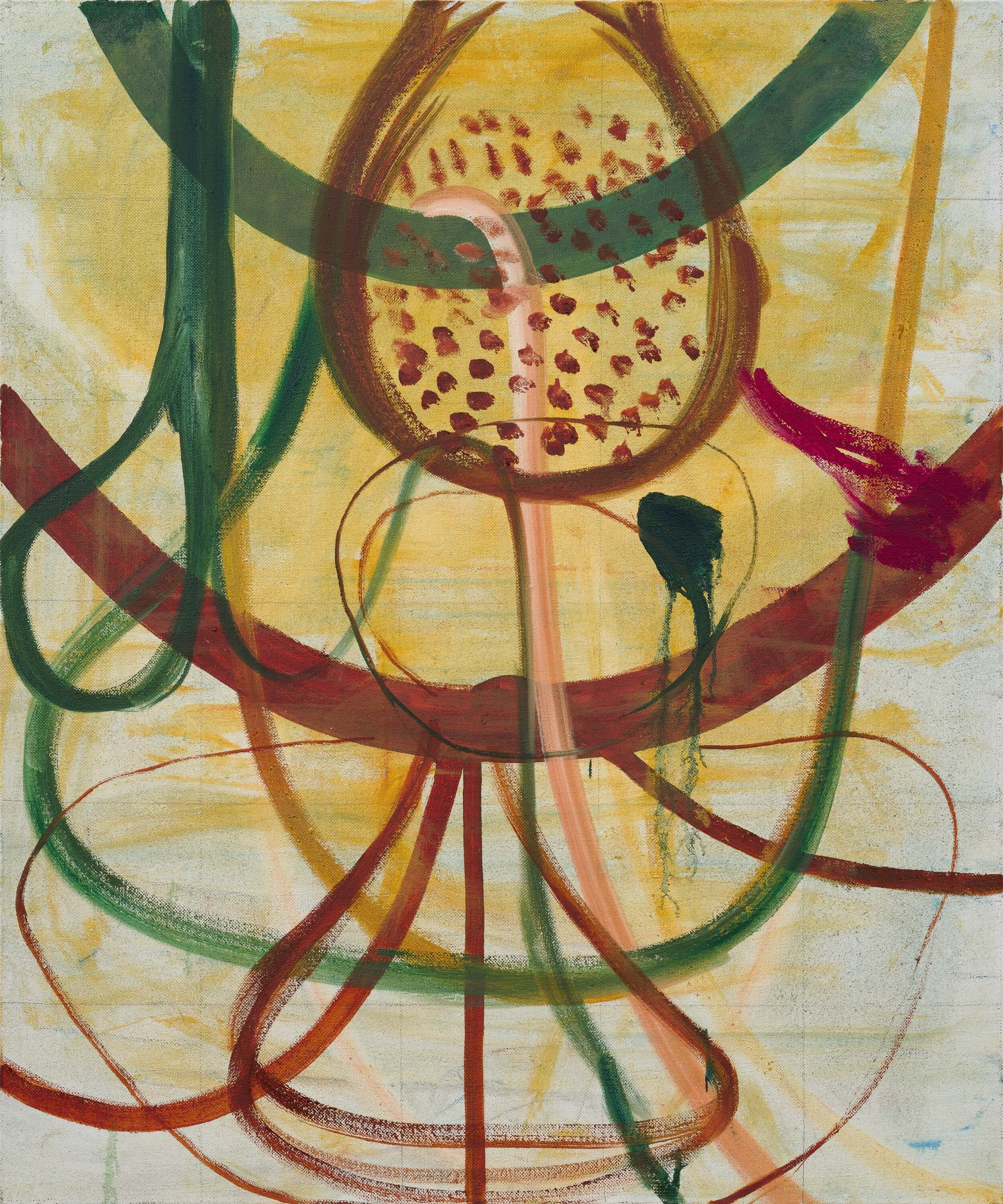
"The Conversationalist" (2025) uses a soft gray-yellow-green background, with multiple layers of curved lines and circular outlines intersecting within the painting. Dark green curves cascade down from above, while ochre lines delineate circles of varying sizes. Tiny red dots are scattered within the ochre circle at the center of the painting, reminiscent of plants, flower stamens, or magnified living organisms. A touch of magenta on the right and the dripping dark green traces below add a striking sense of body and life to the painting.
The title, "A Person Skilled at Conversation," seems to suggest a figure or a relationship, but the painting doesn't present a clear image. Zhang Enli pushes recognizable objects towards ambiguity and openness, so that the work no longer tells a specific narrative, but rather forms a quiet exchange between color, line, and form. This subtle openness is precisely the most recognizable aspect of his paintings in recent years.
Cao LiA unique figure in contemporary Chinese art, after graduating from the Central Academy of Fine Arts in the 1980s and remaining there to teach in the mural painting department, he transcended the binary framework of realism and conceptual art, integrating the primitive memories of ethnic minorities in Southwest China, the narratives of Dunhuang murals, and the experience of survival in the desolate urban environment to form a unique painting language. His paintings are characterized by rich colors, densely arranged figures, and arrays of figures and animals that combine multiple qualities of folk New Year paintings, ancient murals, and exotic perspectives.
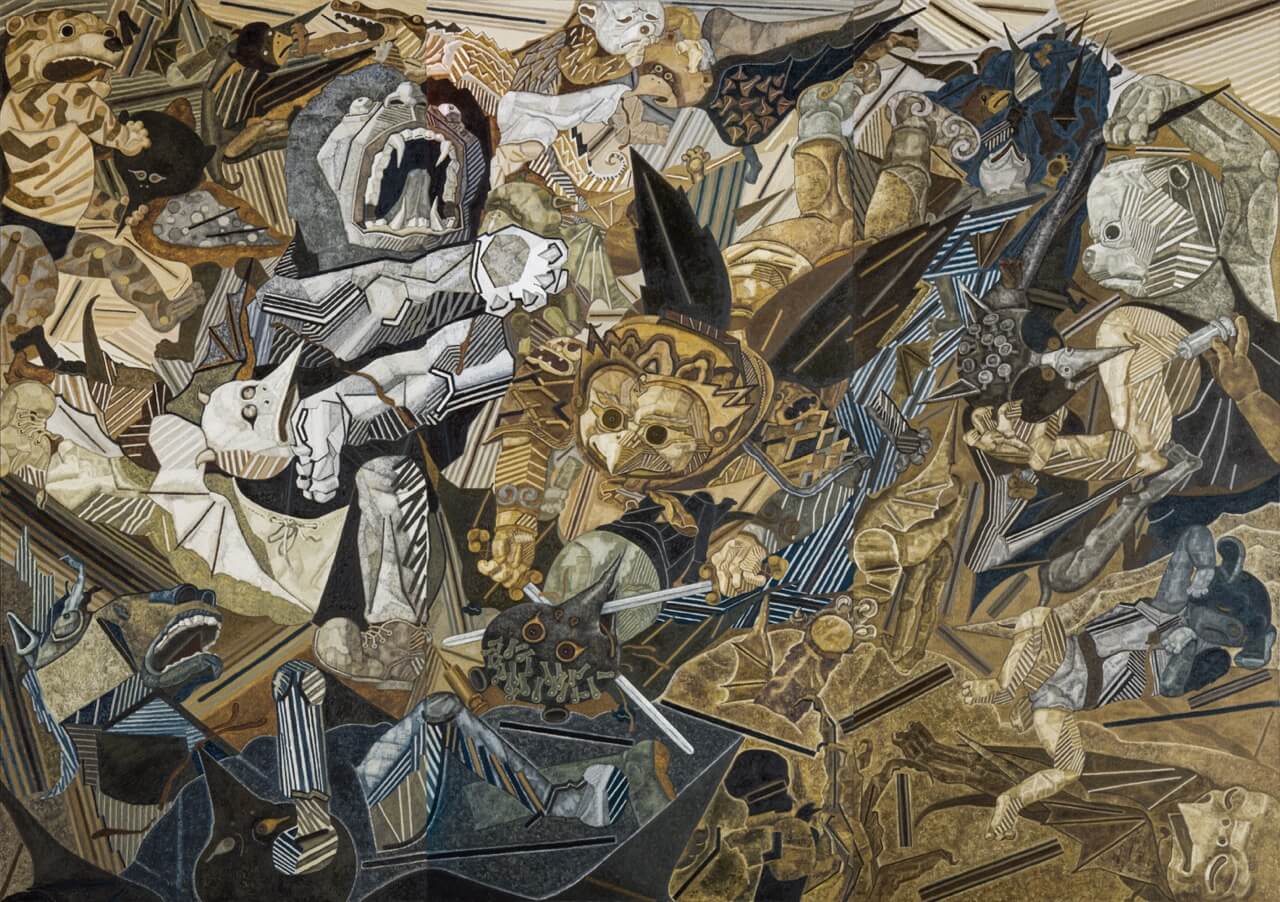
"Heroes" infuses the exhibition with the power of Eastern folk epics through its oversized format: at the center of the painting is a warrior with an exaggeratedly enlarged face and an open mouth, his long howl piercing through time and space; all around are densely packed figures of various kinds, armored warriors, beast-faced walkers, and weapon-wielding fighters, each with different forms, some faces covered with animal patterns, and bodies filled with geometric patterns. All the figures are compressed into a single plane, permanently freezing an endless war. Ochre, ochre, and gray-brown tones bring a sense of weight to the painting, while deep blue and black lines continuously divide the figures and body shapes.
Cao Li did not portray the "hero" as a singular individual figure, but rather placed him within a complex visual world filled with mythology, war, and folk memories. It is precisely within this dense and rugged pictorial structure that the work presents a power that lies between ancient narratives and contemporary painting.
Tan PingHe is a significant representative of Chinese abstract art and a creator with backgrounds in artist, educator, and printmaking. A graduate of the Printmaking Department of the Central Academy of Fine Arts, he later studied in Germany and served as Dean of the School of Design and Vice President of the Central Academy of Fine Arts. For decades, he has consistently sought his own approach between Chinese and Western abstract languages: absorbing the structural consciousness of Western minimalism and abstract painting while retaining the sensitivity to blank space, traces, and atmosphere inherent in Eastern aesthetics.
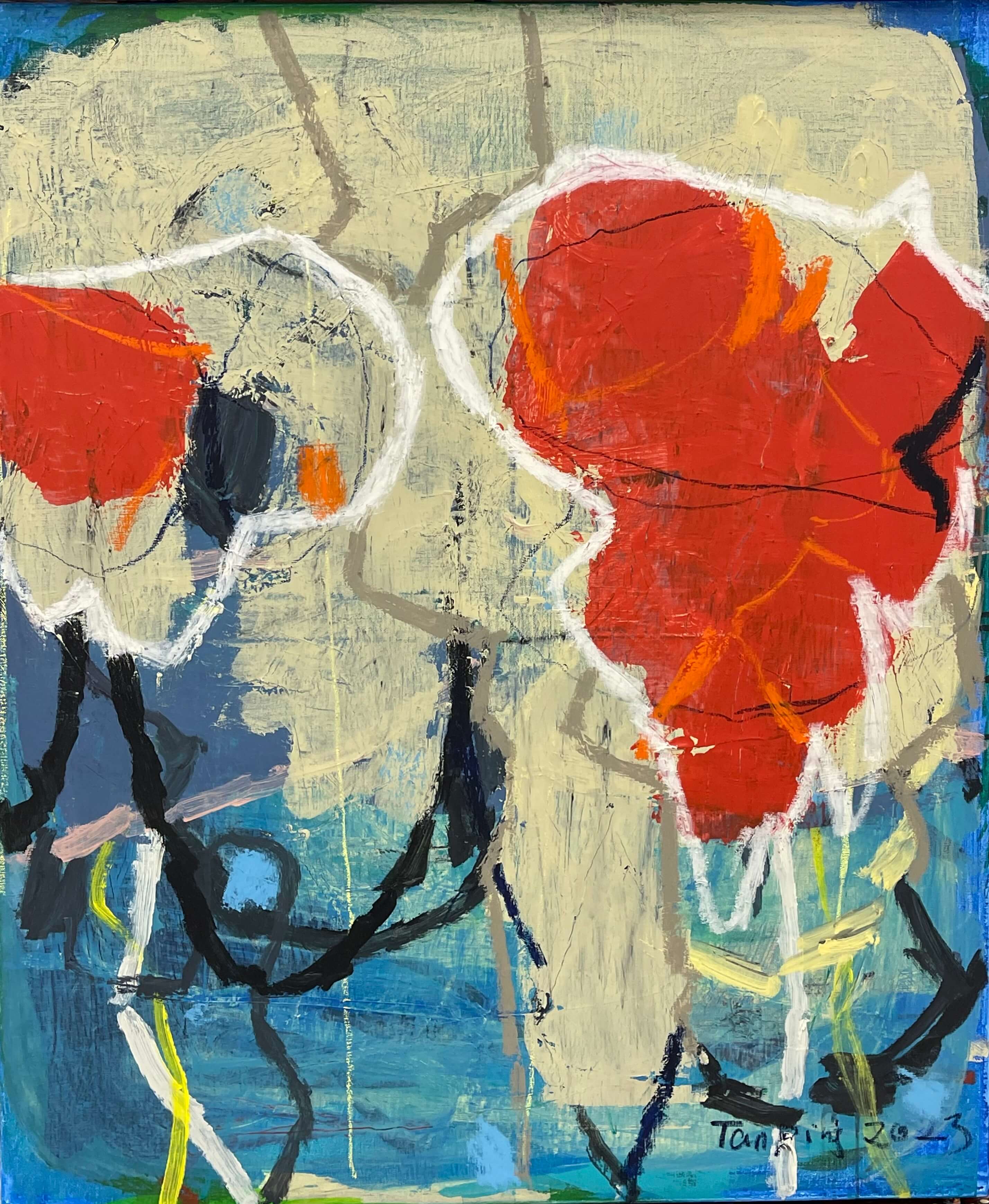
From "covering" to "traces," Tan Ping's work has always revolved around the act of painting itself. His early works were characterized by restraint, subtraction, and a sense of order, while in recent years he has gradually released freer brushstrokes and color relationships. In *Untitled* (2023), two red organic forms are outlined with thick white lines, while the beige background retains clear brushstrokes and pigment layers; in the lower blue area, black curves move freely, interspersed with delicate yellow lines. The painting no longer pursues extreme calmness and compression, but unfolds space between control and chance, making abstraction not merely a formal structure, but also a presentation of emotions, time, and bodily traces.
Otto ReitersbergHe was an important artist within the German Concrete Art and Hard-Edge Painting tradition. His works are characterized by clear color boundaries, rigorous geometric structures, and a calm pictorial order. However, within this highly rational composition, the artist did not completely eliminate the traces of handcraft; those subtle deviations and rhythmic variations make the painting not merely a geometric formula, but also retain the warmth of the viewer.
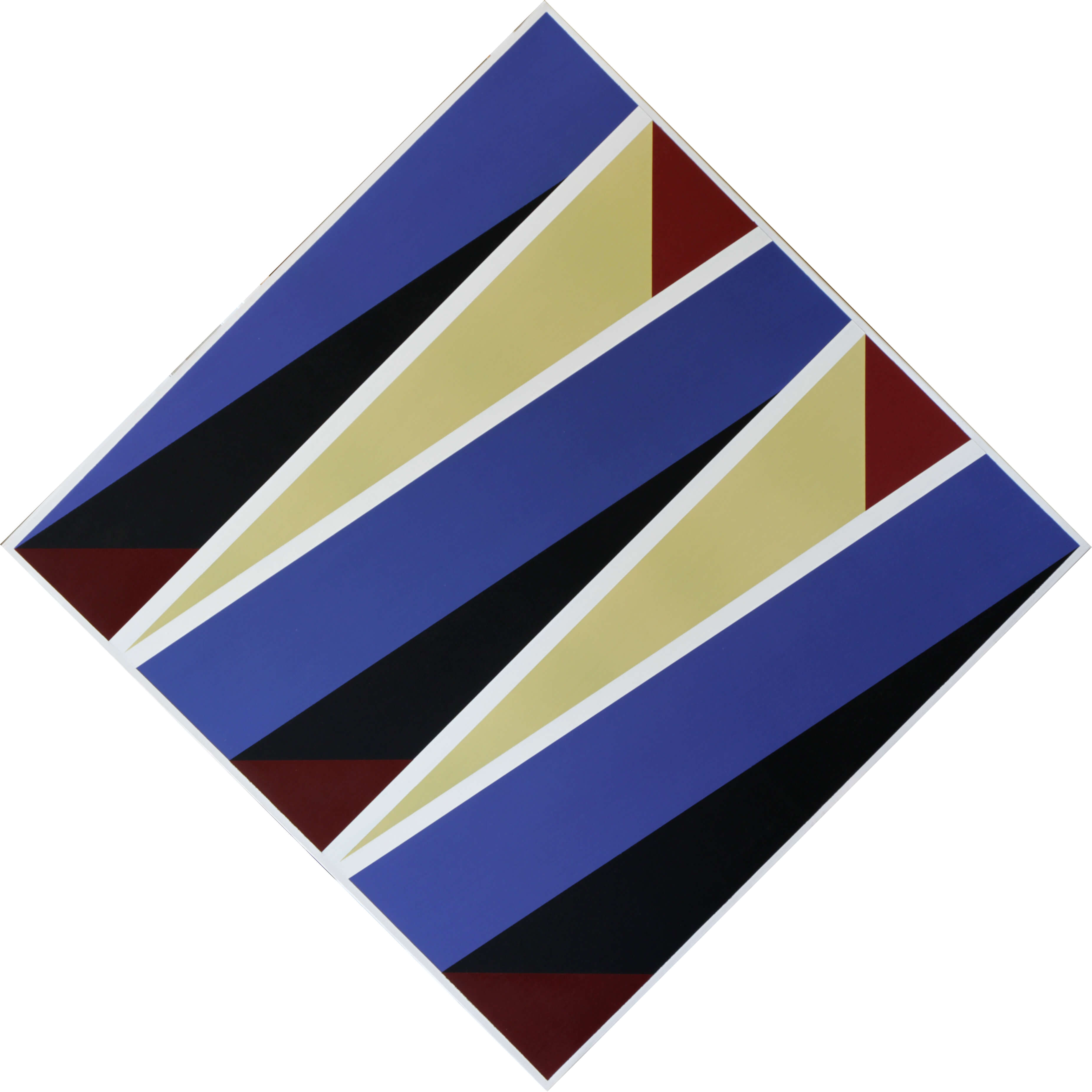
"A5) RB 2018-27, Precision Concrete" features a deep blue rhombus as its main element, with several parallel, diagonal bands of color unfolding in a unified direction, creating a stable and clear pictorial structure. The burgundy triangle is the most striking variation in the image, breaking the stable structure of the blue rhombus and adding a touch of breath to the rigorous geometric order. Wright's work does not tell a story, but rather establishes a quiet and rhythmic relationship of viewing between color, boundaries, and structure.
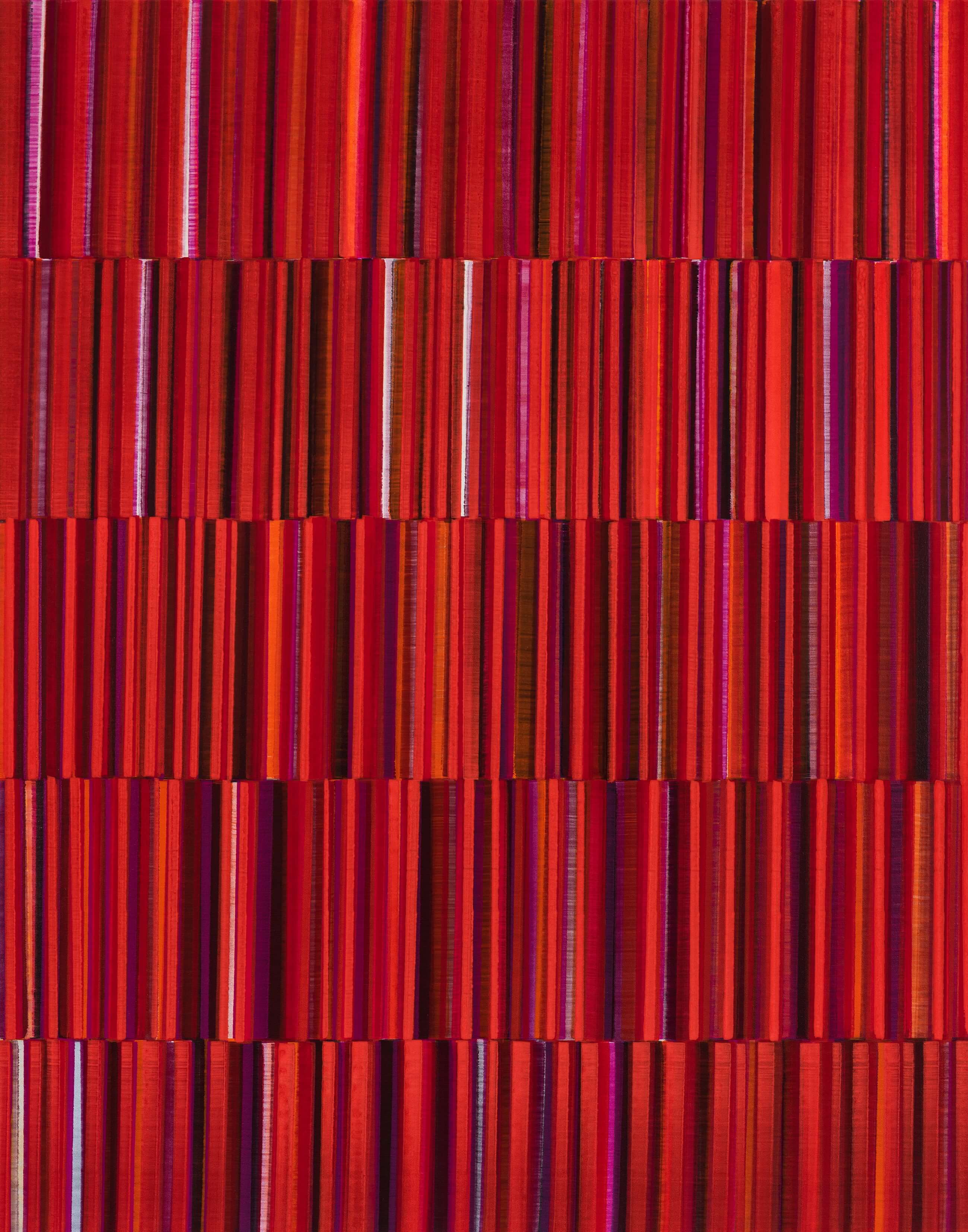
Nikolai DimitrovHis work revolves around the concept of "KlangRaum (sound space)," attempting to establish a connection between painting and music, sight and hearing. He repeatedly layers acrylic paint, using vertical brushstrokes to subdivide the colors, allowing the artwork to create layers and rhythms like sound. For him, color is not merely a visual element, but also a space that can be perceived and heard.
"KlangRaum Sound Space V" is composed of numerous vertical bands of color, with scarlet, brick red, magenta, and ochre transitioning layer by layer across the canvas. From afar, it appears as a vibrant field of red; upon closer inspection, the thickness of the paint, the boundaries of the brushstrokes, and subtle color variations become increasingly apparent. The vertically arranged bands evoke organ pipes, or perhaps a stretched waveform of sound. Dimitrov transforms red into a rhythmic and immersive masterpiece through repetitive painting techniques.
German-Italian painterAntonio MaraHe combines the visual effects of Op Art with geometric composition, creating a distinctive personal language that blends precise structure with highly saturated colors. He often uses mixed media on the canvas, creating a constantly shifting visual effect that changes with the viewing angle through layering, line arrangement, and color gradations.
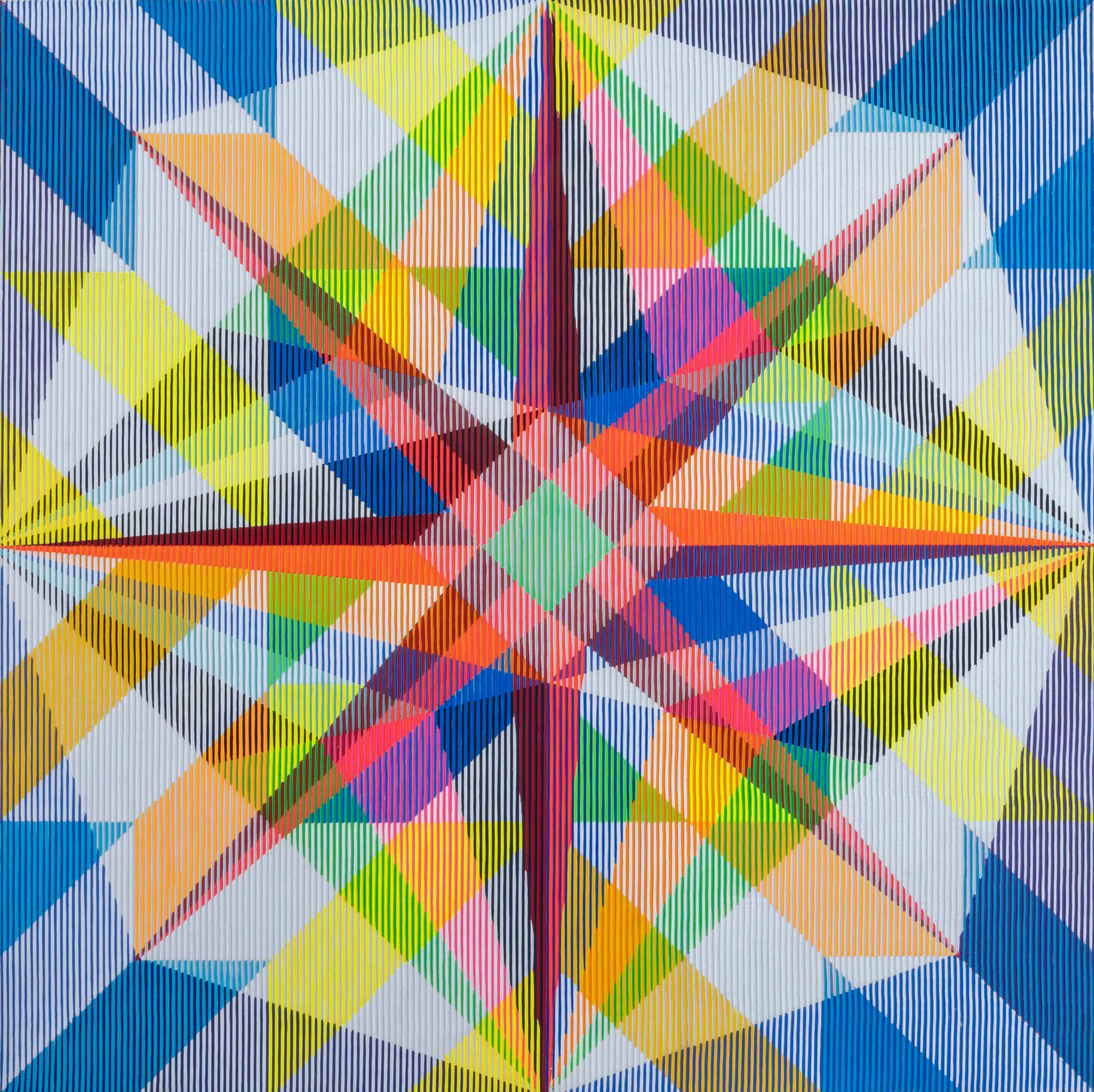
"No Time for Tralala" unfolds on a square canvas, with dense vertical lines radiating outwards from the center, and highly saturated triangular color blocks forming a star-shaped structure. The image appears to have been calculated by digital algorithms, but it actually relies on hand-controlled line thickness, spacing, and color transitions. The title carries a lighthearted humor, while the artwork itself is like a visual activity driven by lines, colors, and the viewer's gaze: the viewer doesn't need to search for a narrative, but simply enters into it with the rhythm of the image.
This section is an open and diverse abstract dialogue. In the works of the six artists, we can see that abstraction is never a single, fixed style label, but a vehicle for preserving perception and recording traces of thought.
Conclusion: Fluid Boundaries, Boundless Symbiosis
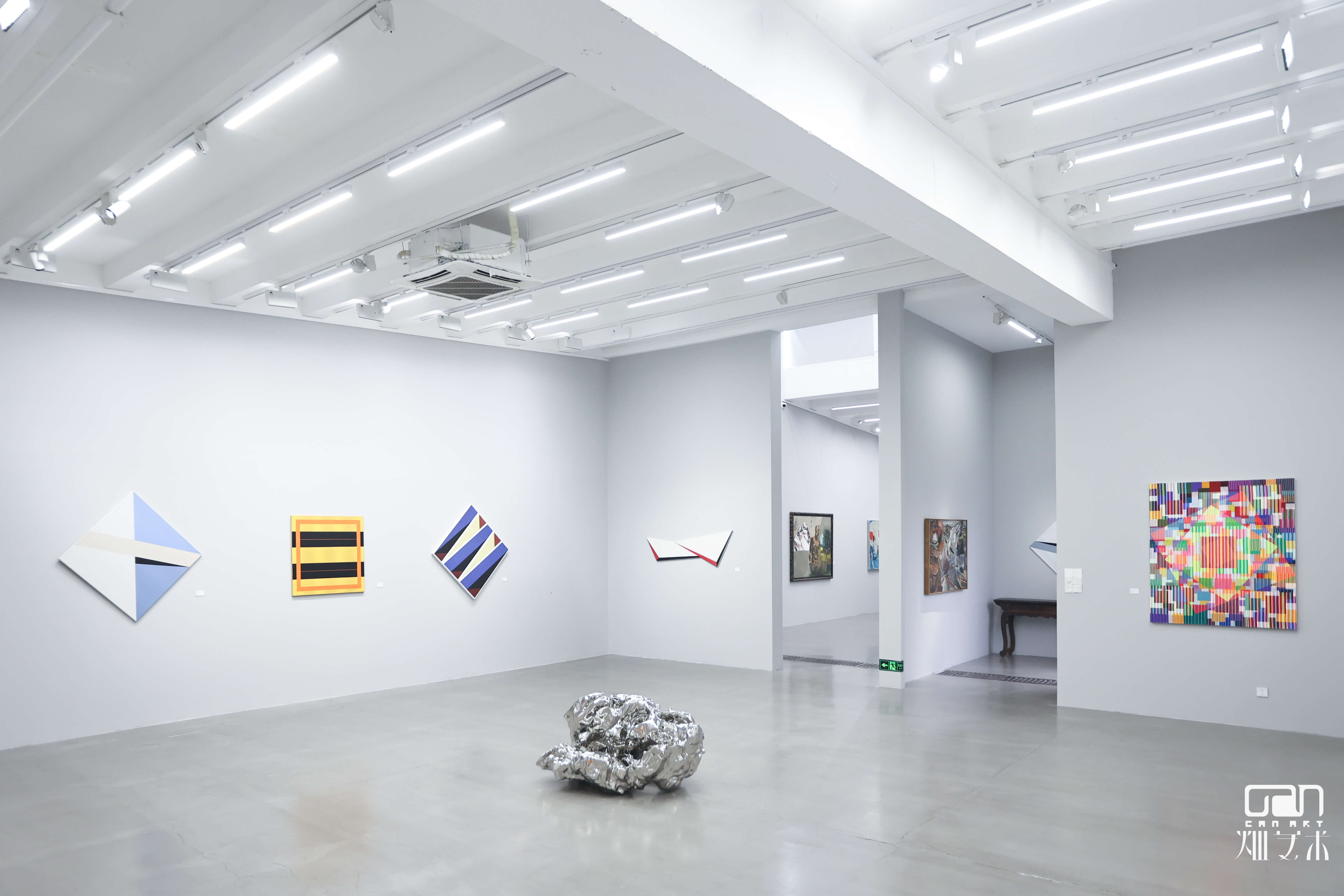
The ten artists of "Boundless" are rooted in two completely different historical contexts in China and Germany, forming a single, continuously growing art scene within the 798 Art Space.
The contemporary artists in this exhibition question their identities amidst social changes, revealing themselves through their distinct visual languages. Painting, sculpture, and space resonate with each other, collectively constructing the complete meaning of "boundless".
Boundaries have never completely disappeared, and the vitality of art is born on these flowing and merging boundaries.
Stay tuned to ArtPro for the latest updates on the global art market.