
International young graffiti artist Yi Que's exhibition and academic seminar focus on the trend of Chinese contemporary art
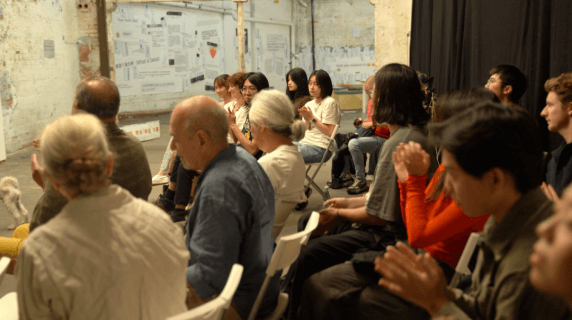
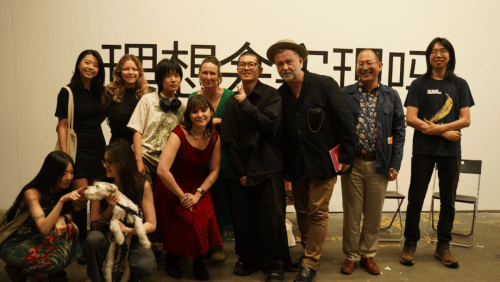
On August 4, 2024, a solo exhibition by Chinese artist Yi Que, supported by Professor Gerstenberg, Chairman of the Judith Nelson Foundation of the University of New South Wales, opened at UglyDuck, a well-known experimental space in London, UK. The exhibition reviewed the historical creations of artist Yi Que and held an academic discussion on the work "East London Socialist Core Values - The Movement of the opposite" created by Yi Que on August 4, 2023 on Graffiti Street in East London, UK a year ago.
Guests attending the conference include the Foundation’s Chairman Supporter, Professor at the University of New South Wales, Distinguished Honorary Fellow of the British-Chinese Humanities Alliance and Tsinghua University in Beijing. Professor Gerst, co-editor of the book series “Contemporary East Asian Visual Culture, Society and Politics”. Dr. Kate Hill, Director of OCCA Art Museum, a senior curator and educator in the field of contemporary Chinese art and Chinese diaspora art. Dr. Bao Hongwei, Associate Professor of Media Studies at the University of Southampton and Co-Director of the Center for Critical Theory and Cultural Studies. Yi Quehe, a well-known Chinese artist, and Chief Curator Tadiana Martinez, who obtained a master’s degree in art history and visual culture from American International University Richmond, also participated.
Curator Tatiana Martinez Collevati:We are about to start our group discussion and our professor, Gerst, would like to say a few words first.
Professor Gerst:I just wanted to say a few words of thanks. My name is Paul Gladston and I am Professor of Contemporary Art at the University of New South Wales (UNSW). I am delighted to be able to use part of our endowment to support this exhibition and the work that goes with it. There are a few people in particular I would like to thank. First of all, of course, is Yique, who is the featured artist for this exhibition and with whom I worked closely throughout the process. I would also like to thank the curatorial team, including Tatiana, Dandan, Marie and NickTariah, the social media specialists for this exhibition, and a large number of people who have played different roles in the exhibition. Please don't feel left out if I don't mention your name, my gratitude goes out to you.
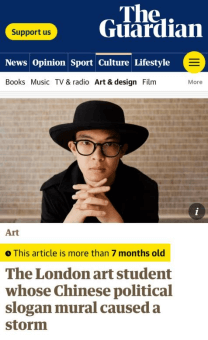
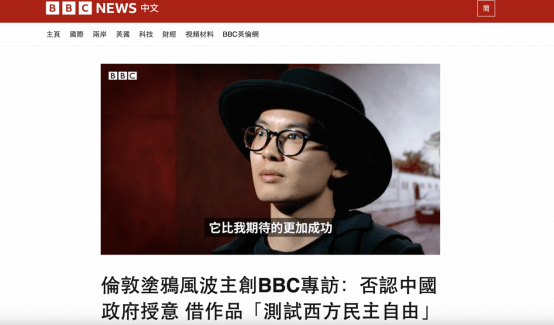
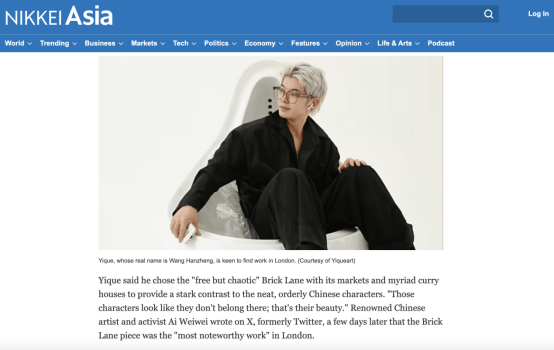
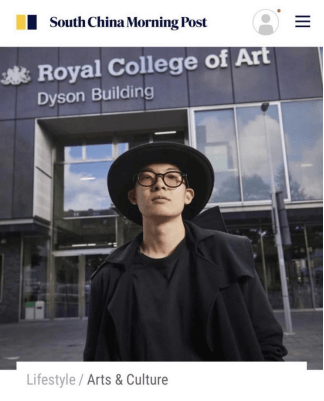
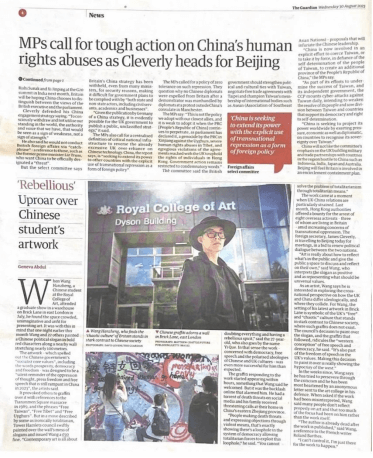
I think the exhibition not only met my expectations, but also fully achieved my goals in terms of space and presentation of the works. We had been hoping to spark a wider discussion with this exhibition, especially about Yique’s work in Brick Lane, East London, last year. I was asked by the South China Morning Post to provide some comments for the newspaper’s article, and like some people around the world, talked about the socialist core values in East London. While writing these comments, I became very interested in the work and asked the reporter to put me in touch with Yique. Since then, we have been discussing the exhibition. I think many people know that Yique’s work has caused a very intense reaction. I don’t think anyone can easily deal with the fierce attacks he has received on social media and the wall being covered with various comments, some of which are positive, but many are negative and shocking.
I think the problem is that the work invites different responses from different cultural perspectives, and this is not fully reflected in the news coverage and media presentation of the work. I also think that Yique's other works also perform similar functions to some extent, but they have not been deeply explored at a critical level. The media and journalism have their own characteristics, and they often fail to present things in a nuanced way. This is the nature of this form of writing, so it is left to us, including you, the audience, to stimulate this more in-depth and nuanced discussion and debate. The discussion tonight is part of this, and I am very happy that we can support this exhibition, hoping that a more insightful and profound discussion will develop from it, not just the superficial discussion presented in the media last year.
Finally, I want to say that we are planning to tour this exhibition to Australia and New York next year, so please stay tuned. We may do different versions of the exhibition in different spaces, but I think it is very important to present this work and the discussion about it more internationally. I hope you will learn something from this discussion tonight. If I have omitted anyone from the thank you section, I apologize for that, but please know that your contributions are deeply appreciated. I think you have done a great job in this exhibition.
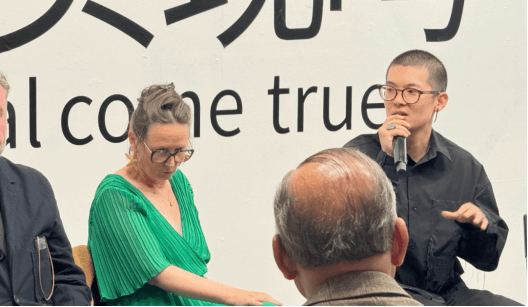
Guest introduction
Panel guests introduction
Curator Tatiana Martinez Collevati:Hello everyone. My name is Tatiana Martinez Collevati, and I am the Chief Curator. Now, I will give some introductions to our discussion group.
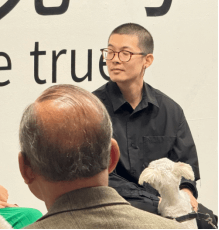
First up, we have our artist Yique, who was born in China. Yique is known for his provocative artistic style, often full of absurdity. A graduate of the Royal College of Art, his multidisciplinary approach to art encompasses a variety of media and external elements, delving into the complexity of human consciousness. In addition to his artistic practice, Yique has also worked as a curator and creative director for renowned museums and galleries in Hangzhou, making him a highly regarded figure not only in the art world, but also as a curator. His research covers classical Marxism, the Frankfurt School, critiques of society, and social change under neoliberalism. Yique's work and curated exhibitions have been exhibited in many countries and prestigious venues such as Tate Modern, Oxo Tower, Cromwell Place, KLA Brussels, Fluxus Museum in Greece, Ming Contemporary Art Museum in Shanghai, and Powerlong Art Center in Hangzhou. Yique's work often sparks controversy and has received international attention as a result, having been featured in media such as the BBC, The Guardian, The New York Times, CNN, and Reuters. He proudly identifies himself as both a critic and a challenger, and he relentlessly challenges conventions and pushes the boundaries of artistic and intellectual discourse. His multifaceted contributions continue to shape the cultural landscape and influence society through thought-provoking art.
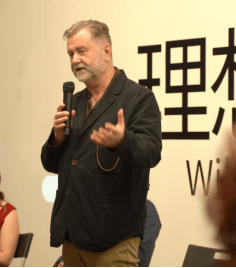
Next, let me introduce our professor Paul Gladston, who is the sponsor of this exhibition. He is the inaugural Judith Nielsen Professor of Contemporary Art at the University of New South Wales in Sydney, and a Distinguished Honorary Fellow of the British-Chinese Humanities Alliance and Tsinghua University in Beijing. He is the co-editor of the book series Visual Culture, Society and Politics in Contemporary East Asia, and the founding editor of the journal Contemporary Chinese Art, Aesthetic Modernity and Zhang Peili's Critical Contemporaneity. Gladston's monograph Contemporary Chinese Art: A Critical History won the Best Publication Award at the China Art Awards. He served as the academic advisor for Transforming Art: New Directions for China at the Hayward Gallery, and has co-curated several exhibitions of contemporary Chinese art, including Rain on the Terrace at NCKU Gallery in Taiwan, Enchanting Reality: Selected Works by Tan Lizhu 2002-2013 at Salamanca Arts Centre in Australia, Ending Tradition: Contemporary Video Art from China also at Salamanca Arts Centre in Australia, and New China, New Art: Contemporary Video from Shanghai and Hangzhou at Zhu Nagli Gallery.
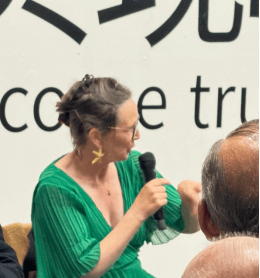
Next up, Dr. Katie Hill. She is a senior curator and educator in the field of contemporary Chinese art and Chinese diaspora art. She received her Masters (Honors) in Chinese from the University of Edinburgh in 1989 and her PhD in Philosophy and History of Art from the University of Sussex in 2002. She runs her own consultancy, the Office for Contemporary Chinese Art, which focuses on curating, art consulting and education. She is currently Head of Academics for Asia and Senior Lecturer at Sotheby’s Institute of Art, where she founded and directs the MA in Modern and Contemporary Asian Art. She is the co-author of the Chinese Art Book and has contributed to Chinese Quarterly, the Journal of Contemporary Chinese Art, Third Text, Apollo, Burlington Magazine and numerous artist catalogs. She will be showcasing the work of Ji Zi and other leading Chinese ink painters in her upcoming exhibition of ink paintings at SOAS Gallery in October 2024.
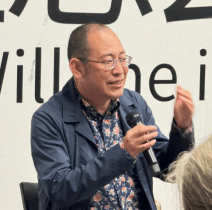
Last but not least, Dr. Hong Wei Bao is Associate Professor of Media Studies at the University of Southampton and Co-Director of the Centre for Critical Theory and Cultural Studies. He is the author of Queer Comrades: Gay Identities and Activism in Postsocialist China, Queer China, Gay Literature and Visual Culture under Postsocialism, Queer Media in China, Queer Performance in Contemporary China, and Queer Asian Diaspora, the latter due out in December 2024. He co-edited Contemporary Chinese Queer Art and the Routledge Handbook of Chinese Gender and Sexuality Studies. He has also co-edited two book series, Oysters: Feminist and Queer Studies in Art, Culture and Gender and Queer China: Transnational Gender and Sexuality Studies.
Discussion officially started
Now I'm going to hand the mic over to Yique, who will talk about the creation and ongoing impact of East London Socialist Core Values, and he'll also show a trailer.
Artist Yi Que:Thank you all for coming to my exhibition. I also want to thank Professor Paul Gladston for contacting me and supporting the entire exhibition. We worked on this for about a year. The original intention of this exhibition was actually the core values of socialism in East London, and it was also the last creation I completed in London. This event did generate a lot of social reactions. From the original intention of this work to now, my own ideas have also changed. At the beginning, I really didn't expect this event to become so popular that the New York Times and the Guardian made such a big fuss. The original purpose was also an artistic purpose, using the Chinese side, which may be the weak side, to reflect the hypocritical side of the West, so I think this is a two-way rebellion against two societies and two values, which is a very important point.
The most artistic thing is that when we see a Chinese icon from the 1980s appear in the form of Western free graffiti on the graffiti street in East London, which is so rich in culture and where Marx once worked, this cross-time and cross-cultural collision has a strong aesthetic characteristic, which makes me very excited. At the same time, the most interesting thing is that I know that these words will be covered up soon, just like these are the mainstream values and ideals that all human beings should pursue, but the facts tell us that it seems difficult to achieve. This is why I used golden words as the intention of falling when setting up the space, because these ideals were golden at first, and then perhaps they were pursued too much, and then they turned into bright red.
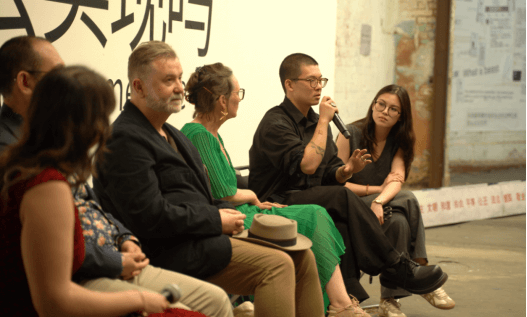
After meeting Paul, I was very surprised that he knew a lot about Chinese history, politics, and culture. Then we discussed many early Chinese artists. Of course, it was not limited to the artists of the same era as him or earlier, but also observed the new young artists. During the chat with him, I even began to miss the 1980s Chinese art. He is the Westerner I know who knows the most about Chinese art. I would tell him that my favorite Gu Dexin, Huang Yongping and others may not be the hot stars and are not so well-known, but Paul knows them very well. This actually touched me very much, because most of the time, like when I was studying at the Royal College of Art, basically the teachers I knew knew very little about Chinese art. We kept learning various Western content, such as race, environmental protection, LGBTQ, etc., and as everyone knows, in fact, because of the different political environment in China, Chinese contemporary art has always been in a state of disconnection from the world, so many times when we come into contact with these topics, we feel that they are far away from our environment. Of course, the interesting thing is that you must know. British teachers talk about what they care about, but you can easily find that more than one-third of Chinese are contributing tuition fees to the British education system.
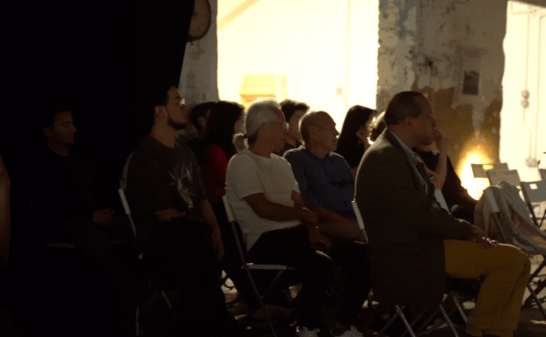
Next, we're going to show a trailer of what happened that night as we painted the graffiti. You can see some details of what happened that night, what attracted the police, and some of the conversations that took place on that street that night.
Part 3
The response to the work and the Chinese and Western media
Curator Tatiana Martinez-Kolevati:Thank you. This is indeed part of the documentary, a small clip, which mainly tells the beginning of "East London Socialist Core Values". As we just saw, Yique completely covered some of the murals on the graffiti wall of Brick Lane, and he actually did it on August 4, 2023 with some friends. After that, this incident caused a huge sensation on social media, and the exhibition area on the left side actually shows some of the responses he received on Instagram and other social media platforms. He also received a lot of attention from international media such as BBC, CNN, as we mentioned before. The first discussion question I want to raise with the discussion group is: There are many differences between the Chinese media and the British media in how they present each other's different voices and describe the "East London Socialist Core Values". So I would like to ask the guests, what do you think is the root cause of the difference in the response of the Chinese media and the British media to Yique's work?
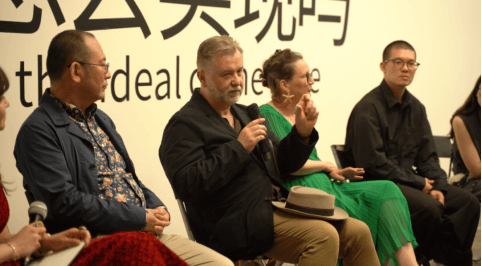
Professor Gerst:My detailed response to this question can be found in the article on the UNSW website, which you can read in detail there. But in short, this is a very interesting work because it creates contrasts and resonances between different cultural and political positions, such as liberal democracy and authoritarianism. So rather than being against any one side, it is more about disrupting these norms by putting these elements in the specific graffiti space of Brick Lane, and engaging in dialogue in a cross-cultural, cross-border and cross-political way. Of course, this also involves the specific discourse habits of a specific social and political context. The default position of liberal democratic countries and their media on these things is usually to regard it as some kind of dissent or as an act of support for Chinese political values, but this work does not actually explicitly show support for either of the two. At the same time, the initial reaction of the Chinese media was to support the work, thinking that this was a great opportunity to put forward Chinese political values on the streets of London. But as the work became a place for "multi-layered writing", graffiti expressing different views was layered, some of which supported the work, but many of which were critical of the Chinese Communist Party, and some of which were misunderstandings and misinterpretations of Yique himself on social media. I think these reactions are in part shaped by the particular political and discursive positions of the people who respond, and it’s important to note that none of us are approaching this from a neutral position, and that this work actually invites these different, non-neutral voices. Even though you may have good reasons to criticize authoritarian politics, which is completely understandable, I think what’s equally important is the position and attitude you express. Also, London graffiti culture itself is subject to certain norms, and this work breaks or at least disrupts these norms, and the wider political environment is also wrapped up in this kind of cultural control and ideological control. What we don’t see, but it’s shown in the short film, is that the city staff tried to stop these people from creating, and then the police came, and both sides said: "Stop, you can’t do this." But in fact there were no restrictions. Yi Que and his team did their research beforehand and took the risk, and they were actually able to continue painting because the police and city staff didn’t actually have the power to stop them. This is an unspoken constraint or control, and the work itself shows how fragile or fictitious these controls are. Of course, this also becomes an indicator of wider political issues. I’ll leave it at that, and I’m sure we’ll come back to this topic, and hopefully we’ll discuss the Taoist elements later.
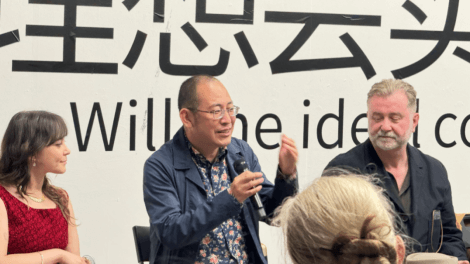
Professor Bao Hongwei:I teach media studies at university. I think one of the most important messages we try to convey to students is that while journalists and media professionals claim to be as objective and neutral as possible, in reality such absolute objectivity and neutrality is impossible. So there needs to be a complete awareness of the boundaries we are in, the scope of the discussion we can control and influence, and do our best to achieve what we can. I also want to point out that when we talk about the British media or the Chinese media, we all know that there is no unified, consistent voice in the British media. There are different political tendencies, different types of media, social media, newspapers, and non-upright tabloids. The same is true in China. In the Chinese media, I looked at the current coverage and found two focuses. The first is of course social media. Although social media is regulated, there is still a time lag for spontaneous audience reaction, and media censors also need time to react and understand what is happening. The second focus is on Hong Kong media, such as the South China Morning Post and Phoenix TV. In the current environment, given the ideological and political environment in Hong Kong, it is understandable why many Hong Kong protesters would see this as an act of spreading GCZY. We saw in the film that someone mentioned that Hong Kong people are more likely to see this as an offensive message or information. This is what I want to emphasize: media news is not spread equally, and some media have louder voices than others.
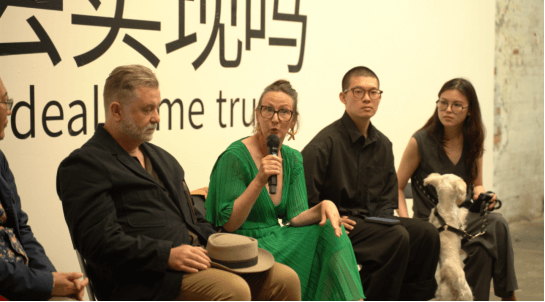
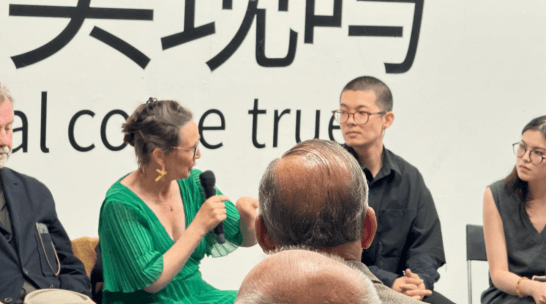
Dr. Kate Hill:Yes, I think in terms of the artwork itself, the way it uses text is very interesting, and the way it is stenciled, and the materiality of the material, and the choice of space. The choice of this wall is very interesting because it operates at the level of a certain public, civic space, and at the level of expressing a certain space, so to speak.
But what I’m also interested in, and this is very powerful to me. I think it works very well as an artwork, as an intervention. It’s a textual intervention, and it brings back to what Yique mentioned about the previous generation’s deep exploration of texts in China over the decades, and his strong interest in the concept of language. For me, it’s very interesting that language works on different levels. Because, if you’re a reader walking through that wall and you don’t know Chinese, what does that mean to you? The texts immediately convey a visual message, and on some level we all know what that means, and there are different levels of reading the work. The context of language is very interesting for the idea of ideology and meaning, and the impossibility of meaning, going back to critical theory, because the texts convey a subliminal, immediate message, and you immediately understand that it’s related to a certain ideology, going back to the founding of the ZGGCD, to be exact, the founding of the People’s Republic of China in 1949. It has a historical art aspect, which is very interesting. It activates history, and it effectively activates the idea of propaganda, because it takes us back to a de-territorialized version of the MZD text, but expressed in the context of the present. I’m very interested in that. I had studied propaganda posters for many years at Western universities, and they all showed people collectively writing propaganda slogans on walls. So it was very interesting to me that artists of Yique’s generation were doing something similar with a group of 20 people on Brick Lane. And this phenomenon has very interesting resonances with the history of propaganda from the 50s all the way up to today. So there’s this conversation between history, the Communist Party, certain texts, and a very unique and resonant form of visual language that has a particular resonance with Chinese visual culture.
Professor Paul Gersetti:I would just add one conceptual point: the context of this work is very important, not only in terms of what it means linguistically, but also in the form of the work. Even though the context is different, you could see public wall murals, stenciled images and text, doing this kind of ideology and propaganda in China 20 years ago. If you go back further, especially in the 50s and 60s, this kind of thing is more common, but even before 1949, people had a long history of using wall murals to convey political messages and debate ideas. This is also what this work draws on, as the painting correctly points out, by recontextualizing it by placing it in a different tradition and context of graffiti painting.
Artist Yi Que:I would like to respond to Dr. Kate Hill's comments about the meaning of text. Actually, before we started creating, we also thought about whether we needed to add translation. In the end, I felt that this was not necessary, because the most direct and simple way to use symbols is to keep them unchanged. This power is the most direct. At the same time, cultural understanding and recognition needs to stimulate people's interest. It does not mean that everything must be made clear. And we all know that after this matter, someone will help me say the part that I didn't say, so I chose to use the most direct way.
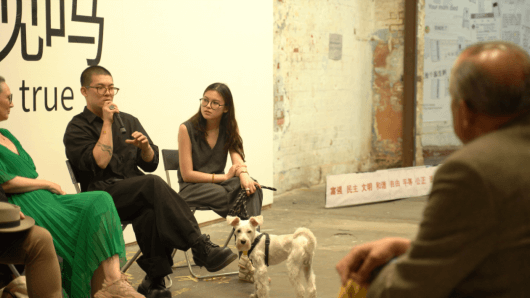
Curator Tatiana Martinez Collevati:Thank you. I want to go back to what Dr. Ketti mentioned about the 24 Chinese characters in the context of Brick Lane. It was really interesting to see their presence in this place. I want to ask Yique and the other panelists how do you think these values translate in the current social and political environment in the UK? How do you feel they resonate or conflict with local values, especially in the context of Brick Lane?
Dr. Bao Hongwei:If we look at the words, none of them are particularly controversial in English or French. They are all good concepts, and some of them sound very much like equality, fraternity, and similar concepts. However, the problem lies in their association with the GCZY context and propaganda. I think Ketti is right that most people may not understand the actual meaning of these terms, but the font and appearance of these words do carry certain connotations. Also, the fact that these words come from China immediately gives people the impression that they have some kind of significance or some degree of negative connotations that are considered by democratic countries. Of course, language is not only about meaning, but also about the role it plays, affecting emotions, consciousness, etc.
Dr. Kate Hill:The aesthetic aspect is really interesting to me. I think of Wang Guangyi’s work in the late 80s and early 90s, where he superimposed Western brands like Coca-Cola over images of the Cultural Revolution. The visual message was very simple and direct, which was very successful commercially for the artist, but also very interesting for that era, when these brands and multinational corporations were becoming more and more prevalent in China. Yique also explores issues of consumerism in his work, and while the context is very different to Wang Guangyi’s work, the visual communication and concepts are very ingrained today.
I also found the Apple piece in the next room very interesting and it explores this issue very effectively. You can see the Apple branding and he’s dressed as an old man trying to sell some apples in a very trendy shopping centre. So it’s interesting that this idea of consumerism and consumer culture also appears in the Brick Lane piece, albeit in a different way. I thought the role of the media was also interesting, Yique said he didn’t tell the press in advance. The press picked it up, which reminded me of the time my husband jumped on Tracy’s bed at Tate Britain. We told the press a day in advance to get people talking about it. But Yique didn’t need to tell the press in advance at all, it grabbed their attention straight away, which was quite interesting to me and shows how the media environment has changed compared to 25 years ago. For me, these changes make this piece very suitable for the current political environment and COVID-19 culture we live in.
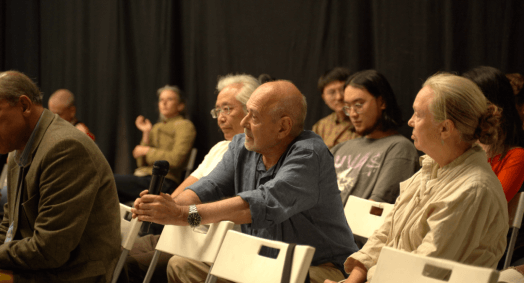
Part 4
Differences and discussions between Chinese and Western art
Professor Paul Gersetti:When you translate these terms into English or French, imagine you present these terms to any political party in this country and you ask them “Do you agree?”. These terms are a core part of mainstream politics. Of course, replacing the Chinese characters with these terms in English or English translations might weaken the critical impact of the work. For people who don’t understand Chinese, the form of the work—a certain linguistic mystery and formal shock—is the essence of the work. There are connotations behind these complex characters that go beyond Chinese. It also tells us that political language is never as harmless as it seems on the surface, in any context. Even concepts or emotions that everyone should agree on can be a potential authoritarian act, not only in China, and I think that’s exactly what we intended to express, and that’s also the artist’s point of view.
Artist Yi Que:When I was communicating with Paul, we also talked about the environment of contemporary Chinese art. When we talked, I also said that I really missed the artistic atmosphere of the 1990s, such as Wang Guangyi and Gu Dexin. This made me feel that there are still people facing these major problems of society and human conditions, and trying to face and solve this situation in the way and form of art. However, based on the current political situation in China, many topics cannot be discussed. This is a fact. I am not saying that this is good or bad at the political level, but at the level of artistic creation, this has led to a certain degree of disconnection between contemporary Chinese art and Western art. However, art and culture are precisely a reaction of human nature. People are born to yearn for freedom. However, the current situation is that Chinese artists find it difficult to recognize such a situation, and are afraid of touching the sensitive parts of politics. This fear will affect their artistic creation. This always makes me feel that Chinese art has lost its soul. They are also influenced by pragmatism. They care too much about economic value, learn Western symbols, and make copies. When we were in the UK we studied a lot of topics that told us how art can intervene in society and deal with its relationship with society, and even want to help and polarize society to adjust its way, but this is difficult in China, and I don’t think I have really done it.
Dr. Bao Hongwei:I would like to recommend my book and recently published collection of essays on contemporary Chinese queer art, which was published in English last year and contains about 13 essays written by artists, activists and curators. For me, what is exciting about art in China right now is that it is not expressed in a very direct or explicit way. Instead of using symbols like the rainbow flag, they are working in a more subtle and oblique way. For example, we talked about Z's paper-cut works, which are currently on display in Xiamen. This work is interesting because it uses forms of Western art and traditional Chinese art to express homosexual intimacy in a way that is not so obvious, and the audience needs to look very carefully to see the message. Similarly, many queer artists in China use performance art, which is often flashy, sudden events, such as a queer wedding on the street, which then quickly disbands. I understand that this art form is very different from queer art in galleries, but these forms are carried out under specific conditions and in a more oblique way, which is very exciting. To me, a lot of contemporary Chinese artists are doing very interesting things, they may not be overtly critical of China like Ai Weiwei, but they are doing it in more obscure ways. I find that the presence of censorship actually creates space for more creative expression. Of course, I am not defending censorship, but I think this kind of obscure expression of working within restrictions and conditions is really worth paying attention to.
Professor Paul Gersetti:In the context of liberal democracy, political criticism has been institutionalized, which may give the illusion of effective criticism. In fact, institutionalization itself is a form of control because you have expected this criticism, it becomes the norm. As we saw when discussing Yique's work, we all know that in the authoritarian context of China, culture, speech and expression are restricted. Sometimes we have the illusion that there is greater freedom in the context of liberal democracy, but this is not always the case. In fact, institutionalized freedom itself is a form of control, just like graffiti art, it looks free and a space for free expression, but it has its own rules and norms in the subculture, and it is also politically controlled, and government officials will come to prevent artistic creation like this.
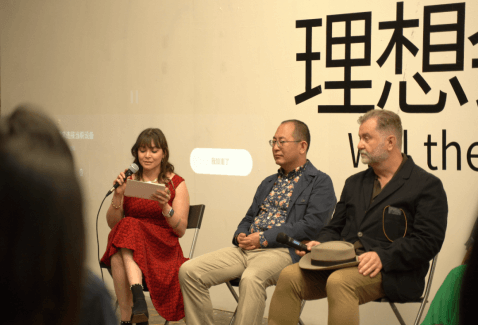
Curator Tatiana Martinez Collevati:I have a question about the differences in freedom of expression for artists in different regions. Do you think there are differences in their ability to challenge social norms, whether in the Western world or the Eastern world?
Part5
Criticality of Contemporary Art
Dr. Kate Hill:From a historical perspective, as Bao just mentioned, expressive and dynamic art practices, such as performance art, which appears quickly and then disappears quickly, have existed in China as early as the early 1980s. This practice was often collective because the space for contemporary art was very limited at the time. In Xiamen, for example, some artists tried to integrate art into their daily lives, but were stopped by public security departments. This has been happening in both contexts. But I think it is interesting that Yique mentioned the current conditions in China. I feel that these conditions have changed in the past five years, and the space for artists to create has become more limited, more difficult than it was ten years ago. So when we talk about a certain time period, we need to be very specific, especially for artists in Beijing, whose studios are often under threat of demolition. A lot of artists who come back from abroad, such as those who studied at Goldsmiths, have become more marginalized when they return to China, especially when their work involves politics, ideology or power systems, which has become more limited in the past few years, especially after 2014.
Professor Paul Gersetti:Actually, the financial aspect, the business aspect, etc… You mentioned the relationship of your work to Taoism. I think it’s worth mentioning that in Chinese history, for a few hundred years in Imperial China, before the pluralistic republican period, there was a critical relationship between culture, including visual culture, so painting, calligraphic rendering and poetry as part of literary culture was a critical relationship, which allowed artists, artists in the long run, and yes, painters, poets and calligraphers, to express a kind of bleak dissatisfaction with the authorities, before which it was part of the system. In principle, you are artists, which is a critical publishing figure and part of the Chinese aristocracy and administrative structure. This group has an obligation that is far greater than the moral role that one person can play in the face of power, to express dissatisfaction with power if it becomes an overwhelming force of course, and in a lot of Chinese literature, this special status is justified. But compared to the Western view after the European and American enlightenment, that critical position is understandable, that it is dangerous to oppose power. Even if you oppose power, another form of power will take its place even if it does not achieve much. In the Western post-Enlightenment system, the idea or theory of critical opposition is embedded in the concept of social transformation, politics and culture, at the social, political and cultural levels. In China, this oppositional position is much rarer because it is not part of cultural history. So when we talk about modern and contemporary artists in China being subject to authority, it is true, but they still maintain a critical dialogue with authority, and I think this approach resonates strongly with China's historical, intellectual and practical heritage.
On the one hand, we often go to complex theory because it is critical. It combines Taoism, Buddhist translation, and more recently, Western Marxist, socialist thought. Interestingly, I want to hear his question before I hand the microphone back to him. You have all seen the "Yin Yang Center". It's a cliché, but it's an important cliché because it enters or symbolizes a particular view of knowledge, which is the relationship between contradictions. Symbols and words in Chinese often have roots in pan-reading. I have always thought that the Yin Yang symbol is two eggs fried on a flat surface. Try it the next time you fry two eggs in a pan. If you do it right, it will come out. There is a yolk, there is an egg white, and you can draw a curve. If you can make a curve like this, you can do this. It symbolizes the "Yin Yang" view that nothing is completely opposite. It always carries traces of things that it shouldn't contain and those that seem to be there and seem to be applied, so it is always in a dynamic interactive relationship. This is not only in the Taoist system, but it actually predates Taoism, at the beginning of Confucianism, before it became the dominant philosophical system in China, and now it is very different in many ways from the dominant dialectic of Judaism in European philosophy, and the synthesis we are talking about has never happened in the deep tradition. So you can see the interaction between opposites and their timely display, which is obviously very important as well.
Artist Yique:At the beginning, I set the main and subtitles for this work. The subtitles are to link and reflect the Taoist Laozi's thoughts. The main title is very simple, East London Socialist Core Values, which is the three elements of time, place, and people as the initial, which is based on what the work does. At the same time, I also gave it a subtitle, wanting to express part of the meaning of the work simply but profoundly, so I chose a sentence from the book "Tao Te Ching", which is a collection of Chinese thoughts, which I have not been able to fully understand until now.
Yes, I quoted Lao Tzu’s words “The opposite is the movement of Tao” which is from Tao Te Ching. Although most media have difficulty understanding the meaning of this word, and they are unlikely to want to study and care about what it means, because they only want to use a partial part of the work to say what they want to say, yes, “The opposite is the movement of Tao” is a good soil for them to play their roles.
What does "the opposite is the movement of the Tao" mean? I think it is too difficult to explain the truth in words. We will see how thinkers like Lao Tzu use ancient texts to express it in a subtle way. Just like what Wittgenstein said, when some metaphors and concepts have exceeded the boundaries of what language can express, the role of art becomes extremely important. "The opposite movement is the way the Tao works, that is, everything follows the law of the Tao, and this law is reflected in the fact that when things reach a certain limit, they will inevitably change in the opposite direction. For example, when things are extremely strong, they will turn to decline, and when they are extremely strong, they will decline. The positive and the negative are the root of each other." This vernacular translation seems to be quite accurate, but it is obvious that for someone who has felt and experienced history and life, such an explanation cannot even play even one tenth of the symbolic meaning of the work.
The core values of these twelve words contrast with the beautiful graffiti of East London, which is a stereotype of freedom. They are like the epitome of two different political and cultural ideologies. Western graffiti itself has long been a microcosm of the hypocritical democracy and freedom of the West. But such a democracy always makes me question and feel that there are problems. You can see that most artists are just painting some Donald Duck and symbolic things, so we can see that most graffiti is like cartoon patterns, which enter the business system. This observation of mine aroused my vigilance because local managers use the guise of free expression to promote and market their areas and spaces. These artists come to paint for free to help them develop land and business. This is a symbol of Western capitalized democracy and freedom. This is why I chose this title-because it represents two completely opposite ideologies. Interestingly, neither of them directly expresses political intentions, but they are political in nature. They both represent seemingly beautiful ideas and concepts, but there are shadows behind them.
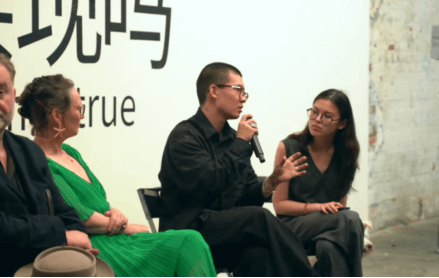
Dr. Bao Hongwei:A few final words. I just want to say that we can debate the relationship between art and politics, but I would say that a lot of misunderstandings of artworks are caused by a lack of explanation of contemporary art. So even though contemporary art has been around for many years, we have Duchamp? We have artists like Tracy Emin, but art, contemporary art is a process, not an artistic product, and this has not been accepted by the public. The social reaction to art is almost part of the artwork itself, and a lot of media coverage, I think especially in the Western media, almost treats it as a social reality, a realistic reproduction of people's ideas, rather than a critical social engagement with reality. So I think art historians, artists and curators have a big role to play in promoting the acceptance of contemporary art.
Part6
Question and Answer Session (Excerpt)
Audience Question 1:What interests me is that this location, Brick Lane, is the birthplace of diverse movements, radical politics, and that type of struggle does lead to normalization, as you say, maybe you use different ways, but it is universal, it normalizes regions around the world. The Germans drew public boundaries and people questioned that… They said they welcomed democracy, but they pushed back and tried to escape the norm… But I think that location, you talked about the paradox, were you playing with that paradox when you chose Brick Lane as the place to do this? Or what, why did it have to be this place? Because a particular form of graffiti dominated there?
A magpie's answer:This didn't take me very long, it was very simple. First, I found the largest and longest street in London that I could work on for the East London Graffiti Girl.
Secondly, I must say that this place has a strong appeal, and at the same time it has very strong commercial attributes, which also attracted me very much to put this completely non-commercial form into it.
Finally, I would like to add that I think at the beginning, the whole state of East London was actually a multicultural place in London. I talked to graffiti artists about what we saw in the documentary, and all the artists said that this was great, you can do anything, and it will disappear within five days.
That was important to me because I felt like it was really emotional for me to have those twelve words disappear in that way, and this is a space, this is more than just twelve words.
This is a kind of collision and dialogue that transcends time and space, and this sense of space, this kind of collision is actually what I think is the most aesthetically pleasing thing.
Audience Question 2:I just wanted to ask, I mentioned earlier that… I’m interested in art that can effect social change, and I wonder how this kind of work works on that level. I’m thinking about things like “resistance art”, like BP or No BP, which did succeed in getting Tate to divest, to end its sponsorship relationship with BP three years ago. That culminated in Tate stopping accepting funding from BP. They did that through art action, including performance pieces, interventions, and very powerful physical actions. These are still works of art, but they’re being used to drive social change. I wonder how the medium of graffiti seeks to effect that kind of change or those kinds of changes?
A magpie's answer:This is an interesting question. I have paid attention to many such action organizations, such as the British environmental action organization Just Stop Oil. There is often no clear boundary between action and art, but I do think that I support actions like Just Stop Oil more than I oppose them, although sometimes their actions lack some creativity and are too conflicting. But if they can achieve their goal, that is, to reduce the UK's financial support for oil mines, it seems that creativity itself is not that important, because you also know how many artists' works are under the banner of promoting environmental protection, which not only do not really help the environment, but even create more pollution and garbage. I think and agree that art's involvement in social change is a very valuable thing. But more creative and relaxed methods and the ability to link more narratives may make things look more "artistic" rather than just regular actions, which may become more standardized things like parades, but many times large-scale parades do not work.
As for graffiti, I feel that at this postmodern point in time, the characteristics of the medium itself are becoming less and less important. No matter what material and form of expression is used, the most important thing is whether it promotes the ideas of society and civilization.
Introduction of the speakers
Introduction of panelists
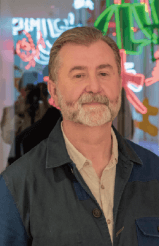
Paul Gladston’s award-winning research and critical writing have had a significant international impact on the development of critical studies of contemporary Chinese art/culture: evidence includes Gladston’s publications being included in undergraduate and postgraduate course reading lists at universities in Europe, North America and China, his invitations to work with major institutions - including UNESCO, London’s Southbank Centre, Sotheby’s Institute, Beijing’s Central Academy of Fine Arts, Beijing’s Tsinghua University, Oxford University, Third Text, Tate Modern (Tate Papers), ShanghART Shanghai, Chambers Fine Arts New York, Brooklyn Rail, New York’s visual arts, culture and politics magazine, UK China National Committee and the Asia Society Australia; his English publications have been translated into Mandarin, Spanish and Russian; and he has supervised groundbreaking doctoral dissertations for several candidates from Europe, Australia and China. He currently holds the inaugural Judith Neilson Chair of Contemporary Art at the University of New South Wales in Sydney (funded by a $7 million endowment + accumulated interest), working to develop an international rhizomatic network dedicated to innovative research, advocacy and teaching in the field of contemporary art/culture studies.
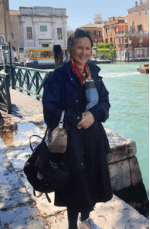
Dr. Kate Hill
Dr Kate Hill is Director of the MA in Modern and Contemporary Asian Art at Sotheby’s Institute of Art, London. She is a regular speaker at numerous institutional and gallery exhibitions and events. Her recent work includes conversations with Ai Weiwei, Tate Modern, selection panel/author, ‘Art Change, New Directions from China’, Hayward Gallery, London, and professional consultant/author for The Chinese Art Book (Phaidon 2013). She also co-edited the special issue of Visual Art Practice magazine on Contemporary Chinese Art and Criticism, published in 2012. She is Director of OCCA (Office of Chinese Contemporary Art), an arts advisory body dedicated to promoting Chinese artists in the UK.
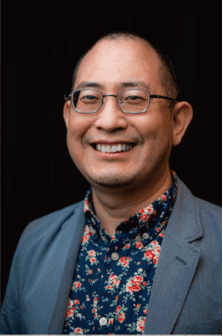
Dr. Bao Hongwei
Dr. Hongwei Bao is Associate Professor of Media Studies at the University of Nottingham, UK, and Co-Director of the Centre for Critical Theory and Cultural Studies. He is the author of Queer Gays: Gay Identities and LGBT Movements in Postsocialist China (NIAS Press, 2018), Queer China: Gay Literature and Visual Culture under Postsocialism (Routledge, 2020), Queer Media in China (Routledge, 2021), Queer Performance in Contemporary China (Routledge, 2022), and the forthcoming Queer Asian Diaspora (Sage, December 2024). He is co-editor of Contemporary Queer Chinese Art (Bloomsbury, 2023) and the Routledge Handbook of Chinese Gender and Sexuality Studies (Routledge, 2024). He is also co-editor of two book series: Oyster: Feminist and Queer Studies in Art, Culture and Gender (de Gruyter) and Queer China: Transnational Gender and Sexuality Studies (Bloomsbury).
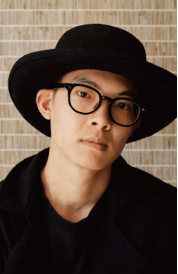
Artist Magpie
Yi Que is a contemporary Chinese artist and curator who graduated from the Royal College of Art. His research covers classical Marxism, social critique of the Frankfurt School, and social change under neoliberalism. His works and curatorial exhibitions have been exhibited in many countries and famous venues, including Tate Modern, OXO Tower, Cromwell Square, KL8 Brussels, Flax Museum in Greece, Ming Contemporary Art Museum in Shanghai, and Baolong Art Center in Hangzhou. Yi Que's curatorial work often arouses controversy and has received international attention. He has been reported and interviewed by media such as BBC, The Guardian, The New York Times, CNN and Reuters. Currently serving as a curator at the Liangzhu Art Center built by Tadao Ando, he proudly considers himself a critic and "troublemaker", constantly challenging traditions and pushing the boundaries of artistic and intellectual discussion. His multifaceted contributions continue to shape the cultural landscape and influence society through thought-provoking art.
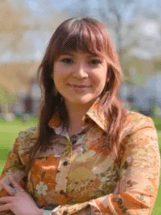
Chair Curator Tatiana Martinez-Kolevati
Tatiana Martinez-Corevati is an independent curator working between London and Los Angeles. She obtained a BA in Anthropology from the University of Texas at Austin, followed by an MA in Art History and Visual Culture from the American International University in Richmond. Her academic research involves DIY visual studies. Her curatorial practice reflects a multidisciplinary approach, including culture, archaeology, sociology and politics. With a keen eye for innovation and a deep understanding of cultural dynamics, Tatiana has curated numerous pop-up exhibitions in two international metropolises, Los Angeles and New York.
Introduction to Translation and Text Editing
Introduction to Translation and Text Organizers
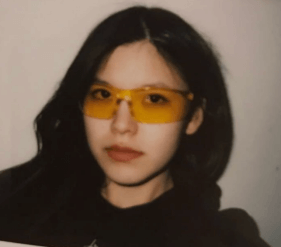
London-based artist and exhibition designer, researcher and guest lecturer at the University of the Arts London. She uses visual media such as spatial installations and oil paintings to explore gender, identity and belonging in postmodern society, combining it with dialogue and positivity, blending sensuality, poetry and realistic expression.
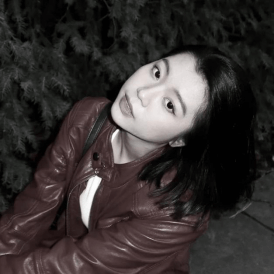
Currently studying at Central Saint Martins College of Art and Design, UAL, her work spans visual arts, social marketing graphic design, text and curation. She incorporates her knowledge of curation, art history, culture and fashion into her surreal multimedia art, combining a variety of cultural legends, her own experiences, women's issues and environmental awareness. Her curatorial narrative and art history research are scattered in her writings on the development of female artists and women's rights.
Special thanks
Producer:Judith Nelson Foundation Ugly Duckling Art Center
Guests:Professor Paul Gersti, Professor Bao Hongwei, Dr. Kate Hill, Artist Yi Que
Curatorial Team:Tatiana Martinez-Korevati, Marie Hilbart, Xia Yiping
Collaborating performance artists:Connie-Melula-Sti
Filming team:Shao Hanbin, Ni Duan
Post-production and dubbing team:Zheng Chaochao, Li Zongyang
Subtitle proofreading:JuJu, Dana
Please continue to follow ArtPro for more latest developments in the global art market.