
[2024 Fall New York Asia Week] Sotheby’s Chinese Art Treasures Sale on September 18th presents porcelain, bronze, jade, Buddhist statues, calligraphy and paintings and other rare old collections
In September, the autumn breeze brings coolness and the sky and earth are clear. In this poetic atmosphere, focus on Sotheby's New York to witness another magnificent feast of oriental art. Hundreds of art treasures carrying history and culture are gathered here after a thousand years of splendor.
In the fall of 2024, Sotheby's New York will hold a special auction called "Treasures of Chinese Art" during New York Asia Art Week. The exhibition will be held from September 12 to 17, and the auction will be held on September 18.
The specific schedule is as follows: September 12-13 from 10:00 am to 5:00 pm (Eastern Daylight Time), September 14 from 10:00 am to 6:00 pm, September 15 from 12:00 noon to 5:00 pm, and September 16-17 from 10:00 am to 5:00 pm.
The exhibition location is located in New York City, the address is 1334 York Ave, New York, NY, 10021.
The "Chinese Art Treasures" auction brings together porcelain, bronze, jade, Buddhist statues, calligraphy and paintings, etc., with rich sources, including rare treasures from the Qing Palace collection, such as an important bronze Zhou hu with prominent origins, records, and inscriptions from the Western Zhou Dynasty, and a gold-inlaid turquoise double-yuan box presented to Emperor Qianlong and later treasured by later Qing emperors; there are also treasures from many private collections in the United States and Europe, such as a rare Yongzheng-era imitation Junxin purple-glazed celestial globe vase, and a large-sized, exquisitely carved Qing Qianlong famille rose Samantabhadra Bodhisattva statue. The following highlights are specially written for you, and we hope to enjoy them with you in the golden autumn.
Featured Lots
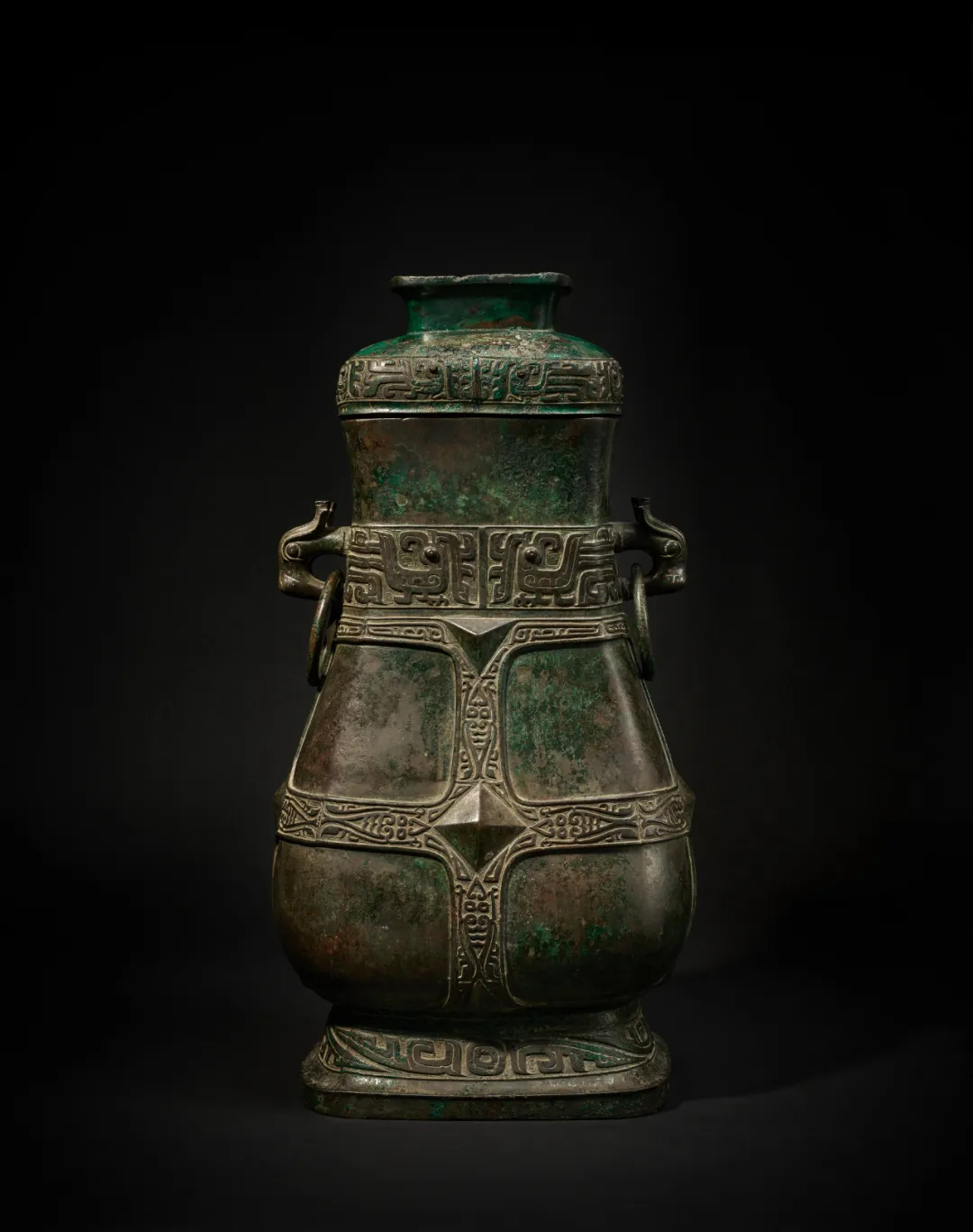
Middle Western Zhou Dynasty, 10th to 9th century BC, Zhou Dynasty pot
Total height 58.5 cm
Estimate: US$3,000,000 - 5,000,000
source:
Collection of Emperor Gaozong of Qing Dynasty Aixinjueluo Hongli
Qing Palace Collection
Collection of Zhou Qingyun (1864-1933)
Zhou Yuhu, an old collection of the Qing Palace, is a representative of China's ancient and brilliant civilization. It has a deep ancient charm and is a treasure of the world. This pot is large in size, majestic in shape, towering, and has excellent casting, solemn and majestic. The whole body is rusty and mature. It has gone through thousands of years and is unique. Its decoration is complex, the layers are clear, the craftsmanship is exquisite, and the design is ingenious. It is not only practical, but also reflects the extremely high social status of its owner at that time. The long inscription cast on the vessel has been recorded and studied in detail by royal scholars and epigraphers of various generations, which further reflects the importance and influence of this pot in the epigraphy world.
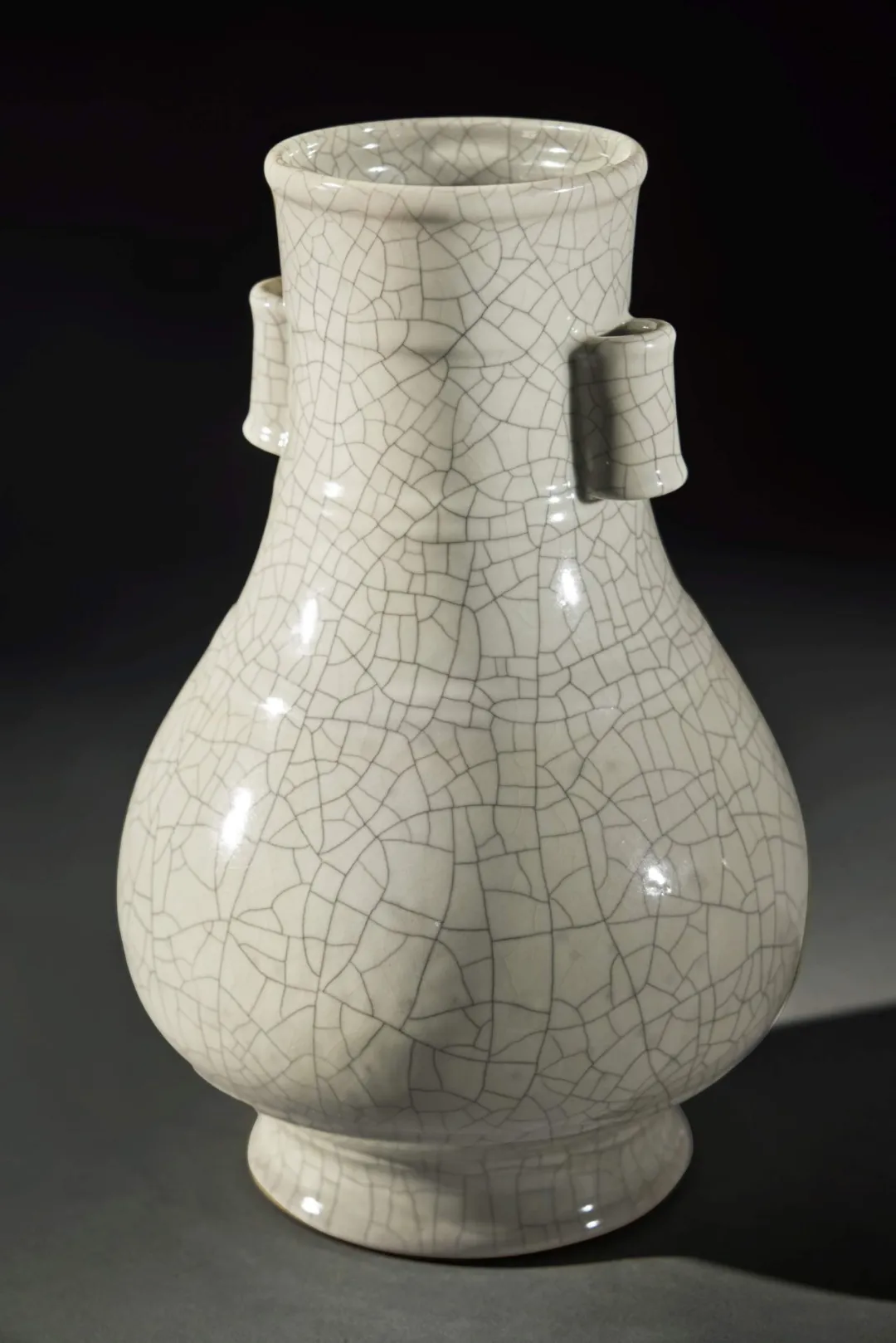
Qing Yongzheng Reign, a Ge-like Glaze Pot with Pierced Ears, with a Mark of "Made in the Yongzheng Period of the Qing Dynasty"
Height 32.4 cm
Estimate: US$1,000,000 - 1,500,000
source:
From the collection of Arthur J. Whittall, acquired in the 1920s and 1930s
Christie’s London, 23 June 1980, lot 146
Collection of Lord Cunliffe (1899-1963)
Bluett & Sons Ltd., Grosvenor House Fair, London, 14 June 1978
Hugh Moss, London
Sotheby’s Hong Kong, 28 November 1979, lot 299
Sotheby’s New York, 4 December 1985, lot 256
From the Collection of Mr. and Mrs. Morton and Grace Gordon
Christie’s New York, 24 March 2011, lot 1120
The crackle glaze of Song Dynasty porcelain was highly praised by later dynasties. It was imitated in the Ming Dynasty and also produced in the Qing Dynasty. The most outstanding example was the Yongzheng Dynasty. This product is a typical example of the fine imitation Song Dynasty porcelain of the Yongzheng period. It is unique and lively. The round belly and outward-slanting feet are more similar to the ancient bronze ware than the Song Dynasty porcelain. As far as we know, imitation Ge porcelain vases of this period are very rare, and there are few products of comparable quality to this one.
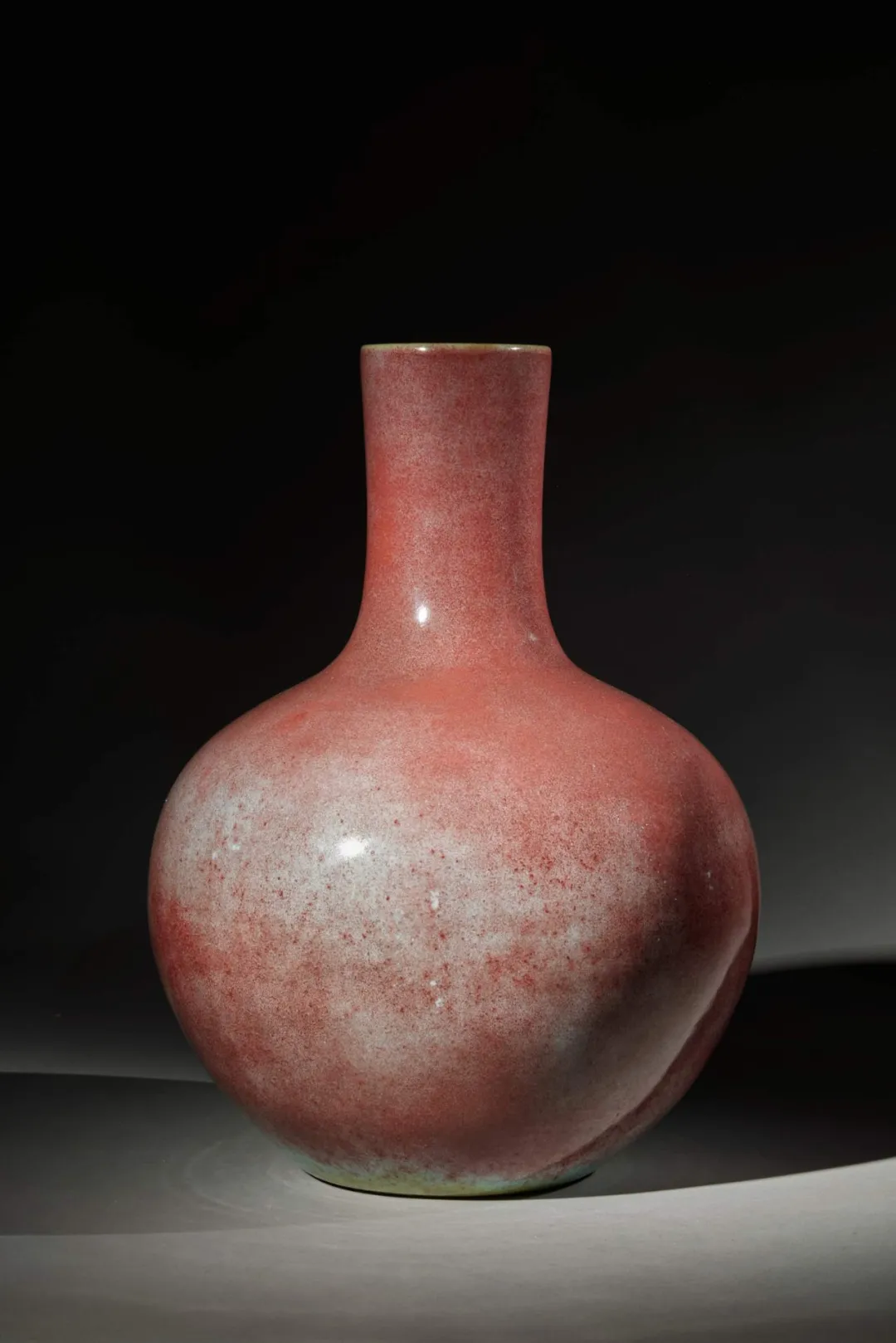
Qing Yongzheng Reign, Imitation Jun New Purple Glaze Celestial Globe Vase "Made in the Yongzheng Period of the Great Qing Dynasty"
Height 52 cm
Estimate: $150,000 - $250,000
source:
Seattle Art Museum, Seattle
Sotheby’s Parke Bernet, New York, 5 November 1977, lot 219
This vase is a magnificent and reserved expression of the extraordinary achievements of porcelain making during the Yongzheng period, with its experimental innovations and ingenuity. During the Yongzheng period, the imperial kilns imitated the blue glaze and purple spots of the Song Dynasty Jun glaze, which was deeply loved by Emperor Shizong of the Qing Dynasty and is very rare and valuable. During the Qianlong period, the celestial globe vase shape was popular, and a variety of glazes, techniques and decorations were produced. However, the Yongzheng celestial globe vase is far rarer, and this large-scale imitation Song monochrome porcelain is even rarer. Only a few examples of celestial globe vases with similar glazes are known, and they have almost never appeared on the art market.
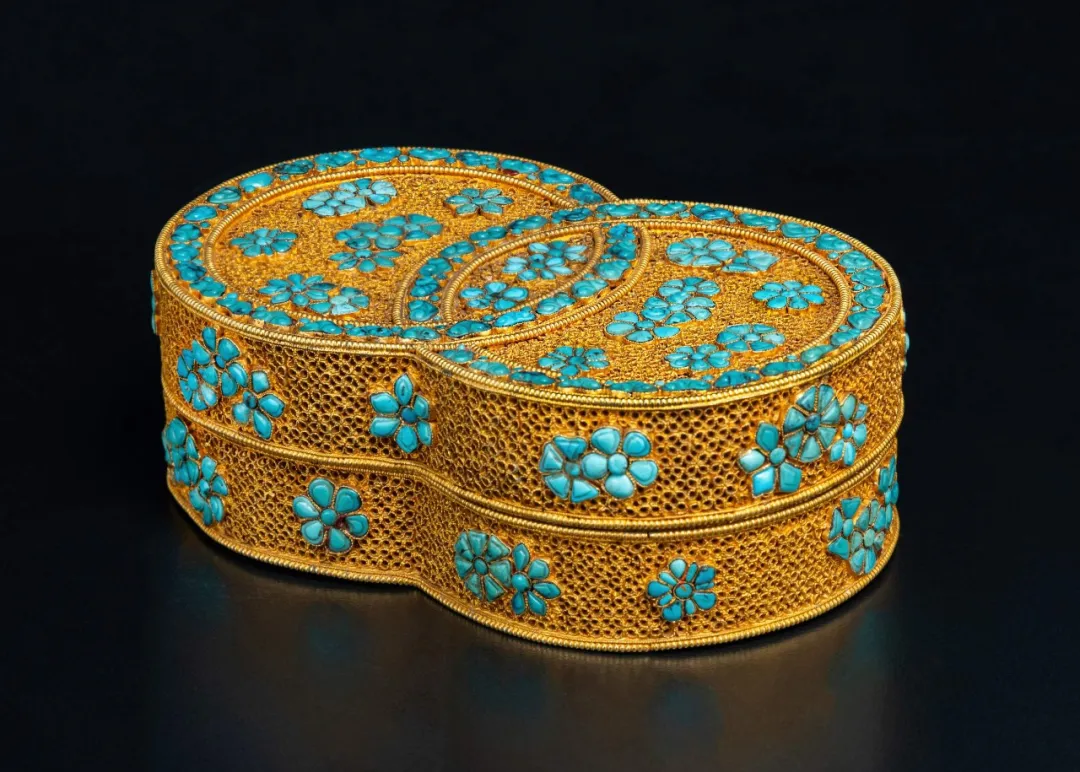
Qing Dynasty Qianlong Period Gold-Inlaid Turquoise Double Box
22k gold weighing 195.6 grams
Width 10.8 cm
Estimate: $60,000 - $80,000
source:
Bao Taiyu (active 1780) presented tribute to Emperor Qianlong (1711-1799) in 1783
Qing Palace Collection
Parish-Watson & Company, Inc., Chicago, 1934
Private collection in the United States, acquired before 1972, passed down in the family since then
When Emperor Qianlong ascended the throne for nearly fifty years, Baotai, the minister stationed in Tibet, presented a set of precious gold-inlaid turquoise stationery items to the emperor. The decorations were exquisite and nearly 6 kilograms of pure gold were used. They were truly imperial treasures and were rare and precious. After Qianlong, this set of items continued to be collected by later Qing emperors. Emperor Puyi mortgaged the collection to obtain a loan, and then foreclosed on it. The collection was then owned by a private collector. In 1933-34, Parish-Watson & Company Ltd. in Chicago first exhibited the collection as a group of 18 items at the international exhibition "Century of Progress". After the exhibition, the collection flowed into important collections around the world. This is one of the four known first-class treasures.
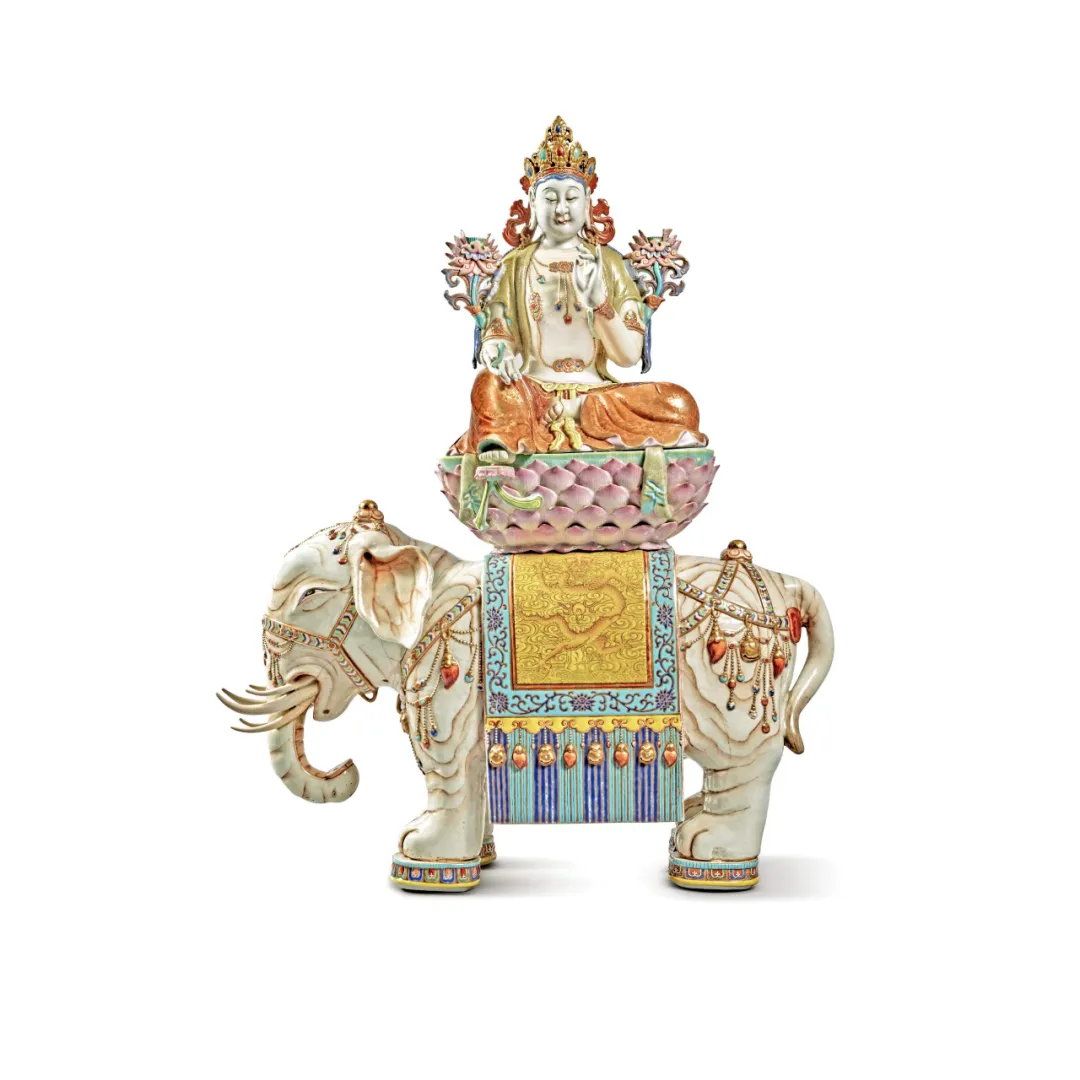
Qing Dynasty Qianlong Period Famille Rose Samantabhadra
Height 69.5 cm
Estimate: US$500,000 - 700,000
source:
Private collection, USA, until 1970s
This statue depicts Samantabhadra, the Bodhisattva, sitting in a semi-lotus position on a six-tusked white elephant. The Bodhisattva’s face is compassionate and radiant, and it is a prime example of a Qing dynasty porcelain statue. Qianlong was a devout Buddhist and a keen admirer of Buddhist art. This statue is not only rare, but also large and exquisitely crafted, making it a rare treasure. From the gilded flowers and swastikas on the loincloth and scarf to the bright pink tones of the lotus seat, this statue shows the excellent craftsmanship of the Qianlong court artisans. This is probably the largest example of its kind ever to come to the art market, and its sheer size made it extremely difficult to shape and fire.
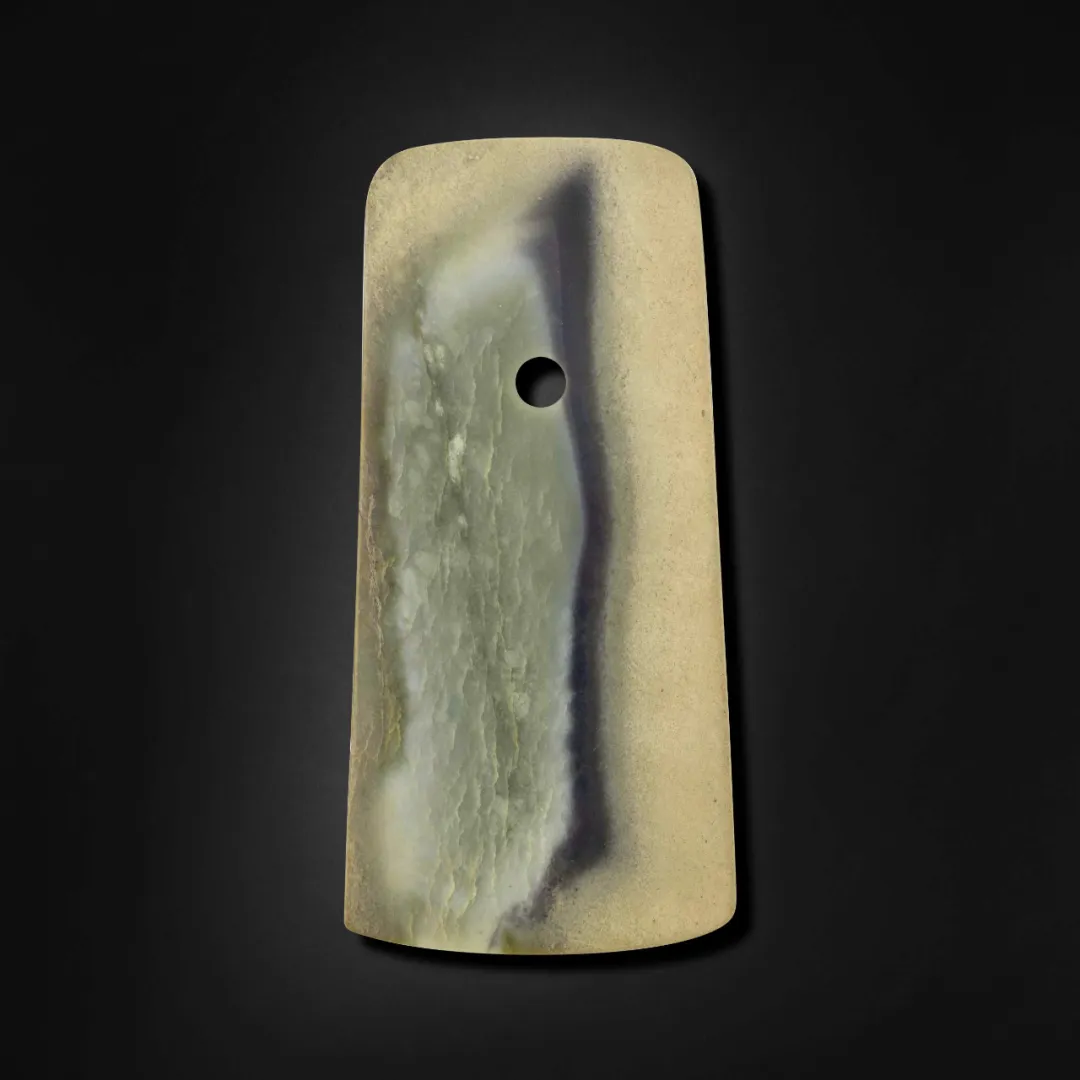
Neolithic to Zhou Dynasty Jade Axe
Length 18.2 cm
Estimate: US$200,000 - 300,000
source:
Collection of Gustav Heinrich Ralph von Koenigswald (1902-1982), acquired in Beijing around 1939
This product is simple in shape, simple and elegant, and is truly a rare ancient jade axe. A dark stripe runs through the center of the jade surface, highlighting the beautiful shape, and contrasting with the light green and gray-blue jade. The history of jade axe can be traced back to the stone axe of the Neolithic Age, and it became a ceremonial weapon in the Shang Dynasty. It was made of fine jade and was a symbol of power and majesty. This product is carefully crafted, showing the outstanding achievements of ancient jade craftsmen, and it was only owned by the leaders in power.
exhibitionDetails
Asia Week New York Exhibition
Special Sale of Chinese Art Treasures
September 12-13 (10:00 a.m. - 5:00 p.m. Eastern Daylight Time)
September 14 (10:00 a.m. - 6:00 p.m. EDT)
September 15 (12:00 noon - 5:00 pm EDT)
September 16-17 (10:00 a.m. - 5:00 p.m. Eastern Daylight Time)
1334 York Ave, New York, NY, 10021
Please continue to follow ArtPro for more latest developments in the global art market.