
ArtPro Space Exhibition | Huang Qiyou's solo project "Long Summer" presents the experience and physical experience of Xiamen's seaside life
Long Summer Huang Qiyou's personal art project
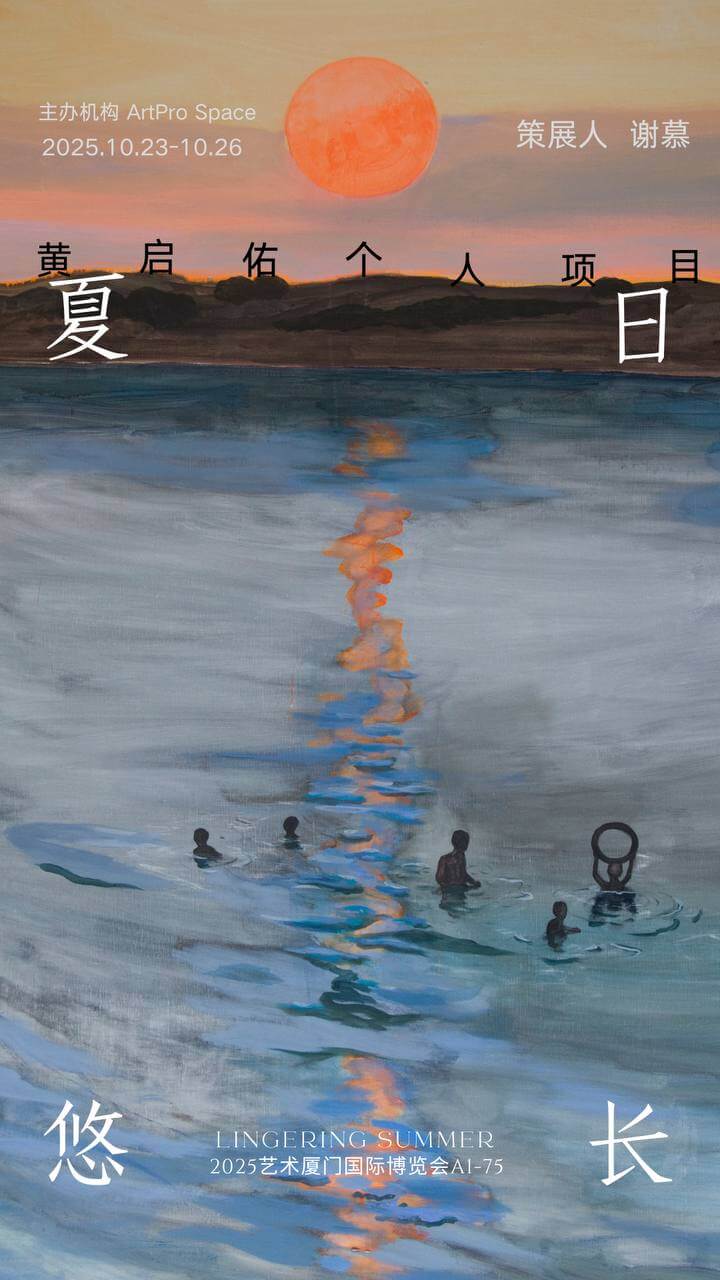
Lingering Summer – Huang Qiyou Solo Exhibition at 2025 Art Xiamen
🗓️ October 23–26, 2025
📍 Xiamen International Expo Booth A1-75
Organizer: ArtPro Space
Curator|Xie Mu
In Xiamen, summer isn't a season; it's a constant presence. Hot, humid, and long, it feels like a constant low-pressure air current envelopes daily life, stretching time through a slow, physical sensation. Huang Qiyou's solo exhibition project, "The Long Summer," was born from this "delayed climate." Drawing on the unique physical experiences and perceptual rhythms of the South, the work constructs a series of pictorial visions exploring how time is perceived.
This exhibition marks Huang Qiyou's second collaboration with ArtPro Space. The paintings on display span 2023 to 2025. As a key project for Art Xiamen's 10th anniversary, it continues the artist's ongoing exploration of individual experience and the language of image.
Curator Xie Mu pointed out: "Unlike the psychological projection of distant imagery in 'Mishan Past', 'Long Summer' is closer to the texture of real life. It stems from the artist's long-term daily residence on the Xiamen seaside - a lifestyle surrounded by humidity, heat waves and water vapor."

From "Mt. Misen" to "Swimming Pool": The Focus of Painting Shifts
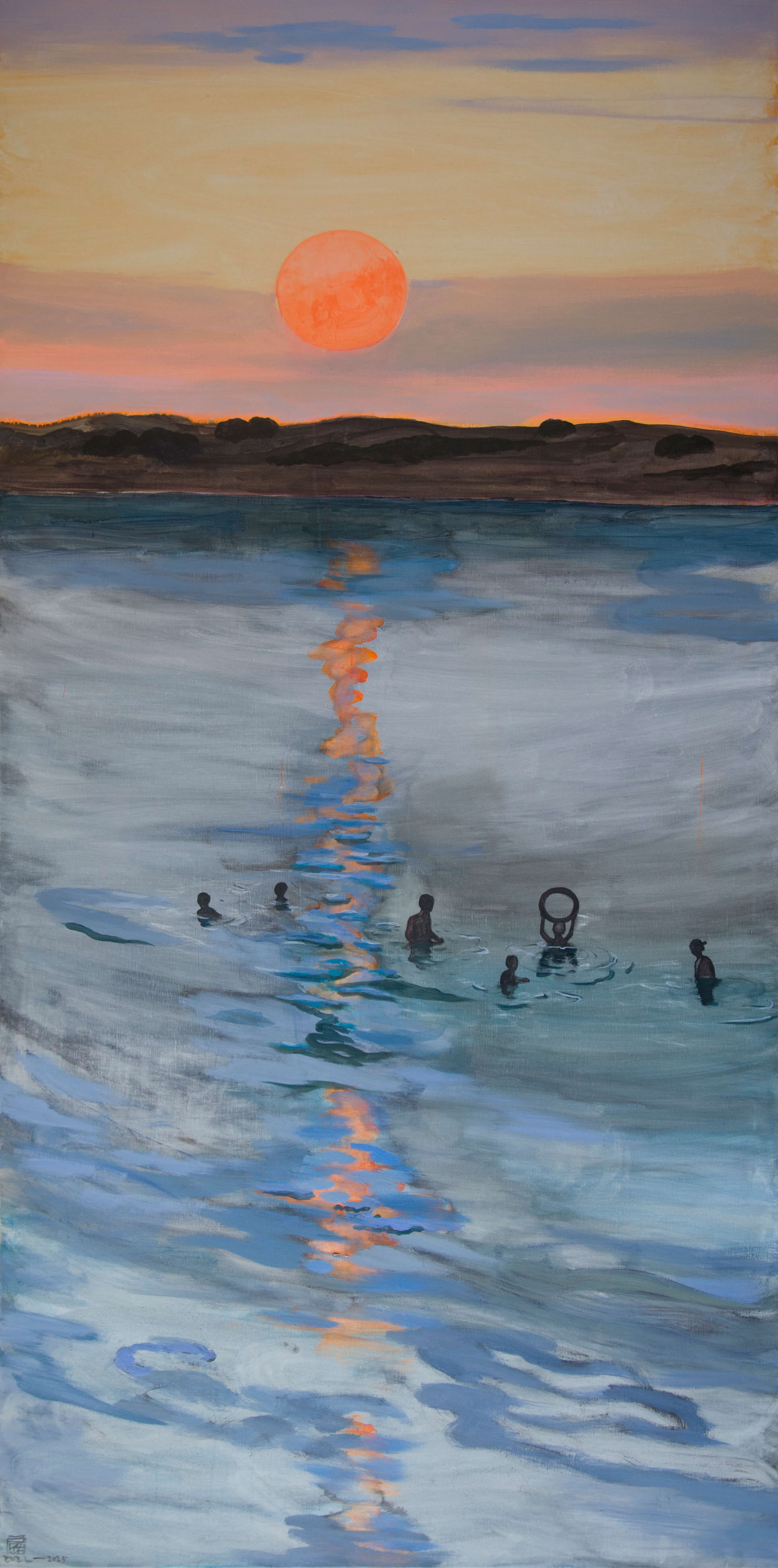
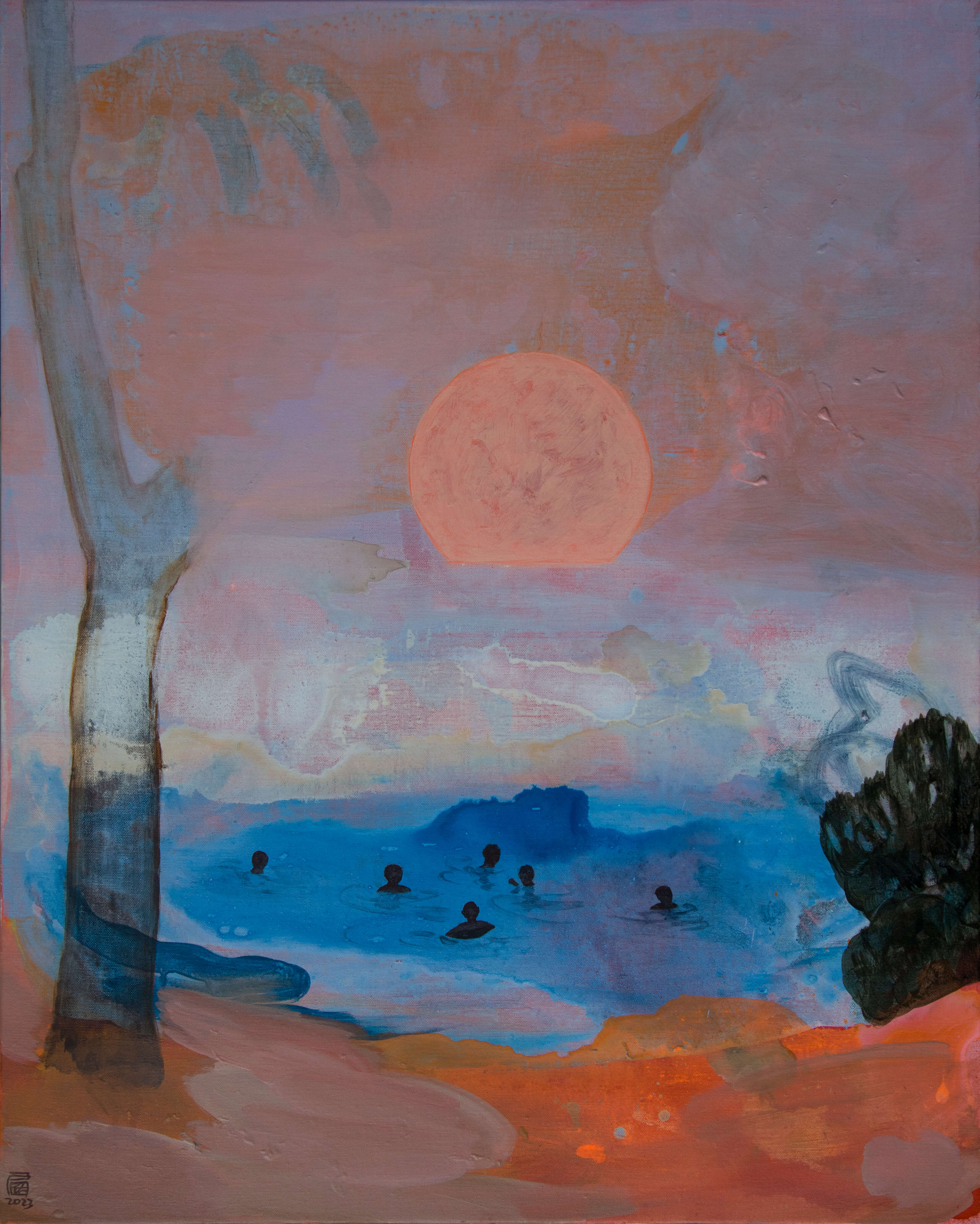
His 2023 solo exhibition, "Memories of Mount Mi," constructed an abstract psychological landscape through mountain forests and dusk, its painterly language imbued with a sense of distance and symbolism. In "Long Summer," however, this distant narrative is displaced, replaced by intimate, physical sensations and immediate observation. Huang Qiyou lives just a few minutes from the beach, and in his exhibition introduction, he wrote, "Summer is swimming season." From a dusk bike ride to the shimmering pool, to the moonlit sea and its roaring tide, the starting point of the painting is no longer the landscape, but the breath of the body and time in the same space.
Sunsets imbue these images with a time-soaked aura. The orange-red afterglow drifts across the water and skin, creating a "touch of light" that is both gentle and elusive. It extends the temporal dimension of the images—dusk and night, tides and body temperature intertwine into a slow, continuous present.
This shift isn't a change in subject matter, but a fundamental adjustment in his approach to painting. With free brushstrokes and a calm rhythm, the artist frees images from narrative and symbolism, returning them to the origins of physical experience. In a visual landscape of rapid consumption, his paintings reject sensationalism and grandeur, presenting a retracted and sustained state of viewing—like the permeation of climate rather than the eruption of an event.
He once said: "I live by the sea, but I seldom paint the sea. The closer I am to it, the easier it is to ignore it, just like we often ignore our loved ones." This "myopic" creative attitude reflects the artist's renewed gaze on "things close to us" - a visual ethic that transforms the macro world into everyday details.
Summer Never Leaves: A Painting Experiment on the Stagnation of Time
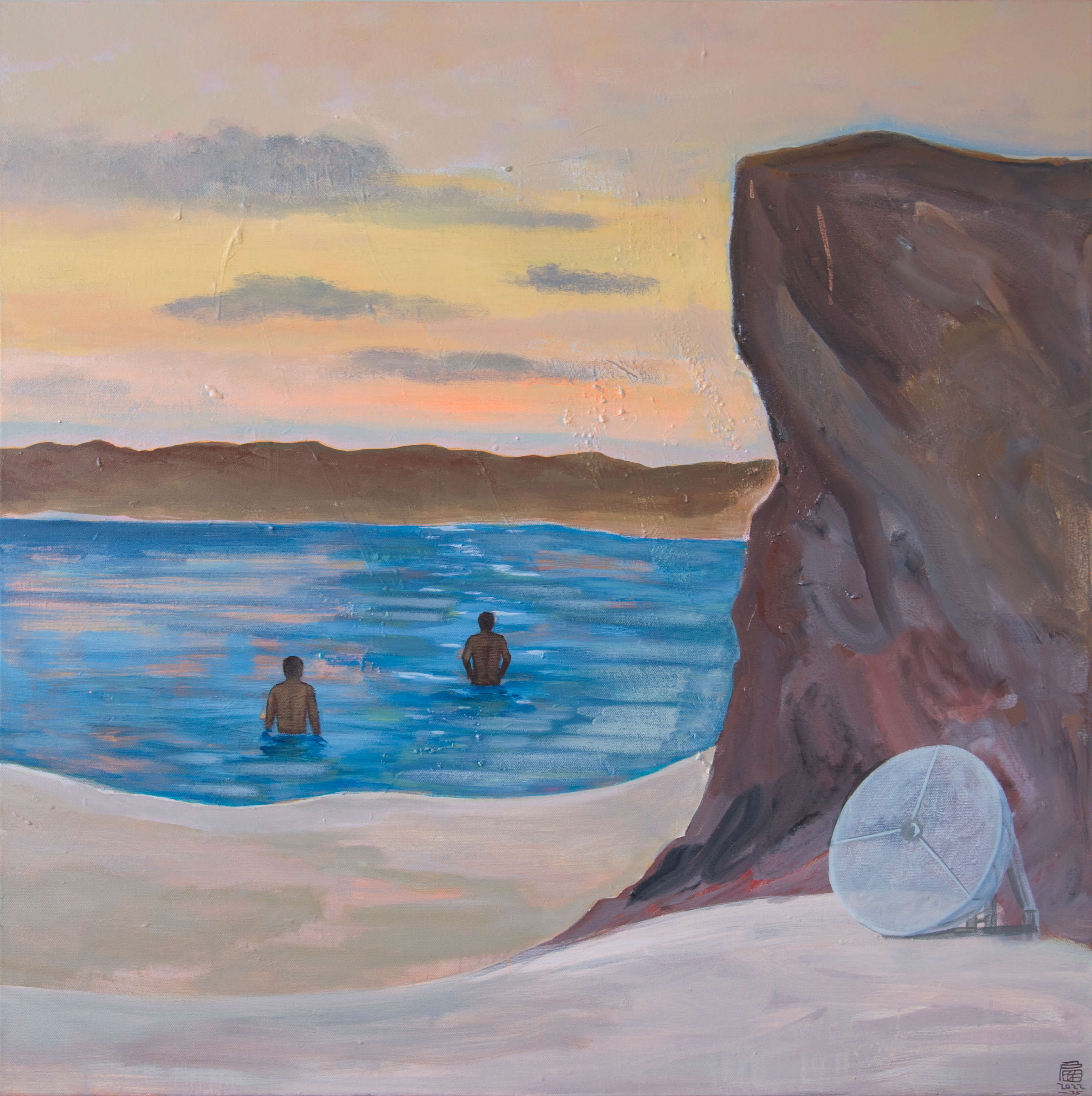
"Summer's Long Day" is not a lyrical paean to summer, but rather a pictorial experiment in the retention of time and the density of perception. The water, the pool, the floating figures, and the blurred perspective all combine to form a space between reality and dream. The composition of the painting tends to be loose, and the flow of air between the blocks of color creates a rhythm like breathing. The figures are magnified, distorted, and then blurred, while the background is diluted into overlapping layers of light and heat.
In these paintings, the sunset is not simply a natural phenomenon but a rhythmic signal—a sign of the slowing of light and the pause of time. Through the moment of sunset, the artist captures the "unfinished" state of time, allowing the warmth of summer to extend across the canvas into a persistent emotion.
The viewer, standing before the painting, feels as if drawn into a weightless immersion. Painting here is no longer a representation of reality, but a scene between experience and physical sensation—a visual climate.
Body and Perception: From Phenomenology to Painting
From an art historical perspective, Huang Qiyou's paintings continue the concept of "embodied viewing" proposed by French philosopher Maurice Merleau-Ponty in The Eye and the Mind (1961). In his view, the painter's body is not a tool for observing the world, but a site where the world manifests itself—the act of painting is the mutual penetration of body and world.
This idea was inherited by action painting and post-abstract painting in 20th-century art history. From Jackson Pollock's "action brushstrokes" to James Elkins's "material bodily labor" in What Painting Is (1999), they all point to the same fact: the meaning of painting lies not in reproduction but in the manifestation of bodily experience.
In "Long Summer," this extension of "body-sensory painting" manifests itself as a sustained yet restrained state of perception. Huang Qiyou replaces the narrative focus of traditional painting with the overlapping rhythms of the body and the climate, transforming the work into a visual record of the resonance between the body and the world. Painting is thus transformed into a questioning of "presence"—a way of seeing rooted in the body, and also a self-reflection on seeing itself.
Visual narrative of local experience
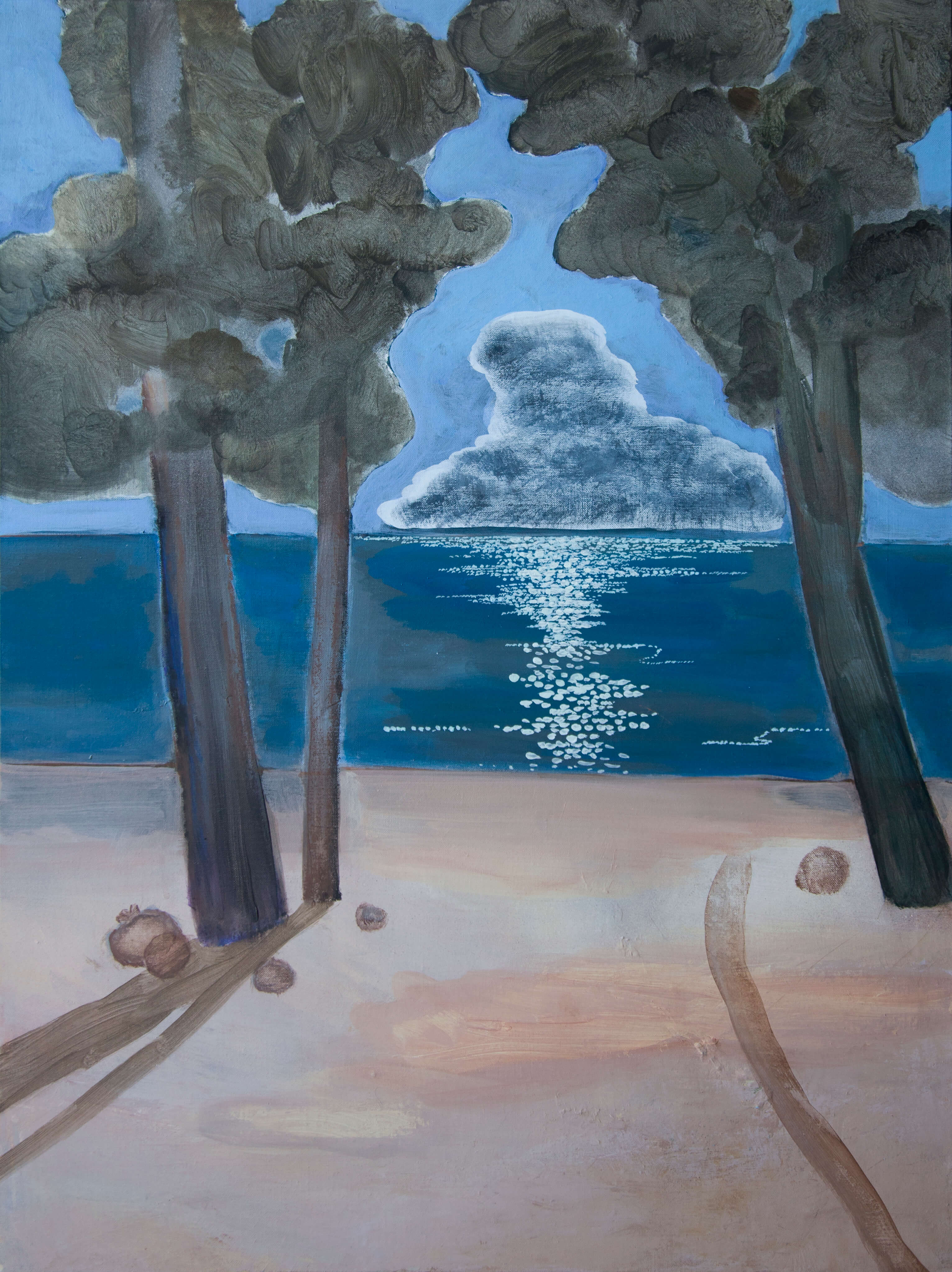
As a key presentation of the "Art Xiamen 10th Anniversary," "Long Summer" actively and persistently responds to the local context of Southern art. Xiamen's heat and humidity, sea breezes, sunsets, and tides constitute the underlying climate of the artist's life and the generative logic of his paintings. Huang Qiyou does not resort to romanticizing an "imagined South," but rather constructs a self-sufficient visual grammar through the realities of humidity and bodily perception.
Within the increasingly stylized and popularized contemporary landscape of young artists, this group of works at the Art Xiamen Art Fair stands out. Drawing on local Fujian experiences, they seek a different kind of speed within the temporal density of southern China. This artistic sample not only responds to the ten-year development path of "Art Xiamen," but also reflects the deep cultivation and return of young artists to real life—local life is no longer a subject matter, but a core condition for the emergence of art.
"The Long Summer" shows us a kind of reverse resistance - in an accelerated world, using slow brushstrokes to resist the passage of time; in the dissolved experience, using visual warmth to preserve the depth of life.
Like the long summer in Xiamen, Huang Qiyou's paintings neither end nor begin; they continue to exist at a moment when the temperature has not yet dissipated.
Preface by Xie Mu
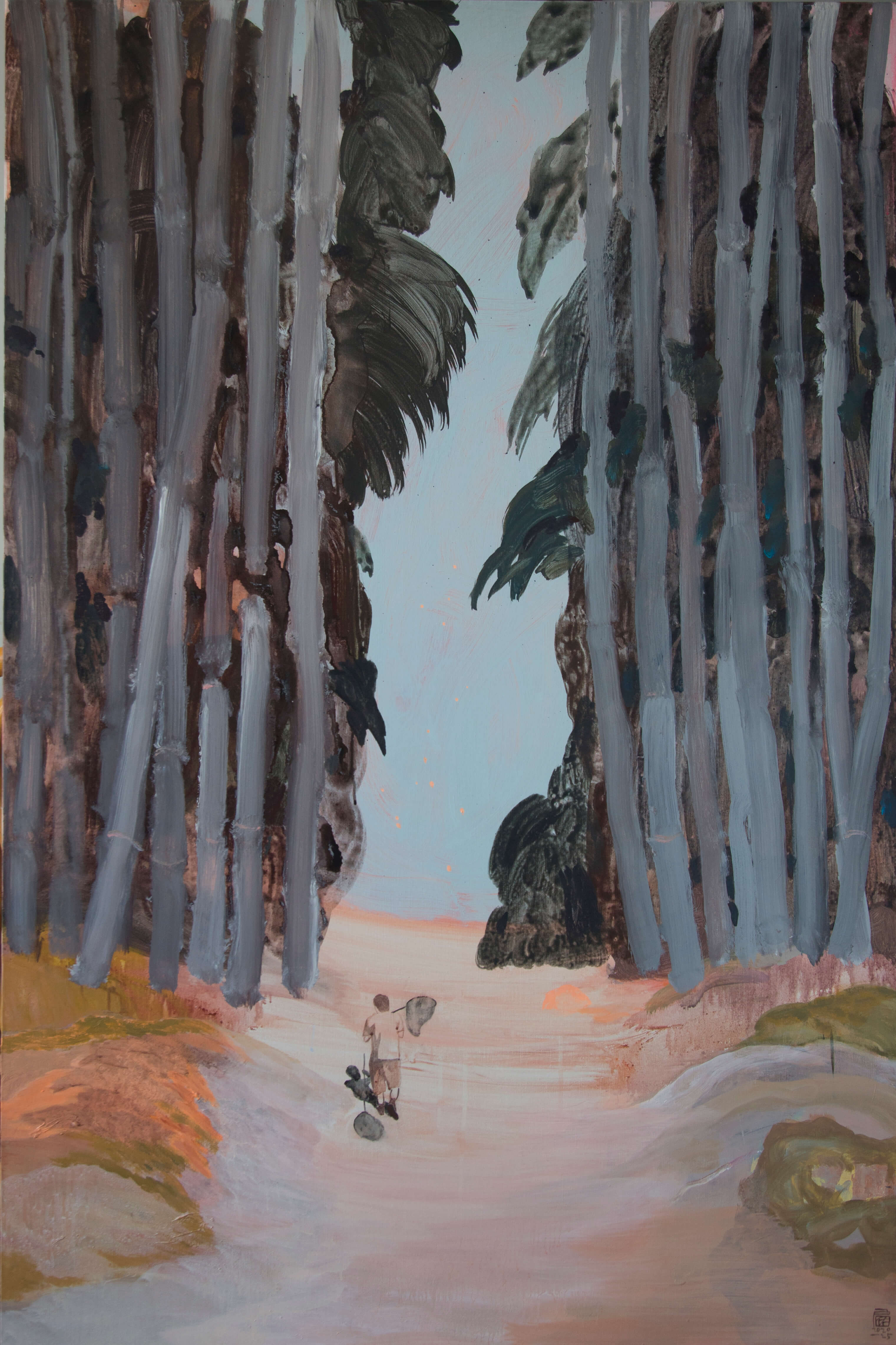
Artist's Statement
Some people say Xiamen is a big factory (factory + summer), and summer is locked in this big factory, and autumn and winter can't squeeze in at all, so summer is always very long. Some people also say that it is the autumn tiger now, but this tiger has not really left since last winter. Okay, if it doesn't leave, I will leave! Where to go? To a place with water, and only in the water can you escape the heat.
In the south, summer is the swimming season. The studio is close to the beach, and you can get there by just turning the throttle of a motorcycle. If you come early, you can watch the sunset, and if you come late, you can watch the bright moon in the sky. The unsettling smell of chlorine water in the swimming pool in the past has now been replaced by a light salty smell.
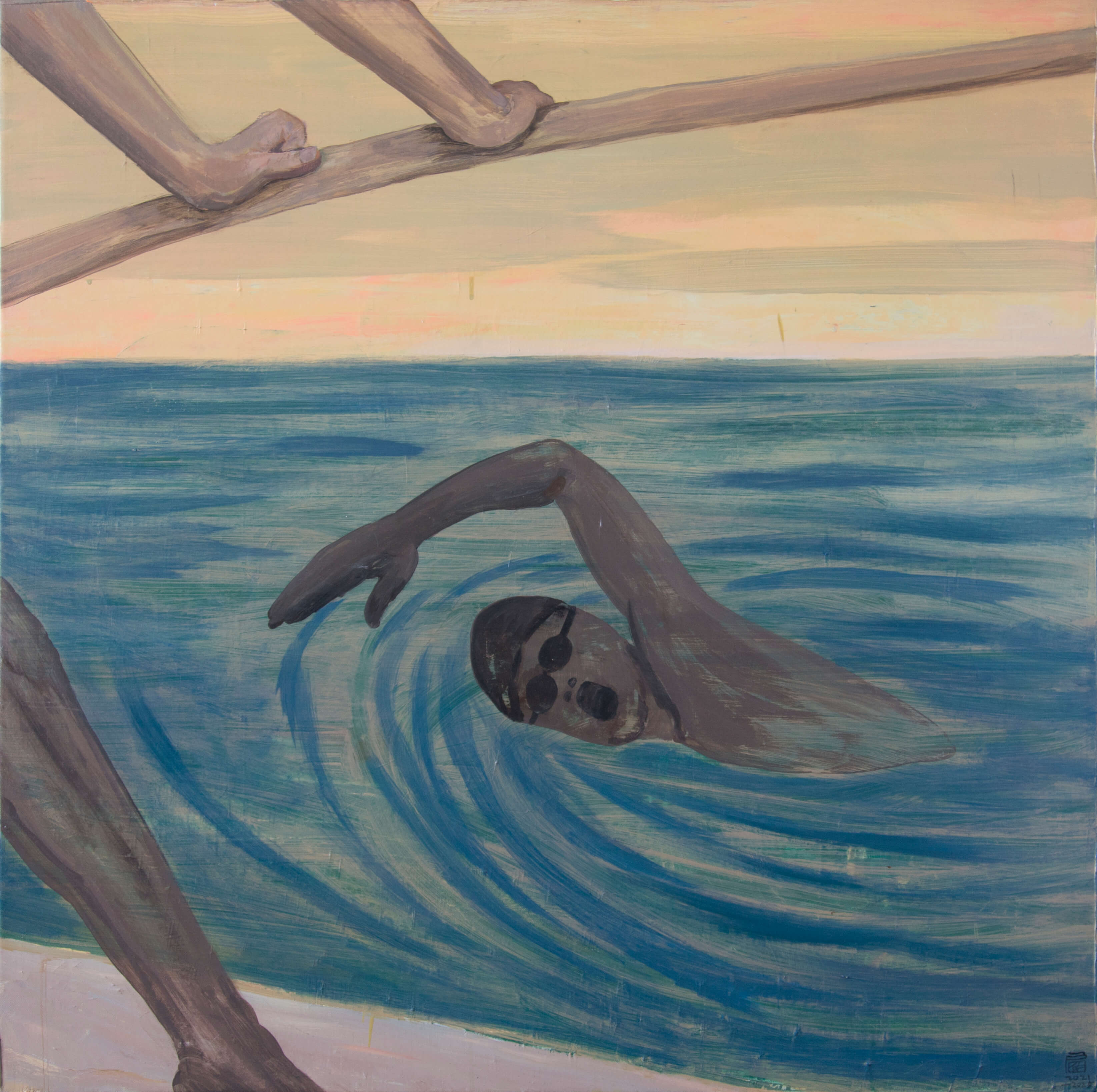
As an indoor worker, swimming, an outdoor sport that stretches the whole body, is a good way to adjust. Sometimes I also want to paint, and after a few years, I have this batch of works. Yes, for many years, I have lived by the sea but rarely painted it. The closer I am to it, the less I feel, just like the people closest to us are often ignored. People who engage in creation tend to have a cultural burden and always want to dig out some profound expressions. I am talking about myself, and accepting beauty has become a matter that requires ability and courage. Therefore, I have learned to occasionally eat a few sweets under the premise of reasonable sugar control.
The beauty of painting lies in its ability to bring one's life into perspective. Whether it's Kikujiro's summer or Dongdong's vacation, the long summer days make everyone's story worth looking forward to. This exhibition features new works, as well as some reworked and adjusted pieces from two years ago, forming a finale to summer.
Huang Qiyou
2025.10.12
Please continue to follow ArtPro for more latest developments in the global art market.